Quick answer: the berries most likely to poison you in a UK hedgerow are deadly nightshade (glossy black, single berries, star-shaped calyx), woody nightshade (red, on a purple-flowered scrambling plant) and yew (red arils on an evergreen tree, seed highly toxic). Everything else common in a British hedgerow — blackberries, elderberries (cooked), sloes, hawthorn, rosehips — is safe to eat.
Britain's hedgerows carry a genuine harvest every autumn, and most of it goes completely unpicked because people don't know what they're looking at — or, just as often, they know just enough to be nervous of all of it. This is the reference I wish existed when I started foraging: every common edible berry you'll find in a British hedgerow, alongside the dangerous ones, so you can tell them apart with confidence rather than guesswork.
The golden rule, before anything else: never eat a wild berry from a single feature alone. Check the whole plant — leaves, growth habit, stems, thorns and habitat — not just the colour and shape of the fruit. Colour is the least reliable identifier in the entire hedgerow.
Edible Berries You'll Find in a UK Hedgerow
Blackberries (Brambles)
The easiest and safest place to start. Clusters of small dark drupelets on thorny, arching canes, ripening from August through October. No dangerous look-alikes among UK Rubus species. If you're new to foraging, this is the fruit to build confidence on.
Dewberries
A less-known blackberry relative — sweeter, softer, with a distinctive waxy blue-white bloom and low, trailing (rather than arching) canes. Ripens several weeks before blackberries. Full details in my dewberry foraging guide.
Elderberries
Small black berries in large, drooping, umbrella-shaped clusters on a small tree with compound, toothed leaves. Ripens late August to September. Must be cooked before eating — raw berries, leaves and stems contain compounds that cause nausea. Full guide: foraging elderberries.
Sloes (Blackthorn)
Small, hard, blue-black fruit with a dusty bloom, on a densely thorny shrub. Ripens September–October. Technically edible raw but intensely astringent — almost always processed into sloe gin, jelly or vinegar. Guide: foraging sloes and blackthorn.
Hawthorn (Haws)
Bright red oval berries in dense clusters on a thorny tree with deeply lobed leaves. Ripens late September through November. Mild and floury raw, much better cooked into jelly or ketchup. Guide: foraging hawthorn berries.
Rowan (Mountain Ash)
Orange-red berries in flat-topped clusters on a tree with pinnate, ash-like leaves and no thorns. Ripens August–October. Mildly toxic raw (causes digestive upset); cooking destroys the toxin completely, and rowan jelly is exceptional with game. Guide: foraging rowan berries.
Rosehips
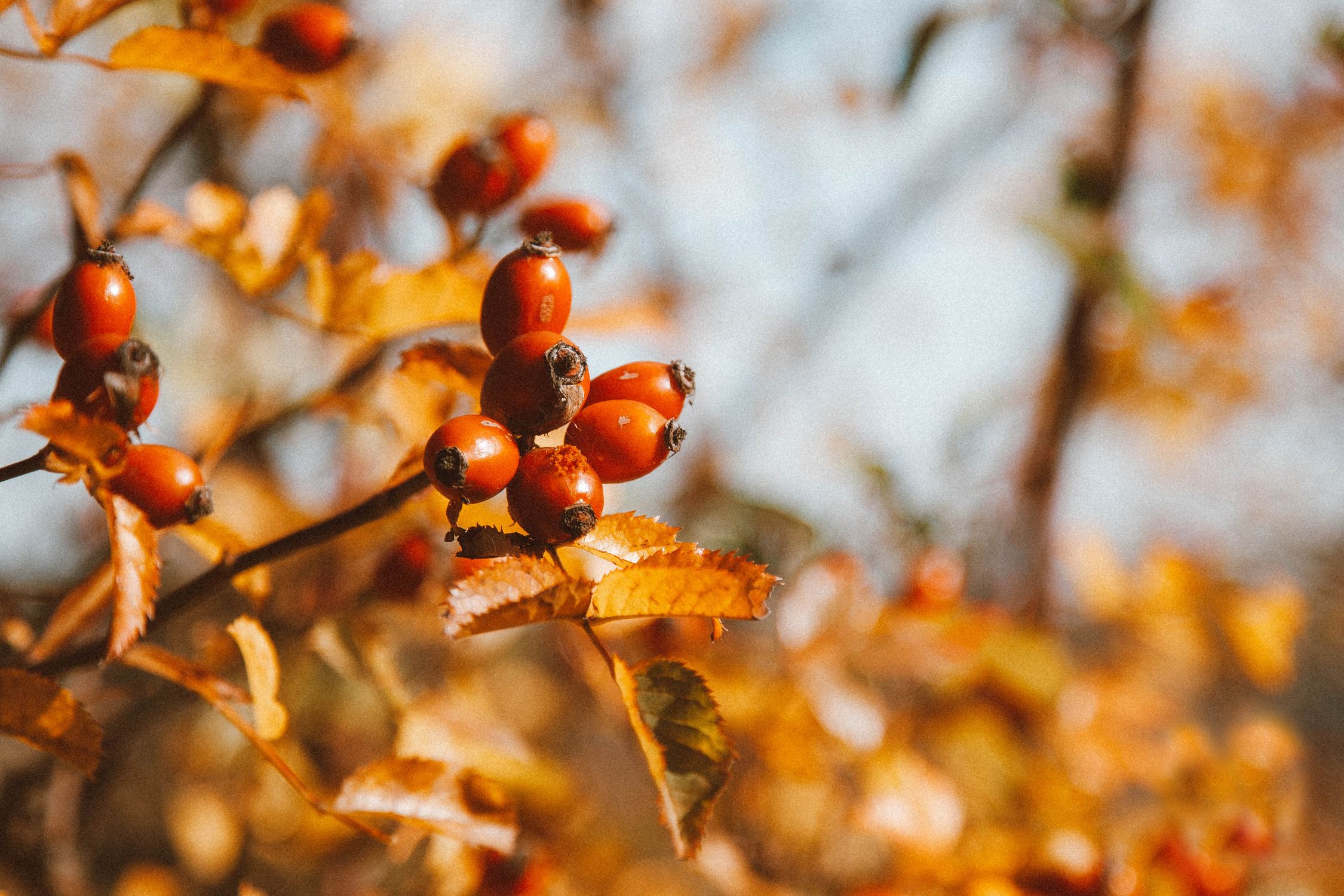
Bright red, oval hips left behind on wild rose bushes after the flowers drop, ripening September through winter. Extremely high in vitamin C. The seeds and fine hairs inside must be removed or strained out before eating. Guide: foraging rosehips.
Wild Damsons
Small, dark blue-purple plums found in old hedgerows and abandoned orchards, larger than a sloe and sweeter even raw. Ripens late August through September. Guide: foraging wild damsons.
Wild Strawberries
Tiny, intensely flavoured red berries on a low ground-cover plant with three-part leaves, found on woodland edges, chalk grassland and hedgebanks. Ripens May through September. Guide: foraging wild strawberries.
Bilberries
Small, dark blue-black berries with a matte bloom, on a low shrub found on acidic moorland and heath rather than hedgerows. Ripens July–September. Guide: bilberries: Britain's wild blueberry.
Poisonous Berries to Know and Avoid
The dangerous ones are far fewer than people assume, but knowing them properly matters. Full detail, photos-in-words and identification comparisons are in my dedicated guide to deadly nightshade and other poisonous berries; the short version, cross-checked against the RHS's own guidance on harmful garden plants:
- Deadly nightshade — glossy black berries, singly on a bushy plant with large oval leaves and a star-shaped green calyx. The most dangerous, genuinely capable of killing (see the Woodland Trust's identification photos if you're not certain).
- Woody nightshade — a scrambling plant with purple-and-yellow flowers and red berries. Toxic but much less dangerous than deadly nightshade — still never eat it.
- Lords and ladies (cuckoo pint) — a spike of bright orange-red berries on a bare stalk in autumn. Causes burning and swelling of the mouth if eaten.
- Yew — red berry-like arils on an evergreen tree, common in churchyards and gardens. The seed inside is highly toxic; treat the whole tree as dangerous.
- Ivy — small black berries in late winter. Mildly toxic, unappetising, rarely a real risk but worth knowing.
- Spindle — strikingly pretty pink and orange fruit capsules in autumn. All parts toxic; the appealing colour is exactly what makes it a hazard for curious children.
If in doubt, don't risk it — and if someone does eat a berry you can't identify, don't wait for symptoms. NHS guidance on suspected poisoning is to seek medical advice immediately, or call 111 (999 if symptoms are severe).
Telling Edible and Poisonous Berries Apart
Colour is the least reliable clue in the whole hedgerow — both blackberries and deadly nightshade berries are black; both elderberries and dark unripe sloes look broadly similar from a distance. What actually distinguishes safe from dangerous:
| Feature | What to check |
|---|---|
| Growth habit | Single berries on a low bushy plant (nightshade family) vs berries in clusters on a shrub, tree or bramble — most edible hedgerow fruit grows in clusters or on thorny canes, not singly. |
| Leaves | Toothed, lobed, compound or simple? Deadly nightshade has large plain oval leaves; most edible hedgerow shrubs have toothed or divided leaves. |
| Calyx | A star-shaped green structure at the base of a berry is a strong warning sign — a feature of the nightshade family. |
| Thorns | Blackberries, sloes and hawthorn are all thorny; this alone doesn't confirm safety but is a useful supporting clue alongside the others. |
| Habitat | Deadly nightshade favours chalky soil, disturbed ground, ruins and churchyards, and is genuinely uncommon — most hedgerow fruit you'll actually encounter in quantity is safe. |
Use at least three of these features together before eating anything, and if you're not certain, leave it. There is no wild berry worth the risk of a wrong guess.
A Note on Cooking-Only Berries
A detail that trips up new foragers: not every safe berry is safe raw. Elderberries and rowan berries are both genuinely good, traditional foraged fruit — and both require cooking to neutralise compounds that cause illness if eaten raw. This isn't the same category of danger as deadly nightshade (which is toxic regardless of cooking), but it's an important distinction: "safe" and "safe raw" are not always the same thing in a British hedgerow.
Common Woodland Berries in the UK
Hedgerows get most of the attention when people talk about foraging, but British woodland has its own berry line-up, and it's worth knowing on its own terms. The mix shifts a little — some of the same species turn up again, but you'll also find fruit that prefers the deeper cover or the acid soil woodland tends to offer, plus a couple of poisonous ones that are much more a woodland problem than a hedgerow one.
Brambles (the same plant that gives you blackberries) are just as much a woodland edge and ride plant as a hedgerow one, and they're still the easiest, safest berry to start with wherever you find them. Push a little further into acid woodland, moorland edges or heath and you may well come across bilberries, Britain's own wild blueberry — small, dark blue-black berries on a low shrub that's easy to miss until you know to look down rather than up. Wild strawberries favour a different kind of woodland spot again: sunny clearings and the grassy margins of rides and paths, where their tiny, intensely flavoured fruit hides among three-part leaves close to the ground.
At the woodland edge rather than deep inside it, elder is genuinely everywhere — a small tree that's just as happy on a woodland margin as in a hedgerow, producing heavy, drooping clusters of small black berries from late summer. And rowan, or mountain ash, turns up in more woodland settings than almost any other UK berry, from upland oak and birch woods to planted amenity trees, its orange-red clusters ripening from August. Both elder and rowan follow the same rule: cook before eating. Raw elderberries and raw rowan berries both contain compounds that cause digestive upset, and that's true regardless of how tempting they look on the tree. Cooking neutralises the problem completely, which is why both turn up so often in jellies, cordials and sauces rather than eaten straight off the branch.
Then there are two woodland berries you need to know only so you can leave them alone. Holly and ivy both produce berries through winter, when almost nothing else is fruiting, and both are mildly toxic — holly's bright red berries and ivy's small black ones can cause vomiting and stomach upset if eaten in any quantity, though serious poisoning is rare. Far more distinctive, and worth being able to name on sight, is lords-and-ladies (also called cuckoo pint) — a bare stalk topped with a tight spike of bright orange-red berries that appears in shaded woodland from late summer. It's poisonous, causing burning and swelling of the mouth and throat if eaten, and its odd, unmistakable shape is exactly why it's worth learning: once you've seen it, you won't confuse it with anything edible. For the full picture on the plants to avoid altogether, my guide to deadly nightshade and other poisonous berries covers them in detail.
Frequently Asked Questions
What is the most common poisonous berry in UK hedgerows?
Woody nightshade (Solanum dulcamara) is far more common than deadly nightshade and produces bright red berries on a scrambling plant with purple-and-yellow flowers. It's toxic but much less dangerous than deadly nightshade — eating a handful causes nausea and stomach upset rather than the life-threatening symptoms deadly nightshade can cause.
How can I tell blackberries from deadly nightshade berries?
Blackberries grow in a tight cluster of many small drupelets (like a raspberry's structure) on thorny, arching brambles. Deadly nightshade berries are single, smooth, round berries sitting inside a star-shaped green calyx, on a bushy plant with large plain oval leaves and no thorns. The berry structure alone is enough to tell them apart — a blackberry is never a single smooth sphere.
Which UK wild berries need to be cooked before eating?
Elderberries and rowan berries both require cooking — raw, both contain compounds that cause digestive upset. Sloes are technically edible raw but so astringent that nobody eats them that way. Blackberries, dewberries, wild strawberries, bilberries, wild damsons, rosehips (once strained of seeds and hairs) and hawthorn berries are all safe to eat raw, though several taste considerably better cooked.
Is it safe to forage berries for children to try?
Yes, with adult supervision and correct identification — start with blackberries, the safest and easiest wild berry to teach, and use the outing to explain clearly which plants to leave alone. Most berry poisoning incidents involve young children eating attractive-looking berries unsupervised, so teaching the "never eat anything without checking with an adult first" rule matters more than memorising every dangerous species by name.