Every autumn the hedgerows of Britain hang heavy with small, dark-purple plums that most people stroll straight past without a second glance. Wild damsons cluster along country lanes, in old field boundaries and at the edges of woodland, simply waiting to be picked. And they're worth stopping for. The damson was once so woven into British rural life that whole landscapes were shaped by its cultivation, and its sharp, intense flavour gives you preserves, gins and sauces that no other fruit can quite match.
What are damsons?
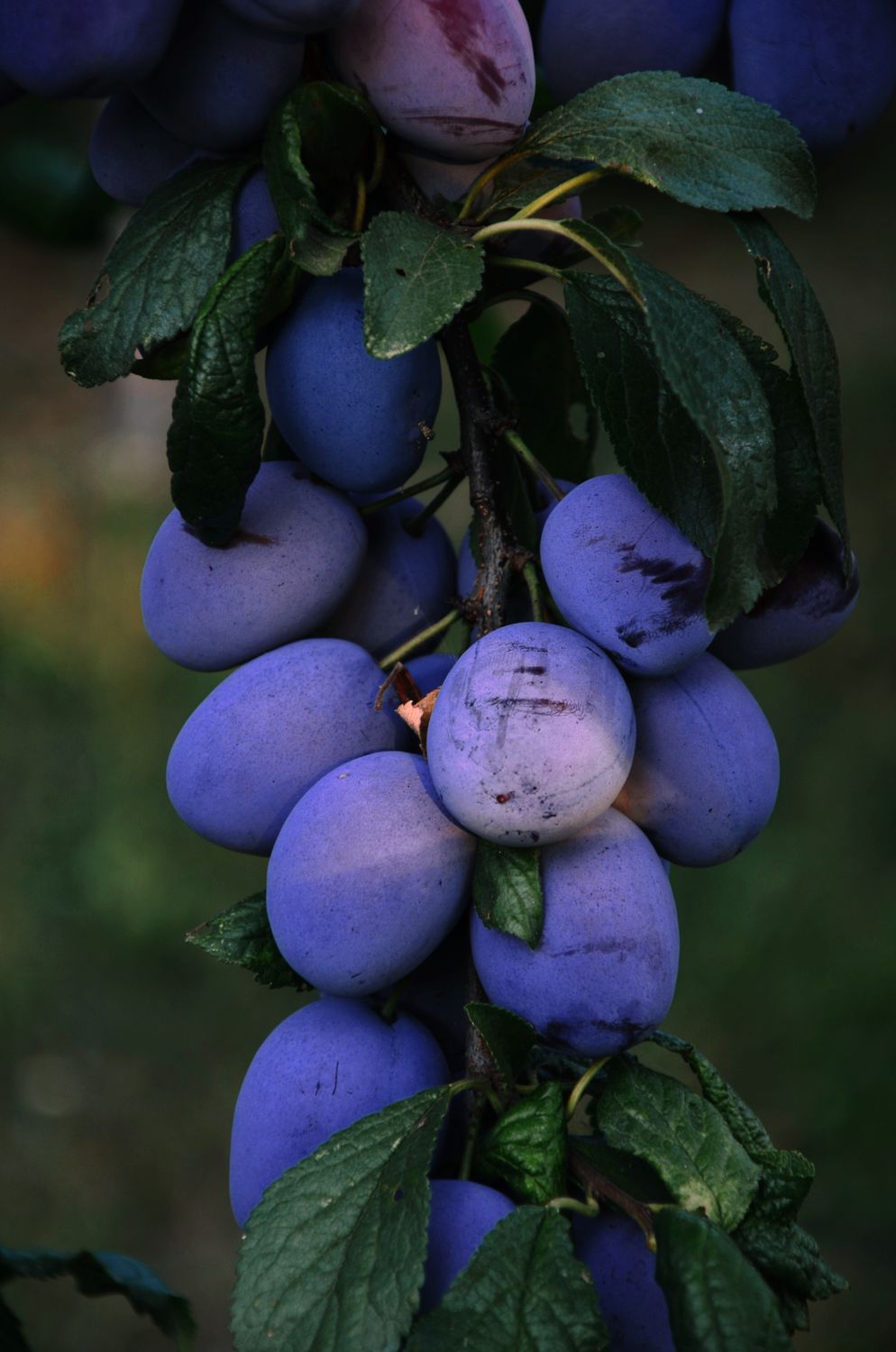
The damson (Prunus domestica subsp. insititia) is a small, oval plum, usually 2 to 3 centimetres long, with deep blue-purple skin under a pale, powdery bloom. The flesh is golden-green and the stone clings on tightly. Unlike a dessert plum, a damson is far too tart and astringent to enjoy raw, but that very intensity is exactly what makes it extraordinary once it's cooked.
The name traces back to Damascus, from the old belief that Crusaders carried the fruit home to Europe from the Middle East. In truth, though, damsons have grown in Britain for centuries and were already well established here in Roman times.
Where to find wild damsons
Wild and feral damsons are surprisingly common across England, Wales and southern Scotland. They thrive in hedgerows, along field boundaries, at the edges of woodland and in abandoned orchards. A great many were originally planted as hedging, because damsons throw dense, thorny growth that makes a fine stock-proof boundary.
Hedgerows are the obvious place to start, especially in rural areas; look for small trees or large bushes tucked into mixed hedges, and remember that old field boundaries often hold damsons planted generations ago. Country lanes are productive too, with areas like the Lyth Valley in Cumbria, the Severn Valley and the Welsh Marches positively lined with damson trees. The easiest way to spot one is by its spring blossom, masses of small white flowers in late March and April that appear before the leaves. Beyond that, historic churchyards and the grounds of old houses frequently contain damson trees planted decades or even centuries back, and the fruit sometimes naturalises on common land and around the margins of parks.
Identifying damsons
Getting your identification right matters here, because several similar wild plums grow alongside them. A true damson has small, oval, dark blue-purple fruit with a heavy bloom, greenish-gold flesh clinging tightly to the stone, and an intensely tart taste. The leaves are small, oval and finely toothed, noticeably smaller and narrower than those of a cultivated plum, and the branches are often thorny or spiny, particularly on older, unpruned trees. The flowers come before the leaves in late March to April, small and white with five petals, in clusters of two or three. Wild damsons also tend to be smaller than cultivated varieties, around 1.5 to 2.5 centimetres long.
You may well meet a few relatives along the way. Bullaces are rounder and slightly larger, often greenish or yellow; sloes are much smaller and grow on very thorny blackthorn; and cherry plums are larger, frequently red or yellow, and sweeter. All are edible, but only the true damson carries that distinctive sharp, complex damson flavour.
When and how to forage
Damsons ripen from late August through October, depending on the season and where you are; northern areas and higher ground tend to come good later. Wait until the fruit is fully coloured and just starting to soften. A light frost is traditionally said to improve the flavour by turning some of the starches to sugars, though in my experience it's a nice bonus rather than something you need to hold out for.
To pick, gently pull or twist the fruit from the branch. A hooked stick or walking cane is handy for drawing down the higher branches, and it's well worth spreading a sheet or tarp beneath the tree and giving the branches a shake to gather the ripe fruit that falls. You may end up with more than you bargained for: a single mature tree can produce 15 to 30 kilograms, and even a modest hedgerow specimen will give you several kilos.
One important point before you set off. Foraging wild fruit from hedgerows is legal in England and Wales under the Theft Act 1968, provided it's for personal use and not for commercial sale. Always forage respectfully: don't damage the trees, leave plenty for the wildlife, and never forage on private land without permission.
The great damson landscapes
A few corners of Britain have especially deep damson roots. The Lyth Valley and Winster Valley in the Lake District were once carpeted with damson orchards, and the spring blossom there is still one of England's finest seasonal sights, marked every April with an annual Damson Day. The Severn Valley, the Shropshire Hills and the old orchard counties of Herefordshire and Worcestershire are rich damson country too. In those regions the trees were traditionally planted as windbreaks around hop yards and as hedgerow boundaries, and a great many of them still stand today.
Preserving your harvest
Damsons are at their very best preserved rather than eaten fresh. Their high pectin content, bold flavour and natural tartness make them ideal for jams, cheeses and a spot of alcoholic infusion. Here are the four I come back to year after year.
Damson jam
Damson jam is one of the finest of all British preserves, with a deep, winey flavour nothing else can replicate. Don't fret about pulling out every stone beforehand, by the way, as they float free during cooking and are easy to fish out.
- Place 1 kilogram of damsons in a heavy pan with 300 millilitres of water.
- Simmer gently until the fruit has softened and the stones have loosened, skimming out the stones with a slotted spoon as they rise to the surface.
- Add 1 kilogram of sugar and stir until dissolved, then boil rapidly until setting point is reached.
- To test for set, drop a teaspoon of jam onto a cold saucer; if it wrinkles when you push it with a finger after a minute, it's ready.
Damson cheese
Damson cheese is a thick, sliceable fruit paste traditionally served with cold meats and strong cheese, and it keeps for a year or more. Cook the damsons as you would for jam, remove the stones, then push the pulp through a sieve. Weigh the pulp and add an equal weight of sugar. Cook it slowly, stirring regularly, until it's so thick that a spoon drawn across the bottom of the pan leaves a clean trail. Pour into oiled moulds or ramekins and cover once cold.
Damson gin
For my money this is the finest fruit gin you can make, and far and away the most popular use for foraged damsons. Take 500 grams of damsons and prick each one with a pin (or freeze them overnight to split the skins), then drop them into a large jar. Add 250 grams of caster sugar and pour over 750 millilitres of gin. Seal it, shake daily for the first week, then tuck it away somewhere cool and dark for at least three months, giving it the odd shake. Strain through muslin and bottle. The longer you leave it the better it gets: a batch made in October is drinkable by Christmas but quite superb by the following autumn. And don't bin the boozy damsons left after straining, they're wonderful spooned over ice cream.
Damson chutney
A rich, spiced damson chutney is superb with cheese, cold meats and pork pies. Cook 1 kilogram of stoned damsons together with 250 grams of chopped onions, 200 grams of brown sugar, 200 millilitres of malt vinegar, a teaspoon each of ground ginger and allspice, and half a teaspoon of cayenne pepper. Simmer gently for about an hour until thick and jammy, then pot into sterilised jars and seal.
A walk worth taking
Foraging wild damsons is one of the simplest pleasures of the British autumn. It ties you to centuries of rural tradition, costs absolutely nothing, and rewards you with a fruit whose culinary potential far outstrips its modest looks. Take a bag along on your next hedgerow walk in September or October. Those small purple plums hiding among the turning leaves are a genuine British treasure, and they're just waiting to be rediscovered.
Wild damsons sit comfortably alongside the other overlooked hedgerow fruit in my UK wild berry identification guide, which covers every edible species I forage each autumn and the poisonous ones I make a point of avoiding.