| Botanical name | Sambucus nigra |
|---|---|
| Family | Adoxaceae |
| Hardy rating | RHS H7 (extremely hardy) |
| Fruiting season | Late August–September |
| Height (mature tree) | Up to 10 m |
| Position | Full sun to partial shade |
| Habitat | Hedgerows, woodland edges, waste ground, railway lines |
| Edible raw? | No — must be cooked |
Every September the elder trees around here turn from something I barely notice to something I can't stop looking at — heavy black clusters hanging over every hedge, footpath and railway embankment in the country. Elderberries are one of the most abundant, easiest-to-identify wild fruits in Britain, and one of the few genuinely important rules to know is that they must be cooked before eating. Here's everything worth knowing, from spotting the tree to getting the berries safely into a bottle.
Identifying Elder
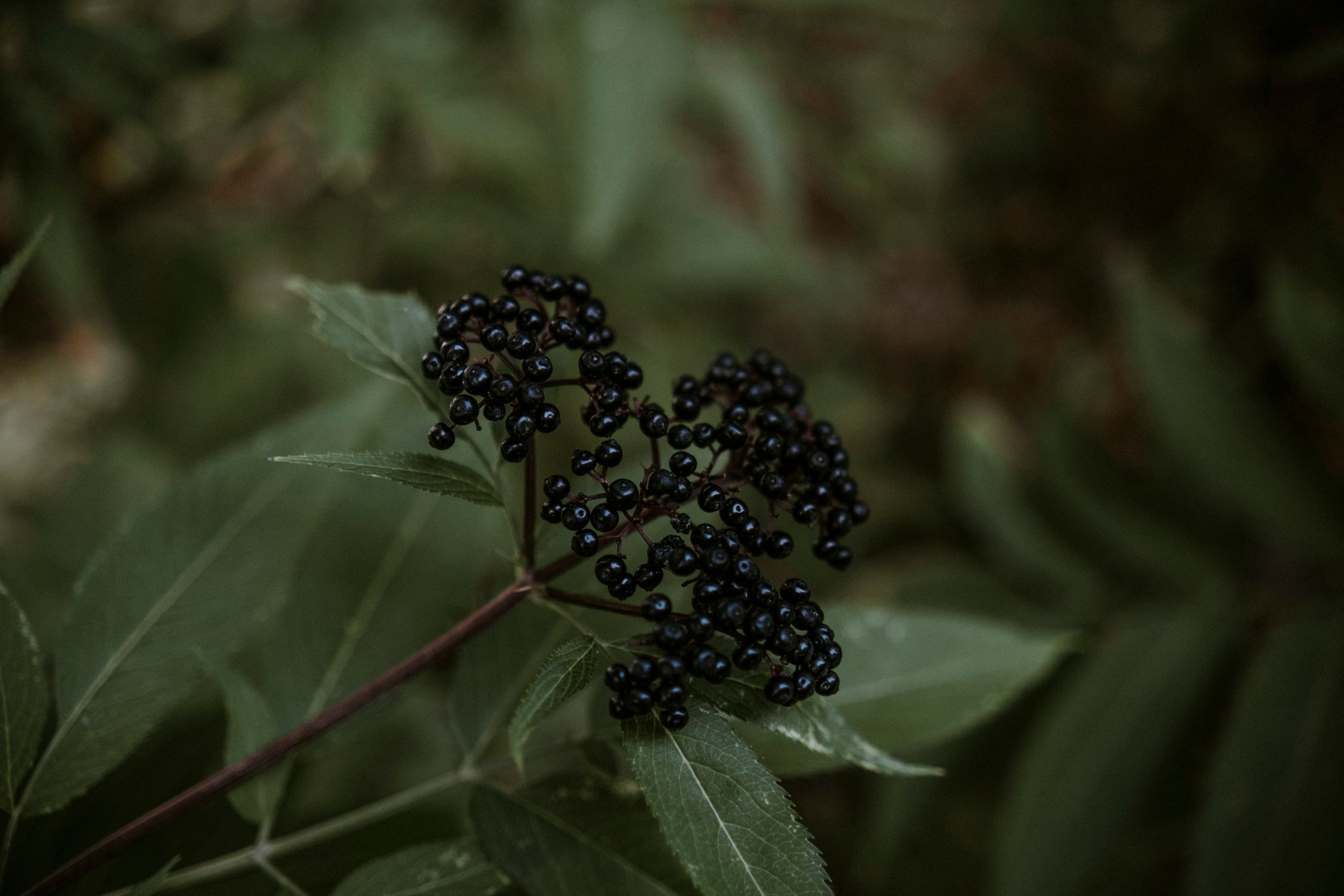
Elder is a small, fast-growing tree or large shrub, rarely more than 10 metres tall, with a distinctive corky, deeply furrowed grey-brown bark on older wood. The leaves are compound, made up of five to seven oval leaflets with toothed edges, arranged opposite each other on the stem. Snap a twig and it smells faintly unpleasant — a useful confirming sign if you're unsure.
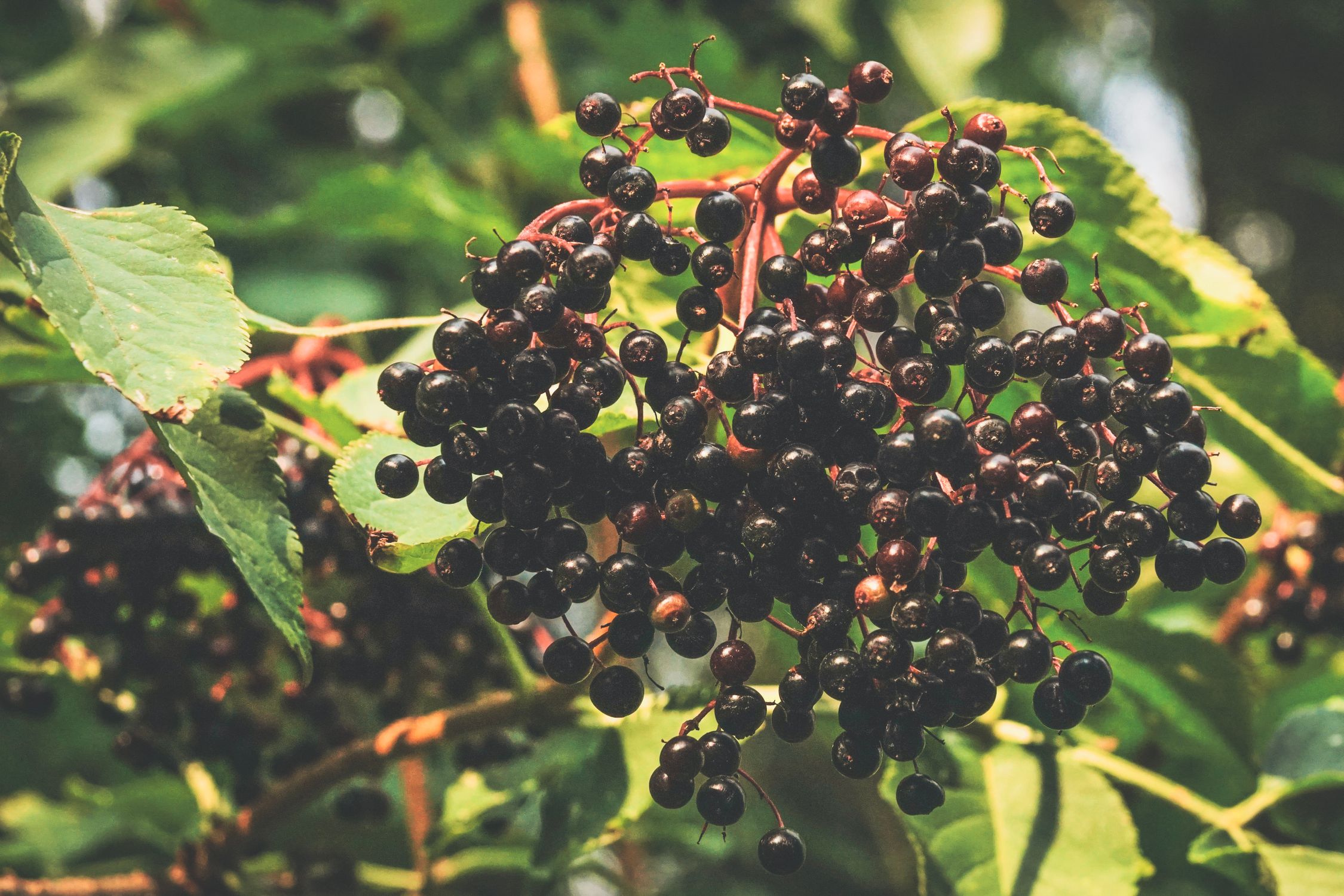
In June the tree covers itself in flat, creamy-white flower heads (umbels) with a sweet, heady scent — these are the same flowers used for elderflower cordial. By September those flower heads have become drooping clusters of small, round, near-black berries, each on its own thin reddish-purple stalk. The whole cluster hangs downward under its own weight, which is one of the easiest ways to tell elder apart from rowan or other red-berried hedgerow trees at a glance.
Where to Find Elderberries in the UK
Almost everywhere. Elder is one of the most widespread trees in Britain, thriving in hedgerows, woodland edges, waste ground, railway lines, motorway verges and gardens alike. It tolerates poor soil and pollution better than most native trees, which is why it's so often the scrubby tree colonising a neglected corner rather than a carefully placed woodland specimen. If you live anywhere in lowland Britain, there's very likely an elder within a short walk.
When Are Elderberries Ripe?
Elderberries ripen from late August through September, occasionally into early October in a mild year. You want the berries fully black and glossy, with the stalks turned reddish-purple rather than green — green stalks are a sign the cluster isn't fully ripe yet. The whole umbel usually ripens together, so once one cluster is ready, the rest of the tree is often close behind.
Cut whole clusters with scissors or secateurs rather than stripping individual berries by hand — it's faster, kinder to the tree, and much easier to process the berries off the stem once you're home. Take no more than a third of the crop from any one tree, leaving plenty for the blackbirds and thrushes that rely on elderberries heavily in early autumn.
Are Elderberries Poisonous Raw?
This is the single most important thing to know before you forage any. Raw elderberries, along with the seeds, leaves, bark and stems of the plant, contain cyanogenic glycosides, compounds that can release small amounts of cyanide when eaten. Raw or undercooked berries commonly cause nausea, vomiting and stomach cramps, and eating any part of the plant other than the cooked flesh of ripe berries should be avoided entirely.
Cooking neutralises the toxin completely. Elderberries have been a safe, traditional British and European foraged fruit for centuries precisely because everyone who's ever used them cooks them first — into cordial, jelly, wine or syrup. Boil the berries for at least 20 minutes before using them in any recipe, and never eat them straight off the tree. This isn't a minor caveat; it's the entire rule for this fruit.
What Do Elderberries Taste Like?
Raw, they're unpleasantly bitter and astringent — one more reason nobody eats them fresh. Cooked, the flavour transforms into something rich, deep and slightly tart, often described as a cross between a blackcurrant and a very dark, earthy blackberry. It's an intense flavour that's rarely eaten on its own; elderberries are almost always sweetened and usually paired with apple, blackberry or lemon to round out the sharpness.
Recipes and Uses
Elderberry cordial
Simmer stripped berries with water, sugar and a little lemon juice, strain through muslin, and bottle. A warming winter drink diluted with hot water, and the base for elderberry "immune support" syrup that's become popular in health-food circles in recent years.
Elderberry and apple jelly
The classic hedgerow preserve. Elderberries are low in pectin on their own, so pairing with apple (high in pectin) gives a reliable set without needing jam sugar. Excellent with cold meats and strong cheese.
Elderberry wine
A genuinely old British tradition, deep and port-like when properly made and aged. Worth trying at least once if you have a glut.
Elderberry syrup
A concentrated, spiced version of the cordial, often with ginger and cloves added, used a spoonful at a time through the winter months.
Strip the berries from their stalks before cooking — the easiest method is to run a fork down the stem, or freeze the whole cluster first, which makes the berries pop off far more easily than trying to pick them fresh off the umbel.
Elderberries vs Other Black Hedgerow Berries
The main thing to avoid confusing elderberries with is deadly nightshade, which is genuinely dangerous rather than merely unpalatable raw. The two are easy to tell apart once you know what to look for: elderberries grow in large, drooping, umbrella-shaped clusters of many small berries on a tree with compound, toothed leaves, while deadly nightshade berries grow singly on a low bushy plant with large oval (not toothed) leaves and a distinctive star-shaped green calyx at the base of each berry. If you're ever uncertain, the growth habit — a proper tree versus a low shrubby plant — is usually the fastest tell.
Frequently Asked Questions
Can you eat elderberries raw?
No. Raw elderberries, along with the seeds, leaves and stems, contain compounds that can cause nausea and vomiting and release small amounts of cyanide. Always cook elderberries thoroughly (at least 20 minutes of boiling) before eating them, in cordial, jelly, syrup or wine.
How do I know when elderberries are ripe?
Look for berries that are fully black and glossy, hanging in heavy, drooping clusters, with the stalks turned reddish-purple rather than green. This happens from late August through September in most of the UK.
Are elderberries the same as elderflowers?
They're from the same tree at different points in the year — elderflowers are the creamy white blossom that appears in June, used fresh for cordial and champagne, while elderberries are the ripe fruit that follows in autumn, which must be cooked before eating. Both come from the same elder tree.
Elderberries are one of the best-known hedgerow fruits, but they're far from the only one worth knowing. My wild berry identification guide shows how elderberries fit into the wider hedgerow picture alongside blackberries, rowan and the handful of poisonous look-alikes to steer clear of.