I get asked this more than almost anything else, and I understand why. Blackcurrants, redcurrants and whitecurrants sound like the same berry in three coats of paint. They aren't. The differences run a good deal deeper than colour, and once you grasp them you'll grow all three better, cook with them more cleverly, and stop planting the wrong one for the job you had in mind.
So are they even related?
They share a surname and not much else. All three sit in the genus Ribes, but the family tree splits early. Blackcurrants are Ribes nigrum. Redcurrants and whitecurrants are both Ribes rubrum — in fact a whitecurrant is just an albino redcurrant, a redcurrant that never got the memo about being red. In practical terms that means reds and whites behave identically and want exactly the same handling, while the blackcurrant is a genuinely different animal that needs treating differently. Get that one fact straight and half the confusion disappears.
Blackcurrants
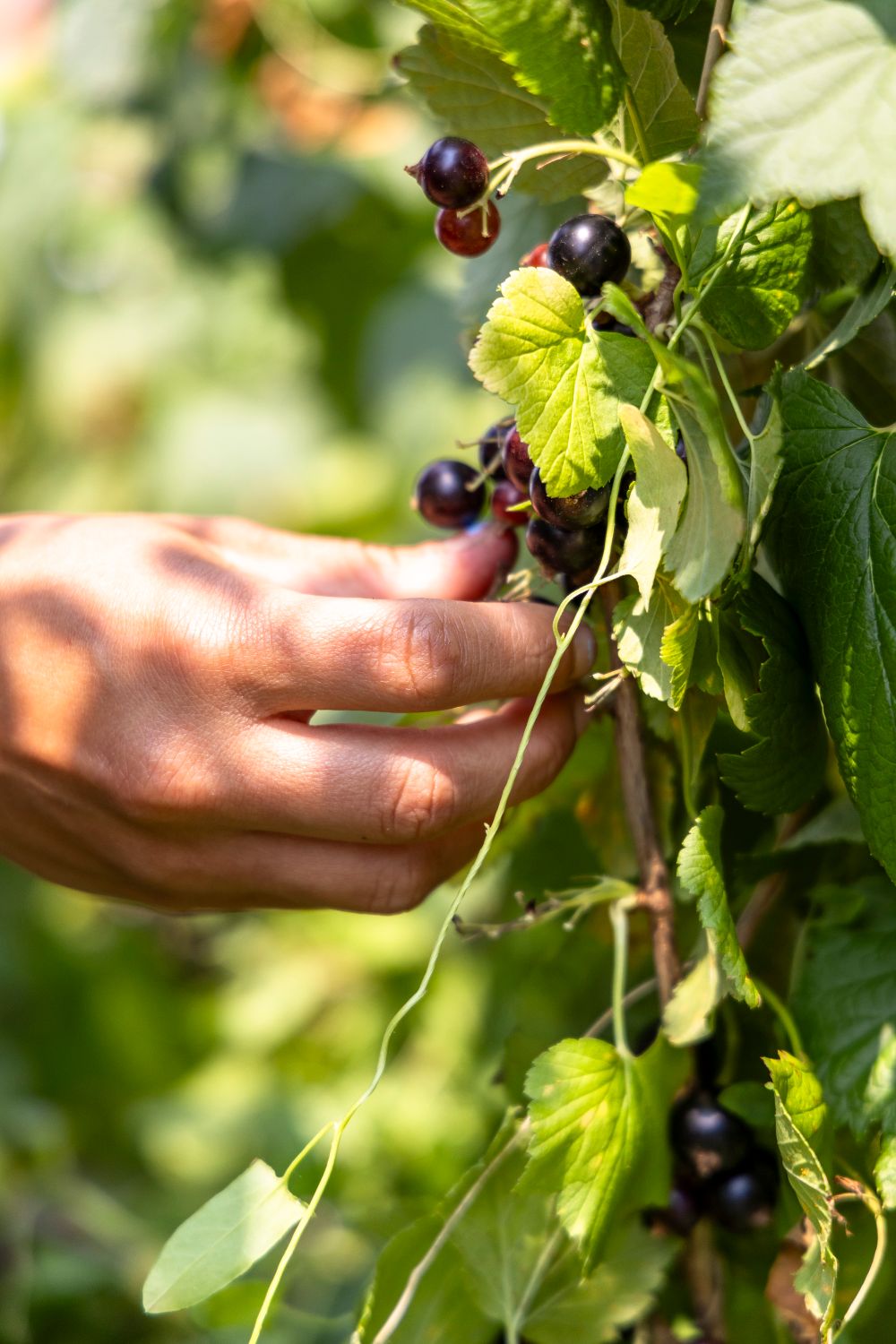
The blackcurrant is the one most of us grew up with, largely thanks to Ribena. The bushes reach about 1.5 metres and, crucially, they fruit on young wood — last year's growth carries this year's crop. Remember that when you come to prune, because it changes everything.
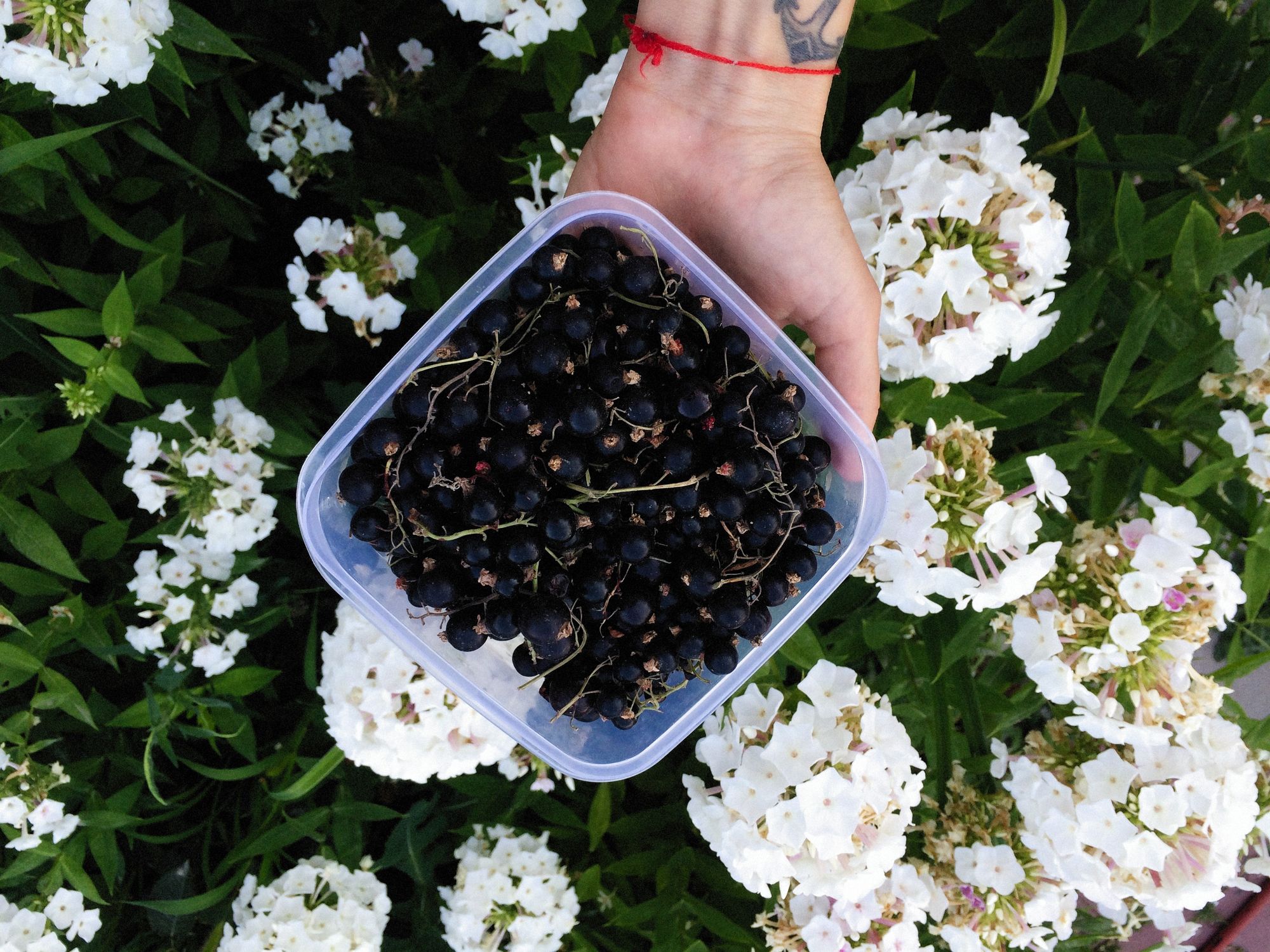
The flavour is unmistakable, and so is the smell — brush past my bushes or do a bit of pruning and that sharp, resinous blackcurrant scent stays on your hands for the rest of the afternoon. On the tongue it's sharp to the point of mouth-puckering when raw, deeply aromatic, and absolutely loaded with vitamin C — roughly four times as much as oranges by weight. Almost nobody eats them straight off the bush. Cook them with sugar and they come into their own as jam, cordial, syrup or pie filling.
On care, blackcurrants are hungry, greedy things and they reward you for indulging them. Each winter I cut out about a third of the oldest stems on mine, taking them right down to ground level to push fresh growth that'll fruit next year — it feels brutal the first time, but the bushes always thank you for it. Feed generously with a high-potassium fertiliser in spring, and lay on a thick mulch of well-rotted manure or compost; I've never known a blackcurrant turn its nose up at a good feed. As for varieties, Ben Connan is compact and crops its socks off, Ben Lomond is the dependable old allotment standby, and Big Ben has unusually large, sweet berries that you can actually enjoy raw — a rare thing in a blackcurrant.
Redcurrants
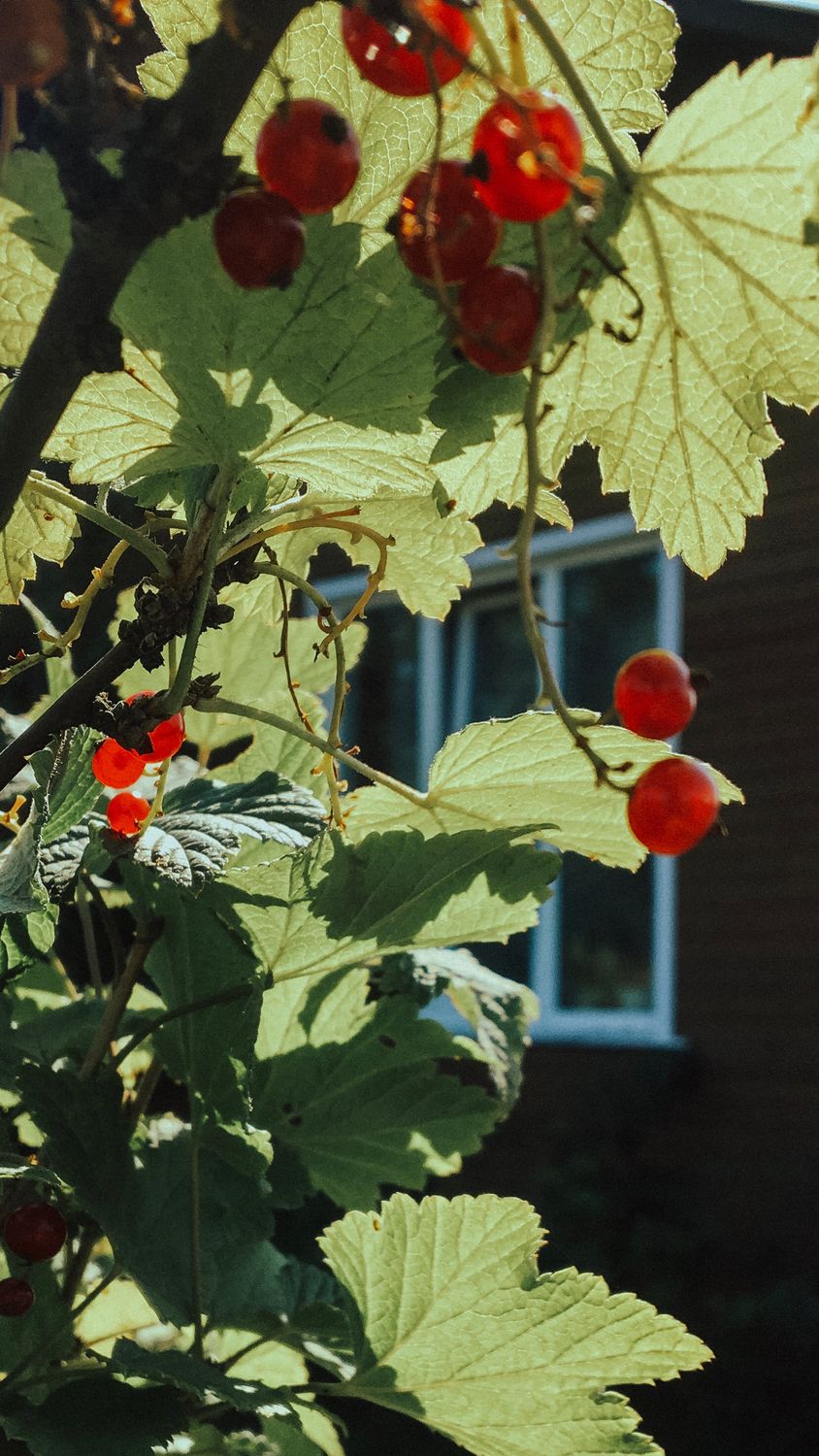
Here's the surprise: redcurrants behave more like gooseberries than like their black cousins. They fruit on old wood, producing berries on short spurs along a permanent framework of branches. That's why they take so beautifully to being trained as cordons or fans against a wall or fence.
The flavour is bright, clean and properly acidic, without the heady aromatic punch of a blackcurrant. This is the berry behind redcurrant jelly, the classic partner to roast lamb, and those translucent ruby strings look stunning draped over a summer pudding. Pruning follows the framework, not the renewal approach — spur-prune in winter, shortening side shoots to one or two buds, and resist the urge to chop everything to the ground as you would a blackcurrant. One of their best tricks is shade tolerance: they'll crop happily on a north-facing wall and actually prefer a little shade in a hot summer. For varieties, Jonkheer van Tets is early and reliable, Red Lake is the traditional pick with long trusses, and Rovada throws very long, easy-to-pick clusters.
Whitecurrants
If I had to name the underdog of the three, it's the whitecurrant. With the red pigment gone, so goes much of the tartness, and the natural sugars step forward. This is the one currant most people are happy to eat fresh from the bush, no sugar required. Grow and prune them exactly as you would redcurrants — they're the same plant in a paler frock. They're harder to find in nurseries, which is a shame, because they're well worth tracking down. White Versailles is the classic and widely sold, Blanka crops heavily with large sweet berries, and White Pearl stays compact enough for a container.
Which one should you grow?
If there's only room for one, let the kitchen decide. For cooking and preserving, the blackcurrant is far and away the most versatile — its flavour survives boiling and dilution, which is exactly why it makes the best jam and cordial. For eating fresh, the whitecurrant wins by a clear margin, being the sweetest raw of the lot. And for a handsome, low-fuss trained form against a wall, the redcurrant is hard to beat; it sets readily into jelly thanks to all that natural pectin, and along with the whitecurrant it's the most shade-tolerant and the lightest feeder. On sheer yield, a mature blackcurrant bush takes the crown, though a redcurrant trained as a cordon earns its keep in a tight spot.
But honestly? Grow all three. They're among the most reliable, productive fruit you can put in a British garden, cropping year after year with barely any fuss. A single bush of each will keep you in jam, jelly, pies and fresh pickings from early July right through August, and trained as cordons they take up almost no room at all. I've never once regretted finding space for the set. Happy growing — Ash.