Blackcurrant pruning trips people up for a different reason than most cane fruit: there's no fence full of canes to sort into two neat groups, just a bush that needs a portion of itself removed every single year, forever. Skip it, or do it half-heartedly, and the bush doesn't die — it just quietly produces less and less fruit until you're wondering why your once-generous blackcurrants have all but stopped. Here's the whole routine, start to finish.
Fruits Best on Young Wood
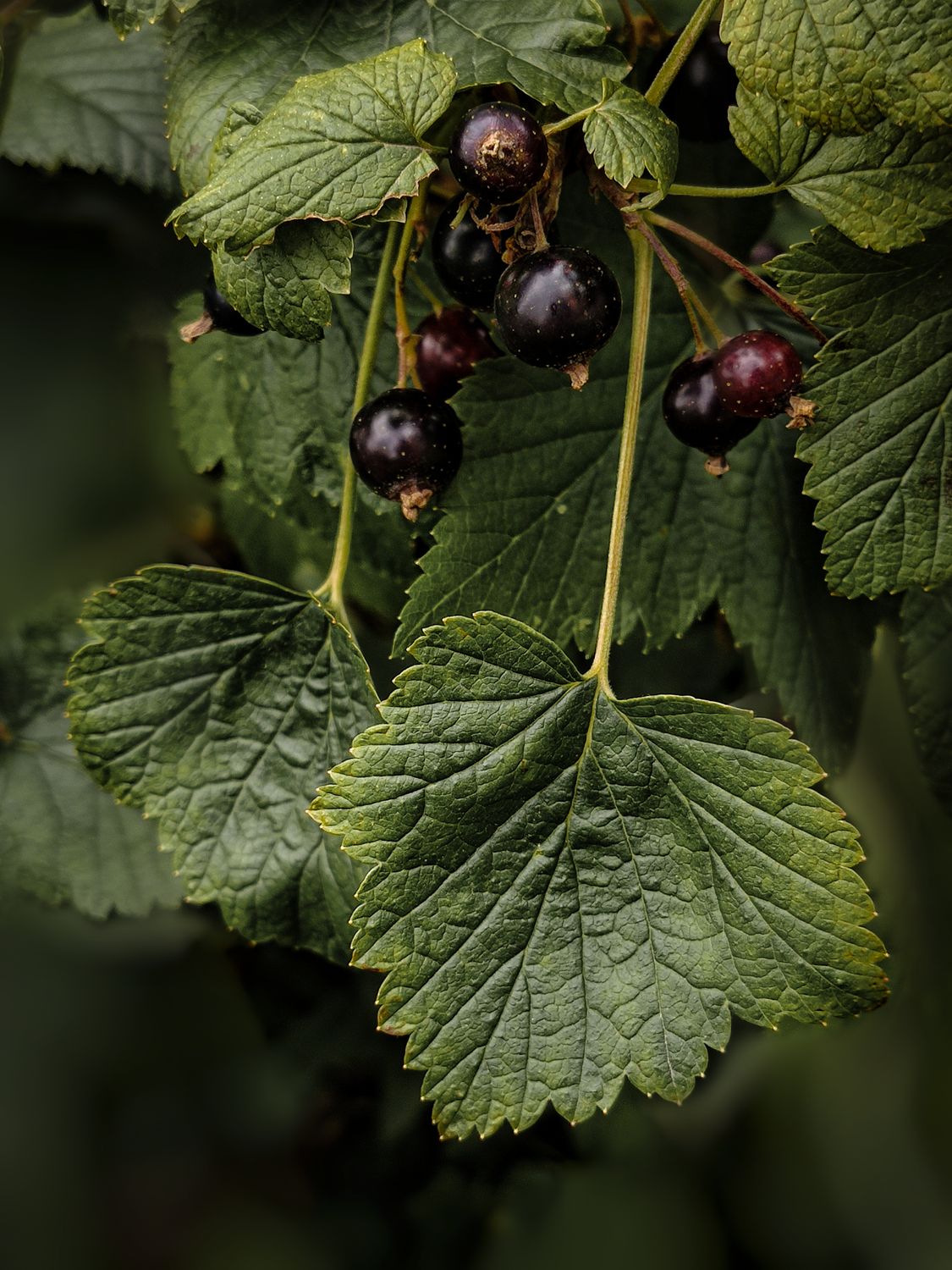
This is the one fact that explains everything else. Blackcurrants (Ribes nigrum) fruit most heavily on wood grown the previous season — pale, fresh, one-year-old stems. As a stem ages past two or three years, it turns dark and woody and its fruiting drops off noticeably. A blackcurrant bush left unpruned doesn't stop fruiting altogether, but it slowly fills up with old, unproductive wood and gives you less each year for no obvious reason — which is exactly why so many inherited, neglected bushes disappoint their new owners.
The whole aim of pruning, every single year, is keeping the bush constantly renewing itself with young stems.
The Hard Cutback at Planting
This is the step almost every new blackcurrant grower skips, and it's the one that matters most. Immediately after planting — bare-root or potted, doesn't matter — cut every single stem back to just one or two buds above ground level. It looks brutal and feels wrong, especially on an expensive potted plant that already has growth on it, but it forces strong new shoots up from the base rather than letting the bush try to fruit on weak first-year wood. You sacrifice that first year's crop for a genuinely more productive bush from year two onwards. Do it. Future you will be glad.
The Annual Prune: One Third Out, Every Winter
From the third winter onwards (the first two years after the hard cutback need only light shaping, covered below), the routine is the same every year: remove roughly a third of the oldest stems, cut cleanly to ground level.
- Wait until the bush is dormant — late autumn or winter, once all the leaves are down.
- Identify the oldest third. These are the darkest, greyest, thickest stems, usually the ones that have fruited for two or three seasons already. If a stem is clearly dark and woody rather than pale and fresh, it's a candidate.
- Cut them right down to ground level. No stubs left behind — a clean cut at the base heals fastest and gives disease nowhere to sit.
- Remove anything dead, damaged, or crossing while you're in there, regardless of its age.
- Step back and check the shape. You're aiming for an open, uncongested bush that light and air can move through — not a dense thicket.
That's the whole job, repeated every winter for the rest of the bush's productive life, which with this treatment is a genuine ten to fifteen years or more.
The First Two Years After the Hard Cutback
Don't apply the "remove a third" rule yet. In years one and two, the bush is simply building its framework from the hard cutback, and there's no old wood to remove regardless. Just take out anything weak, damaged or crossing, and otherwise leave it be. Start the proper annual third-removal routine from the third winter onwards, once there's actually a mix of stem ages to choose from.
Common Mistakes
The most common one, by a distance, is skipping the hard cutback at planting because it feels wasteful — and then wondering two years later why the bush is weak and sparse. The second is being too gentle with the annual prune, taking out only a token stem or two instead of the full third, which leaves the bush gradually clogging up with unproductive old wood over several seasons rather than staying properly renewed. And watch for big bud mite while you're in there each winter — swollen, rounded buds rather than the normal pointed shape are the tell, and any affected stems should come out and go in the bin, not the compost heap.
Frequently Asked Questions
Why do you cut back a blackcurrant so hard when you plant it?
Because blackcurrants fruit on young wood from the base, and a newly planted bush needs to put its energy into strong new shoots rather than trying to fruit on the weak stems it arrived with. Cutting to one or two buds forces vigorous basal growth, giving you a far more productive bush from year two onwards than if you'd left it untouched.
How much of a blackcurrant bush should I prune each year?
Roughly a third of the oldest stems, cut to ground level, every winter from the third year onwards. This keeps the bush in constant renewal — young, productive wood replacing old, tired wood on a rolling cycle — rather than letting it fill up with unproductive age.
What happens if I don't prune a blackcurrant bush?
It won't die, but it will gradually produce less fruit each year as more of the bush becomes old, dark, woody stems that crop poorly. An unpruned bush also gets congested, reducing airflow and raising the risk of mildew. Established but neglected bushes usually respond well to a proper renewal prune, even if it takes a season or two to fully recover.
When is the best time to prune blackcurrants?
Late autumn or winter, once the bush is fully dormant and has dropped its leaves. Pruning while dormant avoids stressing the plant and makes it far easier to see the stem structure and pick out the oldest wood.
For the rest of the growing calendar — planting, feeding, and dealing with big bud mite and reversion virus — my complete blackcurrant growing guide covers it all.