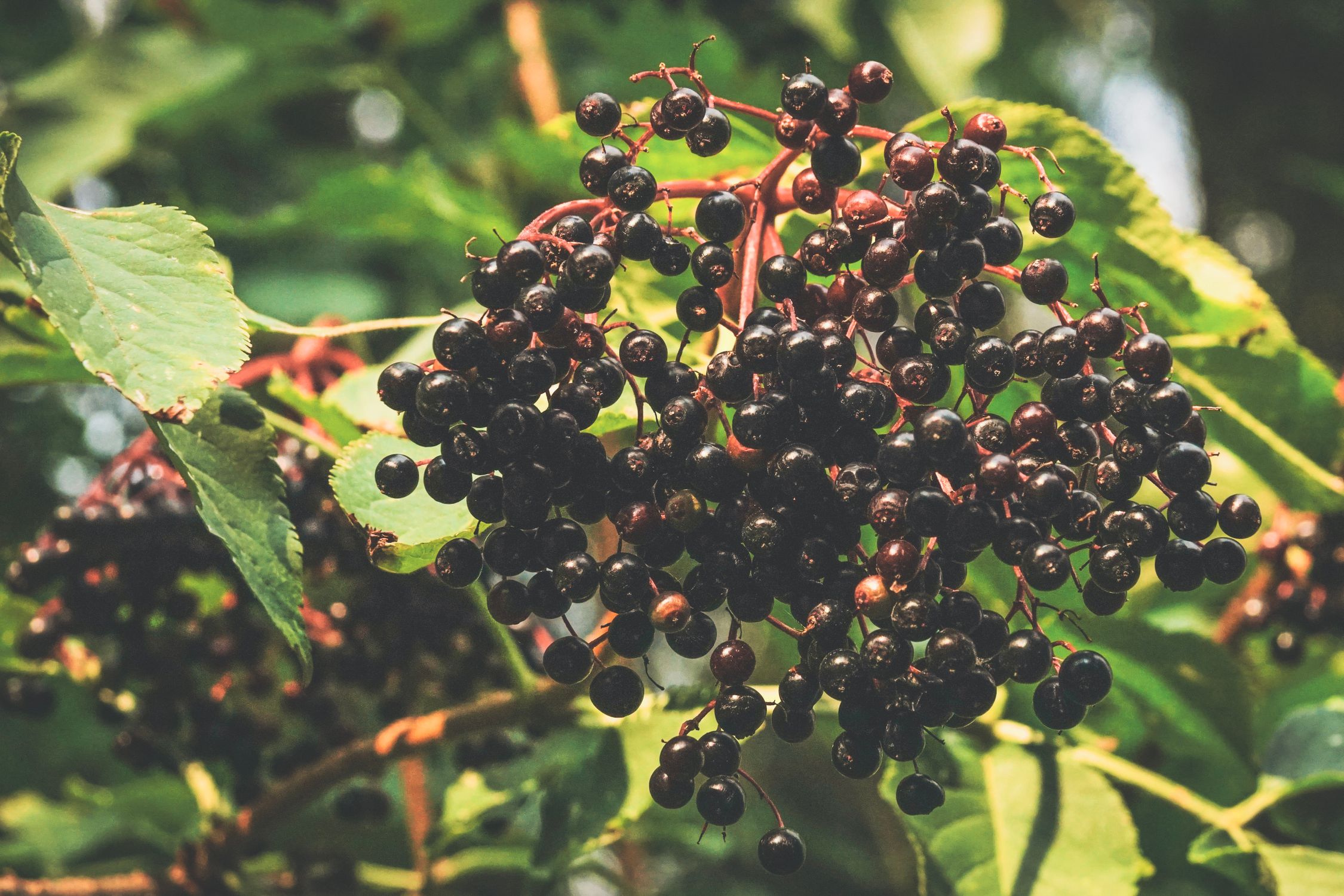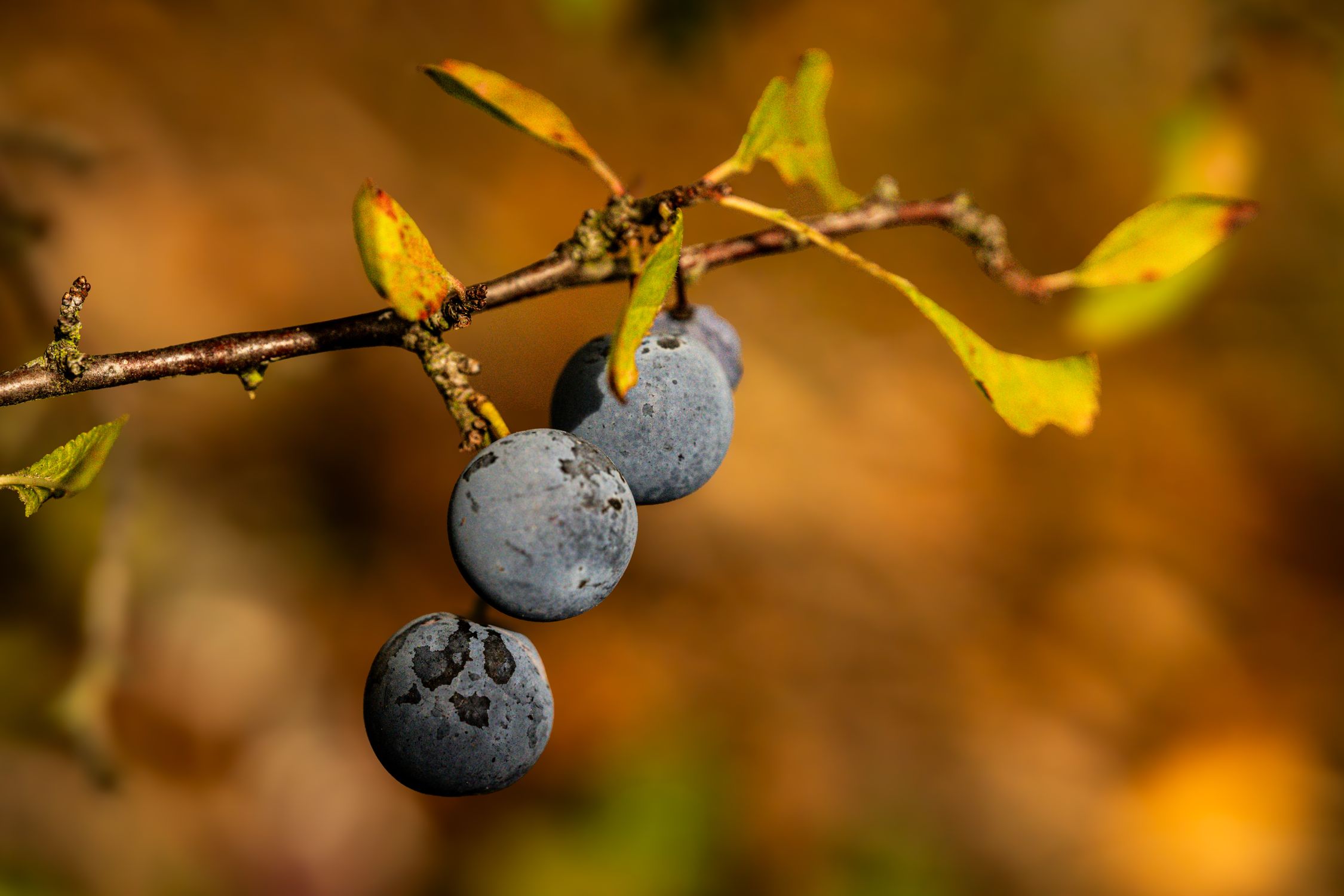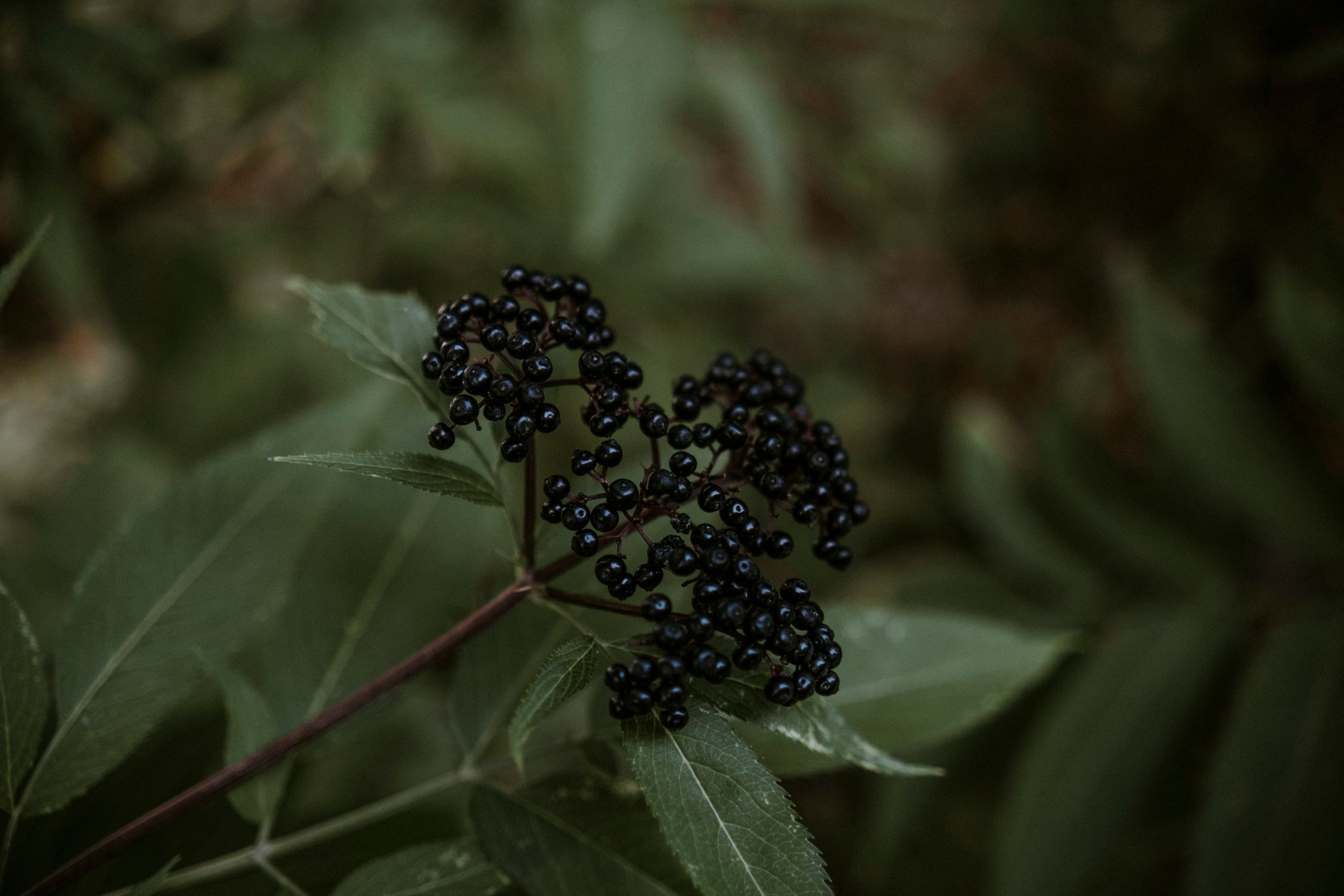
Elderberry syrup is the classic way to deal with a hedgerow glut in September — simmer the berries down with sugar and you get a dark, tart-sweet syrup that keeps in the fridge for weeks. But there's one rule you can't skip: raw elderberries are toxic, so every drop of this syrup has to be properly cooked before it's safe to drink.
Elderberries must be cooked before use — no exceptions
Raw elderberries, along with the seeds, leaves, bark and stems of the plant, contain cyanogenic glycosides — compounds that can release small amounts of cyanide when eaten. Eating them raw causes nausea, vomiting and stomach cramps. Cooking neutralises the toxin completely, but you need to boil the berries for at least 20 minutes before using them in any recipe. This recipe simmers them for 25-30 minutes, well past that safety margin, so follow the method as written and don't shortcut the cooking time. I've covered the identification and safety side of foraging elderberries in more detail in my guide to foraging elderberries — read that first if you're picking your own.
What you'll need
This makes roughly 500ml of syrup — enough for two standard bottles. Double it if you've got a heavy glut, the method scales up fine as long as your pan is big enough.
- 500g fresh or frozen elderberries, stripped from their stalks (about 2-3 large clusters)
- 750ml water
- 300g granulated sugar, or 300ml runny honey
- A thumb-sized piece of fresh ginger, sliced (optional)
- 4-6 whole cloves (optional)
- Juice of half a lemon (optional, adds tartness and helps preserve the syrup)
How to strip elderberries from the stalks
The fastest way to strip a cluster of elderberries is to freeze it whole first. Lay the clusters flat on a tray and freeze for a few hours, then run a fork down each stem — the frozen berries pop off cleanly instead of squashing and staining your fingers purple. If you're working with fresh berries straight from the hedgerow, the same fork method works, it's just slower and messier. Either way, pick out any stalks, leaves or unripe green berries before you cook — you want clean, ripe fruit only, since the stems and unripe berries carry more of the toxic compounds.
Method
- Simmer the berries. Put the stripped elderberries and water in a large pan. Bring to the boil, then reduce to a simmer and cook for 25-30 minutes, stirring occasionally and squashing the berries against the side of the pan with a wooden spoon as they soften. This step is non-negotiable for safety — the berries need this cooking time to neutralise the toxins, not just to release flavour.
- Add ginger and cloves if using. Drop the sliced ginger and cloves in for the last 10 minutes of simmering so they infuse without overpowering the berries.
- Strain. Pour the mixture through a fine sieve or a jelly bag set over a bowl, pressing gently with the back of a spoon to extract the juice. Don't force the pulp through — you want clear juice, not a cloudy purée. Discard the strained pulp and any cloves or ginger pieces.
- Measure and sweeten. Measure the strained juice back into a clean pan. For every 500ml of juice, add 300g of sugar. Warm gently over a low heat, stirring until the sugar has fully dissolved.
- Reduce to a syrup. Simmer for another 5-10 minutes until it thickens slightly and coats the back of a spoon — it will thicken further as it cools, so don't overdo it on the heat or you'll end up with something closer to a jelly.
- Stir in lemon juice. Take the pan off the heat and stir in the lemon juice, if using.
- Using honey instead of sugar? Let the syrup cool to below 40°C before stirring in the honey rather than adding it while the syrup is still hot. This keeps the honey's flavour and natural properties intact — honey heated much above that starts to lose what makes it worth using in the first place.
- Bottle. Pour the warm syrup into clean, sterilised bottles or jars while it's still hot (unless you added honey, in which case bottle once cooled). Leave to cool fully with the lid off before sealing and storing.
How to store elderberry syrup
Elderberry syrup keeps in the fridge for 2-3 weeks in a sealed, sterilised bottle. For longer storage, freeze it in ice cube trays — once frozen, tip the cubes into a freezer bag and you've got ready-portioned amounts you can drop straight into a hot drink or a glass of water without defrosting the whole batch first. Frozen syrup cubes keep well for several months.
Ways to use elderberry syrup
A spoonful stirred into hot water or tea is the simplest way to use it, and it's traditionally taken this way through autumn and winter. Beyond that, it's good drizzled over yoghurt, porridge or pancakes, stirred through sparkling water for a homemade cordial, or used as a base for a gin or vodka cocktail. It's a food, not a medicine — I'd steer clear of anyone telling you it treats or prevents illness, but it's a genuinely useful way to turn a hedgerow glut into something you'll actually use up before next September.
Frequently Asked Questions
Can you eat elderberries raw?
No. Raw elderberries contain cyanogenic glycosides that cause nausea, vomiting and stomach cramps if eaten uncooked. The berries, along with the leaves, stems, bark and seeds of the elder plant, must be cooked — at least 20 minutes of boiling — before they're safe to eat or drink in any form, including syrup.
How long does elderberry syrup last?
In the fridge, a sealed bottle keeps for 2-3 weeks. If you want it to last longer, freeze it in ice cube trays and use portions straight from frozen — that way it'll keep for several months without you needing to get through a whole bottle in a fortnight.
Can I use frozen elderberries for syrup?
Yes, and it's actually the easier option. Freezing the berries first makes them far quicker to strip from the stalks, and it doesn't affect the finished syrup at all — you simmer them from frozen for the same 25-30 minutes as fresh berries.
Do I need to add lemon juice or can I leave it out?
You can leave it out. Lemon juice adds a bit of tartness and helps the syrup keep a little longer, but it's not essential to the recipe or to making the syrup safe — the cooking time is what handles safety, not the lemon.
Why is my elderberry syrup too thin or too thick?
Too thin usually means it wasn't reduced quite long enough in the final simmer — give it another 5 minutes on a gentle heat. Too thick, and closer to a jelly, usually means it was over-reduced or left on the heat too long once the sugar went in; it will always thicken more as it cools, so take it off the heat slightly earlier than you think you need to.