Sloe gin is the great British hedgerow tradition — a fruit too bitter to eat transformed, with nothing but gin, sugar and patience, into a deep garnet liqueur that improves for years. The method could hardly be simpler, yet small decisions (prick or freeze? how much sugar? how long?) make the difference between a decent bottle and a remarkable one. Having made it most autumns for years, here's the recipe and every judgement call explained.
The Classic Sloe Gin Recipe
Ingredients for one 1-litre jar:
- 450–500g ripe sloes (roughly enough to half-fill the jar)
- 200–250g granulated sugar
- 70cl bottle of gin — a straightforward London Dry; save the fancy botanicals for drinking neat
Method:
- 1. Prepare the sloes. Rinse, discard stalks and any damaged fruit, then freeze the lot for 24 hours. Freezing bursts the skins so the gin can reach the flesh — the modern shortcut for the traditional (and tedious) pricking of each berry with a pin. If your sloes were picked after a hard frost, nature has already done this.
- 2. Fill the jar. Tip the still-frozen sloes into a sterilised jar or wide-necked bottle, add the sugar, and pour over the gin to cover everything. Seal.
- 3. Shake. Daily for the first week while the sugar dissolves, then weekly.
- 4. Wait. A dark cupboard, minimum three months. Started in early October, it's just ready for Christmas — though see below on why waiting longer pays.
- 5. Strain and bottle. Through muslin or a coffee filter into sterilised bottles. Don't press the fruit — pressing clouds it.
When to Pick Sloes for Gin
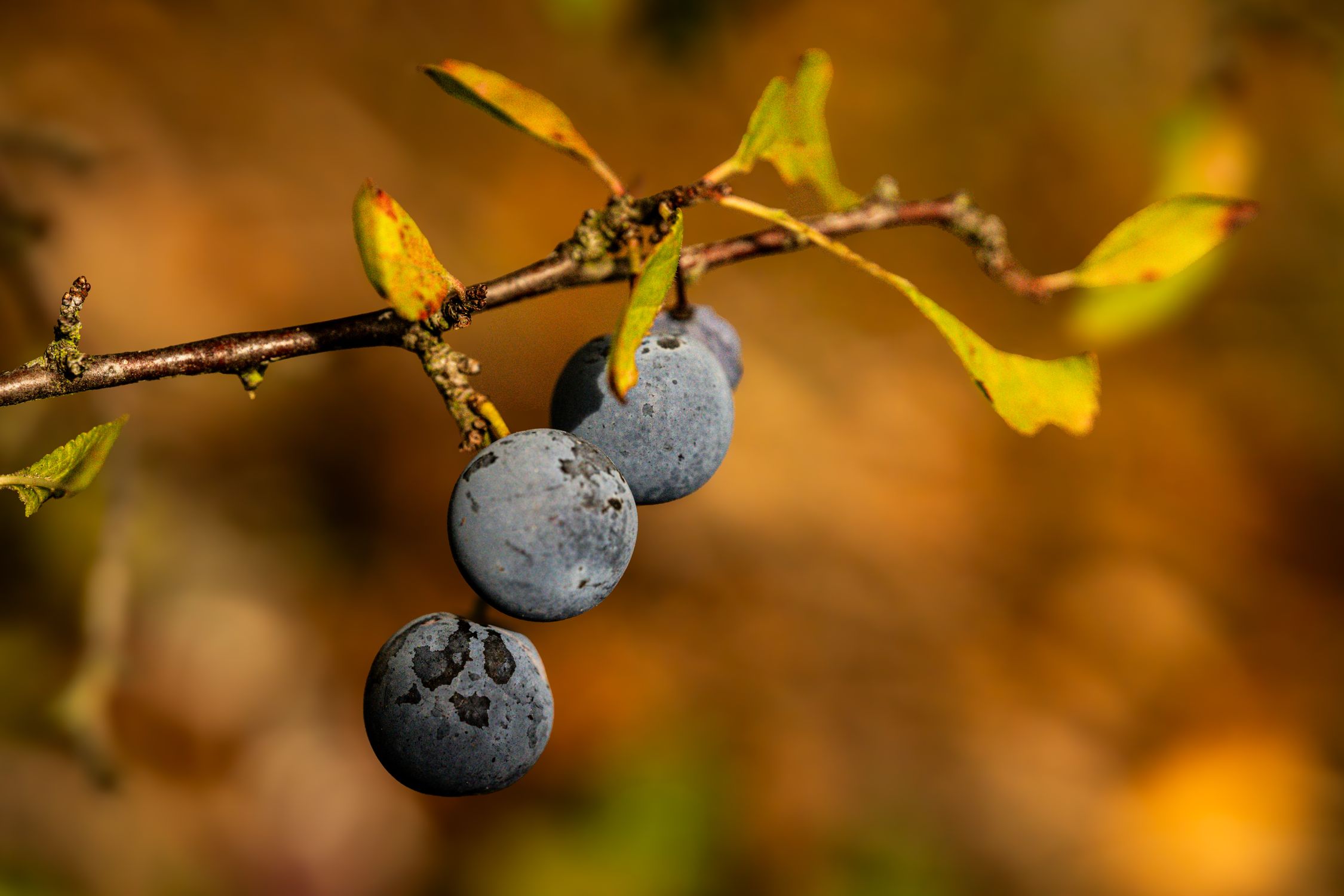
Late September through October, once the berries are deep blue-black, plump and give slightly under a thumb. The old rule says wait for the first frost, but a freezer does the same job with no gamble on the weather — the full picking detail (identification, where blackthorn grows, look-alikes) is in my sloe foraging guide. Pick more than you need and freeze the surplus: frozen sloes make equally good gin months later, so one October afternoon can supply next year's batch too.
How Much Sugar? (The Honest Answer)
Less than most recipes say. Old recipes call for 350g or more per bottle of gin, which lands syrupy-sweet; 200–250g gives a rounder, more grown-up result. Better still, start at 200g and taste at straining time — you can dissolve in a little sugar syrup at bottling if it needs it, but you can never take sweetness out. The fruit's tannin needs some sugar to balance; zero-sugar sloe gin is an austerity nobody enjoys.
How Long Should Sloe Gin Steep?
Three months is the working minimum and the classic October-to-Christmas timeline. Six months is noticeably smoother. A year is better again — the almondy, plummy depth keeps building as the tannins soften — and well-made sloe gin genuinely improves in the bottle for several years, if it survives that long. My own rule: make two jars, drink one at Christmas, hide one.
Troubleshooting and Variations
- Still harsh at three months? It just needs longer — reseal and leave it. Adding a touch more sugar also softens perceived bitterness.
- Cloudy? Squeezed fruit or too-coarse straining. Restrain through a coffee filter; it drips slowly but polishes the result.
- Sloe vodka works identically and lets the fruit speak with no juniper — a good option if gin isn't your spirit.
- A few drops of almond essence is the traditional cheat for the kernel note that long ageing gives naturally. Use restraint.
- Don't waste the strained sloes: stone them and fold into melted dark chocolate for boozy fruit truffles, or steep them again in cheap red wine for a "sloe port".
Beyond Sloes: The Same Trick, Other Berries
The steep-fruit-in-spirit method is a whole genre once you see it. Wild blackberries make a faster, jammier version ready in six weeks; damsons from the same hedgerows make a plummier gin on the identical method; and garden growers should try loganberry gin from my loganberry recipes roundup — brighter than sloe, drinkable in a month.
Frequently Asked Questions
What is the ratio of sloes to gin to sugar?
The easy formula: half-fill your container with sloes, add sugar at roughly 200–250g per 70cl of gin, then top up with the gin. Precision matters little — sloe quantities anywhere from 400 to 600g per bottle all work, and sugar is best finalised by tasting at straining time.
Do you have to freeze or prick sloes before making sloe gin?
One or the other, yes — the waxy skins otherwise keep the gin out and the flavour in. Freezing for 24 hours is easier and works exactly as well as pricking each berry; sloes picked after a proper frost have effectively been pre-treated on the bush.
How long does sloe gin keep?
Years. The alcohol and sugar preserve it indefinitely, and it genuinely improves for at least two or three years in the bottle as the harshness mellows. Store sealed bottles somewhere dark; once opened it still keeps a year or more.
When should I start sloe gin for Christmas?
By late September or early October — the minimum three-month steep lands it just ready for Christmas drinking. Any later start still works; it simply becomes next Easter's bottle instead, which is no tragedy at all.