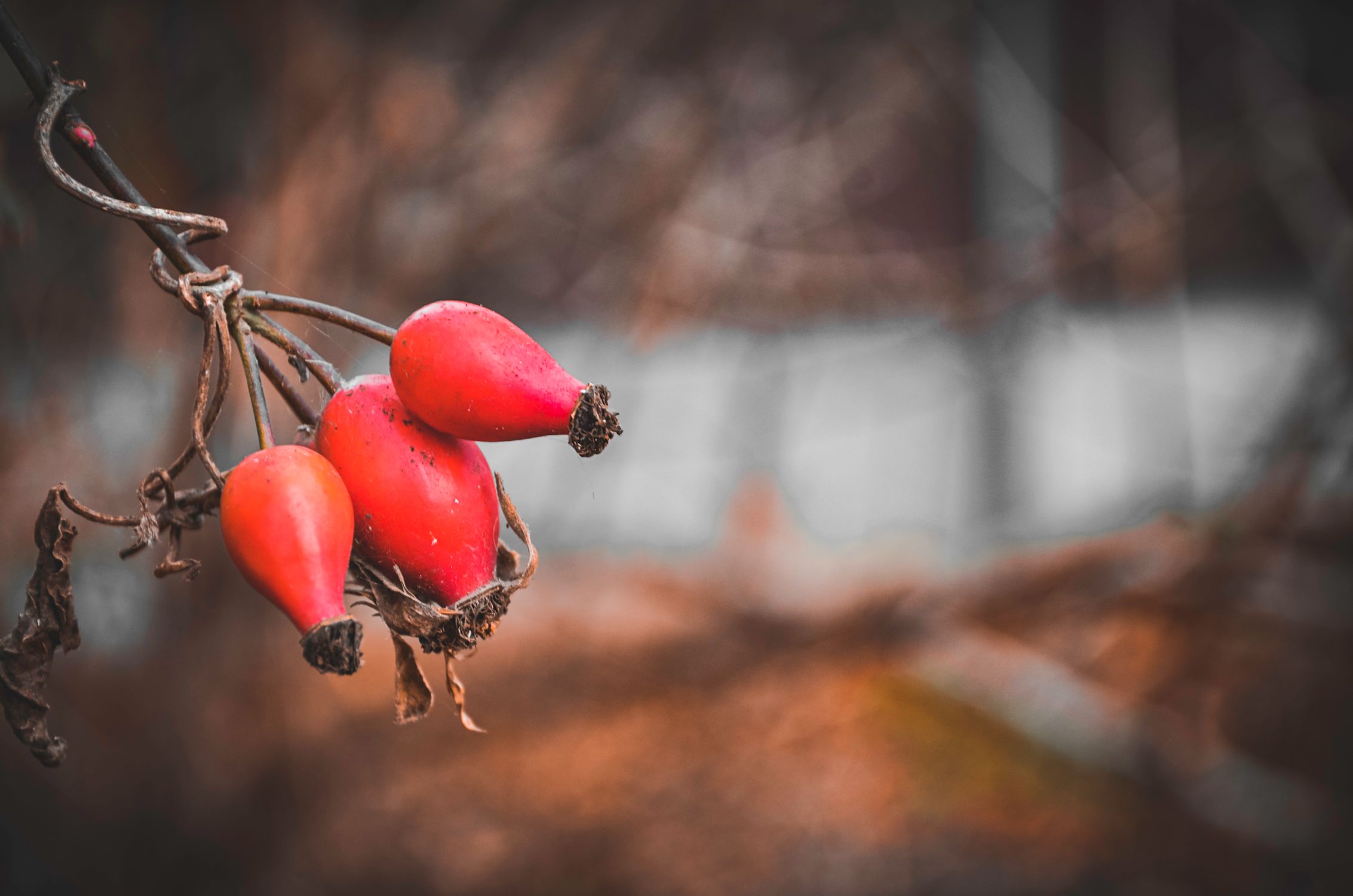
Rosehip syrup is made by simmering rosehips in water, straining the juice twice to remove the fine irritant hairs around the seeds, then boiling it with sugar until it thickens slightly. It takes about an hour of active time, most of it waiting for pans to simmer, and rewards you with a sharp, fruity syrup that's one of the most vitamin C-dense things you can make in a British kitchen.
I forage most of my hips from dog rose hedgerows in October, once the first frost has softened them slightly, though you don't have to wait for frost if you're impatient — I usually am. If you haven't picked your own yet, my guide to foraging and growing rosehips covers which hedgerow roses to look for and how to tell when the hips are ready.
Why bother straining rosehips twice?
Rosehips are packed with vitamin C, but the seeds inside are surrounded by a layer of fine, stiff hairs that are genuinely unpleasant if you swallow them — they're the same hairs kids used to collect for itching powder, and they don't break down in the pan. A single strain through a jelly bag catches the pulp and seeds, but enough of those hairs slip through in suspension that a second, finer strain is not optional. Skip it and your syrup will have a gritty, scratchy quality in the throat that ruins the whole thing. This is the one step in the recipe where corners genuinely cannot be cut.
Rosehip Syrup
Ingredients
- 1kg fresh rosehips, rinsed and roughly chopped
- 2.7 litres water, divided
- Granulated or caster sugar (roughly 350-400g per 600ml of strained juice)
Equipment
- Large stainless steel or enamel pan (avoid aluminium, which reacts with the acidity)
- Jelly bag or muslin cloth, plus a stand or a way to suspend it over a bowl
- A second, finer piece of muslin or a paper coffee filter for the second strain
- Sterilised glass bottles with caps or screw lids
Method
- Roughly chop the rinsed rosehips — a rough pulse in a food processor works, or just chop by hand. You don't need them fine, just broken up enough to release their contents into the water.
- Put the chopped hips into your pan with 1.8 litres of the water. Bring to the boil, then reduce to a simmer for 15-20 minutes, until the hips have softened and started to break down.
- Pour the whole lot into a jelly bag suspended over a large bowl and leave it to drip through for at least an hour. Don't squeeze the bag — squeezing forces cloudy pulp and more of those hairs through, and you want the juice as clear as you can get it at this stage. Set the juice aside.
- Tip the strained pulp back into the pan and add the remaining 900ml of water. Bring back to the boil, simmer for another 15 minutes, then strain through the jelly bag a second time, into the same bowl as your first batch of juice. This second simmer pulls out the vitamin C and flavour you'd otherwise waste.
- Now strain the combined juice again, this time through a fresh piece of fine muslin or a paper coffee filter. This is the pass that actually catches the fine hairs the jelly bag lets through — don't skip it. Let it drip through slowly rather than forcing it.
- Measure the strained juice and pour it into a clean pan. For every 600ml of juice, weigh out 350-400g of sugar (use the higher end if you want a thicker, longer-keeping syrup).
- Heat gently, stirring until the sugar has completely dissolved, then bring to a boil and let it bubble for about 5 minutes until it thickens slightly — it won't set like jam, you're after a syrup consistency, not a gel.
- Pour into warm sterilised bottles while still hot and seal immediately. Label and date them.
A brief bit of history
Rosehip syrup became a genuine wartime staple in Britain: with citrus fruit imports cut off, the Ministry of Food ran a national rosehip-picking campaign during the Second World War, paying children and volunteers to gather hips so the syrup could be made commercially and distributed as a vitamin C supplement, particularly for babies and young children.
How to use rosehip syrup
The classic use is diluted as a drink — a tablespoon or two in a glass of water or sparkling water, similar to how you'd use a cordial. It's also good drizzled over rice pudding, porridge, yoghurt, or vanilla ice cream, where its sharp fruitiness cuts through the richness. A spoonful stirred into hot water with a squeeze of lemon makes a decent stand-in for a hot toddy base if you're feeling under the weather.
Frequently Asked Questions
Do I have to strain rosehip syrup twice?
Yes. The first strain through a jelly bag removes the bulk of the pulp and seeds, but a meaningful amount of the fine irritant hairs surrounding the seeds still passes through in suspension. A second strain through finer muslin or a paper filter is what actually catches them, and skipping it leaves a scratchy, unpleasant texture in the finished syrup.
Can I use frozen rosehips instead of fresh?
Yes — freezing rosehips first actually softens their skins and makes them easier to break down, so if you've picked more than you can process at once, freeze the surplus and use it later with no change to the method.
Why is my rosehip syrup cloudy?
Cloudiness usually means the jelly bag was squeezed rather than left to drip, or the second, finer strain was skipped. Squeezing forces fine pulp through the mesh; letting gravity do the work on both passes gives a much clearer result.
How long does homemade rosehip syrup keep?
Once opened, keep it in the fridge and use within 3-4 weeks. Bottled hot into sterilised bottles and sealed immediately, unopened syrup will keep considerably longer in a cool, dark cupboard — check for any sign of fermentation or off smells before using older bottles.