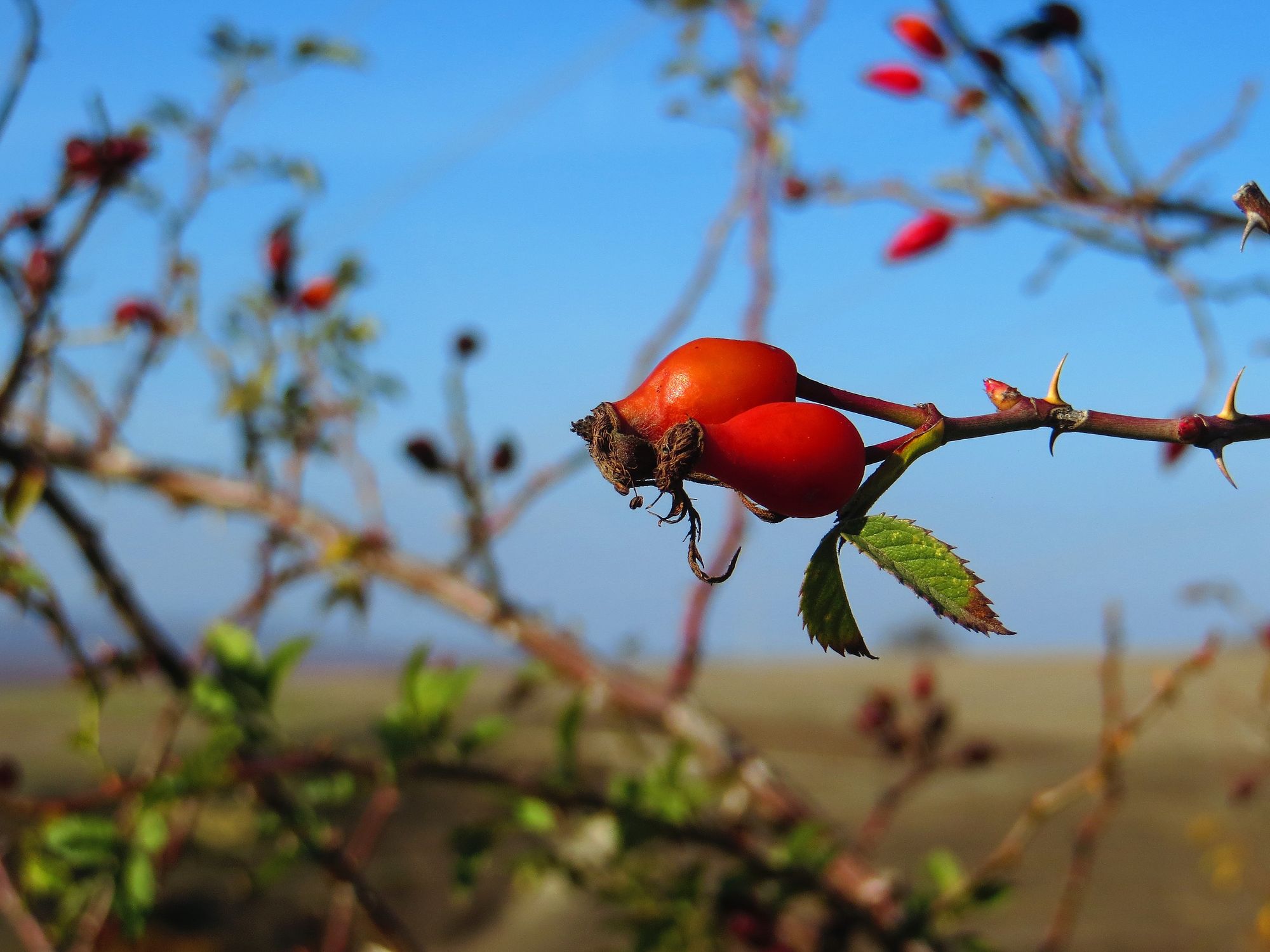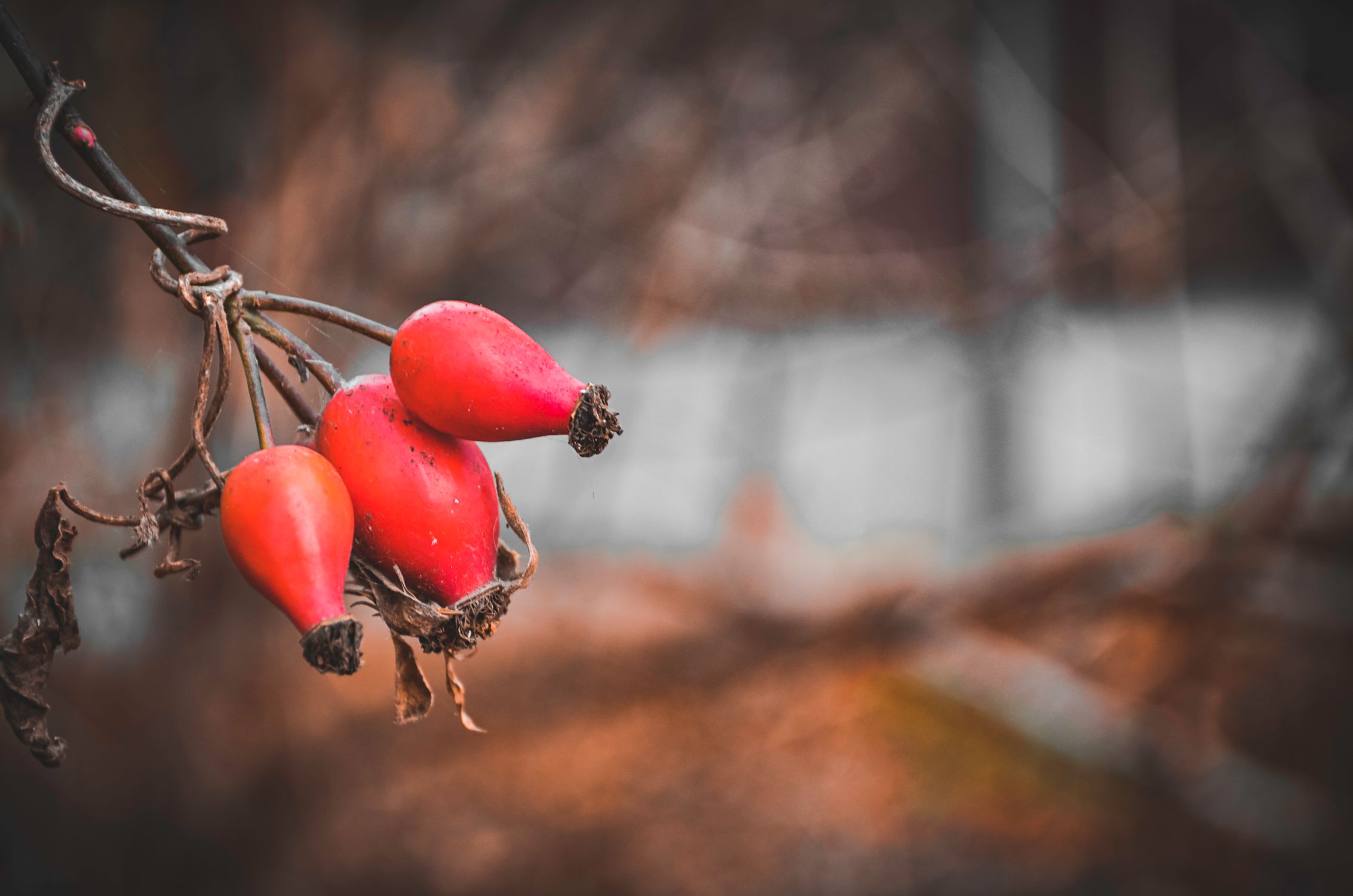
Every autumn, Britain's hedgerows turn red with rosehips. Millions of them, hanging in clusters from wild roses and dog roses along every country lane, and the great majority go completely unpicked. It wasn't always so. During the Second World War, rosehips were one of the most important wild foods we had, gathered by the ton to make a syrup that kept the nation in vitamin C while the citrus imports were blocked. I think that's a tradition worth reviving, and once you've tasted home-made rosehip syrup I suspect you'll agree.
Why Rosehips Matter
Weight for weight, rosehips hold roughly twenty times more vitamin C than oranges. A single tablespoon of rosehip syrup gives you more vitamin C than a glass of orange juice, and on top of that they carry vitamins A, D and E, plus antioxidants and essential fatty acids. For something growing wild and free in the hedge, that's remarkable.
The wartime effort was extraordinary. The Ministry of Food ran a national rosehip collection campaign, paying volunteers to gather them from the hedgerows, and in some years over 2,500 tonnes were brought in and turned into National Rose Hip Syrup by commercial manufacturers. It was handed out free to children and nursing mothers as a vitamin supplement. The habit faded once imported citrus returned after the war, but the syrup never quite vanished, it's still made by Delrosa and others, and home-made versions have had a real revival among foragers and home cooks.
Which Roses Produce the Best Hips
The common dog rose (Rosa canina) gives you the classic hedgerow rosehip: oval, bright red, about 2cm long. To my mind they're the best all-rounder for syrup, and they're the most abundant thing you'll find in the wild, so they're where I'd start.
If you want an easier life at the kitchen sink, hunt out the Japanese rose (Rosa rugosa). Its hips are much larger and rounder, sometimes the size of a cherry tomato, with far more flesh relative to seed, which makes them a joy to process. It's widely planted in parks, along the coast and in gardens, so it's rarely hard to find. Sweet briar (Rosa rubiginosa) is worth a mention too, with smaller but very flavourful hips, and field rose (Rosa arvensis) and other natives all produce usable hips, just on the small side compared with dog rose. One word of warning for the garden: most modern roses give few or no hips at all, because they've been bred for repeat flowering and that prevents the hips forming. It's the species roses and old-fashioned shrub roses that fruit well.
When and How to Pick
Rosehips ripen from September onwards, and they're at their best picked after the first frost, which softens the flesh and concentrates the sugars. If you can't wait for a frost, just pick them and freeze them overnight, it does exactly the same job.
Go for hips that are fully red and slightly soft to the touch but not wrinkled or mushy, and steer clear of any with black spots or holes, which mean insect damage or disease. Try to pick on a dry day if you can, because wet hips are far more inclined to go mouldy before you've got round to dealing with them. And please leave a good share on the bush for the birds. Rosehips are vital winter food for thrushes, blackbirds and waxwings, so take some and leave plenty rather than stripping a bush bare.
Making Rosehip Syrup
The classic recipe is simple enough, but there's one step you absolutely cannot skimp on, and that's the straining. Rosehips are packed with fine hairs around the seeds that are a powerful skin irritant, the very things children used to use as itching powder, and every last one of them must be removed from the finished syrup. I can't stress that enough.
Here's the method I use. Roughly chop or mince one kilogram of rosehips and add them to one litre of boiling water. Bring it back to the boil, take it off the heat, and leave it to infuse for 15 minutes, then strain through a jelly bag or a muslin-lined sieve. Return the pulp to the pan with another 500ml of boiling water, infuse again, and strain again. Combine both lots of liquid, simmer it down to about 750ml, then stir in 500g of sugar until it's fully dissolved and bottle it in sterilised jars or bottles.
It'll keep for several months in the fridge. I have it over porridge, pancakes, ice cream and yoghurt, or simply diluted with water as a drink.
Growing Roses for Hips
If you'd rather have a reliable supply at home than rely on the hedge, plant Rosa rugosa. It's about as close to indestructible as a plant comes, growing in any soil including pure sand, shrugging off salt spray, and cropping heavily with big, fleshy hips. The flowers are fragrant and lovely and the autumn foliage is good too. The one catch is that it suckers and can turn invasive, so give it room or be ready to keep it in check.
Dog rose (Rosa canina) makes a fine hedgerow plant, though it's a vigorous scrambler rather than a tidy bush, so it needs space and something to clamber through. It's beautiful in flower and generous with its hips. If you want something neater for the garden proper, look at Rosa moyesii, which throws out spectacular flask-shaped red hips, or Rosa glauca, grown as much for its lovely purple-grey foliage as for its small dark hips.
Other Uses for Rosehips
Syrup is only the start. You can make rosehips into jelly, dry them for tea, or turn them into rosehip wine. Rosehip tea is a great favourite across Central Europe and couldn't be easier, just steep dried, halved hips in boiling water for ten minutes for a mild, fruity brew with a pleasant tartness.
Rosehip oil, pressed from the seeds, turns up in all manner of skincare and is credited with helping to soften scars and fine lines. Extracting it at home is genuinely fiddly, but the seeds can be cold-pressed if you've the kit for it. And if you fancy something different, the Swedes make a traditional rosehip soup called nyponsoppa, served warm or cold as a pudding. It sounds odd, I know, but it's genuinely delicious: sweet, a touch tart, and beautifully silky. Give it a go.
Rosehips are one stop on a much longer hedgerow trail. My wild berry identification guide covers rosehips alongside blackberries, sloes, rowan and the poisonous species you need to be able to rule out before you pick anything at all.