Every so often I come across a plant that makes me wonder why on earth it isn't in every British garden, and the goumi is one of them. Picture a tough, easygoing shrub that shrugs off poor soil, drought, wind and salt spray, quietly improves the ground it grows in, fills the spring air with fragrance, and then hands you a crop of glossy, speckled red berries in early summer. It sounds almost too good to be true, and yet goumi remains one of those quietly brilliant fruits that hardly anyone here grows. I don't have one in my own garden yet, but the more I read about it the more I think that's an oversight worth putting right — and one you might want to as well.
What exactly is a goumi berry?
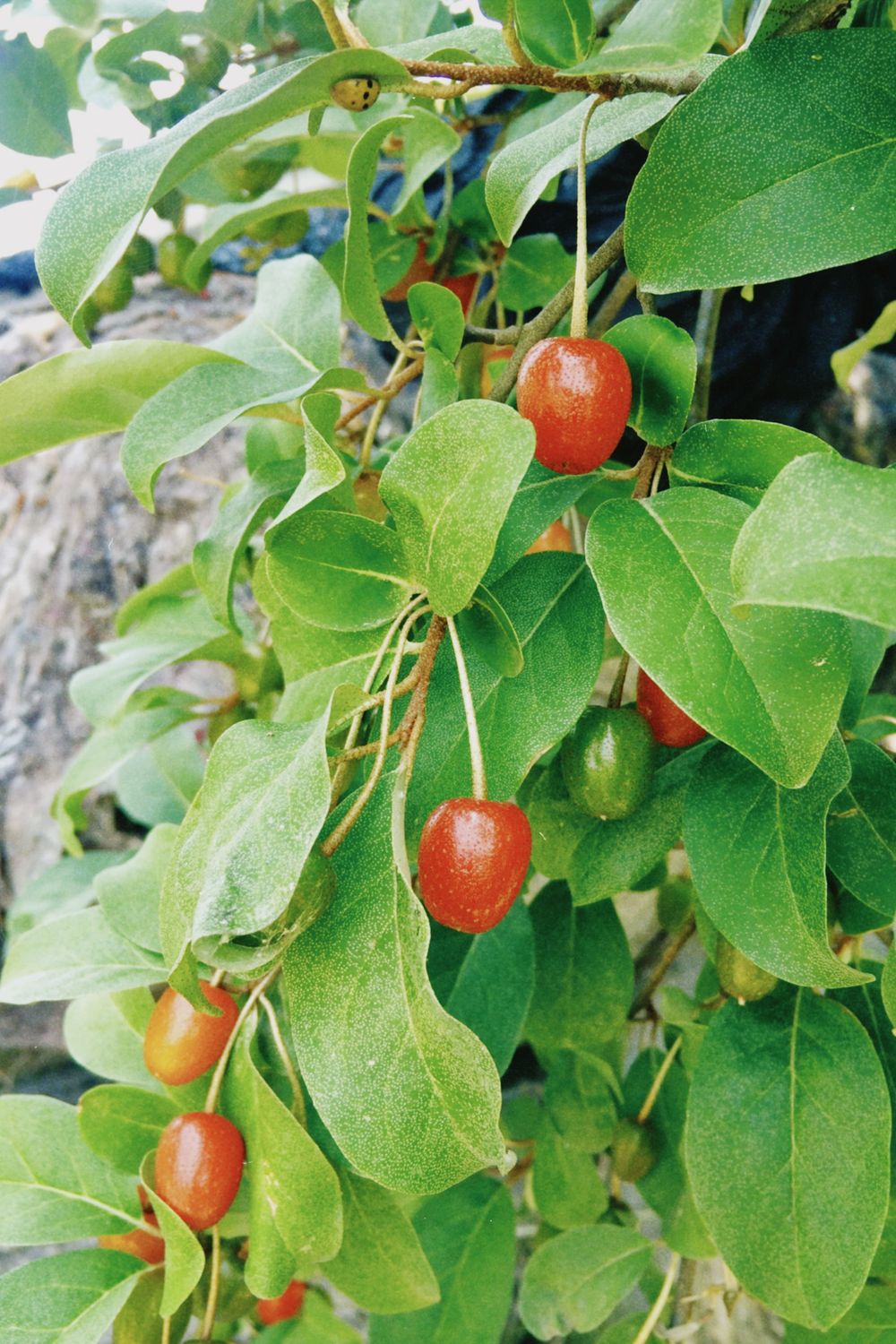
Goumi (sometimes spelled gumi) is the fruit of Elaeagnus multiflora, a deciduous shrub native to the Russian Far East, China and Japan. It typically grows to somewhere between one and a half and two and a half metres, making it a manageable size for most gardens. In spring it produces small, creamy-yellow flowers that are wonderfully fragrant, and by early-to-mid summer these give way to oval, deep-red berries flecked with tiny silvery speckles — a really pretty thing in their own right, quite apart from being edible.
What makes goumi genuinely special, though, is what it does underground. Like its close relative sea buckthorn — both belong to the Elaeagnaceae family — goumi is nitrogen-fixing. That means it works with bacteria in its roots to draw nitrogen from the air and enrich the soil around it. In practical terms, you've got a fruiting shrub that actually feeds its neighbours rather than competing with them, which is why goumi is so prized by anyone interested in forest gardening or permaculture. Plant it near hungrier fruit trees and it earns its keep twice over.
What do goumi berries taste like?
Here's the one thing I'd urge you to remember above all else: patience. Goumi berries are sharply astringent and tart while they're still firming up, and if you try one too early you'll pull a face and write the whole plant off. That would be a mistake. Wait until the berries have turned a deep, rich red and feel genuinely soft to the touch, and the transformation is remarkable — they become sweet-tart and juicy, somewhere between a tart cherry and a redcurrant, with a character all their own.
The temptation to pick early is real, because the half-ripe berries look ready long before they actually are. My advice is to leave them on the shrub until they're almost falling off, then taste one before you commit. Fully ripe goumi are lovely eaten fresh, but they also cook beautifully into jam, sauces and fruit leathers, where their natural tartness comes into its own. As a bonus, they're rich in antioxidants and notably high in lycopene — so they're a genuinely worthwhile addition to the fruit garden, not just a curiosity.
Are goumi berries easy to grow in the UK?
This is where goumi really shines, and it's the main reason I'd recommend it to anyone, beginner or otherwise. It is about as undemanding a fruiting shrub as you could hope to plant. It's fully hardy, copes happily with poor soil, tolerates drought once established, and stands up to wind without complaint. That toughness also makes it a brilliant candidate for coastal gardens, where salt-laden winds see off so many other plants — much like sea buckthorn, it takes seaside conditions in its stride.
Give it a sunny or lightly shaded spot for the best crop, dig in a little compost when you plant, and water it through its first summer while the roots get going. After that, it largely looks after itself. Because it fixes its own nitrogen, you won't need to feed it the way you might pamper a blueberry or a fussy plum — in fact, overly rich soil and heavy feeding can encourage leaf at the expense of fruit, so a bit of benign neglect actually suits it. Pruning is minimal: just tidy out any dead or crossing wood and shape it to keep it within bounds. If you want a fruiting shrub that won't punish you for being busy or forgetful, this is a strong contender.
Do you need more than one goumi plant?
Goumi is largely self-fertile, which means a single shrub will set fruit on its own — good news if you've only room for one. That said, if you have the space, planting two will reward you with noticeably heavier crops, as the cross-pollination boosts fruit set. So one plant is perfectly fine to start with, but if you find you love it (and I suspect you will), adding a second is the simplest way to increase your harvest.
Where does goumi fit in a British garden?
I think goumi suits the kind of gardener who likes a plant to do more than one job. It's a productive fruit bush, a fragrant spring ornamental, a soil-improver and a tough boundary or hedge plant all in one. In a forest-garden setup it's close to ideal, slotted in among fruit trees as a nitrogen-fixing understorey shrub. But it's equally at home as a stand-alone specimen, in a mixed border, or screening an awkward corner where you'd struggle to get anything else to thrive.
If you already grow a few of the more unusual fruits, goumi sits very comfortably alongside them. It has much the same appeal as honeyberries — another easy, hardy and slightly off-the-beaten-track berry that quietly outperforms expectations in our climate. The two make fine companions in a garden built around resilient, low-fuss fruit, giving you early honeyberries followed by a flush of goumi as summer gets going.
Worth a corner of your garden?
I'll be honest and say I'm writing this as an enthusiast rather than someone with years of goumi harvests behind them — but everything about this shrub points to it being a genuinely rewarding plant for British gardens. It's hardy, forgiving, beautiful in spring, useful to the soil, and capable of producing a crop of sweet-tart, lycopene-rich berries once you've learned the patience the fruit demands. For a plant so little known here, that's a remarkable list of virtues.
If you've got a difficult, windy or poor-soil corner that's been defeating you, or you simply fancy growing something your neighbours won't recognise, I'd say give goumi a go. Just remember the golden rule — wait for those berries to go deep red and soft — and I think you'll be glad you found room for it.
— Ash
More Unusual Berry Shrubs
Goumi's nearest neighbours in spirit: sea buckthorn is another nitrogen-fixing toughie with vitamin-packed fruit, honeyberries match it for cold-hardiness and ease, and the unusual berries roundup covers everything else in this category.