If you've never heard of honeyberries, you're in good company, but I reckon that won't be true for much longer. These elongated blue berries, also known as haskap or edible honeysuckle, are one of the most exciting things to land in front of British gardeners in years. Incredibly hardy, genuinely easy to grow, and stuffed with antioxidants, I'd happily bet they're about to become the next big thing in home growing. Let me tell you why I'm so taken with them.
What Are Honeyberries?
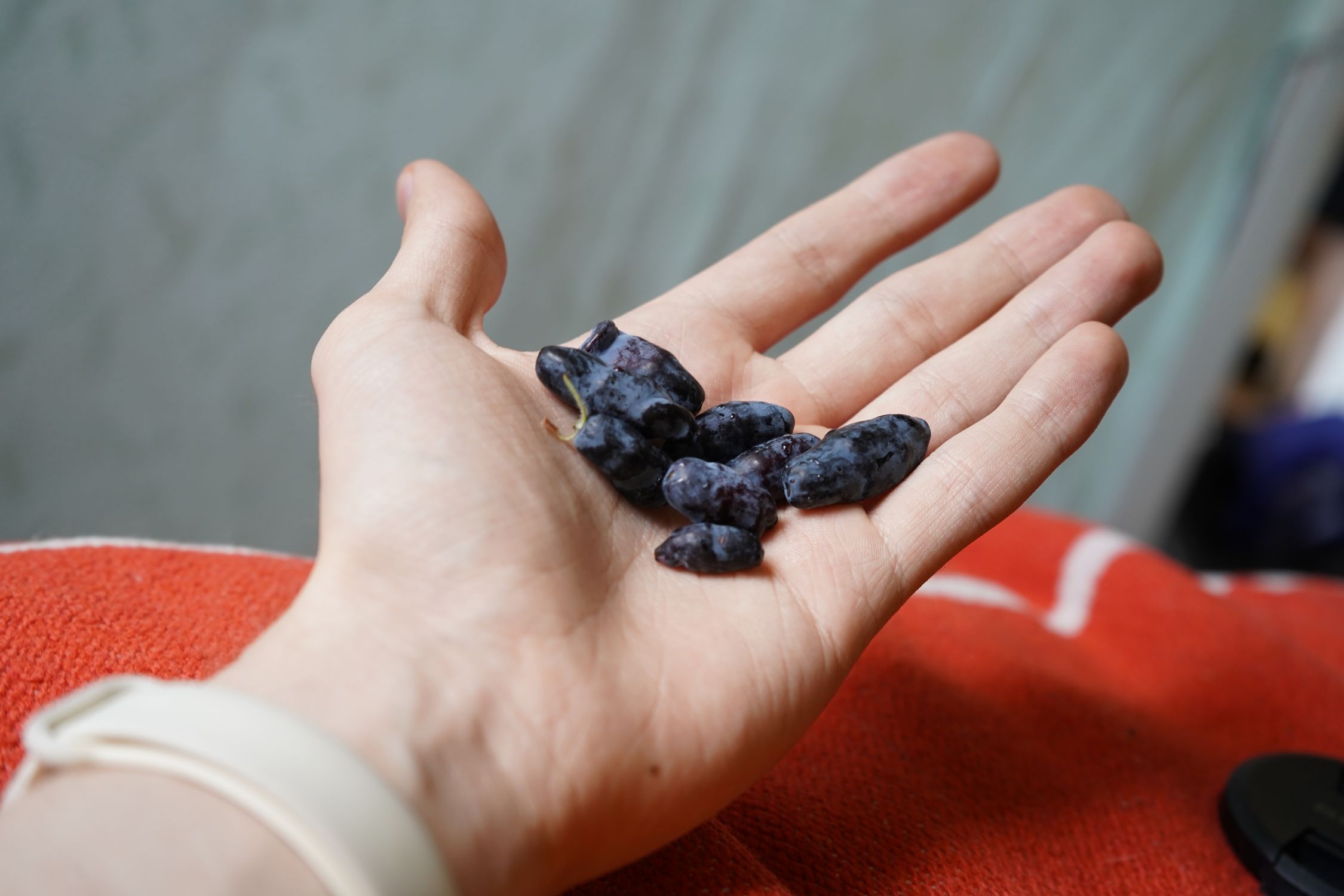
Honeyberries (Lonicera caerulea) are the edible fruit of a honeysuckle species native to Siberia, northern Japan and Canada. The berries are elongated, about the size of a small grape, with a deep blue-purple colour and a dusty bloom rather like a blueberry's.
The flavour is where it gets interesting. To my taste it's like a blueberry crossed with a blackcurrant, sweet with just enough tartness to keep it lively, and that's exactly what keeps me coming back to the bushes for another handful.
Why They Are Perfect for Britain
Honeyberries are astonishingly hardy. They hail from some of the coldest inhabited places on earth and can survive temperatures as low as minus 45 degrees Celsius, so even the most miserable British winter holds no fear for them.
The flowers are nearly as tough, withstanding temperatures down to minus 7 degrees Celsius, which makes them all but immune to the late spring frosts that wreck so many other fruit crops here. Mine flower while there's still a real bite in the air, long before anything else stirs, and a sharp frost simply doesn't bother them. On top of that, they're one of the earliest fruits to ripen in Britain, giving you ripe berries from mid-May to June. They're usually the first thing I'm picking each year, weeks ahead of the strawberries.
Choosing Varieties
One important thing to get right: honeyberries need cross-pollination, so you must plant at least two different cultivars. I learned this the hard way and can't stress it enough — a lone bush will give you almost nothing, no matter how healthy it looks. Get two compatible varieties in and the difference is night and day. Here are the ones I'd point you towards:
- Morena: large, sweet berries with a blueberry-like flavour.
- Indigo Gem: a reliable cropper with firm, tangy-sweet berries.
- Honeybee: an excellent pollinator that produces good berries in its own right.
- Blue Velvet: sweet berries on a compact plant, ideal for smaller gardens.
- Tundra: heavy-cropping, with a nicely balanced sweet-tart flavour.
Whichever you choose, pick at least two compatible varieties and plant them within five metres of each other so the bees can do their work.
Planting and Growing
Honeyberries are wonderfully unfussy. They'll grow in almost any soil, from heavy clay to sandy loam, and unlike blueberries they don't demand acidic conditions, which is a real relief if you've ever struggled on that front. They prefer full sun but will crop acceptably in partial shade.
Plant bare-root or container-grown bushes any time from autumn to early spring, spacing them about 1.5 metres apart. They're naturally compact, usually topping out at 1 to 1.5 metres, so they won't take over.
Minimal Maintenance Required
This is the part I love. Once they're in, honeyberries ask for next to nothing. Water them through dry spells in the first year or two, after which they're quite drought-tolerant and can mostly fend for themselves. A handful of general-purpose fertiliser in spring and an annual mulch of compost keeps them happy. Pruning is minimal, just remove any dead or crossing branches in late winter and leave the rest alone. And as for pests and diseases, I've found they suffer virtually none here in the UK.
Harvesting and Using Honeyberries
The berries are ready when they're uniformly dark blue all the way through, and a ripe one will come away with a gentle tug. A word of warning from bitter experience: the birds adore them, and the blackbirds find mine before I do most years, so net the bushes as the fruit colours up unless you're feeling generous. Fresh honeyberries are lovely straight off the bush, scattered over cereal, yoghurt or a salad. They also make an outstanding jam with a deep, complex flavour, and they freeze perfectly, so you can stash a glut away for the rest of the year.
Nutritional Powerhouse
Honeyberries contain significantly higher levels of antioxidants than blueberries, along with vitamins C and A, potassium and fibre. Research suggests they may have anti-inflammatory and heart-protective properties too, which is a fine excuse to eat more of them.
The Future of British Berry Growing
Honeyberries genuinely feel like a turning point for what's possible in our gardens. Ultra-hardy, early-ripening, low-maintenance and delicious, they tick every box I can think of for the home grower. My advice? Get ahead of the trend and plant a couple this season. You'll be glad you did.
Pruning an Established Honeyberry Bush
Young plants need almost no pruning at all — let them build their framework for the first three or four years. Once a bush is established, prune lightly in late winter while it's dormant: remove dead, damaged or crossing branches, and take out one or two of the oldest, least productive stems each year to encourage fresh growth from the base. Honeyberries fruit on one and two-year-old wood, so avoid the hard, renewal-style pruning you'd give a blackcurrant — a light touch is all this plant wants, and heavy pruning simply costs you fruit the following year for no real benefit.
Growing Honeyberries in Containers
Honeyberries take well to pot culture, which is handy if you're short on ground or want to fit two pollinating varieties into a small space. Use a container at least 45cm across with good drainage, a general-purpose peat-free compost, and remember that you still need two compatible varieties — place the pots within a metre or two of each other rather than the five metres recommended for open ground, since it makes little practical difference to the bees at that distance. Water more consistently than you would a bush in open soil, particularly through the first two summers, and feed with a balanced liquid fertiliser from spring through to fruiting. A potted honeyberry crops a little less than one in the ground, but given how early and reliably it fruits, it's still one of the most rewarding pot-grown berries available to a UK gardener.
Looking to fill a small garden or patio with more than just honeyberries? My guide to the best berries for small gardens and containers covers the other varieties worth a pot.
Where to Buy Honeyberry Plants in the UK
Specialist fruit nurseries are the reliable source — general garden centres are hit and miss, and when they do stock honeyberries it's often only a single variety, which is no use at all given the cross-pollination requirement. Always buy two named, compatible varieties together rather than one plant now and a second later; check with the nursery which pairings pollinate each other well, since not every variety is compatible with every other. Expect to pay roughly £12–£20 per plant for a reasonable-sized specimen. Given how hardy and pest-free honeyberries are once established, a nursery-bought pair is very much a one-time purchase — unlike most soft fruit, there's little reason you'd ever need to replace them.
Frequently Asked Questions
Do honeyberries need two plants to fruit?
Yes, always. Honeyberries are self-incompatible, meaning a single bush — however healthy — will set little or no fruit on its own. You need at least two different, compatible cultivars planted within about five metres of each other so bees can cross-pollinate them. This is the single most common reason new growers are disappointed with their first crop.
How long do honeyberries take to fruit?
Faster than most soft fruit — expect a light crop in the second year and a full harvest by the third or fourth year. Combined with being one of the earliest-ripening fruits in the UK garden (mid-May to June), honeyberries reward patience quicker than almost anything else you could plant.
What do honeyberries taste like compared to blueberries?
Similar in colour and superficially similar in use, but the flavour is distinct: a honeyberry carries more tartness and a blackcurrant-like depth alongside the blueberry sweetness. Most people describe it as a blueberry with more character, rather than a simple substitute.
Honeyberries are one of my top picks in the full guide to unusual berries for British gardens, largely because so few fruits reward you this early in the season — see that round-up for the rest of the hardy exotics I rate just as highly.