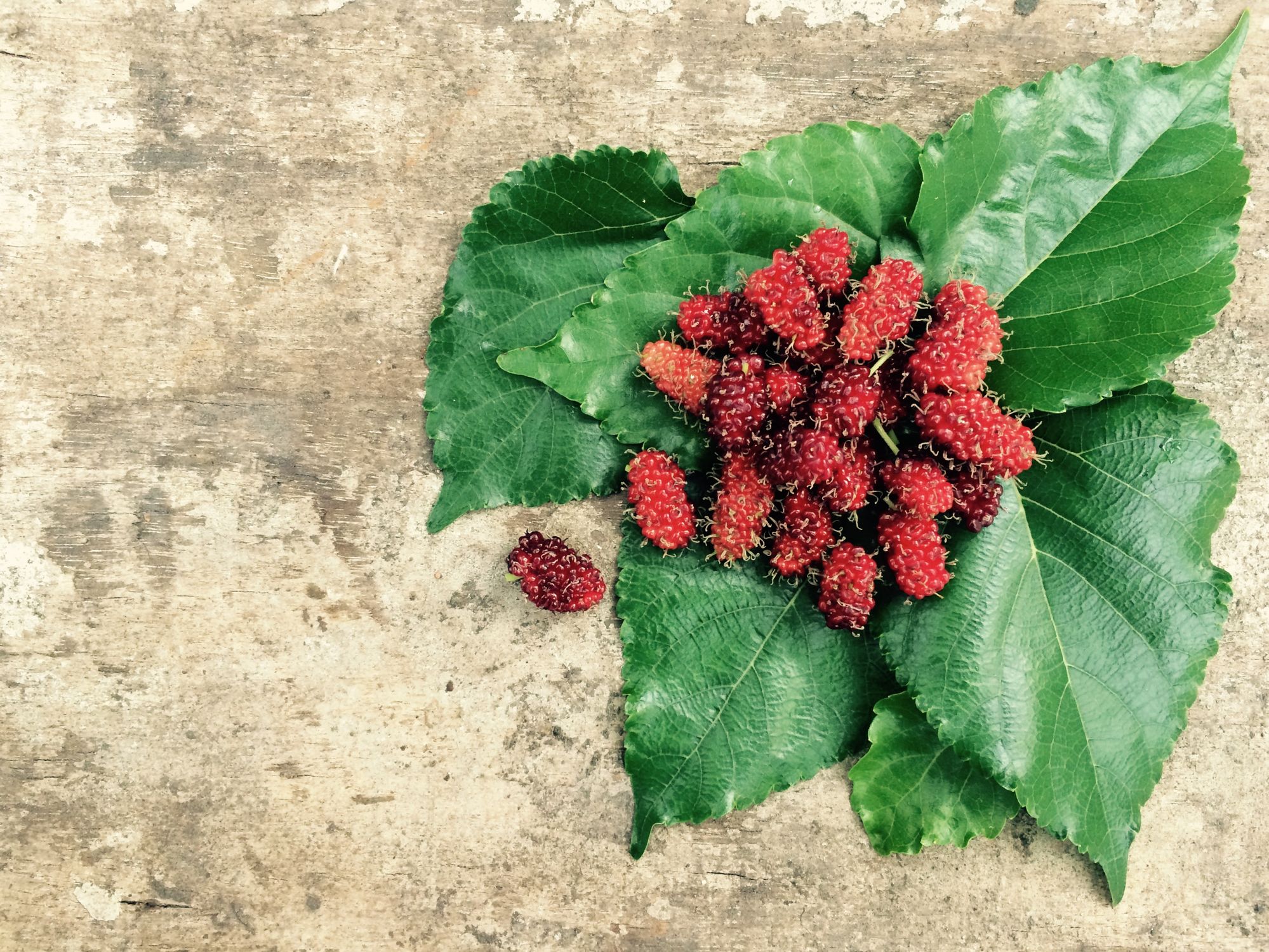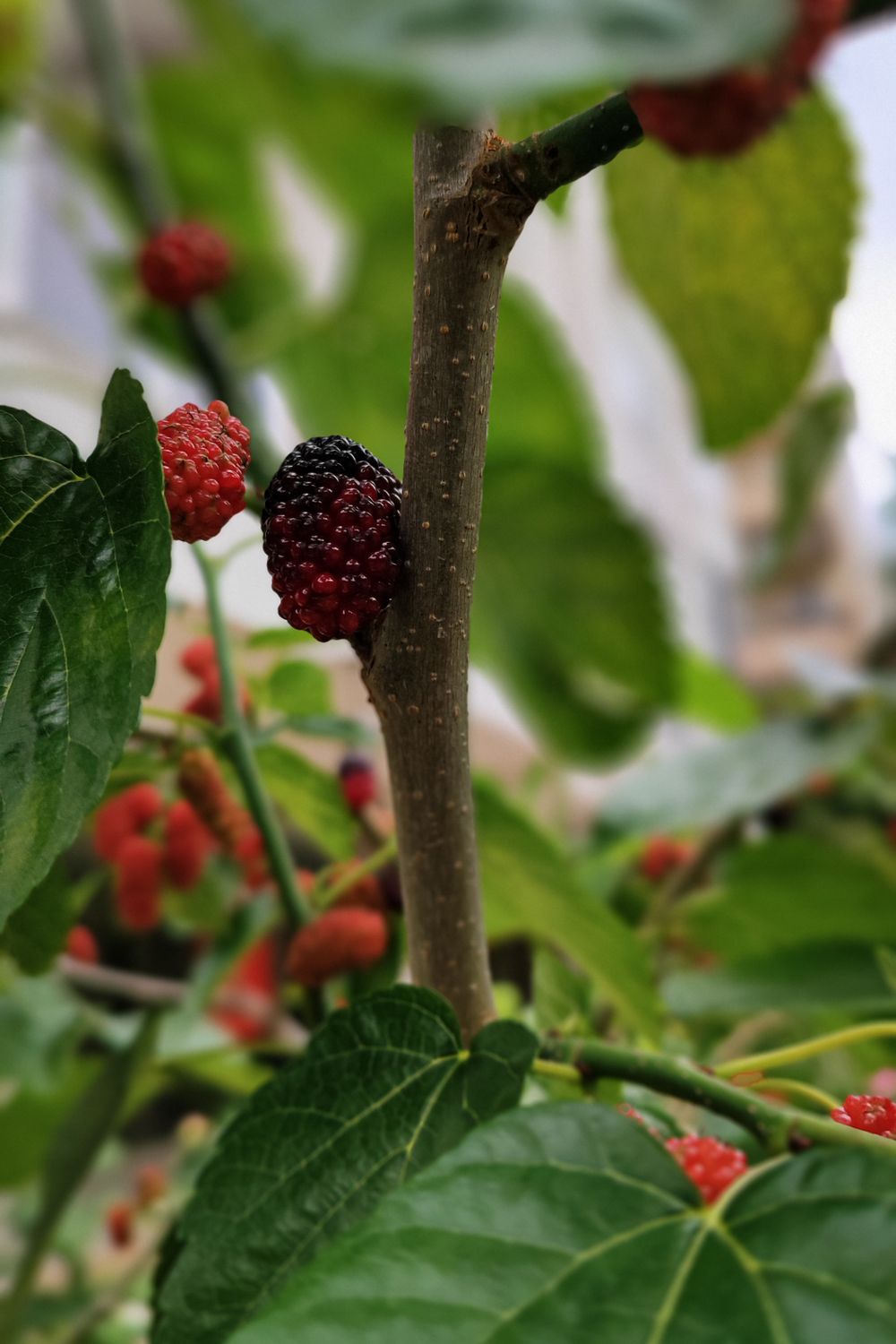
There's a particular kind of fruit you'll almost never find in a shop, and the mulberry is top of that list. It's not because they're hard to grow or fussy about our climate — quite the opposite. It's because a ripe black mulberry is so soft, so juicy, and so utterly determined to stain everything it touches that it simply won't survive a journey from farm to supermarket shelf. The only reliable way to taste one is to grow your own, and that, to my mind, is the whole point. The mulberry is one of those quietly brilliant trees we've collectively forgotten about, and I think it deserves a comeback in British gardens.
What kind of mulberry should I grow?
There are three to know about, and the distinction really matters. The black mulberry (Morus nigra) is the one prized above all others for flavour — deep red-black berries that are intensely sweet and sharp at the same time, ripening through mid-to-late summer. If you want the taste that turns people into mulberry evangelists, this is the tree. There's also the white mulberry (Morus alba), which is milder and gentler in flavour, and the red mulberry (Morus rubra). All have their charms, but if you're planting just one and you care about eating the fruit, make it a black mulberry.
The good news for us is that mulberries are fully hardy in the UK — no fleece, no fuss, no worrying about a cold snap finishing them off. They're also self-fertile, which means a single tree will fruit perfectly happily on its own. You don't need a pollination partner or a second tree squeezed into the corner. One is genuinely enough.
How long do mulberries take to fruit?
Here's where I have to be honest with you, because the mulberry asks for a little patience. Traditional black mulberries are slow-growing and slow to begin fruiting — it can take several years before you see a worthwhile crop. I know that's a hard sell in an age when we want everything by next season. But there's a reward built into that slowness: these become beautiful, characterful, gnarled old trees that live for a very long time, often outliving the gardener who planted them. There's something rather lovely about that. You're not just planting for yourself; you're planting for whoever has the garden in fifty years' time.
If that timescale doesn't suit — and for a small garden or a patio it often won't — there are now modern dwarf and patio types bred to crop young and to grow happily in a container. 'Charlotte Russe' is the one that's made a real splash, fruiting in its first year or two and staying compact enough for a large pot by the back door. It's a different proposition entirely from a stately old Morus nigra, but for instant gratification in a small space it's hard to beat.
If you've got room and time, plant a traditional black mulberry and think of it as a gift to the future. If you haven't, a dwarf in a pot will have you eating mulberries far, far sooner.
Are mulberries easy to grow in the UK?
Once a mulberry is established, it's about as low-maintenance as fruit trees come. Give it a spot in full sun with a bit of shelter — they appreciate not being battered by the wind — and they'll cope with most well-drained soils without complaint. They don't need elaborate pruning, they're not prone to the long list of problems that plague some fruit, and they largely look after themselves. Plant it well, keep it watered while it's settling in, and then mostly leave it be.
A couple of honest warnings, though. The fruit stains everything — your hands, your clothes, and any paving underneath the tree, which will be polka-dotted purple for the season. So think carefully about where you site it; over a patio or a path you walk in socks is asking for trouble. And the birds adore mulberries every bit as much as we do, so you'll be sharing the harvest whether you planned to or not. None of this is a reason not to grow one. It's just the character of the thing.
How do I get more mulberry trees — and what do I do with the fruit?
One of my favourite things about mulberries is how generous they are when it comes to making more of them. They're famously easy to propagate from hardwood cuttings — they root readily, so if a friend has a tree, a few cuttings taken in the dormant season can give you your own for nothing. If you've never tried it, it's a genuinely satisfying way to fill a garden; I've written more about the method in my guide to propagating from cuttings, and mulberries are among the more forgiving subjects to start with.
As for the fruit itself, the very best way to eat a mulberry is straight off the tree, warm from the sun, accepting that your fingers will be stained for the rest of the afternoon. Beyond that, they're wonderful cooked. A few ideas worth your time:
- Jam — rich, dark and a little sharp, often improved with a squeeze of lemon to lift it.
- Pies and crumbles — lovely on their own or mixed with apple.
- Cordial — a deep ruby syrup that's gorgeous over fizzy water or stirred into a drink.
- Ice cream — the colour alone is worth the effort.
The fact that mulberries are so delicate, so fleeting, and so impossible to buy is exactly why they're worth a place in the garden. They're a fruit you have to earn, a little, and that makes them taste all the sweeter. If you enjoy that idea of reviving the overlooked, you might also like my piece on wild damsons — another forgotten British fruit that's well worth the bother.
So my advice is simple: find a sunny, sheltered corner, decide whether you're a patient gardener or an impatient one, and plant a mulberry accordingly. Whether it's a grand old tree for the next generation or a cheerful little dwarf in a pot, you'll be growing something most people have never tasted. And the first time you eat a sun-warm black mulberry straight from the branch, purple fingers and all, you'll understand exactly why I keep banging on about it.
Happy growing,
Ash
Related Guides
If the mulberry's flavour appeals but you haven't the patience for a tree, Japanese wineberries carry a similar winey depth on a cane that fruits in its second year, and wild dewberries are the closest hedgerow equivalent. The unusual berries roundup has the rest of the forgotten-fruit revival.