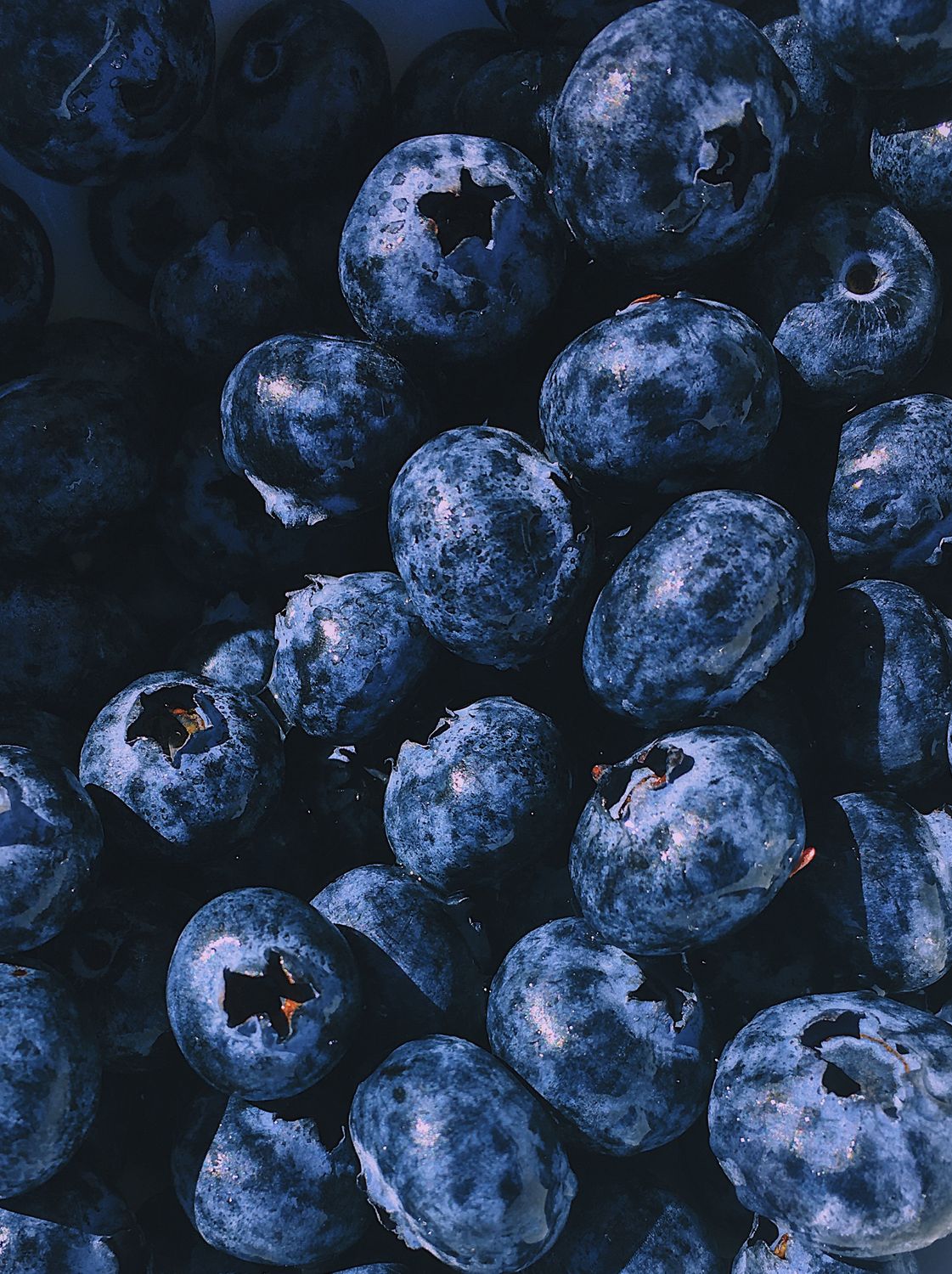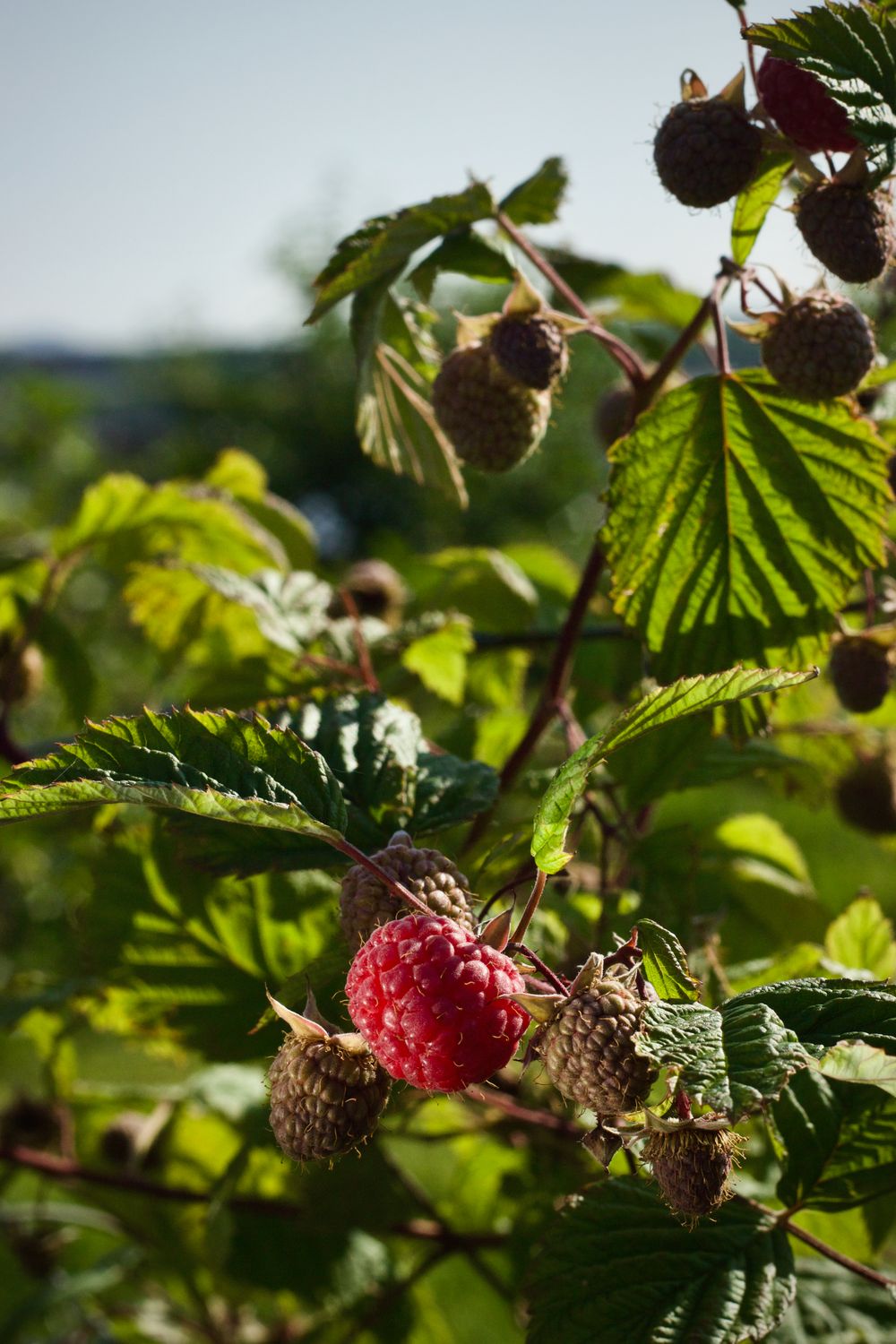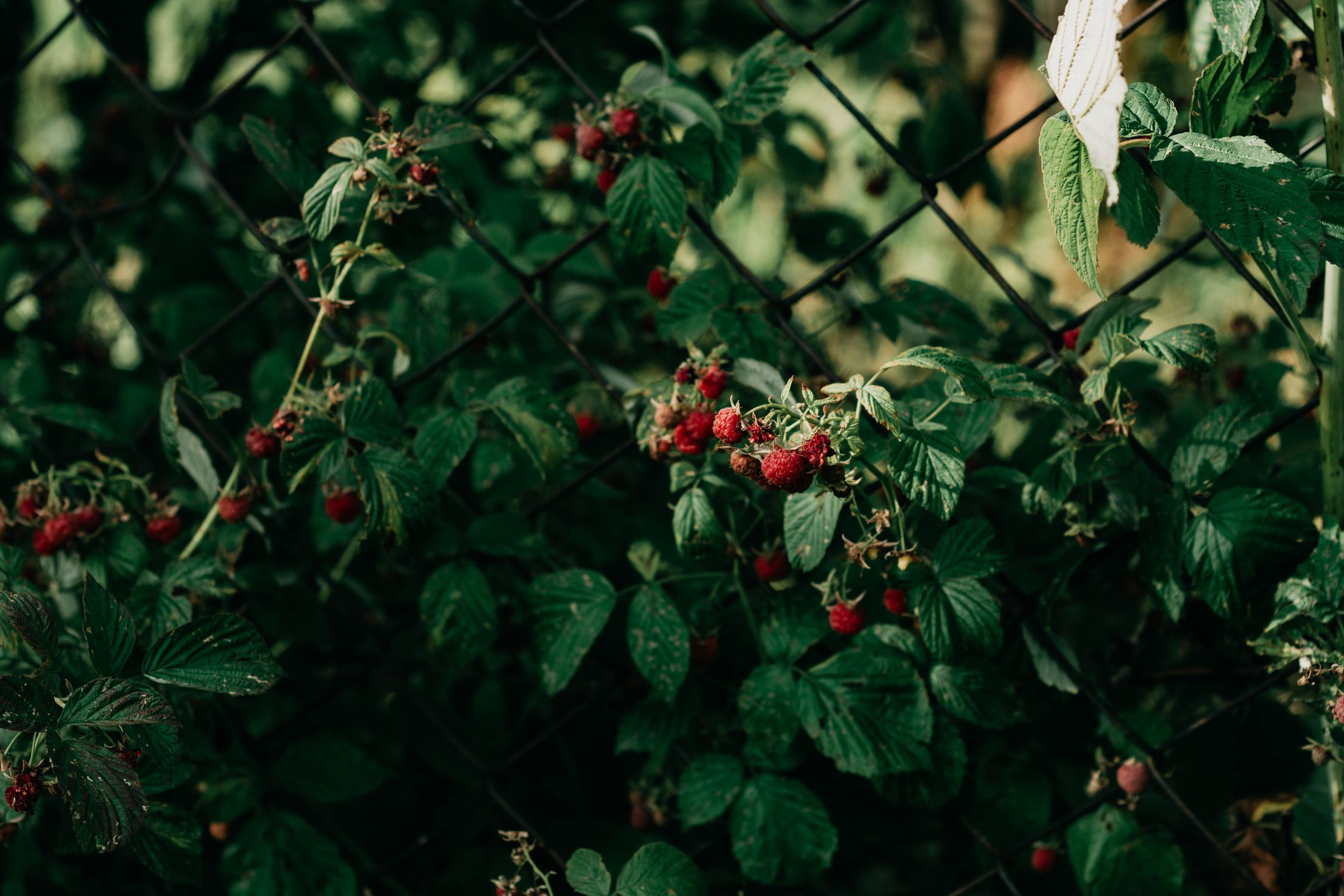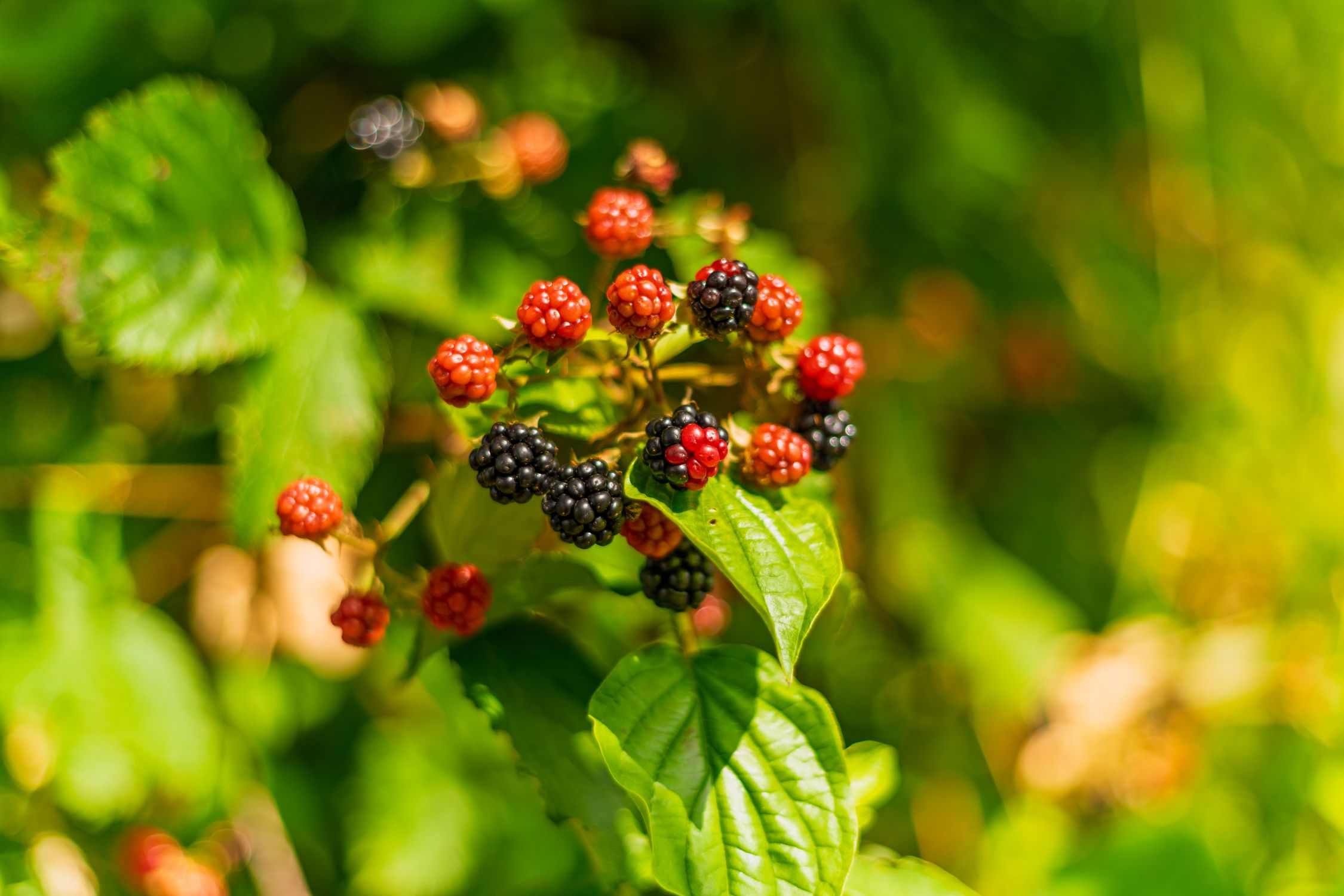
The dewberry (Rubus caesius) is a native British wild berry that grows in hedgerows, clifftops, sand dunes and chalk grassland throughout the UK, ripening several weeks before blackberries and producing fruit that is sweeter and less astringent than its more familiar cousin. Most people walk past it without a second glance. Learn to recognise it and you have a reliable source of sweet, free fruit from midsummer onwards — often in spots where blackberries are still weeks away from ripening.
What is a dewberry?
Dewberries are members of the same genus as blackberries (Rubus) and look broadly similar, but several features distinguish them at a glance. The fruit is composed of fewer, larger drupelets — often just five to ten compared to the dozens that make up a blackberry — and the whole berry is covered in a waxy blue-white bloom that gives it a dusty, powdered appearance. The canes are more slender and trailing than a bramble, lying low along the ground rather than arching upright, and are covered in soft fine prickles rather than the stout thorns of a blackberry.
The flavour is the biggest difference: dewberries are noticeably sweeter and softer than blackberries when fully ripe, with far less of the sharp, astringent quality that makes some wild blackberries difficult to eat straight from the plant. They are considered by many foragers to be the finer fruit of the two.
Identifying dewberries
Look for low-growing, scrambling canes in open, well-drained habitats. The leaves have three to five leaflets and the white flowers (May to July) are similar to blackberry flowers but usually smaller. The key identifier is the berry itself: that powdery blue-white bloom, the small number of large drupelets, and the dull, slightly glaucous colour beneath the bloom when it is wiped away. Unripe dewberries are red and turn dark purple-black as they ripen; the bloom becomes more visible as the fruit matures.
There are no dangerous look-alikes among the Rubus family in the UK. Unripe dewberries are simply sour and astringent, not harmful. If you are ever uncertain, the waxy bloom and the low, trailing growth habit are reliable confirms.
Where to find them
Dewberries prefer open, sunny, well-drained habitats. Coastal clifftops and sand dunes are classic locations, as are chalk and limestone grasslands, old quarries, scrubby hedgerow edges, railway embankments and dry road verges. They are common throughout lowland England and Wales and found in suitable habitat across Scotland and Ireland, though less abundant in the wetter, upland west.
They tend to avoid the heavy, moist soils where blackberries flourish. If you find a hedge full of blackberries, check the drier, sunnier edges — dewberries often grow nearby but in the lighter soils just beyond where the brambles stop. Sand dunes in particular are worth searching: dewberries are often abundant in dune slacks and at the dune edge where grass gives way to scrub.
When to pick them
Dewberries ripen from July to early September in most of the UK — typically three to six weeks before blackberries in the same area. This early season is one of their best qualities: in a good year you can be picking dewberries in late July, at a point when hedgerow fruit is generally still very scarce. Fully ripe fruit comes away easily from the stem with gentle pressure. If you have to tug, give it another few days.
Pick on a dry day. The delicate bloom is easily damaged by rain or heavy handling, and wet dewberries deteriorate quickly. Eat or cook them within a day or two of picking, or freeze immediately if you are not using them straight away.
What do dewberries taste like?
Sweet, soft and gently flavoured, with a quality that sits somewhere between a blackberry and a ripe mulberry. Less complex than a cultivated hybrid like a boysenberry, and less sharp than a wild blackberry, but with a clean, genuine fruit flavour that makes them excellent eating straight from the plant. They lack the firmness of a blackberry, which makes them less useful for some cooking purposes but better for eating fresh off the cane.
Cooking and using dewberries
Use dewberries exactly as you would blackberries: in pies, crumbles, jam, jelly, cordial, wine and desserts. Their sweetness means you can use a little less sugar than you would with blackberries — taste as you go when making jam. They combine beautifully with apples (a classic hedgerow partnership), with cream, and with oats in a crumble.
Because the drupelets are large and few, dewberry jam has a different texture from blackberry jam — slightly more whole-fruit and less seedy. Strain it if you prefer a smooth result. The flavour is delicate enough that long cooking can diminish it; aim for a quick set and a short boil to preserve the fresh fruit character.
Can you grow dewberries in the garden?
Yes, though they are rarely sold as a cultivated plant. A few specialist nurseries offer dewberry plants, and they can be established from cuttings or by tip-layering a wild plant (with the landowner's permission). They need a sunny, well-drained spot and are more drought-tolerant than blackberries. Left to their own devices they will scramble along the ground, so a low trellis or wire helps keep them tidy and makes picking easier.
In the garden they offer a genuinely different crop to a blackberry — earlier, sweeter and much lower-growing, with a less aggressive spreading habit. If you want to explore unusual native and near-native fruiting plants, dewberries pair well with a trained Japanese wineberry for a spread of cane fruits that no standard garden centre stocks.
Frequently Asked Questions
Are dewberries safe to eat?
Yes — they are completely safe and have been gathered by foragers in Britain for centuries. There are no dangerous look-alikes among UK Rubus species. Unripe dewberries are sour and astringent, which is unpleasant but not harmful. As with all foraged fruit, pick from areas away from roadsides, agricultural spray-drifts and dog-walking routes, and wash before eating.
What is the difference between a dewberry and a blackberry?
Dewberries are smaller, with fewer and larger drupelets, a distinctive waxy blue-white bloom, trailing (rather than arching) canes, and softer, finer prickles. The flavour is sweeter and less astringent than most wild blackberries, and the season is earlier. Botanically they are a distinct species (Rubus caesius) rather than a variety of the common blackberry (Rubus fruticosus aggregate).
Do dewberries grow in Scotland and Wales?
Yes, though they are most common in the south and east of England where dry, well-drained habitats are most widespread. In Wales they occur along the coast and in drier limestone areas. In Scotland they are found in suitable lowland habitat, particularly in the east and along the Solway Firth coast. They are less common in the wet, heavily wooded or upland areas of western Britain.
Can I use dewberries instead of blackberries in recipes?
Yes — they are interchangeable in most recipes. Bear in mind they are sweeter, so you may want to reduce the added sugar slightly. They are also softer and break down faster in cooking. For dishes where you want the fruit to hold its shape — tarts, compotes — handle them gently or use a blackberry instead. For crumbles, jams, cordials and baked goods they work perfectly, and the flavour is often more delicate and interesting than a supermarket blackberry.
Dewberries are just one entry in a much longer hedgerow line-up, and if you'd like the full picture — every common edible berry next to every one worth avoiding — my UK wild berry identification guide lays dewberries side by side with the rest of the hedgerow so you can tell them apart with confidence.