Sloes and damsons are both small, dark, plum-like fruits from the hedgerow, and it is easy to mistake one for the other. They are close relatives, but they behave very differently in the kitchen. A sloe is far too sharp to eat raw, while a damson is tart but pleasant, especially cooked.
Look at the plant
The clearest clue is the shrub itself. Blackthorn, which bears sloes, is a spiky, tangled shrub covered in thorns, and it flowers on bare wood in early spring. Damson trees are usually less spiny and produce larger, more oval fruit. My guide to foraging sloes shows how to identify blackthorn in detail.
Look at the fruit
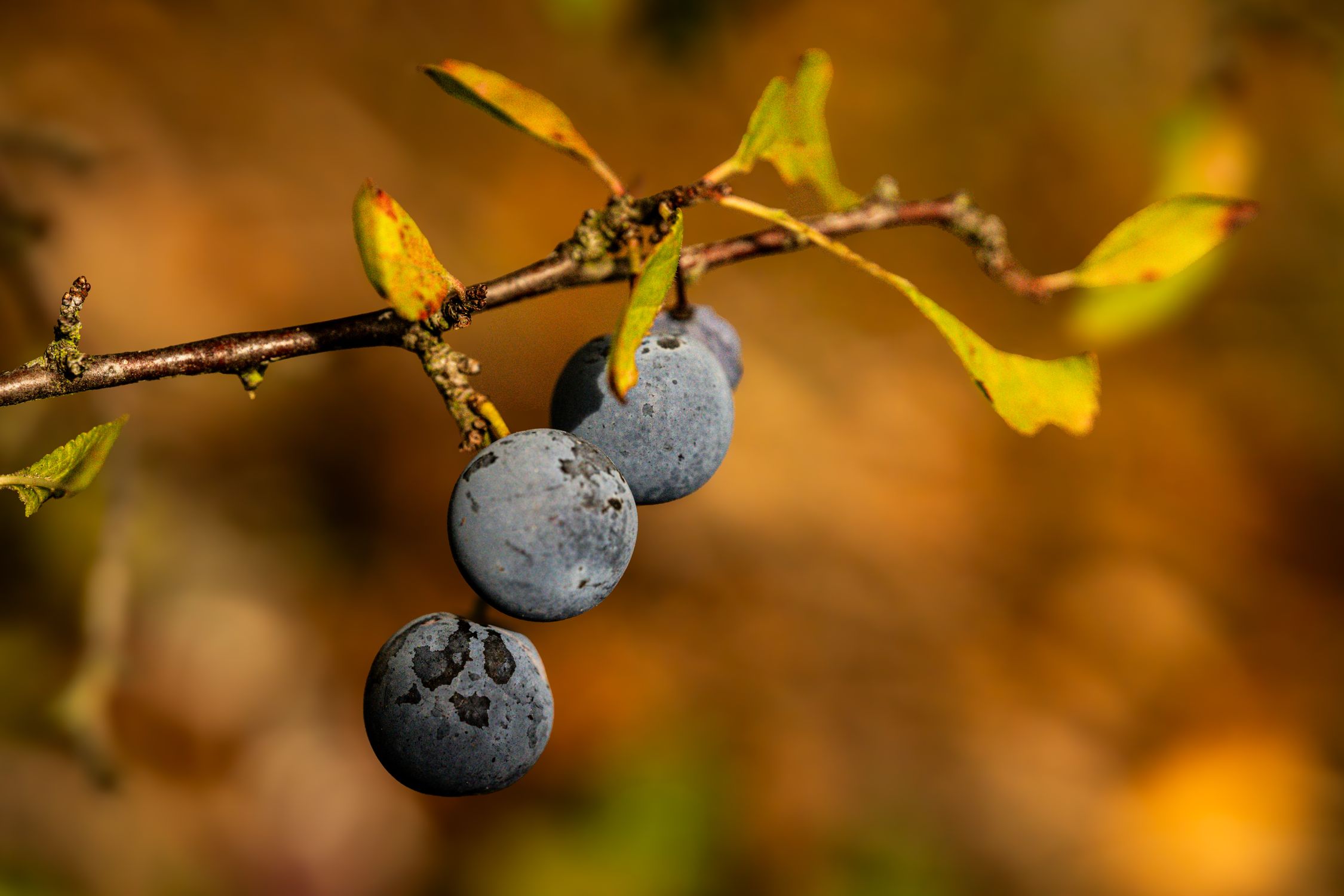
Both are blue-black with a waxy bloom, but sloes are noticeably smaller and rounder, while damsons are bigger and oval. Taste is the final test, but only bite a tiny amount: a sloe will pucker your whole mouth, whereas a damson tastes tart and plummy.
What to make
Sloes are the classic ingredient for sloe gin. Damsons are better for jam, crumbles and preserves, and my guide to foraging and preserving wild damsons has ideas.
Season and picking
Damsons generally ripen earlier, from around late August into September, while sloes are usually picked from September into October. Picking them a little later, once the sloes are deep blue-black and give slightly under the thumb, gives the best flavour. There is also the bullace, a wild plum that is rounder and often ripens later than damsons.
A safety note on stones
Like other fruit in the plum family, sloes and damsons have stones that contain a kernel you should not crush or eat. Steeping whole sloes in gin is fine, but do not eat the stones themselves. When making jam, most people remove the stones as they go, or skim them out while cooking.
Still not sure?
Cross-check what you have found with the UK wild berry identification guide before you eat or cook anything you have picked.
Frequently Asked Questions
Are sloes and damsons the same?
No. They are related, but sloes are smaller and far more astringent, and they grow on thorny blackthorn.
Can you eat sloes raw?
Technically yes, but they are extremely sharp, so they are normally used in gin, liqueurs and preserves.
Which is better for jam?
Damsons, which are larger and less astringent. Sloes are better for gin.