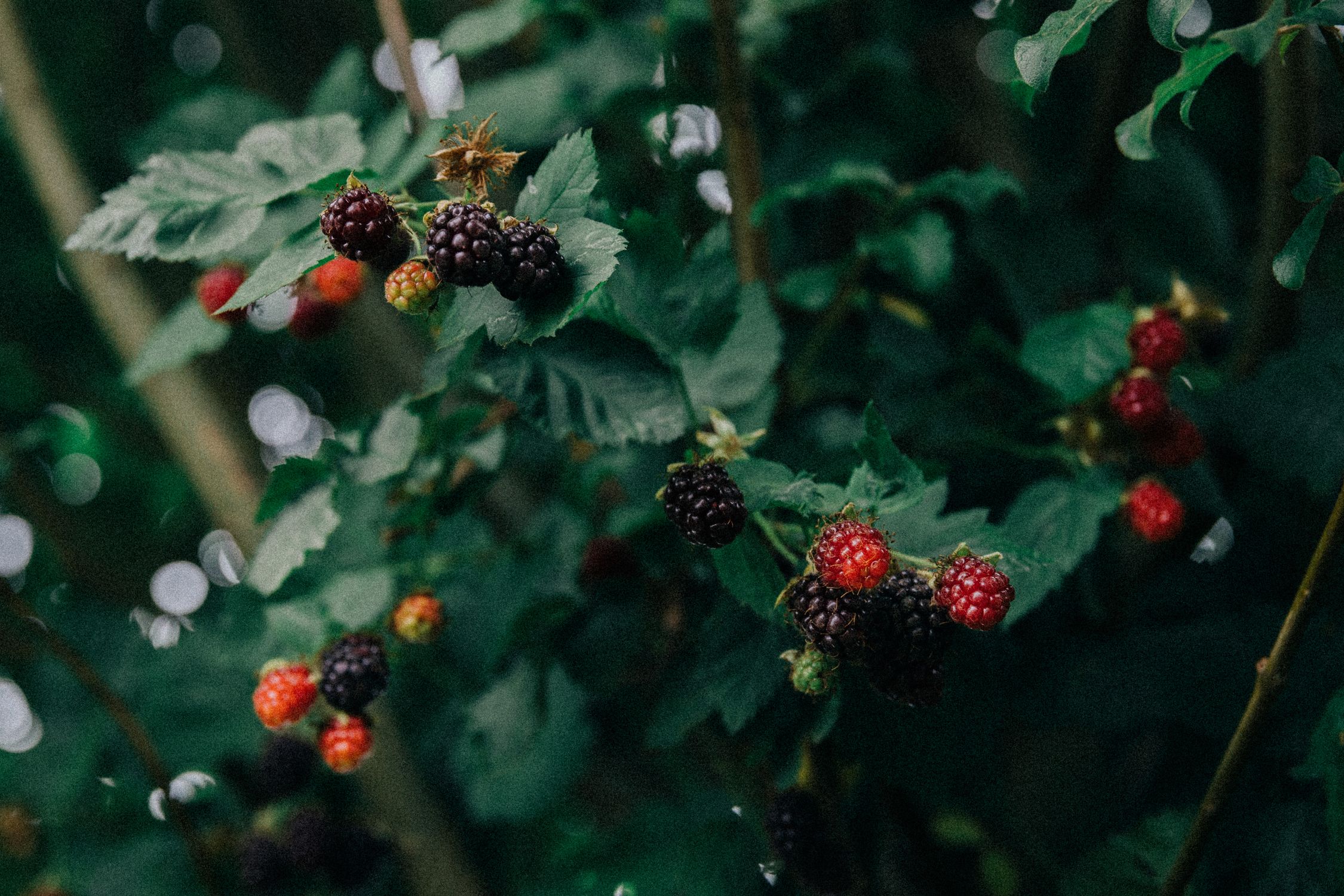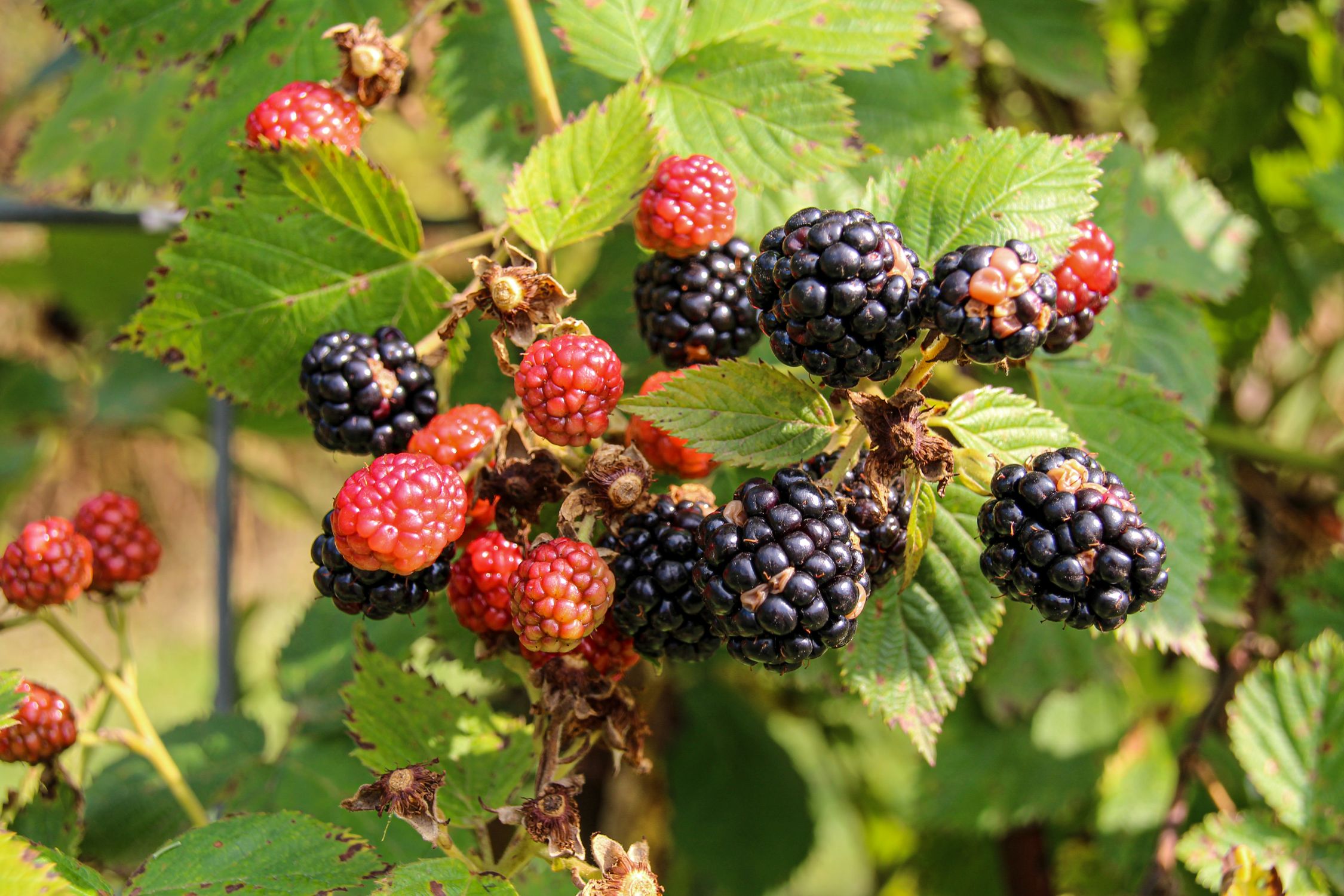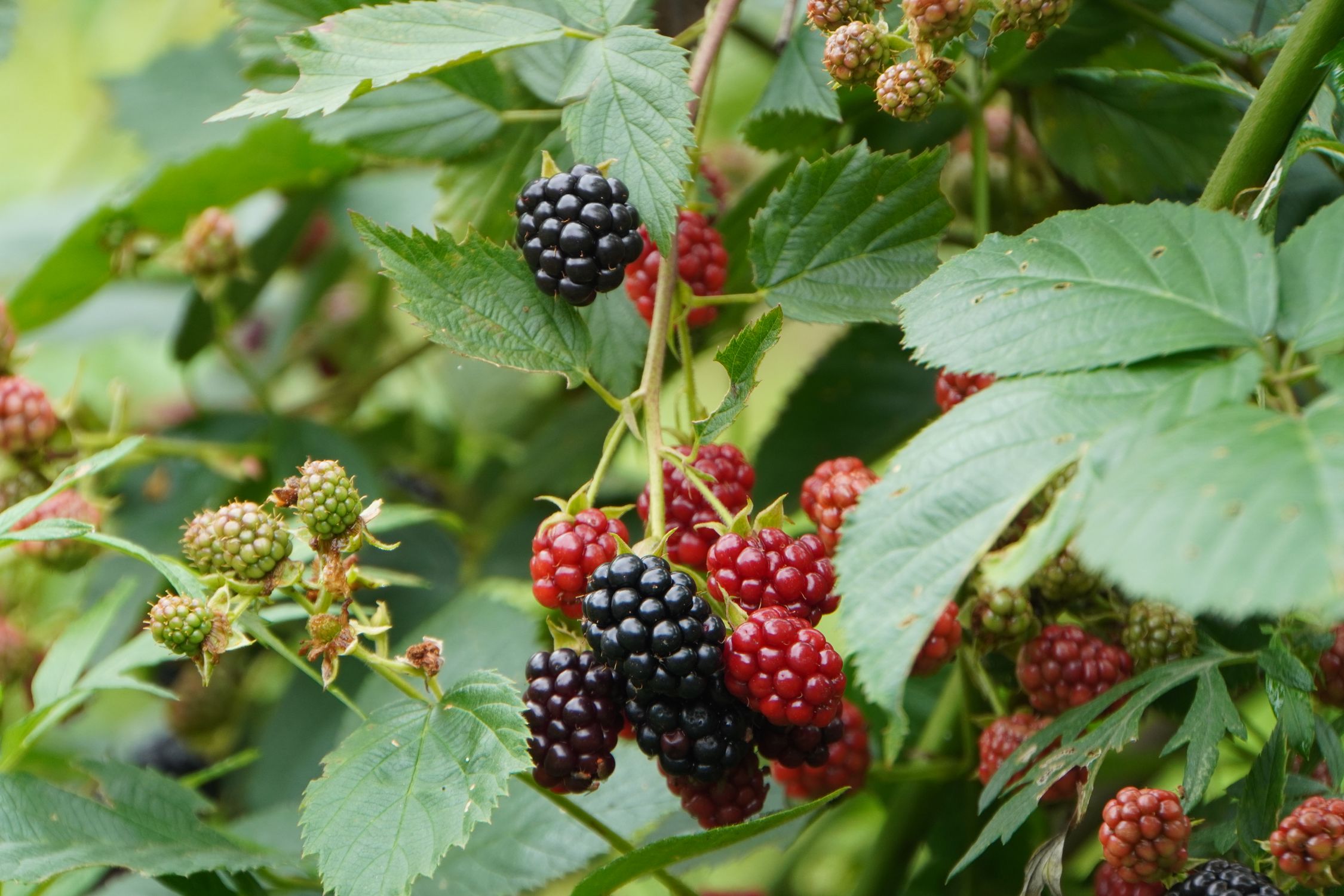
If your only experience of blackberries is scrambling along a hedgerow in September, sleeves snagged and fingers stained purple, then a thornless cultivated variety will feel like a small revelation. I've grown cane fruit for years, and while I've a soft spot for the wild bramble, the modern garden blackberry is a far more civilised beast. No vicious thorns to draw blood, fatter and sweeter fruit, and a plant you can actually train, manage and pick from without protective gauntlets. Let me walk you through how to grow them well in a British garden.
Why choose a thornless blackberry over the wild bramble?
The wild blackberry (Rubus fruticosus, really a whole tangle of microspecies) is a wonderful thing, and I'd never tell anyone to stop foraging. But it's a thug. It roots wherever a cane tip touches soil, it arms itself with hooked thorns, and the fruit can be small, pippy and wildly variable from bush to bush. Cultivated thornless varieties have been bred to keep the best of the bramble — the flavour, the vigour, the generosity — while losing the worst of its habits.
The headline benefit is obvious the first time you prune: no thorns. Tying in and harvesting a thornless cane is genuinely pleasant rather than a battle. The fruit tends to be larger, more uniform and reliably ripe, and because you're growing a known variety you know roughly what you'll get. They're still vigorous — make no mistake, these are not shy plants — but it's a vigour you can direct rather than fight.
Reliable thornless varieties for UK gardens
There's a good range available from British nurseries. A few worth knowing:
- Loch Ness — probably the most popular thornless variety in the UK. Upright, semi-erect canes that need less spreading space, heavy crops of large glossy berries, and good flavour. A sensible first choice.
- Loch Tay — an early ripener, often cropping a couple of weeks ahead of others, with sweet fruit on tidy, manageable canes. Lovely if you want to start the season sooner.
- Oregon Thornless — an old favourite with attractive deeply-cut, parsley-like foliage that looks good over an arch or pergola. Later and milder, with a long picking season.
- Chester Thornless — vigorous, very hardy and productive, ripening later in the season with firm berries that hold well.
- Black Satin — early, heavy-cropping and reliable, with long trailing canes that want plenty of room.
Pick according to your space and when you'd like fruit. For a small plot, the more upright Loch Ness or Loch Tay are easier to keep in bounds; for an arch or a long fence, the trailing types come into their own.
Where and how do you plant a blackberry?
Blackberries are forgiving, which is part of their charm. They'll fruit in partial shade, though you'll get the sweetest berries and heaviest crops in full sun. They like a moisture-retentive but free-draining soil and aren't fussy about pH. What they won't tolerate is a waterlogged spot, so avoid anywhere that sits wet over winter.
Autumn or early spring is the planting window, whenever the ground isn't frozen or sodden. Dig in plenty of well-rotted manure or garden compost first, because these plants are hungry and will sit in the same place for many years. Set the plant at the same depth it was in its pot, firm it in, water well, and then cut the canes back hard — to around 20–25cm — after planting. It feels brutal, but it encourages strong new canes from the base rather than a weak straggle. Space upright varieties about 1.5–2m apart, and trailing types more like 2.5–3.5m, as they cover serious ground.
How do you train and support blackberries?
This is the part people skip and then regret. Blackberries are vigorous and lax — left to themselves they sprawl into an impenetrable thicket, and you lose half the fruit to the middle of the bush. They need support, and the standard method is a system of horizontal wires.
Stretch galvanised wires between sturdy posts or fix them to a fence or wall, spacing them roughly 30cm apart, with the lowest around 90cm off the ground and the top wire at about 1.8m. As the canes grow, tie them in along the wires with soft twine. The key trick is to keep this year's new canes separate from last year's fruiting canes — train the old fruiting canes to one side and bundle the fresh new growth up the middle or to the opposite side. This makes both picking and pruning enormously easier, and it's the single best habit you can get into.
When and how should you prune blackberries?
Here's the bit of biology that makes everything click: blackberries fruit on canes produced the previous year. So the canes that grow this summer will give you fruit next summer, and the canes that fruited this year will never fruit again.
That gives you a simple rule. Once a cane has finished cropping, usually by autumn, cut it right out at the base. Then take all the strong new canes that grew this season and tie them onto the wires in the now-vacant space, ready for next year. If you kept the old and new canes on separate sides as I suggested, this is a five-minute job rather than a puzzle. Thin out any weak or overcrowded new canes too — better six strong canes than a dozen feeble ones.
Feeding, watering and harvesting
In spring, give each plant a generous handful of a balanced general fertiliser and a thick mulch of compost or well-rotted manure around the base, keeping it clear of the canes themselves. That mulch locks in moisture and feeds the soil as it breaks down. Water well in dry spells, especially as the fruit is swelling — drought at that point means small, dry berries.
Harvest from mid to late summer into autumn, depending on variety. A ripe blackberry comes away from the plant with the gentlest tug; if you have to pull, it isn't ready. Unlike raspberries, the central plug stays inside the fruit. Pick regularly, every couple of days in the height of the season, and eat or freeze them quickly — they don't keep long fresh. The birds will tell you when they're ready, so a bit of netting earns its keep.
Can you propagate blackberries yourself?
Easily, and almost for free. The method that suits them best is tip layering, which simply copies what the wild bramble does naturally. In late summer, take the tip of a long, flexible new cane, bend it down to the soil, and bury the last few centimetres — pin it down with a stone or a loop of wire if it won't stay put. Left over winter, that buried tip will root. By the following spring you can sever it from the parent plant and you've a brand-new blackberry to move elsewhere or pass on to a friend.
It's a quietly satisfying thing, turning one plant into several with nothing more than a bent cane and a bit of patience. That generosity is really the heart of growing blackberries: plant one good thornless variety, train it properly, and you'll have crumbles, jams and a freezer full of berries for years to come — and not a scratch on your arms.
Happy growing, and mind you leave a few for the blackbirds.
— Ash