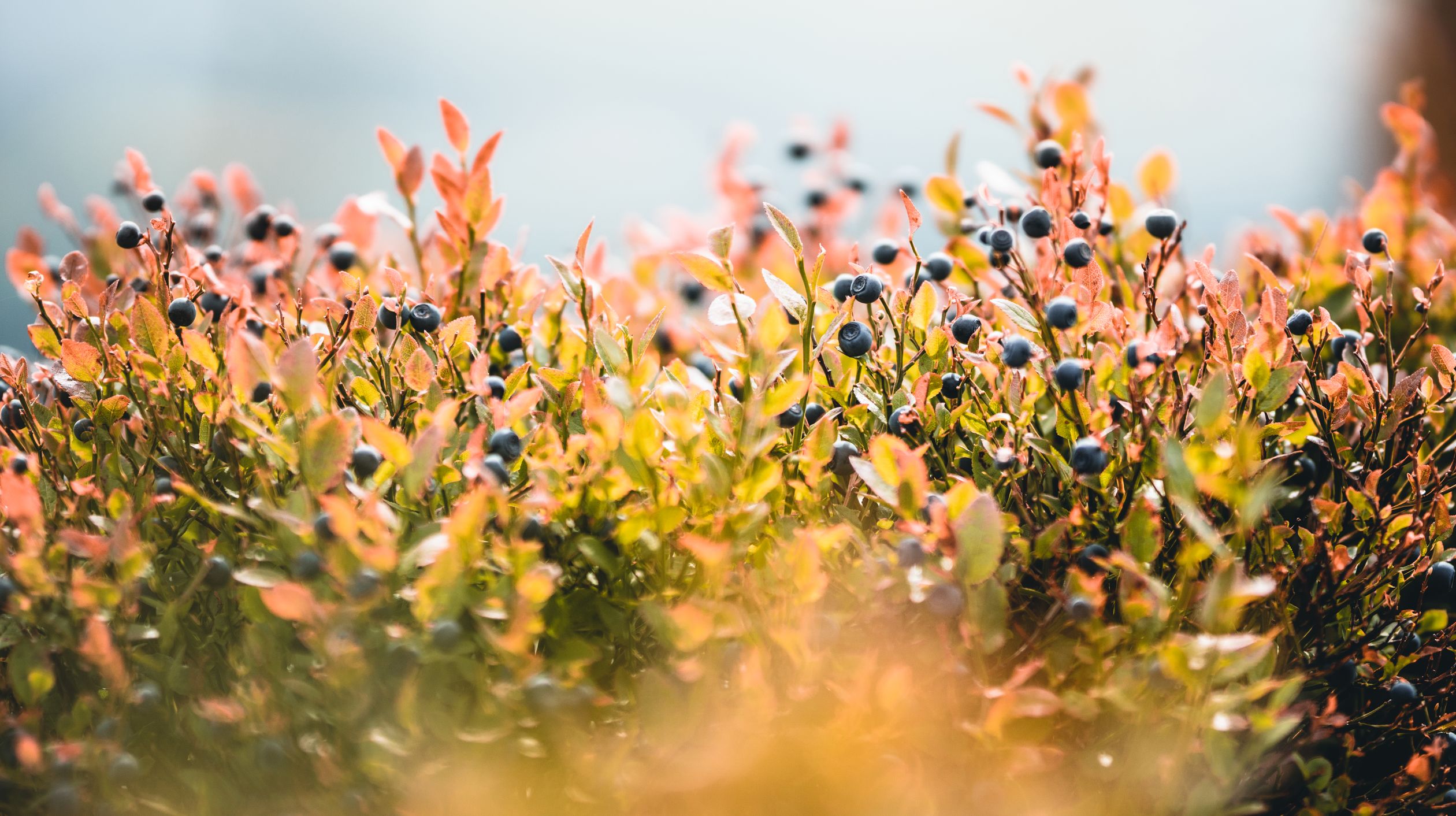
Blueberries grow well across most of the UK. They originate from North America, where the climate closely resembles ours — cool winters, mild summers, reliable rainfall — and our weather provides exactly the cold winter dormancy they need to set fruit. The one condition they are uncompromising about is soil acidity: blueberries need a pH between 4.0 and 5.5, which most British garden soil cannot provide naturally. For most gardeners the answer is a container of ericaceous compost, which gives you full control over the soil and produces excellent results. Here is everything you need to know.
Why Blueberries Love British Weather
Blueberries hail from North America, where they grow in conditions strikingly close to parts of Britain: cool winters, mild summers, and rain you can count on. Our weather hands the bushes the cold spell they need to set their fruit buds, so in that respect we're doing them a favour without lifting a finger.
They're a handsome plant on top of all that. You get clusters of dainty white bell-shaped flowers in spring, plump blue-purple berries through summer, and then a real autumn showstopper as the foliage turns fiery red and orange. I'd grow them for the leaves alone, if I'm honest.
The Soil Secret: Acidity is Everything
Here's the one thing you can't get wrong: blueberries demand acidic soil, with a pH between 4.0 and 5.5. Trouble is, most British garden soils are neutral to alkaline, so the simplest answer by far is to grow them in containers of ericaceous compost. Use pots at least 30 to 40 centimetres across and water only with rainwater, since hard tap water will slowly nudge the pH the wrong way. If you happen to garden on naturally acidic soil, common across parts of Scotland, Wales and the West Country, then count yourself lucky and plant straight into the ground.
Choosing Varieties for the UK
Always pick at least two different varieties so they can cross-pollinate, which makes a real difference to your crop. The full detail on which varieties pair well and how to match flowering times is in my blueberry pollination guide. These five are all reliable choices in British gardens:
- Bluecrop: the classic mid-season variety, reliable, heavy-cropping, and thoroughly at home in British conditions.
- Duke: an early-season variety with large, firm berries.
- Chandler: produces exceptionally large berries over a long season.
- Sunshine Blue: a compact variety, ideal for containers and smaller gardens.
- Darrow: a late-season variety that stretches the harvest into September.
Planting and Care
You can plant container-grown blueberries at any time of year, though autumn and spring are ideal, spacing the bushes about 1.5 metres apart. Their roots sit shallow, so they really appreciate a thick mulch of pine needles or composted bark to keep things cool and moist. Feed with an ericaceous fertiliser in spring, and above all stay on top of the watering, especially for plants in pots; collect rainwater whenever you can, because it's the right stuff for the job and it's free.
Pruning for Productivity
There's not much to do here for the first three years, so leave the bushes be. From the fourth year on, prune in late winter by cutting out the oldest, thickest stems right at the base, which coaxes the plant into throwing up vigorous new growth.
Harvesting and Using Your Blueberries
A blueberry is ready when it's fully blue, plump, and parts from the bush with barely a tug. They don't all ripen together, so you'll want to pick over the bushes several times across the season rather than stripping them in one go. Whatever you can't eat fresh freezes beautifully for the rest of the year.
Common Challenges
Birds are your biggest headache, so net the bushes as soon as the berries start to colour or you'll be feeding the local blackbirds instead of yourself. The other thing to watch for is chlorosis, a yellowing of the leaves — I have a full guide to why blueberry leaves turn red or yellow if you want to diagnose it properly. It is almost always the plant telling you the soil isn't acidic enough.
Frequently asked questions
When do blueberries fruit in the UK?
It depends on the variety. Early-season varieties like Duke start ripening from July; mid-season varieties like Bluecrop peak in August; and late varieties like Chandler stretch the season into September. Growing two or three varieties with staggered ripening times — Duke, Bluecrop, and Chandler is the classic trio — gives you fresh blueberries from July to September with a single pick-over every week or so.
How long before blueberry plants produce fruit?
A small first crop is possible in year two, but expect modest harvests until year three or four and peak production from year five onwards. The plant invests its early years in root development and framework rather than fruit, which is why that first handful can feel like a long time coming. Blueberries are long-lived, though — a well-tended bush can fruit productively for 20 years or more — so the patience is repaid many times over.
Do blueberries need full sun?
Full sun gives the best yields, but blueberries will grow and fruit in light shade. Dappled shade, a few hours of direct sun each day, or a bright north-facing wall can all work, though the harvest will be smaller and the autumn leaf colour less vivid. In a container you can always move the pot to the sunniest spot you have. A south-facing patio or paved area is ideal — it reflects warmth back at the plant and helps berries ripen fully.
Can blueberries really grow in pots long-term?
Yes, and very successfully. Container growing is the standard recommendation for UK gardeners because it sidesteps the soil acidity problem entirely. Use ericaceous (lime-free) compost, water with rainwater, feed with an ericaceous fertiliser through the growing season, and repot every two or three years to refresh the compost. Blueberries in pots can produce good crops for ten years or more with basic maintenance.
Frequently asked questions
When do blueberries fruit in the UK?
It depends on the variety. Early-season varieties like Duke start ripening from July; mid-season varieties like Bluecrop peak in August; and late varieties like Chandler stretch the season into September. Growing two or three varieties with staggered ripening times — Duke, Bluecrop, and Chandler is the classic trio — gives you fresh blueberries from July to September with a single pick-over every week or so.
How long before blueberry plants produce fruit?
A small first crop is possible in year two, but expect modest harvests until year three or four and peak production from year five onwards. The plant invests its early years in root development and framework rather than fruit, which is why that first handful can feel like a long time coming. Blueberries are long-lived, though — a well-tended bush can fruit productively for 20 years or more — so the patience is repaid many times over.
Do blueberries need full sun?
Full sun gives the best yields, but blueberries will grow and fruit in light shade. Dappled shade, a few hours of direct sun each day, or a bright north-facing wall can all work, though the harvest will be smaller and the autumn leaf colour less vivid. In a container you can always move the pot to the sunniest spot you have. A south-facing patio or paved area is ideal — it reflects warmth back at the plant and helps berries ripen fully.
Can blueberries really grow in pots long-term?
Yes, and very successfully. Container growing is the standard recommendation for UK gardeners because it sidesteps the soil acidity problem entirely. Use ericaceous (lime-free) compost, water with rainwater, feed with an ericaceous fertiliser through the growing season, and repot every two or three years to refresh the compost. Blueberries in pots can produce good crops for ten years or more with basic maintenance.
A Long-Term Investment
Look after a blueberry bush and it'll fruit for 20 years or more, the yields climbing as the plant matures. That's the part I love most: a little patience early on buys you two decades of berries. For my money, it's one of the most satisfying fruits you can grow in Britain.
For limited spaces, Top Hat is the finest dwarf variety — it grows to just 30–50cm and fruits well from a pot small enough for a balcony. For something more unusual, Pink Lemonade blueberries are a real variety that ripens bright pink rather than blue, with a sweet, mild flavour that makes them a genuine talking point.
For limited spaces, Top Hat is the finest dwarf variety — it grows to just 30–50cm and fruits well from a pot small enough for a balcony. For something more unusual, Pink Lemonade blueberries are a real variety that ripens bright pink rather than blue, with a sweet, mild flavour that makes them a genuine talking point.
More in this series: Blueberry Pollination Explained: How Many Bushes Do You Really Need? • Why Are My Blueberry Leaves Turning Red or Yellow? • Pink Lemonade Blueberries: The Unusual Berry That Turns Pink Instead of Blue • Top Hat Blueberry: The Best Blueberry for Pots
Blueberries have their own steady window in the UK growing year, and my month-by-month calendar of berries in season sets out exactly when to expect them alongside strawberries, currants and everything else cropping through summer.