Pink Lemonade is a real blueberry variety whose fully ripe berries stay pink rather than turning blue. It is a rabbiteye hybrid (Vaccinium ashei) developed by the USDA and released in 2009. The pink colour is entirely natural — a different balance of anthocyanin pigments that stay red-pink rather than deepening to blue at full ripeness. The berries taste unmistakably of blueberry but sweeter and less acidic than most standard varieties. It grows in the UK in a warm, sheltered spot, and does best in a container of ericaceous compost.
What Makes Them Pink?
Every blueberry begins life green, then passes through pink and red before settling into that final deep blue. Most varieties rush through the pink phase, but Pink Lemonade is a rabbiteye hybrid (Vaccinium ashei) bred to stop and stay pink at full ripeness. The berries simply never turn blue.
The colour comes down to a different balance of anthocyanin pigments. Ordinary blueberries are dominated by the blue-purple anthocyanins, delphinidins and malvidins, whereas Pink Lemonade holds on to higher levels of the red-pink ones, cyanidins and peonidins, that normally get masked as the fruit ripens. The upshot is a berry that looks far more like a large glossy redcurrant or a pale cranberry than anything you'd usually call a blueberry.
The Taste Test
This is what everyone wants to know first: do they actually taste like proper blueberries? Mostly, yes, but not exactly.
Pink Lemonade berries come out sweeter than a lot of standard varieties and noticeably less acidic. People talk about mild floral notes and a hint of something that, with a bit of imagination, you might call lemonade-ish. They don't have the sharp tang of a Bluecrop or the deep, almost wine-like complexity of a Duke, but there's a gentle, easy sweetness to them that makes them lovely straight off the bush.
The texture surprised me, in a good way. They're a touch firmer than most highbush blueberries, with a satisfying pop when you bite in. That firmness also means they hold up well in baking rather than collapsing into mush the way softer varieties tend to.
How Pink Lemonade Was Created
Pink Lemonade was developed by the United States Department of Agriculture in Chatsworth, New Jersey, and released in 2009. It's a rabbiteye type (Vaccinium ashei), and that matters, because rabbiteye blueberries hail from the southeastern United States and are generally reckoned less suited to our cool, wet climate than the northern highbush types that fill most UK gardens.
That said, Pink Lemonade has turned out more adaptable than many of its rabbiteye cousins. It does reasonably well in sheltered, warm spots across southern England, and especially in containers where you can keep the soil exactly how it likes it. It isn't the hardiest blueberry going, but it's a long way from impossible here.
Growing Pink Lemonade in the UK
The two things that'll make or break your success are its rabbiteye heritage and its pollination needs. Like every blueberry, it wants acidic soil, a pH between 4.0 and 5.5, and for most of us the simplest route by far is a container of ericaceous compost — the same approach I cover in full in my complete guide to growing blueberries in the UK. Then give it the warmest, most sheltered spot you've got, a south-facing wall or patio is ideal, because it needs more heat than a standard highbush to ripen properly.
Pollination is the catch — my blueberry pollination guide covers this in full. The short version: rabbiteyes generally do better with another rabbiteye variety nearby to cross-pollinate. In practice some gardeners do get a decent crop from a lone Pink Lemonade, particularly with other blueberries flowering close by, but yields are clearly better with a partner, and another rabbiteye such as Powder Blue is the ideal companion. One more thing that catches people out: water with rainwater wherever you can, because in hard-water areas tap water slowly nudges the soil pH up and yellows the leaves — if that happens, my guide to why blueberry leaves turn red or yellow covers every cause and the fix. As for the cold, it's hardy to around minus 15 degrees Celsius, which sees off most of lowland Britain, but in colder or exposed gardens give it shelter or a winter fleece.
What About Yield?
I'll be straight with you, this is a moderate cropper, not a heavy one. Expect 1 to 2 kilograms from a mature bush, against the 3 to 5 kilograms you'd get from a well-grown highbush like Bluecrop. The berries ripen in mid to late summer, a little behind most highbush types.
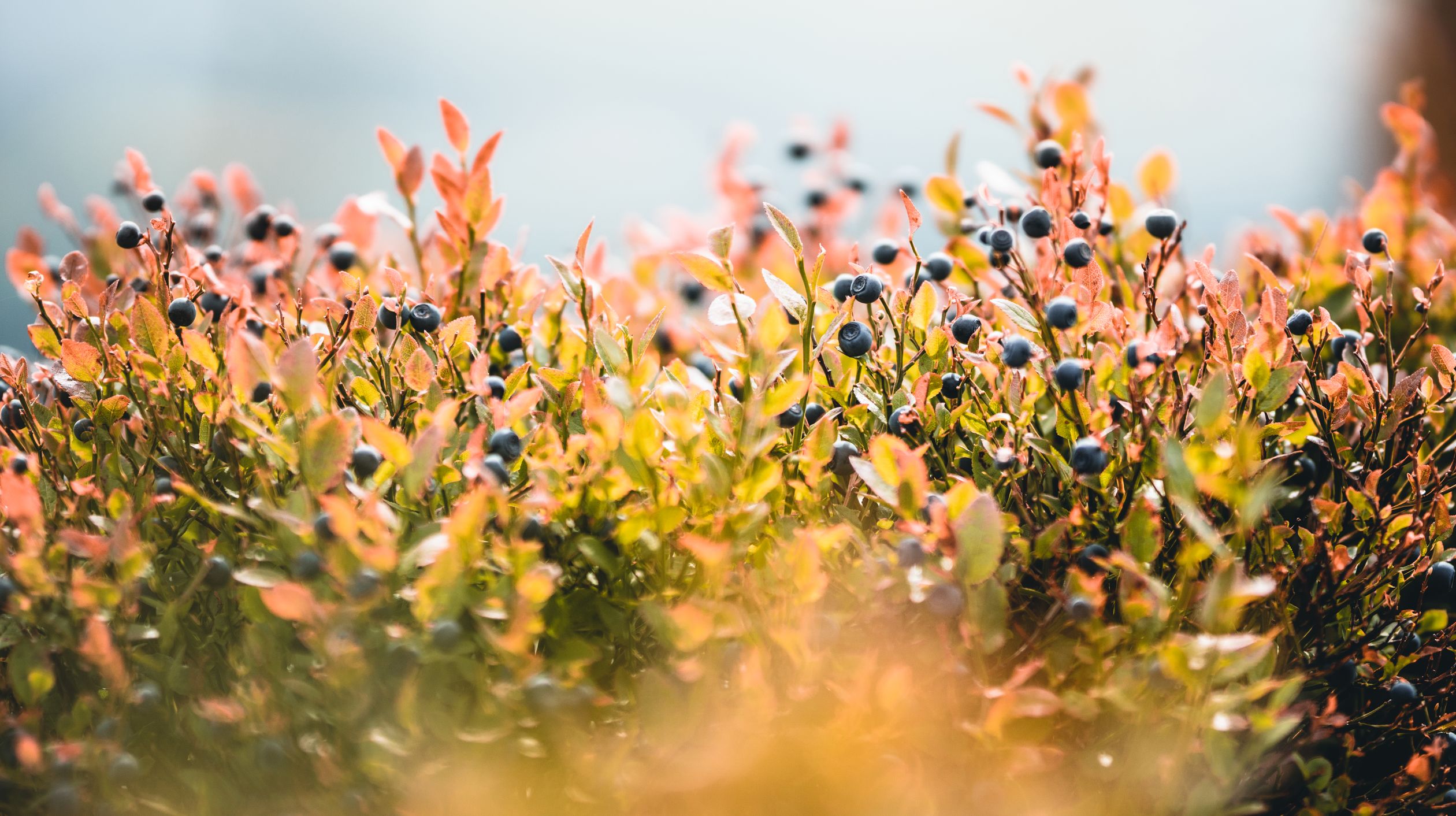
The bush itself is a handsome thing, reaching about 1.5 metres with good autumn colour, and those pink berries glowing on the branches make it a genuine ornamental as much as a fruit bush. That counts for something in a small garden.
Is It Worth Growing?
It really depends what you're after. If you want maximum yield and rock-solid reliability in our climate, a proven highbush like Duke, Bluecrop or Chandler — or Top Hat if space is tight — will beat Pink Lemonade on yield every single time, no contest.
But if you enjoy growing the unusual, fancy a talking point, or have children who'll be utterly delighted by pink blueberries, it's well worth a spot in your collection. The flavour genuinely is good, the plant is lovely, and the novelty of a pink blueberry never quite wears off, even for me. My honest advice is to treat it as an addition rather than your only blueberry. Grow it alongside a couple of dependable highbush varieties for the main crop, and let Pink Lemonade be the curiosity and conversation piece it does so well.
In the Kitchen
That pink colour is the obvious draw, and the happy news is the berries hold it when cooked, giving you jams, syrups and bakes with a properly rosy hue. They're sweet enough to eat fresh by the handful and look striking on a fruit platter or cheese board. In baking, the firm texture stands up well in muffins, scones and tarts, and the colour stays pink rather than bleeding blue-purple through the batter.
For jam, pink blueberry jam is a guaranteed conversation starter, though the flavour's milder than the standard sort, so sharpen it with a squeeze of lemon juice. And in drinks, they muddle beautifully into cocktails or lemonade and give you a natural pink without a drop of food colouring. Pink Lemonade berries in actual pink lemonade is almost too on the nose, I'll admit, but I promise you it works.
Frequently asked questions
Are Pink Lemonade blueberries natural or artificially coloured?
Completely natural. The pink colour is the result of a different balance of anthocyanin pigments in the berry. Standard blueberries are dominated by blue-purple anthocyanins (delphinidins and malvidins); Pink Lemonade retains higher levels of the red-pink types (cyanidins and peonidins) that most varieties lose as they ripen. No dye, no genetic modification — just a berry that was specifically bred to stop developing at the pink stage rather than continuing to blue.
Do Pink Lemonade blueberries taste different from normal blueberries?
Yes, noticeably. They are sweeter and significantly less sharp than most highbush varieties — the tartness that defines a Bluecrop or a Duke is much reduced. People often describe mild floral notes and an easy, almost candy-like sweetness. They lack the deep, complex flavour of a fully-flavoured highbush, but for fresh eating straight off the bush — especially with children — the sweetness is a genuine plus.
Are Pink Lemonade blueberries self-fertile?
Technically yes, but yields improve considerably with a companion variety. Rabbiteye blueberries (which Pink Lemonade is) self-pollinate less efficiently than highbush types, so the single-plant harvest can be disappointing. Powder Blue is the classic companion for Pink Lemonade, as it is also a rabbiteye and their flowering times overlap well. If you only have space for one pot, a highbush variety next door is better than nothing, though the cross-pollination benefit is less reliable across types.
Where can I buy Pink Lemonade blueberry plants in the UK?
Specialist online fruit nurseries are your most reliable source — Ken Muir, Crocus, and the RHS online shop have all stocked it, as have a number of independent growers. Availability at high street garden centres is patchy and seasonal. Searching for "Pink Lemonade blueberry UK" in late winter or early spring, when bare-root and pot-grown stock ships, gives you the best selection. It is increasingly available but still rarer than Bluecrop or Duke, which are stocked almost everywhere.
Frequently asked questions
Are Pink Lemonade blueberries natural or artificially coloured?
Completely natural. The pink colour is the result of a different balance of anthocyanin pigments in the berry. Standard blueberries are dominated by blue-purple anthocyanins (delphinidins and malvidins); Pink Lemonade retains higher levels of the red-pink types (cyanidins and peonidins) that most varieties lose as they ripen. No dye, no genetic modification — just a berry that was specifically bred to stop developing at the pink stage rather than continuing to blue.
Do Pink Lemonade blueberries taste different from normal blueberries?
Yes, noticeably. They are sweeter and significantly less sharp than most highbush varieties — the tartness that defines a Bluecrop or a Duke is much reduced. People often describe mild floral notes and an easy, almost candy-like sweetness. They lack the deep, complex flavour of a fully-flavoured highbush, but for fresh eating straight off the bush — especially with children — the sweetness is a genuine plus.
Are Pink Lemonade blueberries self-fertile?
Technically yes, but yields improve considerably with a companion variety. Rabbiteye blueberries (which Pink Lemonade is) self-pollinate less efficiently than highbush types, so the single-plant harvest can be disappointing. Powder Blue is the classic companion for Pink Lemonade, as it is also a rabbiteye and their flowering times overlap well. If you only have space for one pot, a highbush variety next door is better than nothing, though the cross-pollination benefit is less reliable across types.
Where can I buy Pink Lemonade blueberry plants in the UK?
Specialist online fruit nurseries are your most reliable source — Ken Muir, Crocus, and the RHS online shop have all stocked it, as have a number of independent growers. Availability at high street garden centres is patchy and seasonal. Searching for "Pink Lemonade blueberry UK" in late winter or early spring, when bare-root and pot-grown stock ships, gives you the best selection. It is increasingly available but still rarer than Bluecrop or Duke, which are stocked almost everywhere.
The Verdict
Pink Lemonade blueberries are a genuine novelty that also happens to taste good, which isn't always the way with novelties. They're not the most productive or reliable choice for a British garden, and they ask for a touch more warmth and attention than standard varieties. But they deliver exactly what they promise: pink blueberries with a sweet, pleasant flavour and enough visual drama to justify the slightly fussier care. Every now and then a garden wants a plant that makes visitors do a proper double-take, and this one does it in spades.