Blueberry leaves turn red or yellow for several reasons, and the cause matters because the fix is different each time. The most common reason by far is soil pH: blueberries need very acidic conditions (pH 4.0–5.5), and when the soil is too alkaline the plant cannot absorb iron. The leaves then turn yellow while the veins stay green — a pattern called chlorosis. Leaves also turn red naturally in autumn as the plant drops them for winter, which is completely normal and not a sign of trouble at all. A third possibility is a nutrient deficiency. Here is how to tell which one you are dealing with.
Is it the soil pH? (the most common culprit)
If I had to put money on a single cause, it would be soil pH. Blueberries are fussy in one very specific way: they are acid-loving plants, and they want a soil pH somewhere between 4.5 and 5.5. That's properly acidic, far more so than most garden soil, which tends to sit closer to neutral. Get this wrong and everything else you do barely matters.
Here's why it shows up in the leaves. When the soil is too alkaline or even just neutral, the plant simply can't take up iron, even if there's plenty of iron in the ground. Iron is what plants use to make chlorophyll, the green pigment, so without it the leaves can't stay green. The classic signature of this is iron chlorosis: the leaf goes yellow but the veins stay green, giving you that distinctive network of green lines on a pale yellow background. You'll often see it on the newest, youngest leaves first. Alongside the yellowing, stressed plants frequently throw out reddish or purple tints too, so red and yellow can appear together on the same struggling bush.
The thing to watch for is the pattern. Yellow between green veins, worst on fresh growth, plant generally looking unhappy and not putting on much size? That's pH and iron, almost certainly. To fix it properly you need to address the cause, not just paper over it:
- Repot or top-dress with ericaceous compost. If the plant is in a pot, this is the single best move. Ericaceous (lime-free, acidic) compost is made for exactly this. In the ground, work it in around the roots and mulch with it.
- Add sulphur to acidify. Garden sulphur lowers pH gradually over months, so it's a slow, steady correction rather than an instant fix.
- Water with rainwater, not tap water. Tap water in hard-water areas is alkaline and limey, and over time it creeps the pH back up. A water butt is honestly the kindest thing you can do for a blueberry.
- Feed with an ericaceous or sequestered-iron feed. Sequestered iron gives the plant iron in a form it can actually absorb even when conditions aren't perfect. It's a brilliant quick rescue for chlorosis while the slower pH correction takes hold.
Could it just be autumn?
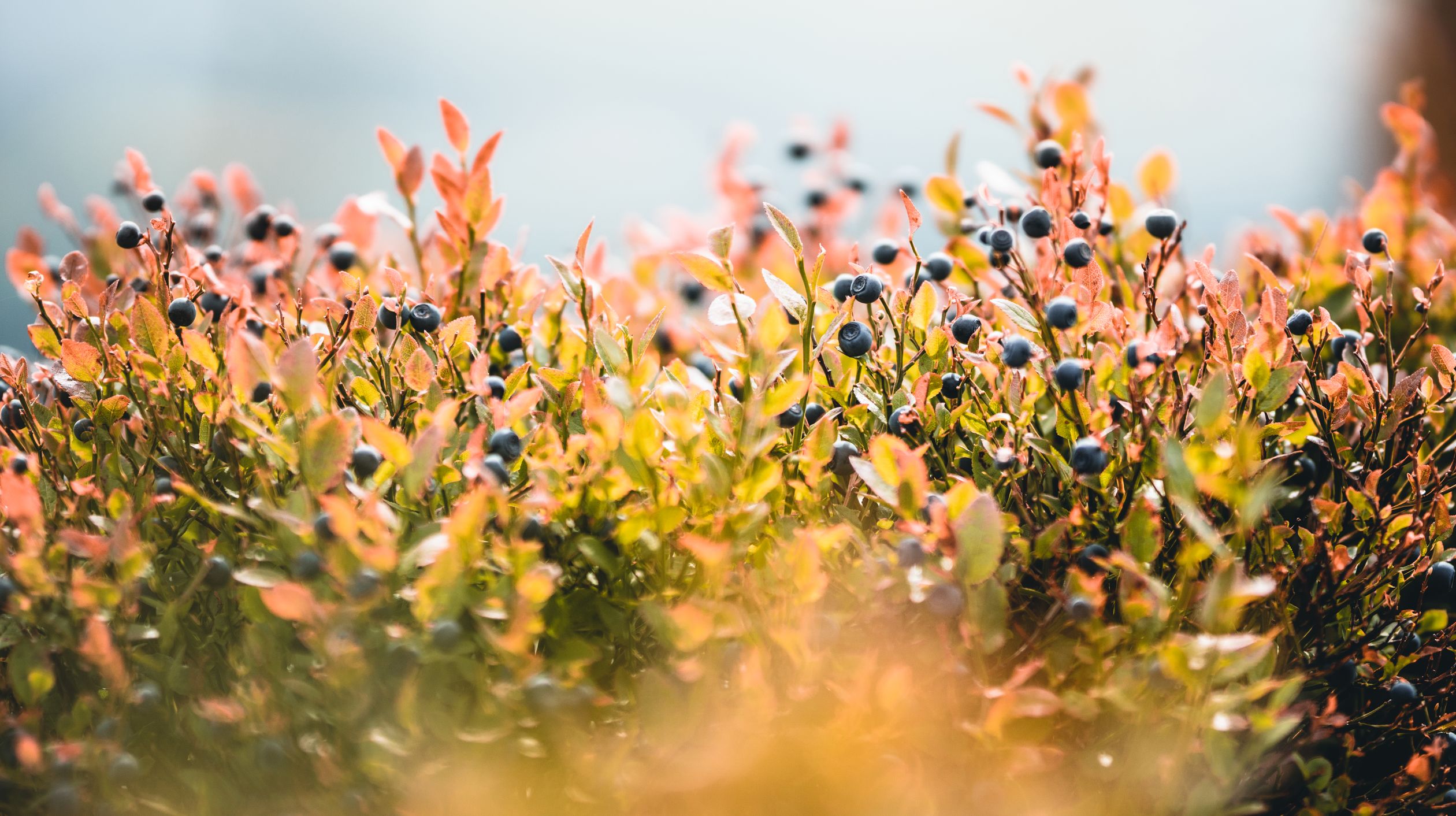
Before you reach for the sulphur, take a look at the calendar and the rest of the bush. Blueberries are deciduous, and one of their loveliest tricks is that the foliage turns a brilliant fiery red before it drops in autumn. This is completely normal and nothing whatsoever to worry about. If it's autumn, the whole bush is colouring up more or less evenly, and the leaves are heading towards dropping, then you're not looking at a disease or deficiency at all. You're just watching the plant do its seasonal thing, and very prettily too.
The way I tell them apart is timing and uniformity. Autumn colour arrives late in the year and affects the whole plant in a fairly even, gradual sweep. A problem, by contrast, tends to show up in spring or summer, patchily, on a plant that otherwise should be in full leaf. So season is your first and best clue.
What if it's a nutrient deficiency?
Even with the pH spot on, a hungry plant will tell you through its leaves. The two deficiencies I'd think about first are nitrogen and magnesium, and helpfully they look quite different.
A nitrogen shortage tends to show as an overall, even paling of the leaves, usually starting with the older, lower foliage, because the plant shuttles what little nitrogen it has up to the new growth. The bush looks generally lacklustre and growth is feeble. Magnesium deficiency, on the other hand, gives you yellowing between the veins on older leaves, sometimes with red or orange tints sneaking in at the edges. The key tell versus iron chlorosis is which leaves are affected: magnesium hits the old leaves first, iron hits the young ones first.
For feeding, I'd always reach for a fertiliser formulated for ericaceous plants, since it's balanced for acid-lovers and won't nudge your pH the wrong way. Feed through the growing season rather than in a single big dose, and go gently. Blueberries are not heavy feeders, and you can do more harm by overdoing it than by holding back.
Why do my leaves look stressed but the pH is fine?
If you've checked the pH, ruled out autumn, and the feeding's in order, the answer usually lies with water and the weather. Blueberries have shallow, fine, fibrous roots that are surprisingly sensitive, and they don't forgive extremes.
Waterlogging is a genuine killer. If the roots sit in soggy, airless compost, they can't function, and the leaves respond by yellowing and looking sad regardless of pH. Pots without proper drainage are the usual offenders. At the other end, drought stresses those same shallow roots quickly, and a thirsty blueberry will scorch, redden and curl, especially in a hot dry spell or when a container dries out faster than you noticed. The aim is compost that stays evenly moist but never sodden.
Cold and general stress can also throw out reddish or purplish tints, particularly on a young plant after a sharp cold snap, a recent repotting, or being moved to a windy spot. This kind of colouring is usually temporary. Once the plant settles and conditions warm up, it tends to green back up on its own, so a bit of patience is often all that's needed.
So how do I work out which one it is?
When I'm trying to diagnose a poorly blueberry, I run through it in a sensible order rather than guessing. First, what season is it? If it's autumn and the colour is even and pretty, relax, that's normal. If it's spring or summer, something's up. Second, what's the pattern? Yellow with green veins on new growth points hard at pH and iron, the most likely cause by far. Even paling on old leaves leans towards nitrogen; between-vein yellowing on old leaves with red edges suggests magnesium. Third, check the water. Soggy or bone dry? Sort the watering and drainage. And if you're in a hard-water area and have been using the tap, switch to rainwater, because that quietly undoes a lot of good work over time.
The reassuring truth is that blueberries are tough, forgiving plants once their basic wants are met, and discoloured leaves are far more often a request than a death sentence. Get the soil properly acidic, water with rainwater, feed lightly with something ericaceous, and keep the compost evenly moist, and the bush rewards you by greening up and getting on with making fruit. Don't panic at the first red leaf. Read what the plant is telling you, work through the causes calmly, and you'll almost always find the fix is simpler than the fright suggested. For everything else on blueberry care, variety choice and soil preparation, my complete guide to growing blueberries in the UK has the full picture.
Frequently asked questions
Why are my blueberry leaves yellow with green veins?
This is the classic sign of iron chlorosis, and it almost always comes down to soil pH. When the pH is too high (too alkaline), the plant cannot take up iron — even if there is plenty of iron in the compost — because iron becomes chemically unavailable outside the acidic range. The fix is to lower the pH: repot or top-dress with ericaceous compost, apply garden sulphur for a gradual correction, and switch to rainwater. A dose of sequestered iron gives a quick boost while the longer-term pH correction takes hold.
Is it normal for blueberry leaves to turn red in autumn?
Yes, completely. Blueberries are deciduous, and their autumn colour is one of their finest qualities — the foliage turns a vivid, fiery red or orange before it drops for winter. If it is late September or October and the whole plant is colouring evenly, that is the plant doing exactly what it should. No action needed. The confusion arises because stress-related reddening can also appear on individual leaves at other times of year, but autumn colour is uniform across the whole plant and arrives on cue.
How do I lower the pH for blueberries quickly?
The quickest route is a dose of sequestered iron (chelated iron), which allows the plant to absorb iron immediately despite the high pH — this addresses the symptom within days. For the underlying cause, repot into ericaceous (lime-free) compost, which is acidic from the start. Garden sulphur works but takes three to six months to act. And going forward, water with rainwater rather than hard tap water, which contains dissolved lime and slowly nudges the pH up over a season.
Can I revive a blueberry with yellow leaves?
In most cases, yes. If the cause is pH or nutrient deficiency, correcting the conditions allows the plant to recover over the following weeks of new growth — the existing yellowed leaves may not fully green up, but healthy new foliage comes through. If the plant has been badly waterlogged or in severely alkaline conditions for a long time, recovery is slower, but blueberries are resilient. Correct the cause, apply sequestered iron as a quick fix, and be patient. Very few plants need replacing; most just need the right conditions.