Top Hat is a dwarf blueberry that grows to just 30 to 50cm tall — compact enough for a patio pot, a balcony, or a sunny doorstep. It produces full-sized blueberries with the same flavour as standard varieties, and its growing requirements are identical: ericaceous compost, rainwater where possible, a sunny position, and a spell of winter cold to set fruit. The only sacrifice is total yield, which is lower than a full-sized bush simply because there is less plant to carry the fruit.
What is Top Hat?
Top Hat is a dwarf blueberry developed by Michigan State University, a cross between a highbush and a lowbush blueberry. What you end up with is a tidy little plant that reaches only 30 to 50cm tall and roughly the same across. Honestly, it looks more like a neat evergreen shrub than a fruit bush, and yet it produces full-sized blueberries on something small enough to perch on a windowsill.
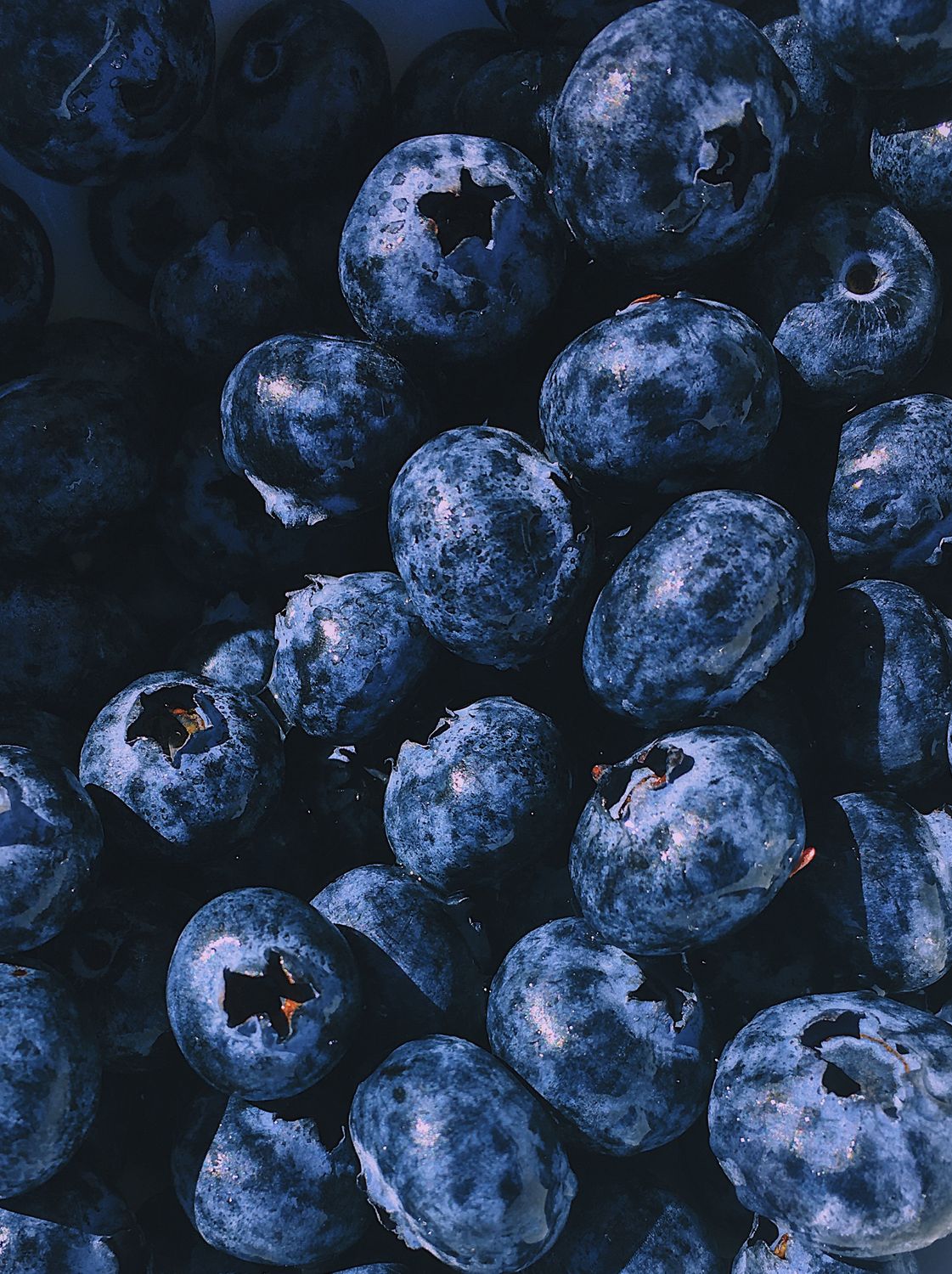
The berries themselves are no compromise. They're the same size and flavour as standard highbush blueberries, sweet and juicy, ripening in mid to late summer. The only thing you sacrifice is total yield, and that's simply because there's less plant to carry the fruit.
Why it works in pots
Here's the thing with blueberries: they need acidic soil, and most British garden soil just isn't acidic enough. Growing in a pot of ericaceous compost sidesteps that problem neatly. The trouble is that ordinary blueberry varieties in pots go top-heavy, demand enormous containers, and end up looking awkward and floppy.
Top Hat stays compact and well-proportioned in a pot as small as 25cm across, though I'd give it 30 to 40cm for better results. It doesn't need staking, won't flop over the edges, and genuinely earns its place as a patio plant. You get white bell-shaped flowers in spring and a lovely flush of autumn leaf colour into the bargain, so it's pulling its weight even when there's no fruit on it.
Growing Top Hat
None of this is difficult, but a few things matter more than people realise. Use ericaceous (lime-free) compost and nothing else. Standard multi-purpose compost is far too alkaline and you'll see the leaves yellow and the plant sulk within a year. Keep the compost consistently moist but never waterlogged, and use rainwater if you possibly can, because tap water in hard-water areas slowly creeps the pH upwards. If tap water is all you've got, let it stand overnight first.
For feeding, an ericaceous liquid feed every two to three weeks from April to August keeps it happy. Steer clear of general-purpose fertilisers, as they so often contain lime. If you notice the leaves yellowing, my guide to why blueberry leaves turn red or yellow covers every cause — it is almost always the soil pH. If you notice the leaves yellowing, my guide to why blueberry leaves turn red or yellow covers every cause — it is almost always the soil pH. Position it in full sun or light shade, a sunny patio, balcony or doorstep being ideal. It will grow on a bright windowsill indoors, but it does better outdoors where pollinators can actually reach the flowers.
Pruning takes about thirty seconds. In late winter, snip out anything dead or crossing and that's your lot. The one job worth diarising is repotting into fresh ericaceous compost every two to three years, because the old compost gradually breaks down and loses its acidity. Do this even if the plant hasn't outgrown its pot.
Does it need a pollination partner?
Top Hat is self-fertile, so a single plant will fruit happily on its own. That said, yields improve noticeably with a second blueberry variety nearby for cross-pollination. If you've space for two pots, another compact sort like Sunshine Blue or Northsky makes a good companion. Even flying solo, expect a respectable crop: a mature plant in a good year can give you 300 to 500 grams of berries, enough for fresh eating and the odd batch of pancakes.
Overwintering
Top Hat is fully hardy and needs no winter protection across most of Britain. In fact it needs a spell of winter cold to set fruit properly, so resist any urge to bring it indoors for the winter. Leave it outside, frost and all. The one precaution I'd bother with is raising the pot off the ground on pot feet or a couple of bricks, so the compost doesn't sit waterlogged through the winter rains.
In a really exposed spot, or during a long hard frost, wrap the pot in bubble wrap to look after the roots. The plant itself is tough as old boots, but roots in a pot are always more exposed to cold than roots in open ground.
Other dwarf blueberry options
Top Hat is the easiest dwarf blueberry to find in Britain, but it isn't the only one worth a look. Sunshine Blue grows a touch taller, around 60 to 90cm, and stays semi-evergreen in mild winters. Northsky keeps under 60cm and is extremely cold-hardy. Jelly Bean is a newer arrival with sweet, jelly-bean-shaped berries on a compact plant. For something entirely different, Pink Lemonade blueberries produce clusters of bright pink berries rather than blue — not a dwarf, but a striking addition to a patio collection. For something entirely different, Pink Lemonade blueberries produce clusters of bright pink berries rather than blue — not a dwarf, but a striking addition to a patio collection. Any of them will do well in a pot. I keep coming back to Top Hat, though, because it's the most compact, the easiest to buy, and the best place to start if you've never grown blueberries in containers before.
Is it worth growing?
I'll be straight with you: one Top Hat won't replace your weekly punnet from the supermarket. What it will give you is a few handfuls of properly fresh, perfectly ripe blueberries that taste better than anything off a shelf, from a plant smaller than a window box. For balconies, patios and small gardens, I struggle to think of anything that beats it. For the full picture on blueberry growing — soil, watering, varieties and pruning — my complete guide to growing blueberries in the UK has it all covered.
Frequently asked questions
Is Top Hat blueberry self-fertile?
Yes — Top Hat will fruit happily on its own. A mature plant in a good season can produce 300 to 500 grams of berries without a companion. That said, yields improve noticeably if you grow a second blueberry variety nearby for cross-pollination, as they do with all blueberries. A Sunshine Blue or Northsky in an adjacent pot is the ideal pairing — both are compact enough for small spaces and their flowering times overlap well with Top Hat.
What size pot does Top Hat blueberry need?
A minimum of 25cm across, though 30 to 40cm is better. Top Hat has a compact, shallow root system and does not need depth — it needs width and adequate volume of compost to stay moist between waterings. Use ericaceous (lime-free) compost and nothing else; standard multi-purpose compost is far too alkaline. Repot every two to three years even if the plant has not outgrown its pot, because old compost gradually loses its acidity.
When does Top Hat blueberry fruit?
Mid to late summer — roughly July into August in most parts of the UK. It is slightly later than early-season highbush varieties like Duke, which start in July, but it crops at the same time as mid-season types like Bluecrop. The berries do not all ripen at once, so pick over the plant every week or so rather than stripping it in a single go. Fully ripe berries are deep blue, plump, and come away from the branch with barely a pull.
Can Top Hat blueberry be grown indoors?
It will survive on a very bright, south-facing windowsill, but it does better outdoors. Two things hold it back indoors: pollinators cannot reach the flowers (reducing fruit set), and the plant needs genuine winter cold to trigger fruit bud formation for the following season. If you bring it inside for winter warmth, it may not fruit well the following year. Leave it outside in a sheltered spot — it is fully hardy to around minus 15 degrees Celsius — and let it do what it is designed for.
More in this series: Growing Blueberries in Britain: Everything You Need to Know • Blueberry Pollination Explained: How Many Bushes Do You Really Need? • Why Are My Blueberry Leaves Turning Red or Yellow? • Pink Lemonade Blueberries: The Unusual Berry That Turns Pink Instead of Blue
Once you've picked a variety like Top Hat, the general rules of container growing still apply — pot size, compost, watering and winter protection all matter as much as the blueberry itself. My guide to container gardening for fruit covers that groundwork in full, alongside how it applies to other berries beyond blueberries.
And if Top Hat has you thinking beyond blueberries, my guide to the best berries for small gardens and containers rounds up the other fruit worth trying in a small space.