Yes, cranberries can be grown in the UK. They thrive in acidic, peaty soil with steady moisture — conditions that are easy to replicate in a pot of ericaceous compost — and the British climate suits their need for cold winter dormancy perfectly. Say "cranberry" and most people picture those vast flooded bogs in Massachusetts, with workers wading waist-deep through a sea of bobbing red fruit. It looks nothing like a back garden in Britain, so when people ask me whether they can grow their own, they've usually decided the answer is no before I've opened my mouth. They're wrong, as it happens. Cranberries grow surprisingly well here, once you understand what they're actually after.
Do Cranberries Need to Be Flooded?
Let me clear up the biggest misunderstanding first, because nearly everyone holds it: cranberries do not grow in water. They grow in acidic, peaty bogs that are damp but never submerged. All that dramatic flooding in the harvest photographs is a harvesting trick, not a growing condition. Ripe cranberries have little air pockets inside that make them float, so commercial growers flood the bogs briefly in autumn and skim the bobbing fruit off the surface with machines. You won't be flooding anything. You just need acidic soil that stays reliably damp.
What Cranberries Need
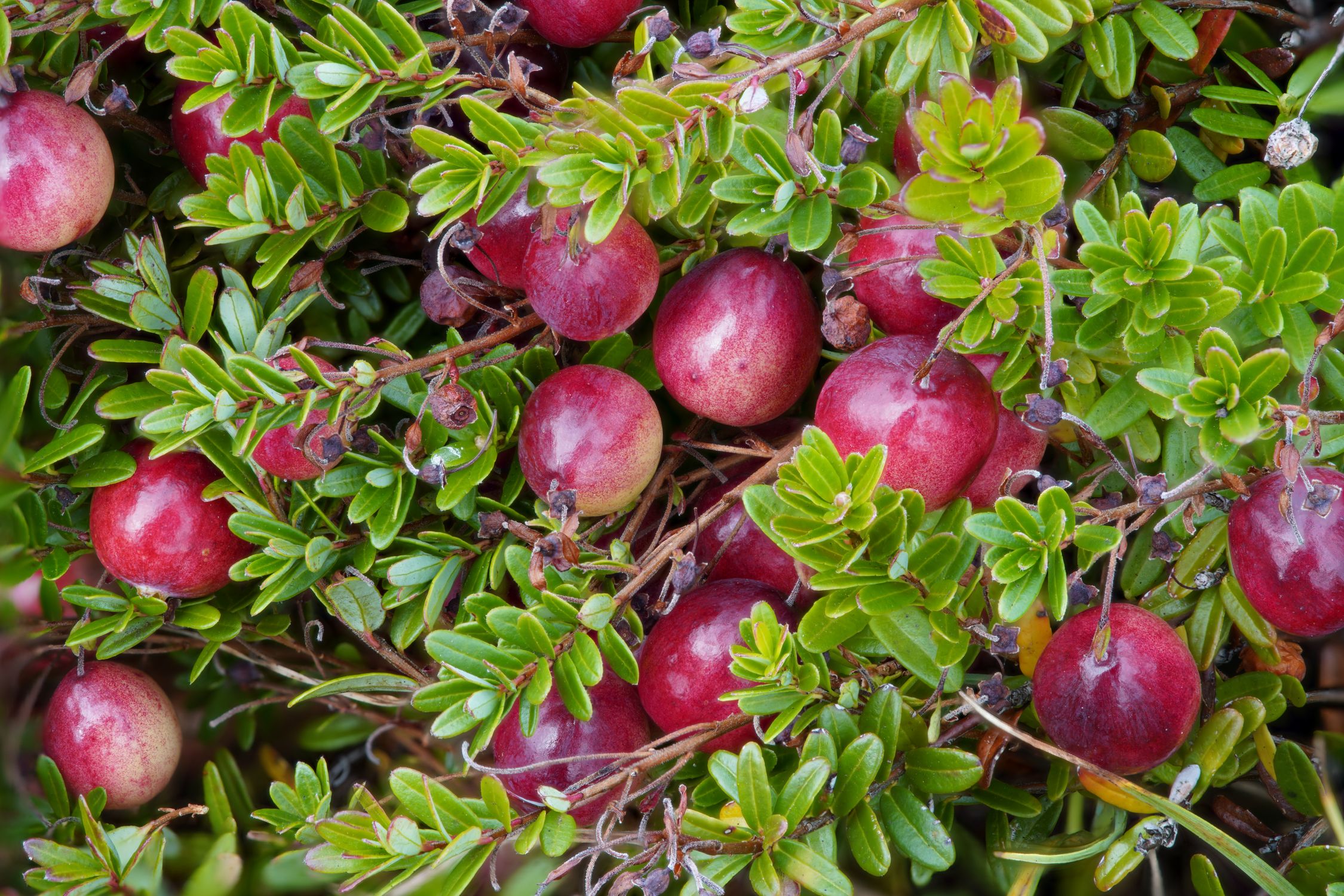
The cranberry is Vaccinium macrocarpon, a low, creeping evergreen native to the bogs and wetlands of North America, and a cousin of the blueberry, the bilberry and our garden heathers. It shares their basic wants, which I'd boil down to four things. The first is acidity, and it's the one you can't fudge: a soil pH between 4.0 and 5.5, because cranberries simply will not grow in neutral or alkaline ground. The second is steady moisture, damp like a wrung-out sponge rather than a puddle, since the roots still need oxygen and standing water will drown them. The third is sun, full sun for the heaviest crop though they'll cope with light shade. And the fourth, happily, our climate hands them for free: they're fully hardy here and want a cold winter dormancy, which a British winter never fails to deliver.
Growing Cranberries in Containers
For most of us, growing them in a pot is far and away the easiest route. Use a wide, shallow container, at least 30cm across and 15cm deep, because cranberries are shallow-rooted creepers rather than deep-rooted bushes, so width counts for more than depth. Fill it with a mix of ericaceous compost and perlite, and if you want to give moisture retention a boost, work in some sphagnum moss as a few growers do. Plant young cranberries about 15cm apart and water them in well.
The golden rule from there is never to let the compost dry out, which in high summer can mean a daily watering. Use rainwater if your tap water is hard, since the lime in it will edge the pH up over time and quietly sabotage you. A saucer underneath helps hold moisture, but don't leave it permanently brimming.
Growing Cranberries in the Ground
If you're lucky enough to have naturally acidic, boggy ground, cranberries will reward you for almost no effort, making lovely ground cover that spreads by runners into a dense mat of evergreen foliage. For the rest of us without that kind of soil, the answer is to cheat a little: dig out a shallow bed about 15cm deep, line it with pond liner, punch a few drainage holes in the bottom, and fill it with ericaceous compost. The liner walls off the surrounding alkaline soil and keeps your pocket of acidity intact.
Varieties for British Gardens
Most cranberries on sale in UK garden centres come simply labelled Vaccinium macrocarpon with no variety name attached, and you'll do better hunting down a named cultivar. Early Black is a dependable early ripener that suits our shorter season nicely. Stevens is a heavy cropper with large berries. Pilgrim is widely available and crops well in our conditions. And Ben Lear ripens early with good-sized fruit. Any of the four is a sound choice.
Harvesting and Using Cranberries
Cranberries ripen through October and November, turning from green to deep red, and they want to be firm and fully coloured before you pick. Here's a charming little test I'm fond of: drop a ripe cranberry on a hard surface and it bounces, thanks to those air pockets, while an unripe one just thuds.
Don't expect to eat them raw, mind. Fresh cranberries are fiercely tart and almost nobody enjoys them straight off the plant. They're a cooking berry through and through, destined for sauce, jam, juice and baking. The classic cranberry sauce alongside the roast turkey is the obvious place to start, but they also make a cracking chutney, dry well for scattering through cakes and muesli, and pair beautifully with apple in crumbles and pies. They keep for weeks in the fridge and freeze perfectly, so a single productive pot can see you through Christmas dinner with plenty spare for the freezer.
Frequently asked questions
Do cranberries grow in the UK?
Yes. Cranberries are not native to Britain but they grow well here, given acidic soil and steady moisture. The British climate actually suits them, since they need a cold winter dormancy and our winters reliably deliver that. Most gardeners find a pot of ericaceous compost kept damp with rainwater the easiest route in.
Can you grow cranberries in a UK garden?
You can, either in a container of ericaceous compost or in a specially prepared acidic bed. The container route is easier for most gardens because you can control the pH precisely and use rainwater to maintain it. A large, shallow pot at least 30cm across filled with ericaceous compost is all most gardeners need.
What is cranberry season in the UK?
Cranberry season in the UK typically runs from October into November. The berries turn from green to deep red through the autumn and are ready to pick when fully coloured and firm. They keep well in the fridge for several weeks after picking and freeze perfectly.
Do cranberries need boggy ground to grow?
No. The flooded-bog image comes from the commercial harvesting method, not from how the plants actually grow. Cranberries want soil that is consistently damp — like a well-wrung sponge — but never waterlogged. The roots still need oxygen, and standing water will kill them. Steady moisture is the goal, not a bog.
What to Expect from a Cranberry Plant
Cranberry plants are genuinely attractive the year round — delicate pink flowers in summer, bright red berries in autumn, and neat evergreen foliage right through the winter. From a well-established pot, a realistic yield is around 200 to 400 grams a year once the plant is three or four years old. Not vast, but more than enough for a batch of cranberry sauce and a jar of jam, made from something you grew yourself. They do ask for attention to watering and soil acidity, so they reward a gardener who enjoys checking on things.
As a talking point and a source of properly home-grown sauce, a pot or two earns its place. If you're curious about the nutritional side of things, I've also written about whether cranberries are actually good for you — the health benefits are real, but the form in which you eat them makes a significant difference. And if you'd like something similar but a little more forgiving, it's worth weighing cranberries against their close cousin in my cranberry vs lingonberry comparison.
More in this series: How to Make Cranberry Sauce (Easy Homemade Recipe) • Growing Cranberries in Pots and Containers • Cranberry vs Lingonberry: What's the Difference? • Are Cranberries Good for You? The Health Benefits Explained
Why Are My Cranberry Leaves Turning Yellow?
Yellowing leaves on a cranberry plant almost always mean the soil isn't acidic enough. This is the single most common problem gardeners run into, and it's rarely a watering or feeding issue — it's chemistry. Once pH drifts up past about 5.5, the plant can't take up iron properly even if there's plenty in the soil, and the newer leaves turn pale yellow while the veins often stay green (a classic sign of iron chlorosis). Tap water is usually the culprit over time, since even "soft" mains water carries enough lime to nudge ericaceous compost off course after a season or two.
Fix it by watering with rainwater going forward, feeding with a sequestered iron tonic made for ericaceous plants, and checking pH with a cheap soil testing kit if the yellowing doesn't clear up within a few weeks. If you're growing in the ground rather than a lined bed, this is also the moment to accept that the site probably isn't acidic enough long-term and a container or lined bed will save you the annual fight.
Why Isn't My Cranberry Plant Fruiting?
Poor fruit set is usually down to one of two things: not enough winter chill, or not enough pollination. Cranberries need a proper cold dormant period to trigger flowering the following year, so a plant that's been kept somewhere sheltered and mild over winter — up against a warm wall, or brought into a porch — often flowers weakly or not at all. Leave containers out in the open through winter; British cold is exactly what they need.
Pollination is the other common gap, especially for container-grown plants on a patio or balcony. Cranberries are self-fertile, so you don't need two plants, but the flowers still need something moving pollen between them — usually bees. If your plant flowers well in early summer but the flowers just drop without swelling into berries, low insect activity is the likely reason. Positioning pots somewhere bees actually visit, rather than a sheltered corner, makes a real difference.
Judging Ripeness: The Float Test
Alongside colour and the bounce test already covered above, the float test is the other reliable way to judge ripeness, and it's more useful once you're harvesting more than a handful at a time. Drop your picked berries into a bowl of water: ripe cranberries have four small internal air pockets and float, while underripe ones sit low or sink. It's the same principle commercial growers use in flooded bogs, just done in a washing-up bowl at home — pick through, skim off what floats, and leave the sinkers on the plant another week.
Making the Most of a Small Home Harvest
Most home-grown cranberry crops are modest — a few hundred grams from an established plant — which is too small for jam-making but perfect for sauce. Freeze berries loose on a tray as soon as you pick them, then bag them once solid; they'll keep for months and can go straight from freezer to pan with no need to thaw first. When you're ready to use them, our cranberry sauce recipe takes just 300g of berries and turns them into something far brighter than anything from a jar. If you're growing in containers rather than a bed, our dedicated guide to growing cranberries in pots and containers covers pot sizing, compost, and watering in more depth than we can go into here.