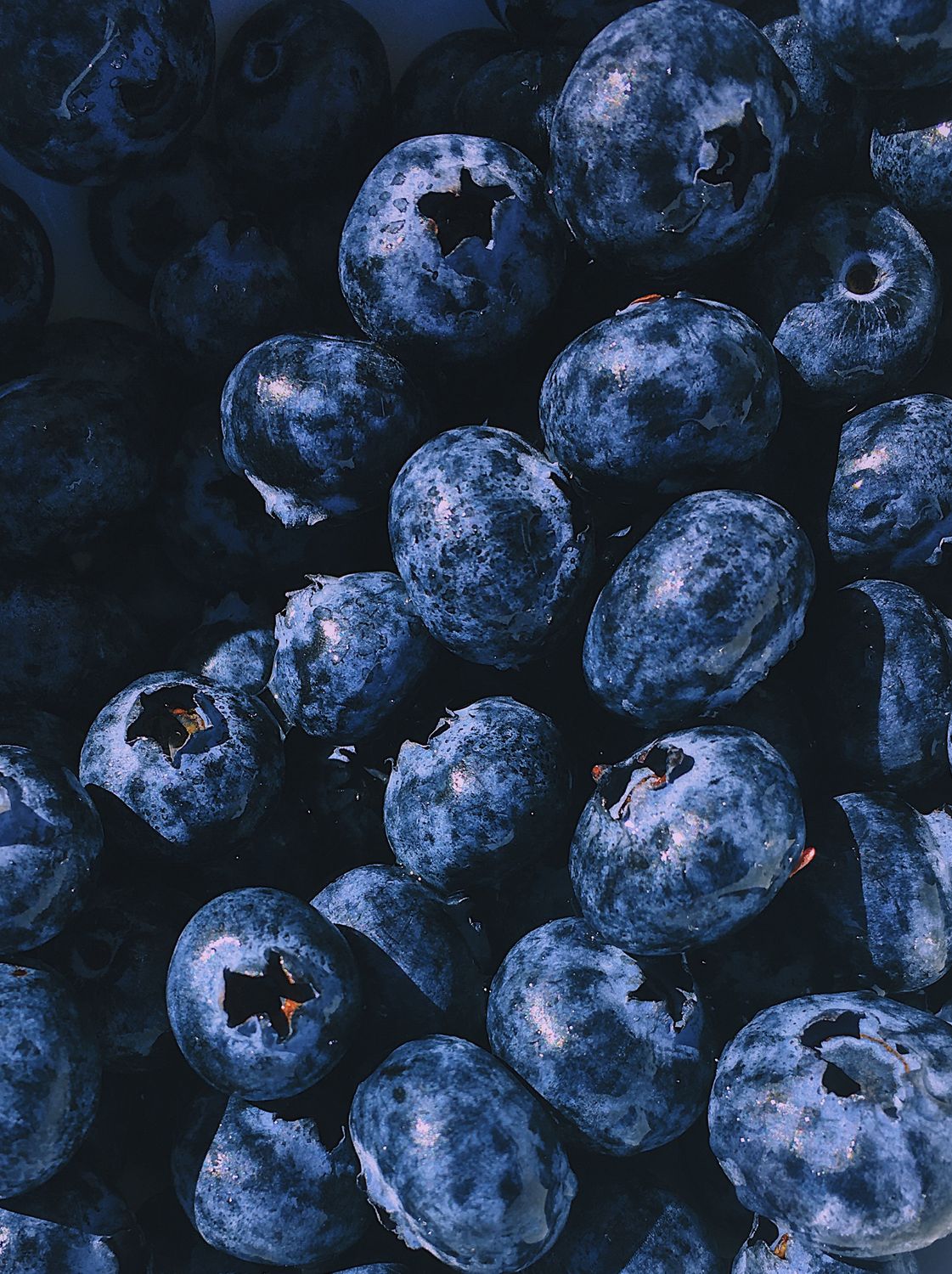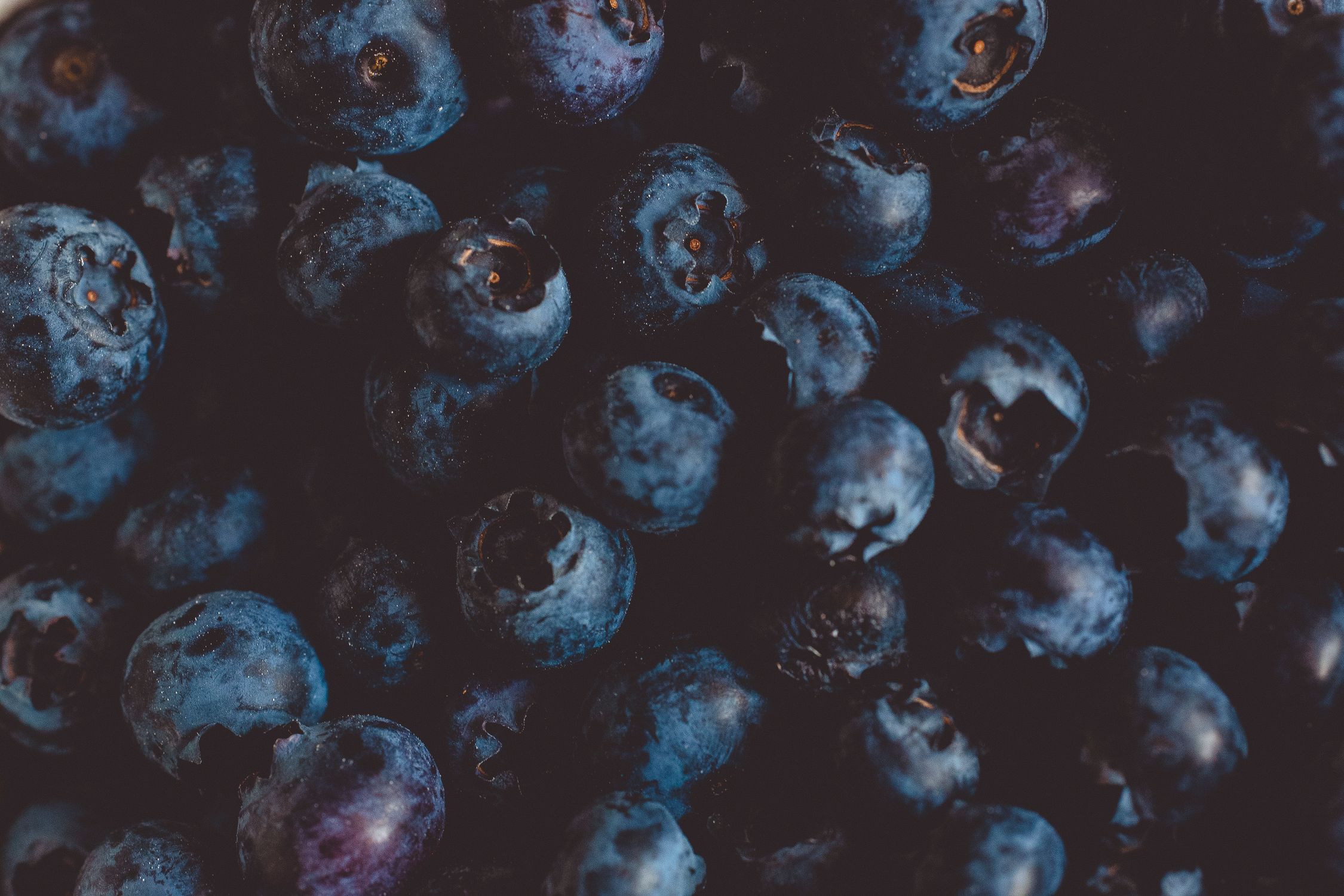
Walk across any British moorland in late summer and there's a fair chance you'll tread on bilberries without even noticing. These tiny dark berries grow on low bushes barely ankle-high, tucked away under the heather and bracken. They're close cousins of the blueberries piled up in supermarket punnets, but anyone who has tasted both will tell you they're not remotely the same thing.
Bilberries vs Blueberries
The cultivated blueberries you buy are North American highbush blueberries, Vaccinium corymbosum. Bilberries are Vaccinium myrtillus, a European species that grows wild across Britain, Scandinavia, and much of northern Europe. The differences run a good deal deeper than geography.
For a start, bilberries are smaller, rarely bigger than a pea. The flesh is a deep red-purple all the way through, where blueberry flesh is pale green, and that's why bilberries stain absolutely everything they touch, from your fingers to your teeth to the kitchen worktop, in a way blueberries simply don't. The flavour is more intense too, sharper and more complex, with a depth no commercial blueberry can match.
The trade-off, and there always is one, is yield. A bilberry bush gives you a fraction of what a highbush blueberry will, and the berries are fiddly to pick, growing singly or in pairs rather than in obliging clusters. That's precisely why bilberries never became a commercial crop, and why you'll never see them in a supermarket.
Where to Find Them
Bilberries grow on acidic soils across upland Britain, with moorland, heathland, and open woodland edges being the classic spots. The Peak District, Snowdonia, the Scottish Highlands, Dartmoor, and the North York Moors all hold good populations, and you'll find them in lowland heathland too, in places like the Surrey Hills and the New Forest.
Look for low, wiry bushes with small oval leaves growing in among the heather. In spring they carry tiny pink-green bell-shaped flowers, and by late July the berries begin to ripen, turning from green to a deep blue-black. The season runs from late July through August, and sometimes into early September up at higher altitudes.
The surest way to confirm you've found the real thing is to squash one between your fingers. If it bleeds dark purple juice, it's a bilberry. A blueberry would show pale green flesh and leave your fingers clean.
Picking Bilberries
This is the part that tests your patience. The bushes are short, the berries are small, and gathering a useful quantity takes time, there's no way round it. In Scandinavia they use a special berry comb that strips the fruit straight off the bush, but these are hard to come by in Britain and, used roughly, they'll damage the plants.
Most British pickers, myself included, just work by hand. It's slow but it's gentle on the plants. A realistic target is around 500 grams an hour in a good patch, though an experienced picker in a bumper year might do better. My one practical tip: bring a container you can strap to your waist so both hands are free for picking. And be ready for purple fingers that'll take a day or two to fade, so old clothes are very much recommended.
Growing Bilberries in the Garden
You can grow bilberries at home, though I'll be honest, they'll never give you the quantities cultivated blueberries do. They want acidic soil with a pH between 4.0 and 5.5, partial shade, and steady moisture. A spot under birch trees or on the north side of a wall suits them nicely.
Container growing in ericaceous compost does work, but the bushes stay very small and the yield is minimal. Honestly, they're far better treated as a ground cover plant in an acid-soil garden, left to spread naturally beneath taller shrubs. Plants are available from specialist nurseries, but they establish slowly and may take three to four years to fruit well, so patience again. The upside is they don't need the regular pruning a highbush blueberry demands, just the occasional tidy to take out dead wood.
Using Bilberries
That intense flavour and deep colour make bilberries outstanding in the kitchen. They make a jam darker and more complex than anything blueberries can manage. Bilberry pie is a traditional dish in parts of northern England, and bilberry tart is a classic right across much of Europe.
They freeze well and go straight from frozen into baking, smoothies, and sauces. That high anthocyanin content responsible for their colour also makes them nutritionally impressive, with antioxidant levels significantly higher than cultivated blueberries. One word of warning, though: fresh bilberries need eating or processing quickly, as they don't keep like the thicker-skinned highbush sort. A day or two in the fridge is about the limit before they start to soften and leak.
Bilberries in British Culture
Bilberries have a long history in these islands, gathered for both food and medicine over centuries. In parts of Lancashire and Yorkshire, bilberry picking was a communal summer ritual, and bilberry pie was standard fare at the August fairs and wakes weeks.
During the Second World War, RAF pilots were rumoured to eat bilberry jam to sharpen their night vision. The science behind that is debatable, I'll grant you, but bilberries do contain compounds that support eye health, and the story has stuck around regardless. Over in Ireland, the last Sunday in July is traditionally known as Fraughan Sunday, when people climb the hilltops to gather bilberries; the name comes from the Irish word for the berry, fraochan, and similar customs once ran through Wales and Scotland.
When cheap imported blueberries flooded the shelves from the 1990s onwards, bilberry picking fell away. But there's been a quiet revival of late, driven by foragers rediscovering just how much better a wild bilberry tastes than anything money can buy. Long may it continue.
Bilberries take their place among Britain's other wild fruit in my UK wild berry identification guide, which covers moorland and hedgerow species side by side so you know exactly what you're looking at, and what to leave well alone.