Cranberries grow very well in pots — in fact, a wide, shallow container of ericaceous compost is the best way to grow them in most British gardens. A container gives you direct control over the two things cranberries are fussiest about: soil acidity and moisture. In open ground both are hard to guarantee; in a pot they're entirely in your gift. If you're still deciding whether it's worth the effort at all, I've made the wider case for growing cranberries in Britain separately — this piece is about doing it well in a container.
Why are pots and raised beds the best way to grow cranberries?
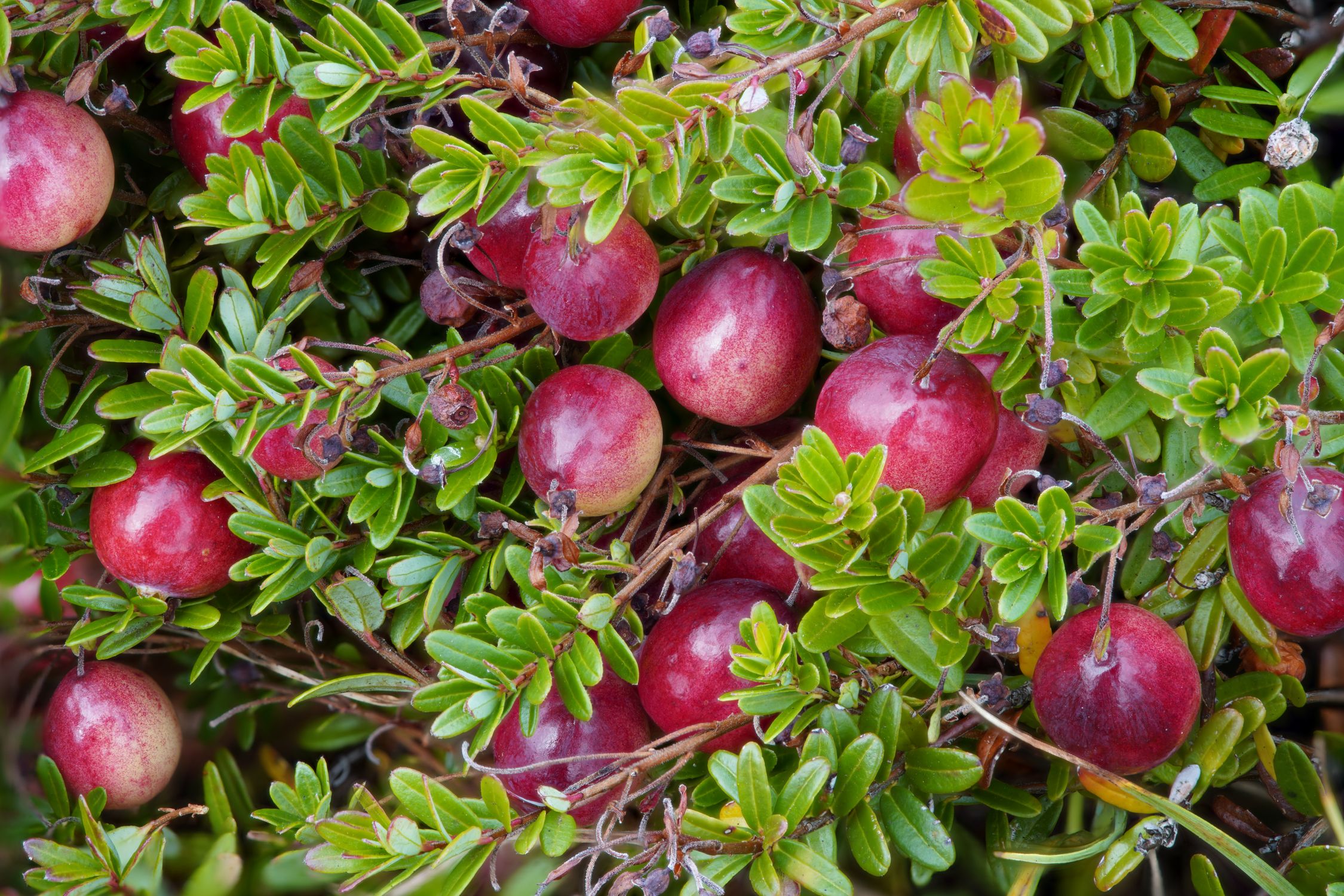
The cranberry (Vaccinium macrocarpon) is a low, evergreen, creeping bog plant. In the wild it sprawls across acidic peat bogs with its feet permanently damp, and that tells you everything about what it wants from you. Most British garden soil is nowhere near acidic enough, and trying to drag a whole border down to the pH a cranberry needs is a losing battle — the surrounding soil simply buffers it back. A pot, or a dedicated raised bed lined to keep ordinary soil out, sidesteps the whole problem. You fill it with exactly the compost the plant wants, you water it with exactly the water it wants, and nothing leaches in to undo your work.
There's a happy bonus, too. Cranberries are acid-loving in the same way blueberries are, so if you already grow blueberries in tubs you've effectively done a dry run for this. The regime is near enough identical, and the two make natural companions on a patio.
What compost and pH do cranberries need?
This is the non-negotiable bit, so I'll be blunt about it. Cranberries demand very acidic conditions — a soil pH of roughly 4.0 to 5.5. That is far more acidic than most plants tolerate, and it's why ordinary multipurpose compost won't do. You want a proper ericaceous compost — and a peat-free ericaceous mix is the responsible choice these days — or, if you can find it, a lime-free acidic compost. Whatever you use, the words to look for are ericaceous or lime-free; anything with added lime or a neutral pH will slowly starve the plant and yellow its leaves.
As for the container itself, think about the plant's habit. A cranberry creeps and trails along the ground rather than growing up; it's a mat-former, not a bush. So a wide, shallow container suits it far better than a tall narrow one — a broad pan or a half-barrel laid out as a shallow bed gives the runners room to spread and root as they go, which is exactly how cranberries like to colonise. Make sure it drains freely, even though you'll be keeping it wet, because stagnant waterlogging that goes anaerobic will rot the roots.
Can you grow cranberries in a pot — and how do you keep them watered?
You absolutely can, and watering is where pot-grown cranberries are made or lost. These are bog plants, and the single fastest way to kill one is to let it dry out. The compost should stay constantly, reliably moist — never parched, never just damp on top while bone-dry beneath. In the heat of summer I stand the pot in a wide tray or saucer and keep a little water sitting in it, so the compost wicks moisture up from below and never has the chance to dry. That standing-water trick is one thing cranberries genuinely appreciate, where most container plants would resent it.
But — and this is the part people miss — it matters enormously what you water with. Use rainwater, not tap water. Hard British tap water carries dissolved lime, and every can of it nudges the compost's pH upward over time, slowly undoing the acidity your cranberry depends on. You won't see it happen in a week, but over a season of tap watering the plant fades, the leaves pale, and you'll wonder what went wrong. So get a water butt on a downpipe if you possibly can, and save the rain for your acid-lovers. It's free, it's soft, and it's exactly what the plant is adapted to.
If you remember only two things, make them these: keep cranberries permanently moist, and water them with rainwater. Get those right and the rest is detail.
Where should cranberries go, and how do you plant and feed them?
Give them full sun. Cranberries will limp along in part shade, but they fruit best and ripen most reliably in an open, sunny spot — so the brightest corner of the patio is theirs. Plant in spring once the worst of the frosts have passed, setting the plants into your ericaceous compost at the depth they came in and firming them gently. Space several across a wide container if you're filling a broad pan; they'll knit together into a low evergreen mat over a season or two. Helpfully, cranberries are self-fertile, so a single plant will set fruit on its own — there's no need to juggle pollination partners.
Feed lightly. This is not a hungry plant, and overfeeding does more harm than good — too much nitrogen pushes soft leafy growth at the expense of fruit. A gentle ericaceous feed, the same sort you'd give blueberries or rhododendrons, applied sparingly through the growing season is plenty. I top that off with an acidic mulch: a layer of composted bark, or pine needles if you can get them, spread over the surface. It keeps the moisture in, suppresses weeds, and quietly maintains the acidity rather than working against it.
How do you overwinter and harvest cranberries in containers?
Here's a reassuring fact: cranberries are fully hardy, and they don't merely tolerate a British winter — they need it. The plant requires a proper spell of winter cold, a genuine dormancy, before it will set fruit the following year. So resist any urge to coddle it indoors or under cover; a cranberry kept too warm and cosy over winter simply won't crop. Leave it out to take the chill. The one concession I'd make is the same as for any acid-lover in a pot: the roots are more exposed than they'd be in the ground, so in a really hard frost it does no harm to tuck the container into a sheltered spot, but the plant itself wants that cold.
Through winter, ease right off the feeding and let growth pause — but, as ever, don't let the compost dry out completely even in the cold months. Then comes the reward. Cranberries ripen in autumn, roughly September through November, the berries deepening to that familiar glossy red. Pick them when they're firm and well-coloured; a ripe cranberry should bounce if you drop it, which is a daft but reliable little test. They keep beautifully, and there's no nicer use for a home-grown handful than turning them into homemade cranberry sauce — a piece I've written to publish alongside this one.
That, to me, is the joy of cranberries in containers. They ask for very particular things — acid compost, constant moisture, rainwater, sun and a cold winter — but every one of those is something a pot lets you provide precisely. Get the basics right and you'll have a handsome evergreen mat that earns its keep all year and crowns it with a scarlet harvest just as the garden winds down. Happy growing.
Frequently asked questions
Can you grow cranberries in pots in the UK?
Yes — and for most British gardeners, a pot is actually the best approach. Cranberries need very acidic soil (pH 4.0–5.5) and constant moisture, both of which are difficult to guarantee in open ground. A wide, shallow container filled with ericaceous compost and watered with rainwater gives you full control over both, and the results are far more reliable than trying to adapt ordinary garden soil to suit them.
What size pot do cranberries need?
Wide and shallow, rather than tall and narrow. A cranberry is a low, creeping, trailing plant — it grows outward, not upward — so width matters far more than depth. Aim for a container at least 30cm across and roughly 15cm deep, though bigger is always better. A broad half-barrel or a wide terracotta pan suits them well and gives the runners room to spread and root as they go.
Do cranberries in pots need rainwater?
Yes, wherever possible. Hard British tap water contains dissolved lime, and watering with it over a full season gradually raises the compost's pH, slowly undoing the acidity the plant depends on. The effect is invisible week to week, but after a summer of tap watering the leaves pale and growth stalls. A water butt on a downpipe solves the problem — soft rainwater is free, it's what the plant is adapted to, and it keeps the pH exactly where you need it.
How long before pot-grown cranberries produce fruit?
Expect a modest first crop in year two or three, building to a proper harvest by year three or four. Cranberries are slow to establish but long-lived — a well-maintained container can crop reliably for ten years or more. In the first year, focus on keeping the compost consistently moist and acidic; that investment in the roots pays off handsomely once the plant settles in.
More in this series: Cranberries: Can You Grow Them in Britain? • How to Make Cranberry Sauce (Easy Homemade Recipe) • Cranberry vs Lingonberry: What's the Difference? • Are Cranberries Good for You? The Health Benefits Explained
Cranberries are a fairly specialised case among container berries, needing acid compost and constant moisture that not every fruit demands. For the wider picture on choosing pots, compost and a watering routine that suits berries generally, my container gardening guide for fruit is a useful companion piece.