| Botanical name | Fragaria vesca |
|---|---|
| Family | Rosaceae |
| Hardy rating | RHS H7 (extremely hardy) |
| Fruiting season | May–September |
| Height | 5–30 cm |
| Position | Full sun to partial shade |
| Habitat | Woodland edges, grassland, hedgebanks, chalk downland |
| Edible raw? | Yes — intensely flavoured |
The wild strawberry is, by almost any measure, a better strawberry than the ones you buy in shops. It's smaller — often barely the size of a fingernail — and you'll never pick a quantity large enough to fill a punnet. But the flavour is completely different from a supermarket strawberry: intensely sweet, aromatic, almost perfumed, concentrated in a way that the large commercial varieties, bred for size and shelf life rather than taste, simply cannot match. One wild strawberry, eaten warm from the plant on a summer afternoon, contains more flavour per gram than a whole punnet of February imports.
They grow across Britain in a wide range of habitats — woodland edges, chalk grassland, hedgebanks, railway embankments, old walls — and once you know what you're looking for, you'll spot them everywhere. They're also easy to grow in gardens, either as a ground cover or in containers, though you'll need several plants to get a harvestable quantity.
Identifying Wild Strawberry
Fragaria vesca looks like a small version of a cultivated strawberry plant, which makes sense — the garden strawberry (Fragaria × ananassa) is a hybrid partly descended from it. The leaves are in groups of three (trifoliate), bright green, slightly hairy, with toothed margins. The leaflets are more rounded and less glossy than garden strawberry leaves.
The flowers are small (1–1.5 cm across), white with five petals and a yellow centre, held on slender stems above the leaves from April through to July in successive flushes. The runners are the same as cultivated strawberries — long, slender, red stems that root at intervals to produce new plants.
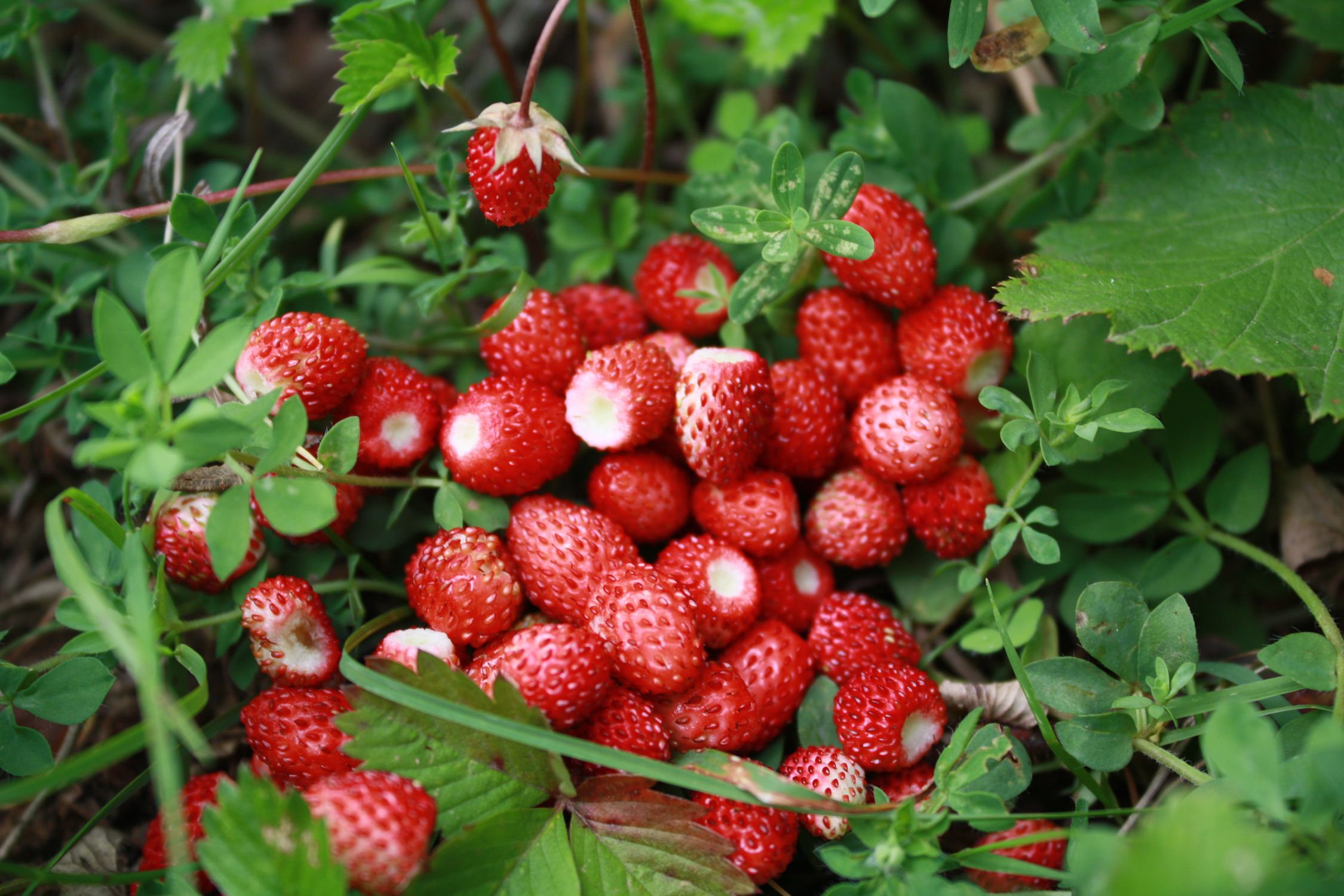
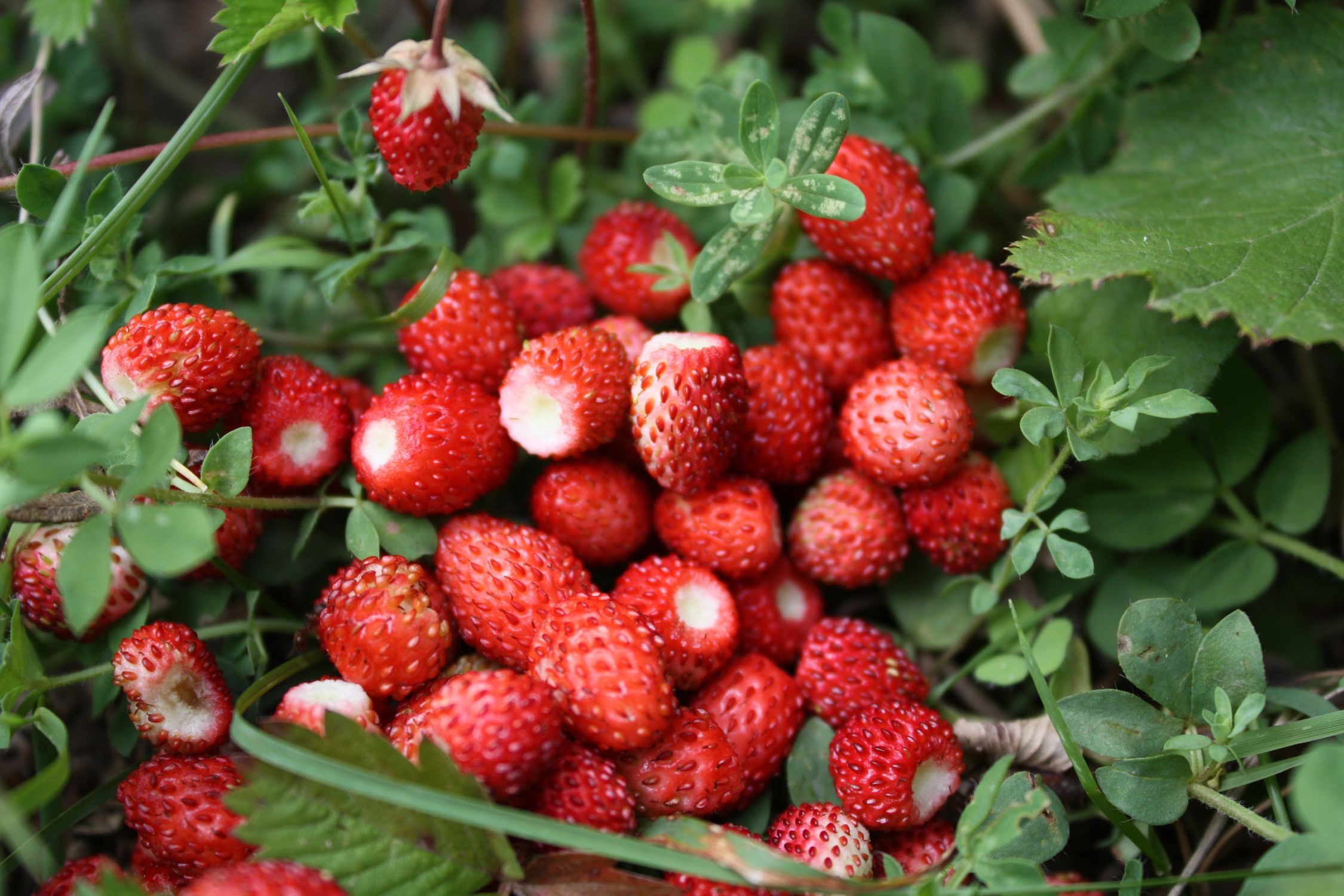
The fruit is unmistakable once you know it: a tiny, perfectly formed strawberry, usually 1–2 cm long, bright red when ripe, covered in tiny seeds on the surface. Unripe fruit is pale green or white. The fruit points downward from its stem, often hidden beneath the foliage — you frequently smell them before you see them, since the scent of a cluster of ripe wild strawberries is remarkable.
There are two other wild strawberry species in Britain that may cause brief confusion:
Barren strawberry (Potentilla sterilis) — very similar leaves and flowers but no fruit is produced, or only a tiny dry non-fleshy structure. The flowers appear earlier (February–May) and the petals are slightly notched. There's no edible fruit to pick, so it doesn't matter much for foragers, but it's worth knowing it exists.
Hautbois strawberry (Fragaria moschata) — a naturalised species occasionally found in old gardens and hedgerows, similar to wild strawberry but slightly larger and with a distinct musky flavour. Edible, but relatively uncommon.
Where to Find Them
Wild strawberries favour disturbed, open ground with reasonable drainage — they don't like waterlogged or heavily shaded conditions, though they'll tolerate dappled shade. The best habitats in Britain are:
Chalk and limestone grassland — the short, open turf on chalk downland and limestone escarpments is ideal. Some of the most productive wild strawberry patches in southern England are on south-facing chalk slopes.
Woodland edges — the strip between closed-canopy woodland and open ground, where light gets in, is productive. Old coppiced woodland, where periodic cutting creates open patches, can be excellent.
Hedgebanks — the raised banks under hedgerows, particularly old ones, are frequently colonised by wild strawberry. South-facing hedgebanks in sun get the most fruit.
Road and railway embankments — disturbed ground that hasn't been managed into grass monoculture often supports wild strawberry, particularly on chalk or sandy soils.
Old walls and ruins — Fragaria vesca will grow from wall crevices where a little soil has accumulated, and these plants, fully exposed to sun, can produce intensely flavoured fruit.
When to Pick
Wild strawberries ripen from late May in warm southern sites through to September in shadier spots and further north. The season is typically at its peak in June and July. Because plants flower in flushes across the season, there's rarely a single moment of glut — you'll typically find a few ripe berries on each plant spread over several weeks.
Ripe berries are fully red all over and come away from the plant with a very gentle touch. Under-ripe berries are pale or greenish and will be significantly less flavourful even if they look mostly red. The seeds on fully ripe berries typically sit in slight depressions in the flesh; on under-ripe berries they're more prominent.
Wild strawberries don't keep well — the flesh is very soft and they'll deteriorate within hours of picking. Eat them on the spot or within a few hours at most.
Growing Wild Strawberries in the Garden
If you want a reliable supply rather than foraging for scattered berries in the hedgerow, growing Fragaria vesca in the garden is easy and rewarding. The plants are vigorous, self-spreading via runners, and will colonise a bed or border quickly once established.
Wild strawberry tolerates a wider range of conditions than cultivated varieties — it will grow in partial shade and is quite drought-tolerant once established, making it useful as ground cover under trees or shrubs where other plants struggle. For maximum fruit, give it full sun and reasonable drainage.
Plants can be grown from seed (start under cover in late winter, cold stratification helps germination), bought as small plants from specialist nurseries, or acquired as rooted runners from friends or garden groups. The named variety 'Alexandria' is a runnerless form that's easier to contain in a garden border — useful if you want to keep it from spreading. 'Mignonette' is a similar compact variety with good flavour.
For larger garden strawberries with a flavour closer to the wild than to commercial varieties, Fragaria vesca is also the species behind alpine strawberries — the cultivated selections with more productive growth habits. There's a full comparison in the alpine strawberry flavour guide, but in brief: the core wild-strawberry flavour comes from the same aromatic compounds in both, just more reliably expressed in the garden-cultivated selections.
What to Do With the Harvest
The honest answer is: eat them immediately. Wild strawberries are best eaten within minutes of picking, warm from the sun, with no preparation at all. This is not a fruit that benefits from processing.
If you somehow have enough to cook with: a small quantity scattered over vanilla ice cream or a plain panna cotta transforms the dish out of proportion to their weight. A handful stirred into a glass of Prosecco. A very small amount of wild strawberry jam — made quickly with the minimum cooking to preserve the raw fruit aroma — is superb but requires more fruit than most foragers accumulate in a session.
Wild Strawberry vs Alpine Strawberry vs Garden Strawberry
A question worth addressing directly, since the three are often confused:
Wild strawberry (Fragaria vesca) — the original. Very small fruit, intense flavour, found growing in the wild and in cottage gardens. Spreads vigorously by runners in most forms.
Alpine strawberry — a cultivated selection of Fragaria vesca with more productive growth, often runnerless, bred for garden use. Fruit is slightly larger than truly wild plants but retains most of the flavour. The alpine strawberry article covers these in detail.
Garden strawberry (Fragaria × ananassa) — the modern cultivated strawberry, a hybrid of two American species (F. chiloensis and F. virginiana) developed in 18th-century Europe. Produces large, juicy berries, but the flavour compounds that make wild strawberries extraordinary are present in much lower concentrations. This is a different plant, not just a bigger version of the wild one.
Frequently Asked Questions
Are wild strawberries safe to eat?
Completely safe. Fragaria vesca is the original strawberry — humans have been eating wild strawberries for thousands of years across the northern hemisphere. The only caveat applies to anyone with a known strawberry allergy, which is caused by the same compounds present in both wild and cultivated varieties.
Why do wild strawberries taste so much better than shop strawberries?
The flavour of wild strawberries comes primarily from a compound called furaneol (2,5-dimethyl-4-hydroxy-3(2H)-furanone) plus a range of other aromatic esters. Commercial strawberry varieties have been selected for yield, size, uniformity, and shelf life — traits that tend to dilute flavour concentration. Wild Fragaria vesca has had none of that selection pressure, so the flavour compounds are present in much higher relative concentrations per gram.
Can I transplant wild strawberries from a hedgerow to my garden?
You can, though this requires landowner permission on private land. A better approach is to source plants from a nursery or buy seeds — this supports plant breeders who maintain these varieties and avoids disturbing wild populations. Rooted runners from existing garden plants are another easy source if you know someone who grows them.
How do you know when wild strawberries are ripe?
Fully red all over, including the tip (which often stays green on slightly underripe fruit), and they detach from the stem with the very lightest touch. Ripe wild strawberries fall into your hand almost by themselves. If you need to pull at all, leave them another day or two.
Do wild strawberries grow in Scotland?
Yes — Fragaria vesca is native across Britain including Scotland, and is found as far north as Orkney. The season is later and shorter the further north you go, typically June–August in most of Scotland, but the plants are perfectly hardy and productive in the right habitat.
Wild strawberries earn their place in my complete guide to identifying UK wild berries, which walks through every common edible hedgerow and woodland-edge fruit alongside the poisonous ones to avoid — handy if you're foraging beyond strawberries too.