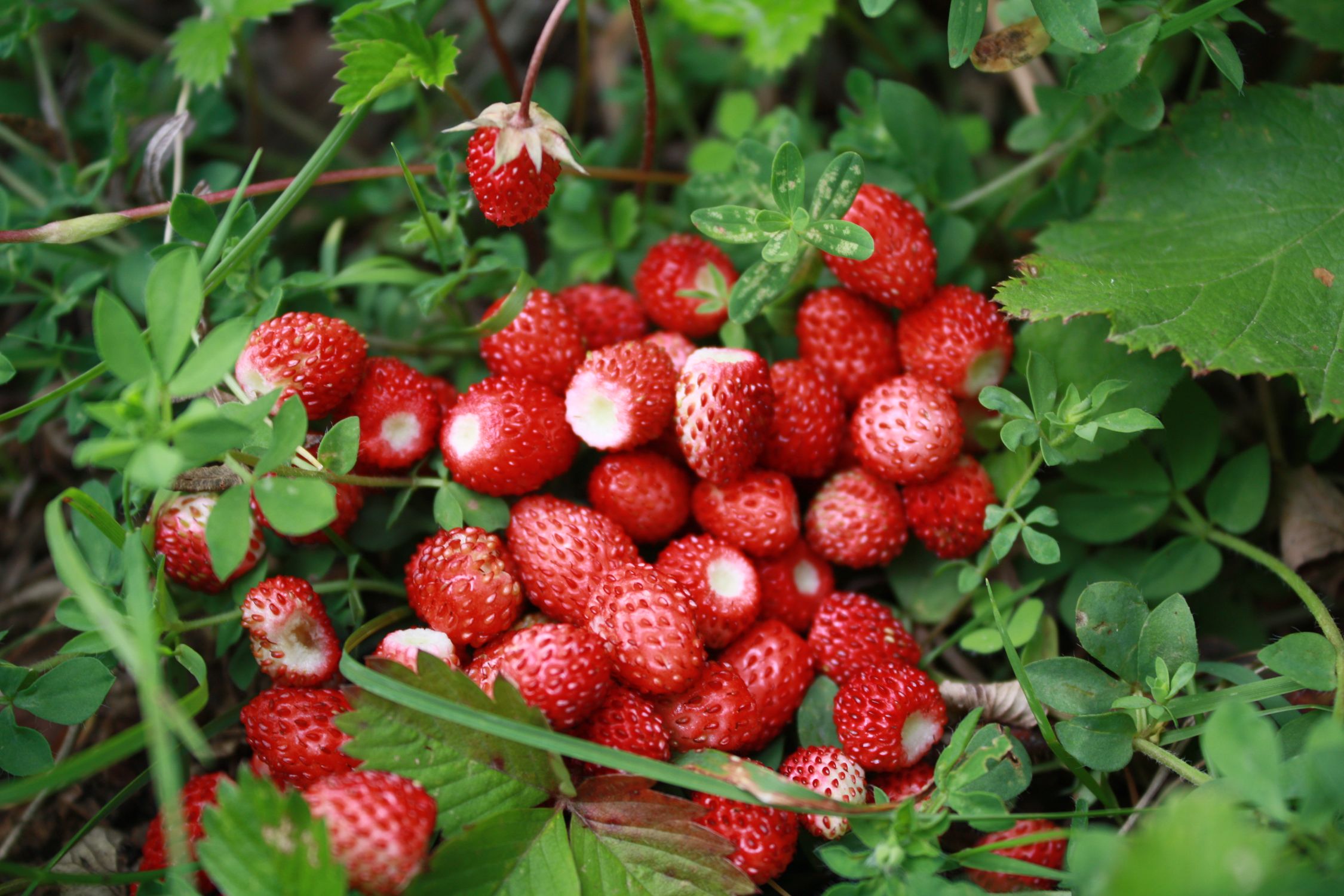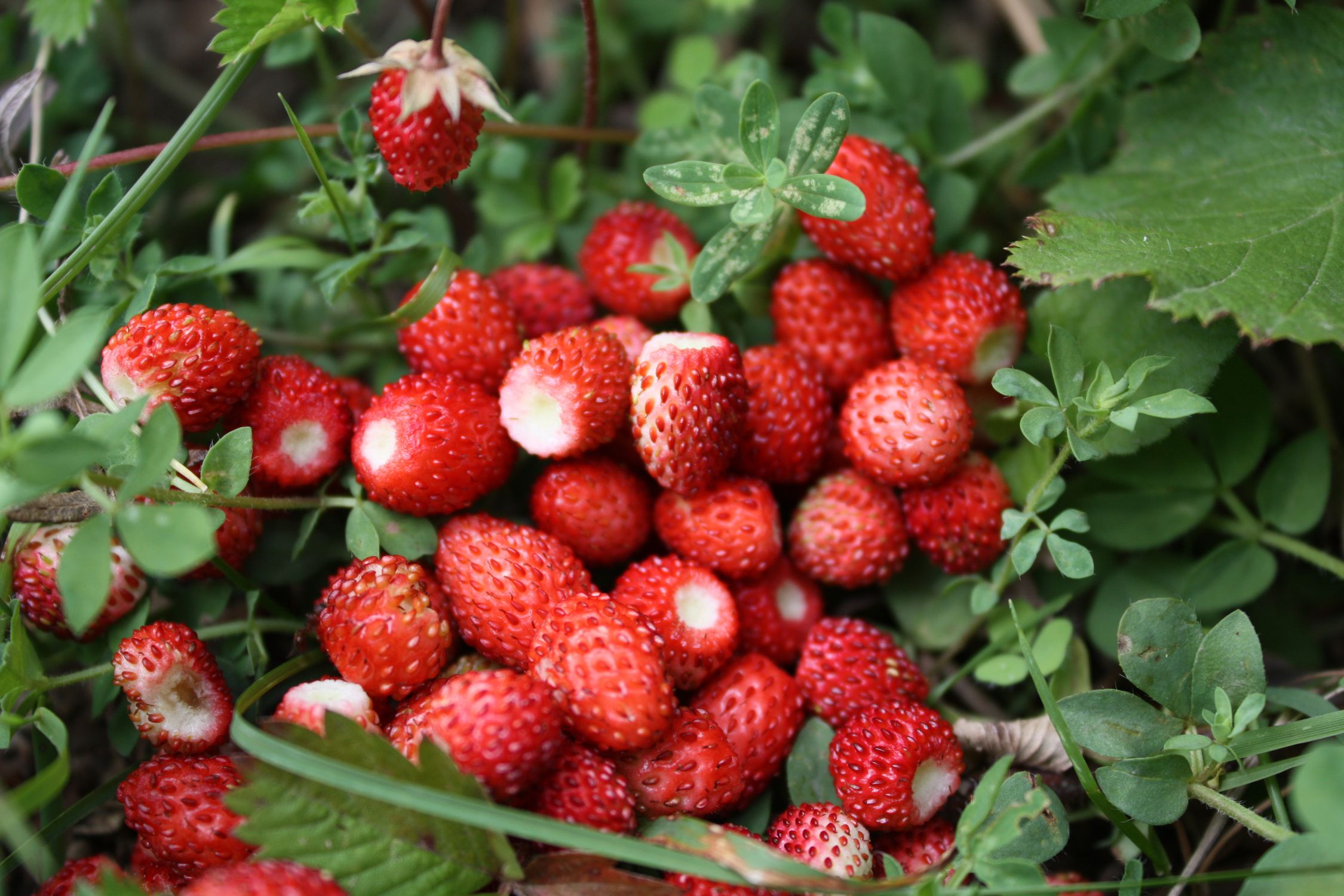
Alpine strawberries taste intensely sweet and deeply aromatic, with notes of rose, pineapple, and something oddly close to bubblegum — the opposite of anything a supermarket has ever sold. The strawberry in your trolley is a different thing: big, red, perfectly shaped, but watery, faintly sweet and gone in a moment. Find a wild alpine strawberry growing along a woodland margin and bite into one, and the difference is arresting. That is what a strawberry is supposed to taste like, and we have spent two centuries breeding it out of existence.
A tale of two strawberries
The strawberries we buy today are Fragaria x ananassa, a hybrid created in the 1750s by crossing two American species: the large-fruited Chilean strawberry (Fragaria chiloensis) and the flavourful Virginia strawberry (Fragaria virginiana). Every generation of breeders since has selected for size, firmness, shelf life, disease resistance and good looks. Flavour, sadly, has been the thing quietly sacrificed in the chase for a berry that ships well and gleams under fluorescent lighting.
The alpine strawberry (Fragaria vesca) is a different species altogether. It's the original European wild strawberry, native to woodlands, hedgerows and meadows right across Britain and the wider continent, and it has never been put through the commercial breeding mill. When you eat one, you're tasting more or less exactly what a medieval peasant tasted gathering wild strawberries off the forest floor. The flavour simply hasn't changed in thousands of years, and I find something rather wonderful in that.
What do alpine strawberries taste like?
The science explains why. Alpine strawberries produce far higher concentrations of the volatile aromatic compounds — the furanones and linalool — that give strawberries their characteristic scent and taste. Gram for gram, a single alpine strawberry carries three to five times the concentration of these flavour compounds compared with a commercial variety of the same weight.
They're also higher in sugar relative to their size and lower in water content, which concentrates everything further. The upshot is a tiny berry that packs more flavour into one gram than a supermarket strawberry manages in twenty. There's a bit of psychology in it too. Because the berries are so small, roughly 1 to 2 centimetres long, you eat them one at a time rather than by the handful, so each one lands as a distinct, intense little hit rather than a mouthful of bland sweetness.
Finding wild alpine strawberries in Britain
Fragaria vesca is native here and surprisingly common once your eye is in. It grows along woodland edges, hedgerow banks, railway embankments, churchyards, old walls and chalky grassland. The plants are small, low and very easy to walk straight past.
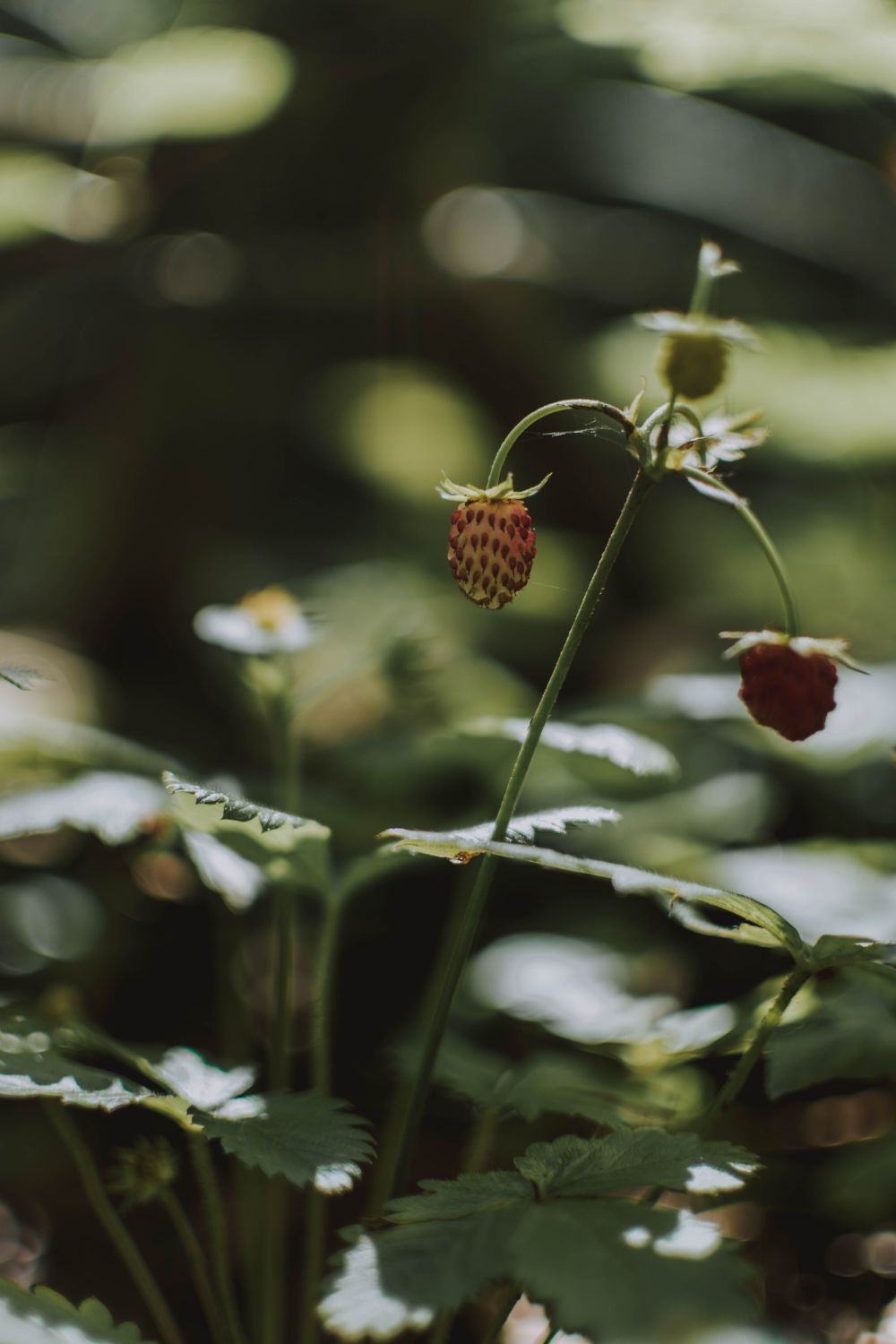
To know you've got the right thing, look for trifoliate leaves with toothed edges, white five-petalled flowers in spring and early summer, and tiny red berries from June onwards. The fruit points upward or outward rather than hanging down. Do be aware of the mock strawberry (Duchesnea indica), whose fruit also points upward but is tasteless. The season runs from June through September, with the heaviest crop in June and July. Chalky and limestone areas are particularly productive, so the North and South Downs, the Cotswolds, and the limestone dales of northern England are all good hunting grounds. They'll also colonise old walls, rock gardens, and the gaps between paving slabs, so don't ignore the man-made corners either.
Growing alpine strawberries at home
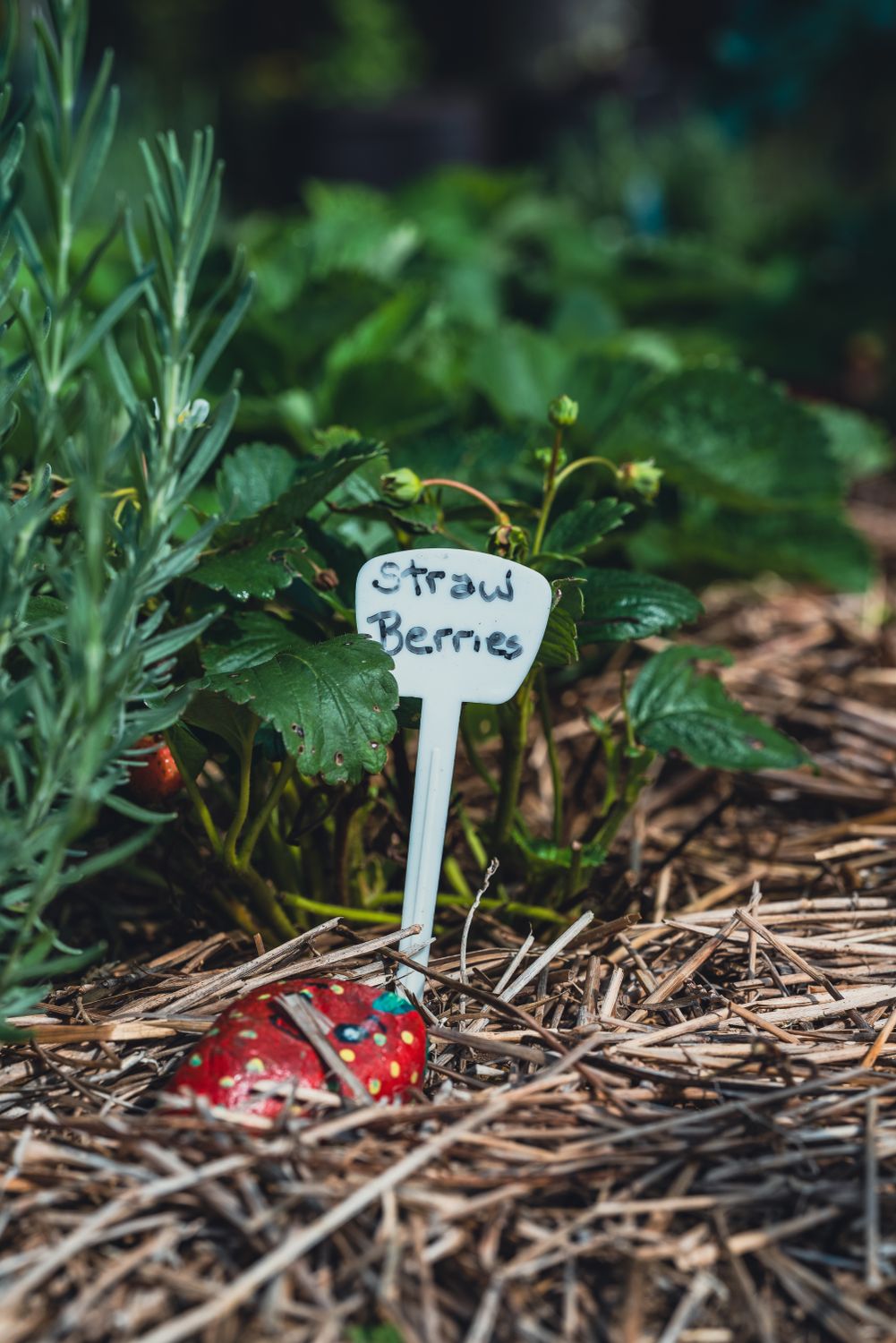
These are among the easiest and most rewarding fruit plants you can grow, full stop. They thrive in conditions that would see off a conventional strawberry, shrugging at partial shade, poor soil and a fair bit of neglect. Position-wise they're happy in partial shade right through to full sun, and unlike garden strawberries they actually prefer a little shade, giving better-flavoured fruit when they're not baked all day. Any reasonable garden soil suits them, as they're not fussy about pH or fertility, and they do beautifully in containers and window boxes.
One of their best tricks is that they come true from seed, which very few strawberries do. Sow indoors in early spring, surface-sow onto damp compost, and expect germination in two to four weeks. The seeds need light to get going, so don't cover them. Plant out 20 to 25 centimetres apart, where they'll form neat, compact clumps that make excellent edging along paths and borders. Best of all, most varieties don't throw runners the way garden strawberries do. They stay put and slowly bulk up as a clump, which makes them far better behaved in the garden.
Notable varieties
A handful are worth knowing by name. Alexandria is the one you'll find most easily, cropping reliably from June to October with good-sized berries, fine flavour and no runners. Mignonette is a French heirloom prized for its intense aroma, with smaller berries than Alexandria but arguably the finest flavour of any cultivated alpine. Yellow Wonder gives pale yellow berries with a distinct pineapple-like flavour, and crucially the birds largely ignore the yellow fruit, so you actually get to eat your crop, which on its own makes it worth growing. White Soul is white-fruited with an intense, perfumed sweetness and, like Yellow Wonder, comes with that built-in bird protection. And Baron Solemacher, a classic German variety dating to 1935, is a heavy cropper with no runners and excellent flavour on compact plants ideal for containers.
The yellow and white advantage
I want to dwell on the yellow and white sorts for a moment, because they solve the single biggest headache of growing strawberries: birds. Blackbirds, thrushes and robins are drawn to red fruit like magnets, will strip a patch clean in a day, and netting is fiddly and ugly. Yellow and white alpine strawberries, though, are all but invisible to them. The fruit is sitting right there, ripe and sweet, but the birds just don't read it as food. That isn't a minor convenience, it's transformative. You can grow open, unnetted rows of Yellow Wonder and pick every last berry yourself.
How to eat them
The golden rule is to eat them fresh, ideally standing next to the plant. The flavour peaks the instant you pick and fades fast; within an hour, a good chunk of those volatile aromatics have simply evaporated. So the best way, by a mile, is straight off the plant and warm from the sun, one at a time. After that, the classic French preparation, fraises des bois et crème, is just fresh alpine strawberries scattered over thick cream, which carries and amplifies the fragrance beautifully. If you can resist eating them all, alpine strawberry jam is a real luxury; it takes patience and a lot of berries, but no commercial jam comes close to the aroma. A handful dropped into sparkling water, prosecco or a gin and tonic will perfume the whole glass, and their tiny size and intense colour make them a perfect garnish for desserts, cakes and breakfast bowls.
Frequently asked questions
What do alpine strawberries taste like?
Intensely sweet and deeply aromatic, with notes of rose, pineapple, and something that sits close to bubblegum — the opposite of a supermarket strawberry. The flavour is concentrated because the berries are small and low in water content, carrying three to five times the aromatic compounds of a commercial variety gram for gram. You eat them one at a time rather than by the handful, and each one lands as a distinct, intense hit.
Are alpine strawberries and wild strawberries the same thing?
Yes, they are. Alpine strawberry is the garden name for Fragaria vesca, the European wild strawberry native to British woodlands, hedgerows and chalk grassland. The two names are interchangeable. Cultivated alpine varieties such as Alexandria and Yellow Wonder are selected forms of exactly the same species, chosen for reliability and slightly larger berries rather than any fundamental change in flavour.
Can you grow alpine strawberries in the UK?
Very easily — they're among the most forgiving fruit plants you can grow here. They tolerate partial shade, poor soil, and benign neglect, and they thrive in containers, window boxes, and shaded borders where a conventional strawberry would struggle. Sow from seed indoors in early spring or buy young plants, and you can expect fruit in the first year.
Do alpine strawberries spread?
Most cultivated varieties don't throw runners the way garden strawberries do. Varieties like Alexandria, Mignonette, Baron Solemacher, Yellow Wonder, and White Soul slowly bulk up as neat clumps rather than spreading across the bed. This makes them far better behaved in a garden, though you propagate them by dividing established clumps in spring or autumn rather than pegging down runners.
What we lost
There's something quietly melancholy about tasting an alpine strawberry for the first time and realising how far the modern berry has drifted from its origins. The wild fruit, unchanged since before recorded history, delivers a flavour that two centuries of clever breeding have never managed to recreate in a bigger package. Every push to make strawberries larger, firmer and more shippable has carried them further from that tiny, perfect, intensely flavoured original.
Growing alpine strawberries is, I think, a small act of culinary preservation. It reconnects you with a flavour our ancestors knew intimately and our food system has quietly abandoned. A row of them along a garden path costs next to nothing, asks almost nothing of you, and will remind you every June through October of what a strawberry really tastes like.
More in this series: The Complete Guide to Growing Strawberries in the UK • The Best Soil for Strawberries: Getting Your Mix Right • Growing Strawberries Indoors: The Best Varieties for Windowsills and Conservatories • Slugs, Birds, and Aphids: How to Keep Every Pest Off Your Strawberries • The 6 Best Strawberry Varieties for Hanging Baskets • Cambridge Favourite: Britain's Most Popular Strawberry • Mara des Bois: A Strawberry That Actually Tastes of Strawberry • Top 6 Sweetest Strawberry Varieties to Grow in the UK • Top 7 Highest-Yielding Strawberry Varieties for British Gardens