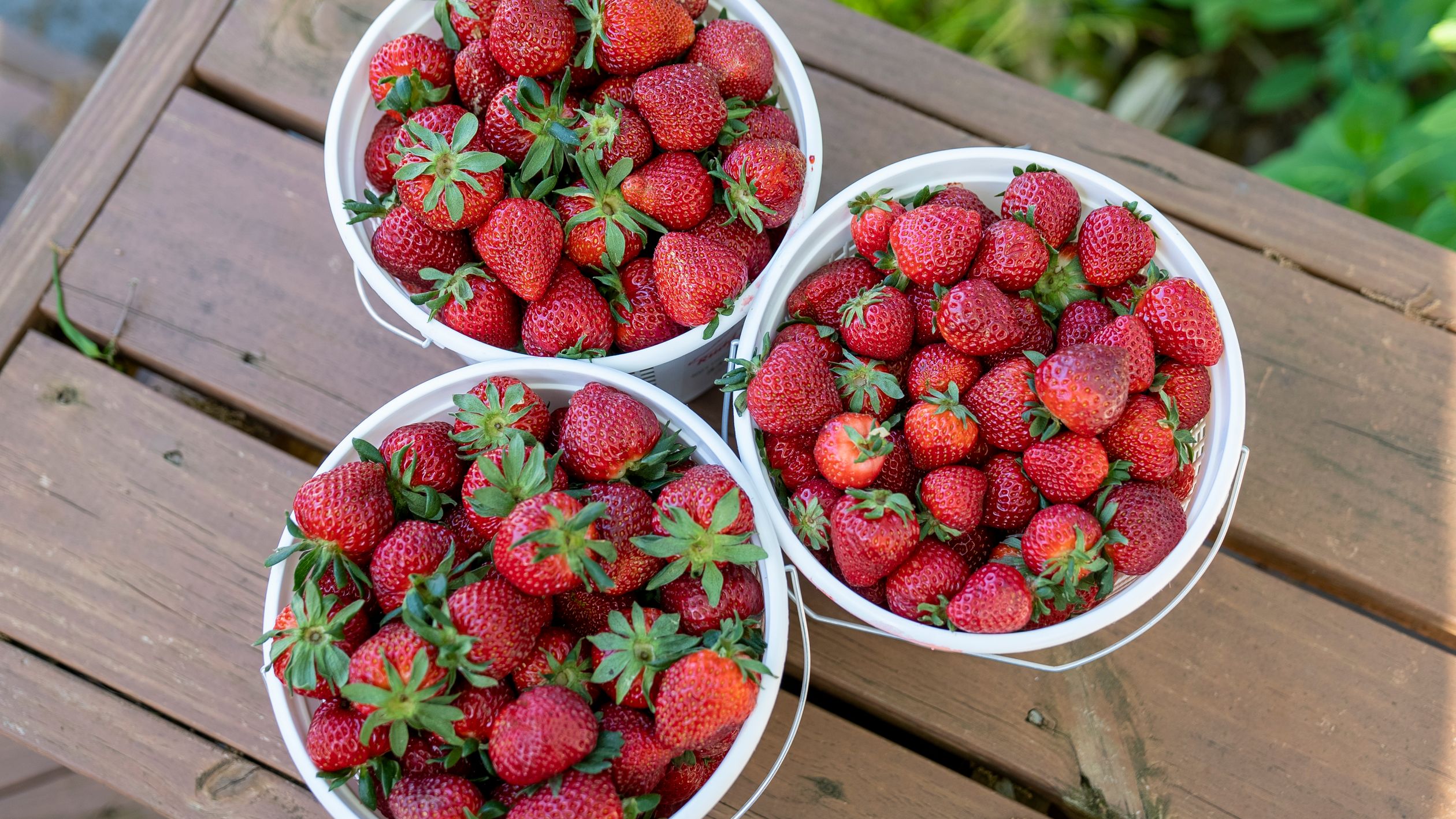
The highest-yielding strawberry varieties in UK gardens can produce two to three times as much fruit per plant as average types. Florence, Elsanta, Sonata, and Malling Centenary are among the most productive, and all are well-suited to the British climate and growing season.
Yield always comes down partly to how you grow them, but variety is where it all begins. So here are seven strawberries that, in my experience, consistently come good when sheer volume of fruit is what you are after.
Elsanta
Elsanta dominates commercial strawberry growing right across Europe, and it does so for one reason: it churns out huge quantities of uniform, firm fruit. Bred in the Netherlands, it makes up the majority of supermarket strawberries sold in the UK. In the garden it regularly gives 700 grams to over a kilogram per plant, with large, firm, glossy berries. The flavour is decent rather than exceptional, and that is the trade-off you accept for such productivity. If you want volume above all else, Elsanta delivers. Just be aware it is prone to verticillium wilt, so never plant it where potatoes, tomatoes, or strawberries have grown in the previous three years.
Florence
Florence is a late-season variety that pushes the harvest on into August, which I find genuinely useful for stretching things out. Bred at East Malling Research, it pairs high yields with excellent disease resistance, and the berries are dark red, firm, and noticeably sweeter than Elsanta. You can expect 600 to 800 grams per plant, and it shrugs off British weather well. It is particularly resistant to crown rot, which makes it a sound choice for heavier soils where the drainage is less than ideal. It will still appreciate a raised bed or ridge on clay, but it does not demand the perfect drainage some varieties insist on.
Sonata
Sonata is another Dutch-bred commercial variety that crosses over nicely into the garden. It produces large, uniform berries in impressive numbers, and the flavour sits comfortably between Elsanta and the sweeter heritage types, so it makes a fair compromise between yield and taste. It fruits mid-season and copes well with rain without splitting or going over to grey mould, which is no small thing in a typical British summer. With good care, reckon on 600 to 900 grams per plant. It responds well to regular feeding: a balanced fertiliser in early spring, then a switch to high-potash once the flowers appear.
Malling Centenary
Malling Centenary turns up on best-of lists for good reason, because it is one of the rare varieties that scores highly on sweetness and yield at once. Another East Malling introduction, it produces large, conical, sweet berries in quantities that rival the commercial sorts. Typical yields run 500 to 800 grams per plant, and the berries are firm enough to keep a day or two without softening, which is a real help when you are picking more than you can eat or process in one go. It is vigorous and throws plenty of runners, so remove the excess to push energy into fruit, keeping a few back each year to raise replacement plants.
Fenella
Fenella is a late-season variety from East Malling bred specifically for the British climate, which is exactly the sort of pedigree I like to see. It crops heavily with large, well-flavoured berries from late July into August, carrying the season well beyond the early types. What really sets it apart is its resistance to a whole range of common strawberry diseases, including verticillium wilt, phytophthora, and powdery mildew. That resistance means fewer losses and more fruit reaching the punnet rather than the compost heap. Expect 600 to 800 grams per plant, and pair it with an early variety like Honeoye for a harvest that runs from late May right through to mid-August.
Symphony
Symphony is a Scottish-bred variety from the James Hutton Institute, developed to handle cooler, wetter conditions, and it shows. It thrives in northern England and Scotland where other varieties struggle, still managing a respectable 500 to 700 grams per plant. The berries are medium to large, dark red, and firm. It also has particularly good resistance to red core disease, a serious soil-borne problem in a lot of UK gardens. If you have ever lost strawberry plants to red core, Symphony is well worth a try; it handles cool, damp summers without the yield drops that hit varieties bred for continental climates.
Albion
Albion is an everbearer from California that has earned its place in British gardens. Unlike the main-season varieties above, it fruits continuously from June to October. Each individual picking is smaller, but the total over the season often beats the single-crop varieties outright. Over a full season, well-fed Albion plants can give 800 grams to a kilogram, with large, conical, firm berries and a good flavour. The one risk is exhaustion: everbearers graft hard, so they need consistent feeding and watering across that long season. Feed fortnightly with liquid tomato fertiliser throughout, and replace the plants annually or every two years, since they wear themselves out faster than main-season types.
How to Maximise Your Harvest
Even the heaviest cropper needs decent conditions to live up to its billing, and the basics make all the difference. Feed regularly, with a general fertiliser in spring and then high-potash from flowering onwards, because strawberries are genuinely hungry plants. Water consistently and at the base rather than overhead, as erratic watering gives you small, misshapen fruit and overhead watering invites grey mould. Cut off runners as they appear unless you actually want new plants, since each one steals energy from the fruit. Move your beds every three years at most, or soil-borne diseases build up and yields fall away dramatically. Net against birds the moment the first berries colour up, because blackbirds will cheerfully take a third of your crop. And if I can leave you with one piece of advice, plant a mix of early, mid, and late varieties so you get a steady harvest from May to August rather than one enormous glut you cannot possibly use.
Frequently Asked Questions
Do high-yield strawberry varieties taste good?
Some do, some do not. Malling Centenary and Florence are both decent to eat and heavy croppers. Elsanta is reliable but mild. If flavour is a higher priority than quantity, my guide to the six sweetest varieties covers the ones that prioritise taste — many growers plant a row of a heavy cropper alongside a smaller patch of a flavour variety.
How do I get the most fruit from my strawberry plants?
Start with good soil preparation, choose a sunny spot, feed with a high-potassium fertiliser from flower bud to end of harvest, and water consistently without waterlogging. My guide to strawberry soil covers preparation in detail. Keeping on top of pests early in the season also makes a big difference — my pest guide covers the main threats.
How long does a productive strawberry plant last?
Three to four years for most varieties, after which yields begin to fall noticeably. Replace plants using runners taken from the strongest, healthiest plants in your patch. Each parent plant typically produces several runners per season, so one good plant can replace itself multiple times over. My complete growing guide covers propagation from runners as part of the ongoing care cycle.
Is Cambridge Favourite in the top seven for yield?
No — Cambridge Favourite is a reliable mid-range producer but does not make the top tier for yield. It earns its place in many gardens for its disease resistance and consistency rather than sheer volume. The varieties in this guide were selected specifically because they consistently outperform it and similar mid-range types on harvest weight per plant.
More in this series: The Complete Guide to Growing Strawberries in the UK • Why Alpine Strawberries Taste Like No Strawberry You've Ever Bought • The Best Soil for Strawberries: Getting Your Mix Right • Growing Strawberries Indoors: The Best Varieties for Windowsills and Conservatories • Slugs, Birds, and Aphids: How to Keep Every Pest Off Your Strawberries • The 6 Best Strawberry Varieties for Hanging Baskets • Cambridge Favourite: Britain's Most Popular Strawberry • Mara des Bois: A Strawberry That Actually Tastes of Strawberry • Top 6 Sweetest Strawberry Varieties to Grow in the UK