Strawberries can be grown successfully indoors on a bright windowsill, in a conservatory, or under grow lights, and compact varieties produce a genuine harvest rather than just a novelty. The key is choosing the right variety, ensuring enough light, and pollinating the flowers by hand since there are no insects to do it indoors.
The secret, more than anything else, is choosing the right variety. Not every strawberry takes to indoor life, and in my experience picking the wrong one is the single most common reason people give up on the whole idea.
What Makes a Good Indoor Strawberry?
Indoor varieties need a particular set of traits to do well. Light is the great limiting factor inside, even on a bright south-facing windowsill, so the best candidates are those bred to cope with less of it or naturally compact enough to sit under grow lights.
What you're really after is a plant with a compact habit that stays small and won't send runners sprawling across your kitchen counter, which is why day-neutral and alpine types tend to be the most manageable. Everbearing or day-neutral varieties earn their place too, fruiting continuously rather than in one big June glut, and since you're putting effort into indoor growing you'll want that long return. It also helps to choose something that sets fruit readily. All strawberries are self-fertile to some degree, but some fruit far more reliably without insects, and since you'll be hand-pollinating indoors, those willing setters make life easier. Finally, keep an eye out for disease resistance: indoor air can be stuffy and still, so varieties that resist powdery mildew and botrytis will fare better.
The Best Varieties for Indoors
Alpine Strawberries
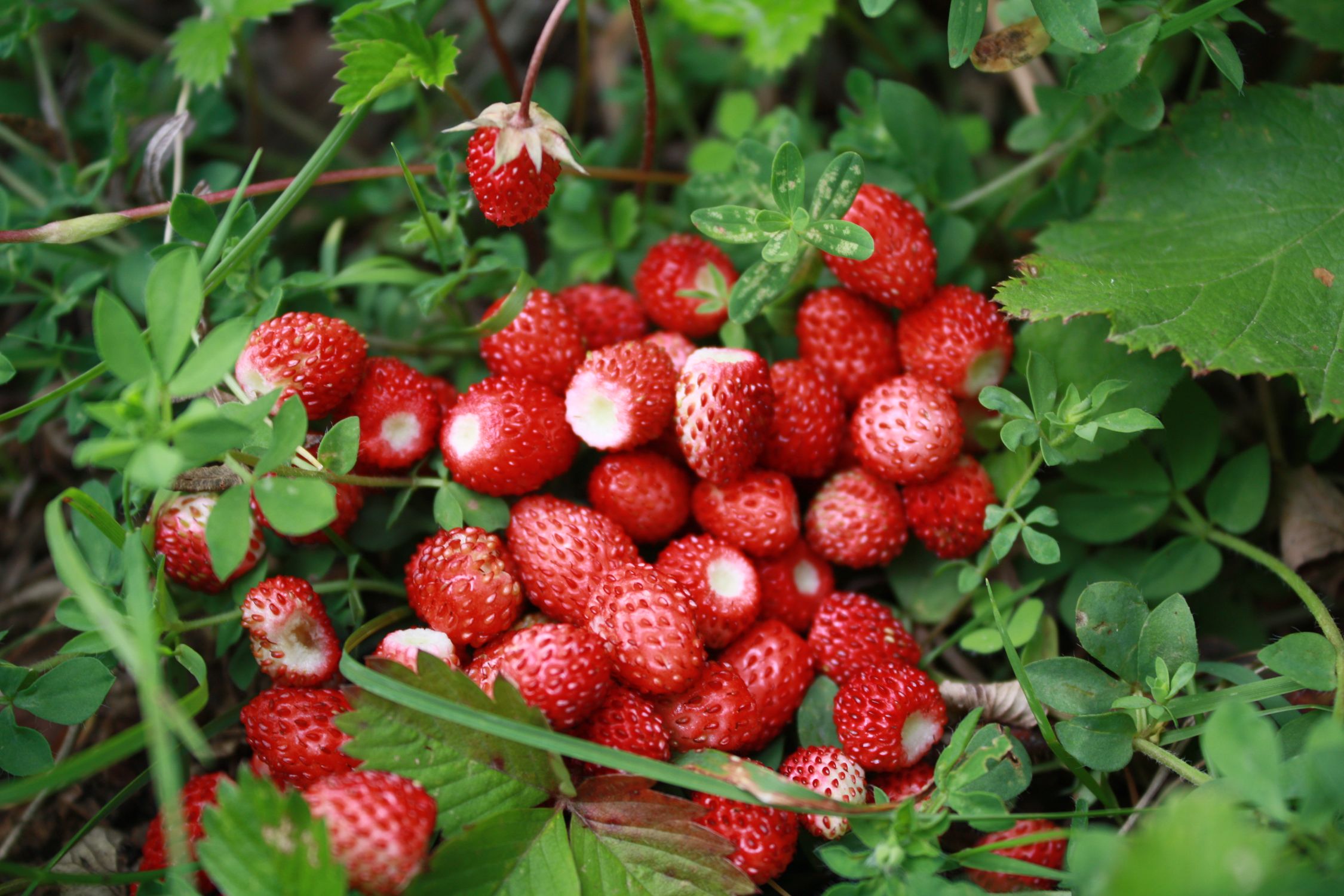
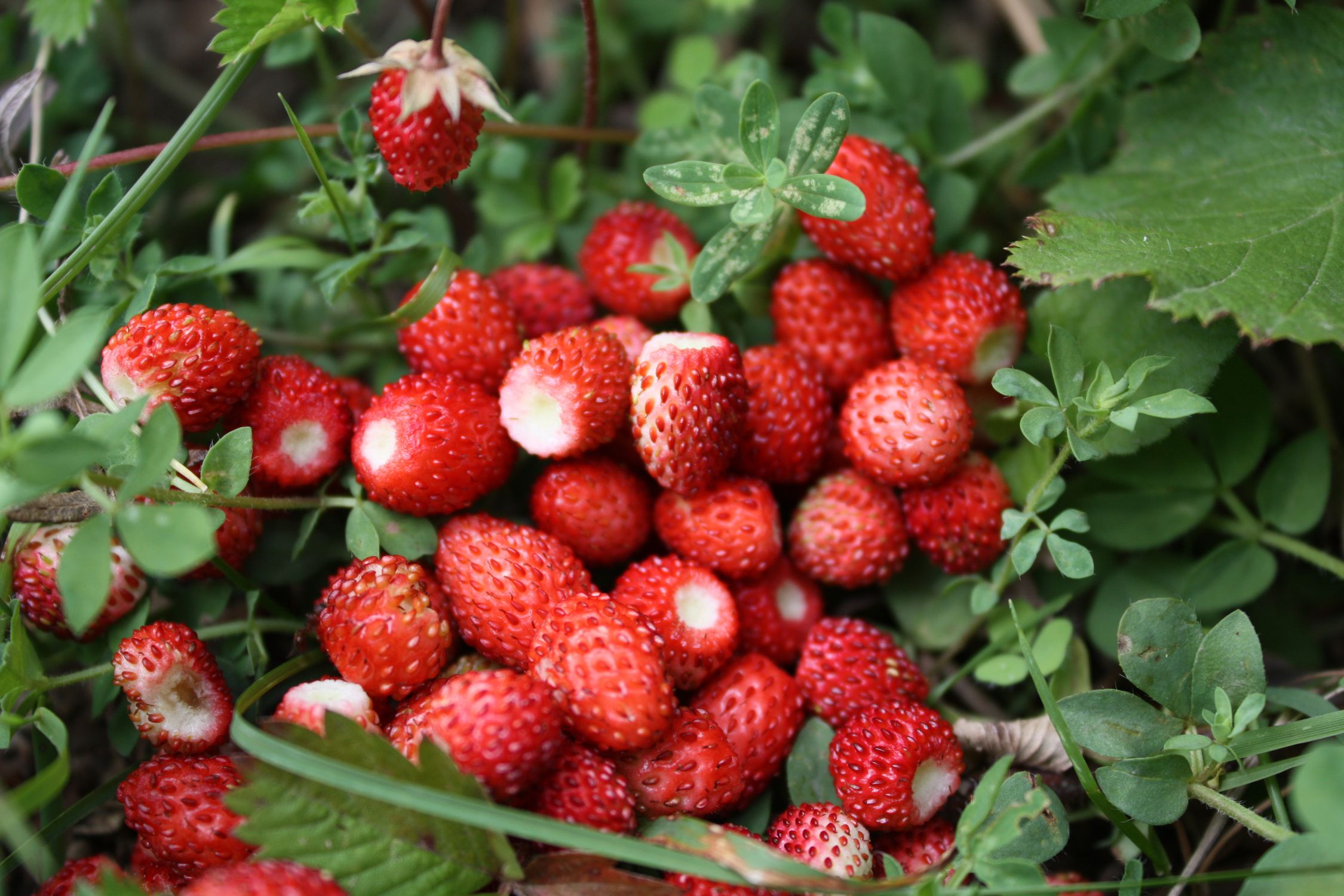
Alpine strawberries (Fragaria vesca) are, for my money, the undisputed champions of indoor growing. They're compact, rarely throw runners, tolerate lower light than any other strawberry, and produce tiny, intensely flavoured berries from June to October.
The pick of the alpines for indoors are Alexandria (the standard choice, widely available and excellent flavour), Mignonette (slightly smaller plants, handy for tight spaces) and Baron Solemacher (very compact and heavy-cropping for an alpine). If you fancy something a bit different, white-fruited sorts like White Soul and Pineapple Crush are a novelty and a touch sweeter than the red ones.
Alpines grow easily from seed, which makes them the cheapest way in. Sow in February or March on the surface of moist compost and keep them at around 18 degrees Celsius. Germination takes two to four weeks, so don't lose heart.
Everbearing Varieties
If you want bigger berries than the alpines give, everbearing varieties are your next step. They fruit in flushes from June to October rather than continuously, but the berries are full-sized.
Mara des Bois is outstanding indoors, and one I'd recommend without hesitation. It gives medium-sized berries with an extraordinary wild strawberry flavour, copes with lower light better than most, and is fairly compact too. Flamenco is another strong choice, with large, sweet berries over a long season and good disease resistance, though it's more vigorous so wants a larger pot. Albion is hugely popular for indoor growing in the US and does well in British conservatories, producing large, firm berries continuously, but be warned it needs more light than the alpines or Mara des Bois. For Albion you'll really want a south-facing conservatory or some supplemental lighting.
Compact Varieties for Small Spaces
A few varieties have been bred specifically for containers and take very nicely to a windowsill. Loran is a compact, runnerless type that gives medium berries with good flavour and stays tidy without you forever snipping off runners. Ruby Ann, meanwhile, has striking dark pink flowers alongside decent fruit, so it's as much ornamental as productive, which is the one to choose if your indoor strawberry also needs to look the part.
Growing Conditions
Light
Light is the single biggest thing standing between you and success. Strawberries need at least six hours of direct sun a day to fruit well. A south-facing windowsill is the bare minimum, and even then, UK winter light is usually too feeble for fruiting.
This is where supplemental LED grow lights make a dramatic difference. Position them 15 to 20 centimetres above the plants and run them for 12 to 16 hours a day. Full-spectrum LED panels meant for houseplants do the job nicely and cost very little to run. Without grow lights, be realistic and expect fruiting only from April to October, even indoors.
Containers and Compost
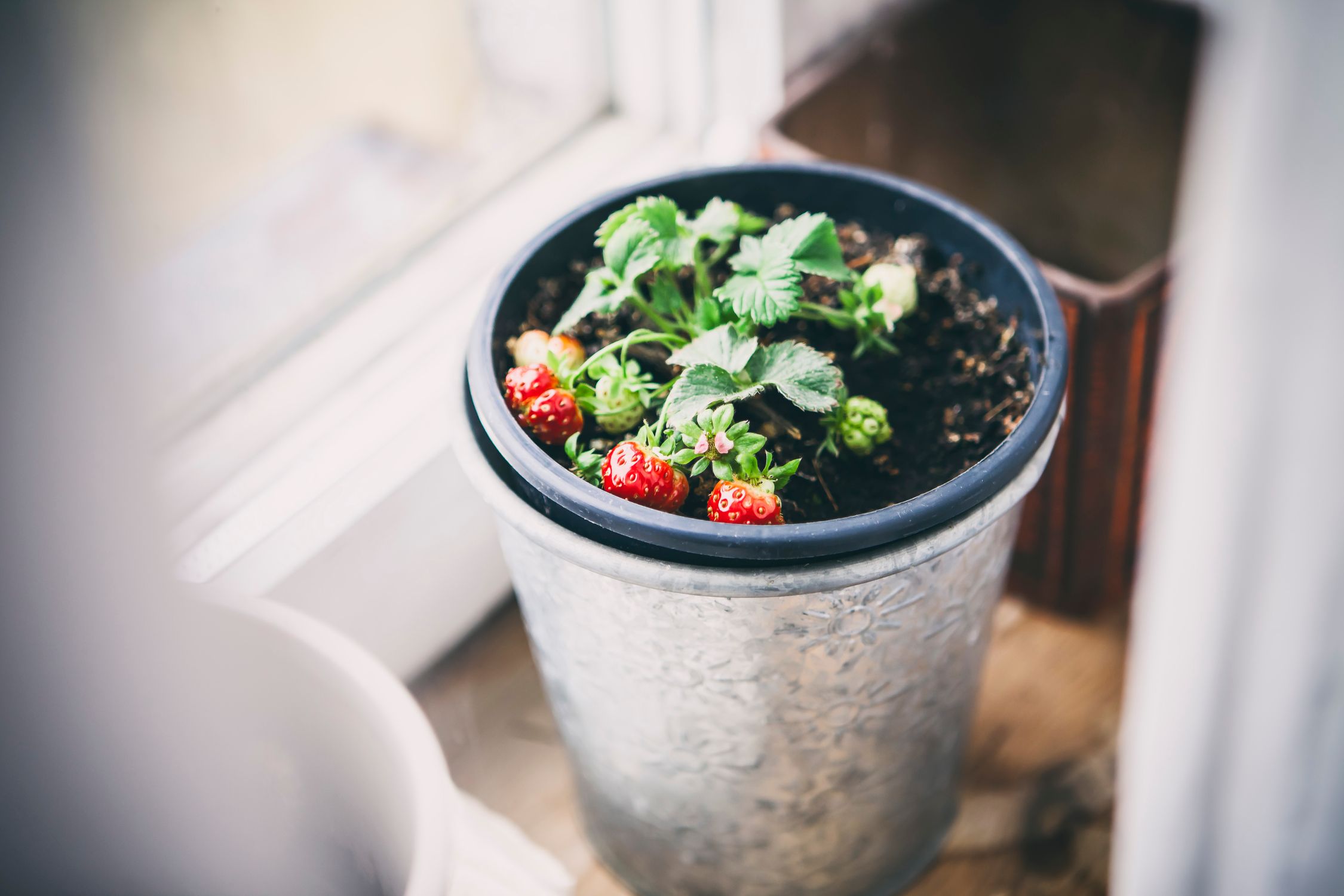
Use containers at least 15 centimetres deep with drainage holes. I'm fond of terracotta for this, because it breathes and helps guard against overwatering. Whatever you use, skip the saucers that leave plants standing in water.
For compost, standard multipurpose mixed with about 20 percent perlite gives good results. The perlite improves drainage, which is critical indoors where overwatering is the most common killer by a mile. Strawberries like things slightly acidic (pH 5.5 to 6.5) but they're far less fussy about it than blueberries.
Pollination
No bees indoors means no pollination, which means no fruit, so this part is on you. Take a small soft paintbrush or a cotton bud and gently dab from flower to flower, moving pollen between the stamens and the pistil. Do it every day or two while the flowers are open. Alternatively, a small desk fan aimed at the plants while they're in flower can shake loose enough pollen for some fruit set. It's less reliable than doing it by hand, but it's also a lot less effort, so take your pick.
Watering and Feeding
Indoor air is dry, especially in a heated room in winter. Strawberries hate sitting in constantly wet roots but do appreciate a bit of humidity around the leaves, so water only when the top centimetre of compost feels dry, and mist the leaves occasionally when things get really arid.
From flowering onwards, feed fortnightly with a liquid tomato fertiliser. The high potash content encourages flowers and fruit. Whatever you do, don't pile on nitrogen-heavy feeds, or you'll get lush leaves and not a single berry to show for it.
Common Indoor Problems
A few troubles crop up often enough to be worth flagging:
- Leggy, pale growth: not enough light. Move the plant closer to the window or add grow lights.
- Flowers but no fruit: pollination has failed. Hand-pollinate daily.
- Grey mould on the berries: too humid with poor air circulation. Improve ventilation and ease off the misting.
- Aphids: common indoors. Spray with diluted washing-up liquid, or introduce ladybirds if you can get hold of them.
- Spider mites: they love warm, dry air. Mist regularly and raise the humidity. Bad infestations will need biological controls.
What to Expect
Let me set expectations honestly: indoor strawberries will never match outdoor yields. A healthy alpine might give you 20 to 30 berries over a season, and a full-sized everbearing plant in a conservatory perhaps a punnet or two. The point was never volume, though. It's the quiet pleasure of picking a perfectly ripe strawberry in January, and that's a pleasure worth chasing.
So set your sights accordingly, invest in grow lights if you're serious, and if you just want the easiest path to success, start with the alpines. You won't regret it.
Frequently Asked Questions
How much light do indoor strawberries need?
At least six hours of direct sunlight per day — a south-facing windowsill is ideal. In a conservatory they will usually receive enough light naturally. In north-facing rooms or darker spots, a simple LED grow light positioned 15 to 20cm above the foliage for 12 hours per day will do the job. Without enough light the plants produce plenty of leaves but very little fruit.
How do I pollinate strawberry flowers indoors?
Run a soft paintbrush or cotton bud lightly around the centre of each open flower, transferring pollen between blooms. Do this once a day while flowers are open. Missing this step entirely results in misshapen or absent fruit. Alpine strawberries are a good choice for indoors precisely because they set fruit more reliably without perfect pollination.
What size pot do indoor strawberries need?
A minimum of 20cm diameter per plant, ideally 25 to 30cm. Crowded roots limit fruit production significantly. Use a free-draining compost mix — my guide to strawberry soil and compost covers the best mixes for containers. Make sure the pot has drainage holes and sits on a saucer that you empty after watering.
Which strawberry variety is best for a windowsill?
Compact everbearing varieties perform best indoors. Mara des Bois is an excellent choice for flavour — see my Mara des Bois guide for detail — and alpine varieties work particularly well in small pots. For outdoor alternatives in small spaces, my guide to hanging basket strawberries covers the best compact outdoor options.
More in this series: The Complete Guide to Growing Strawberries in the UK • Why Alpine Strawberries Taste Like No Strawberry You've Ever Bought • The Best Soil for Strawberries: Getting Your Mix Right • Slugs, Birds, and Aphids: How to Keep Every Pest Off Your Strawberries • The 6 Best Strawberry Varieties for Hanging Baskets • Cambridge Favourite: Britain's Most Popular Strawberry • Mara des Bois: A Strawberry That Actually Tastes of Strawberry • Top 6 Sweetest Strawberry Varieties to Grow in the UK • Top 7 Highest-Yielding Strawberry Varieties for British Gardens