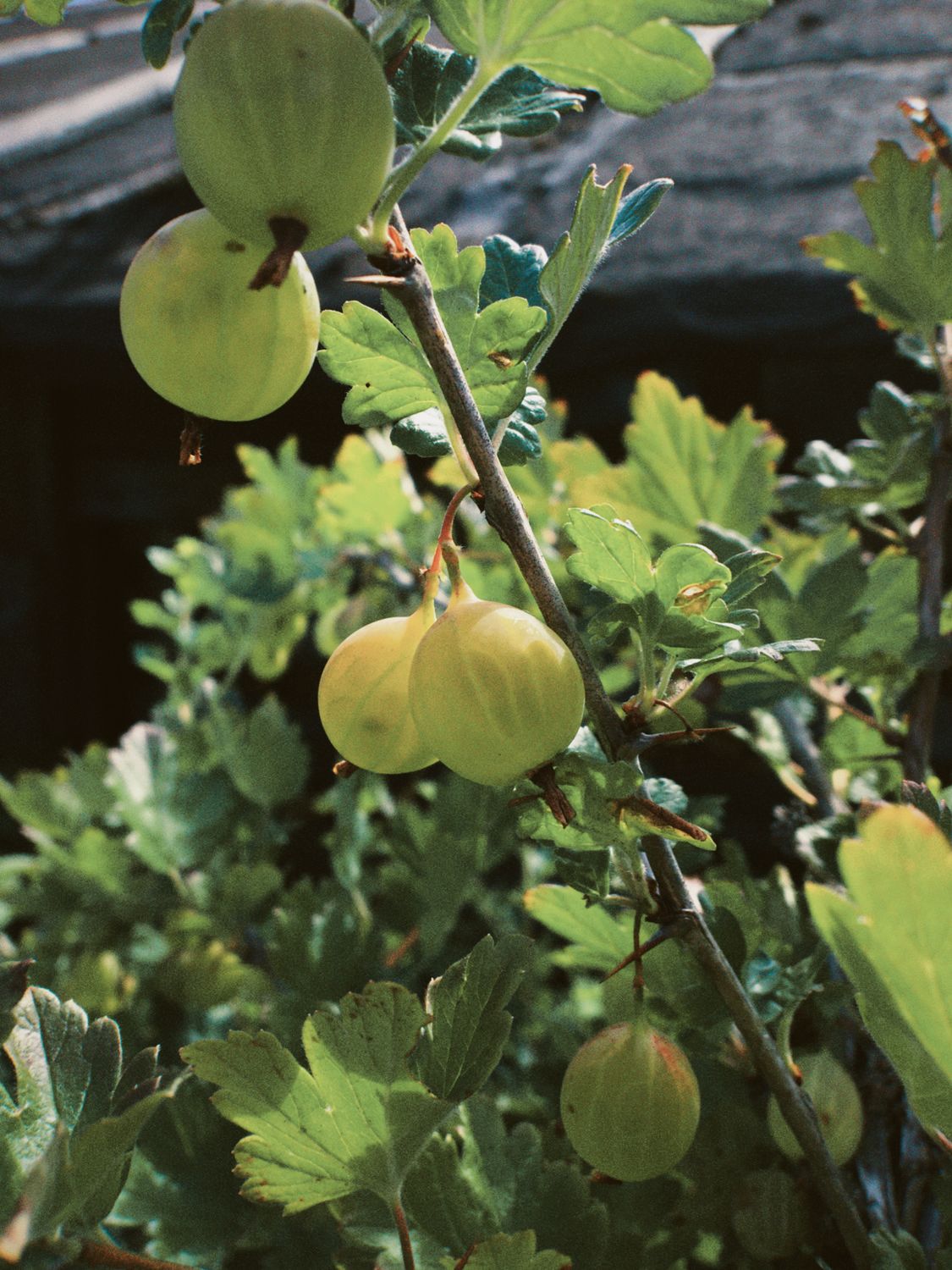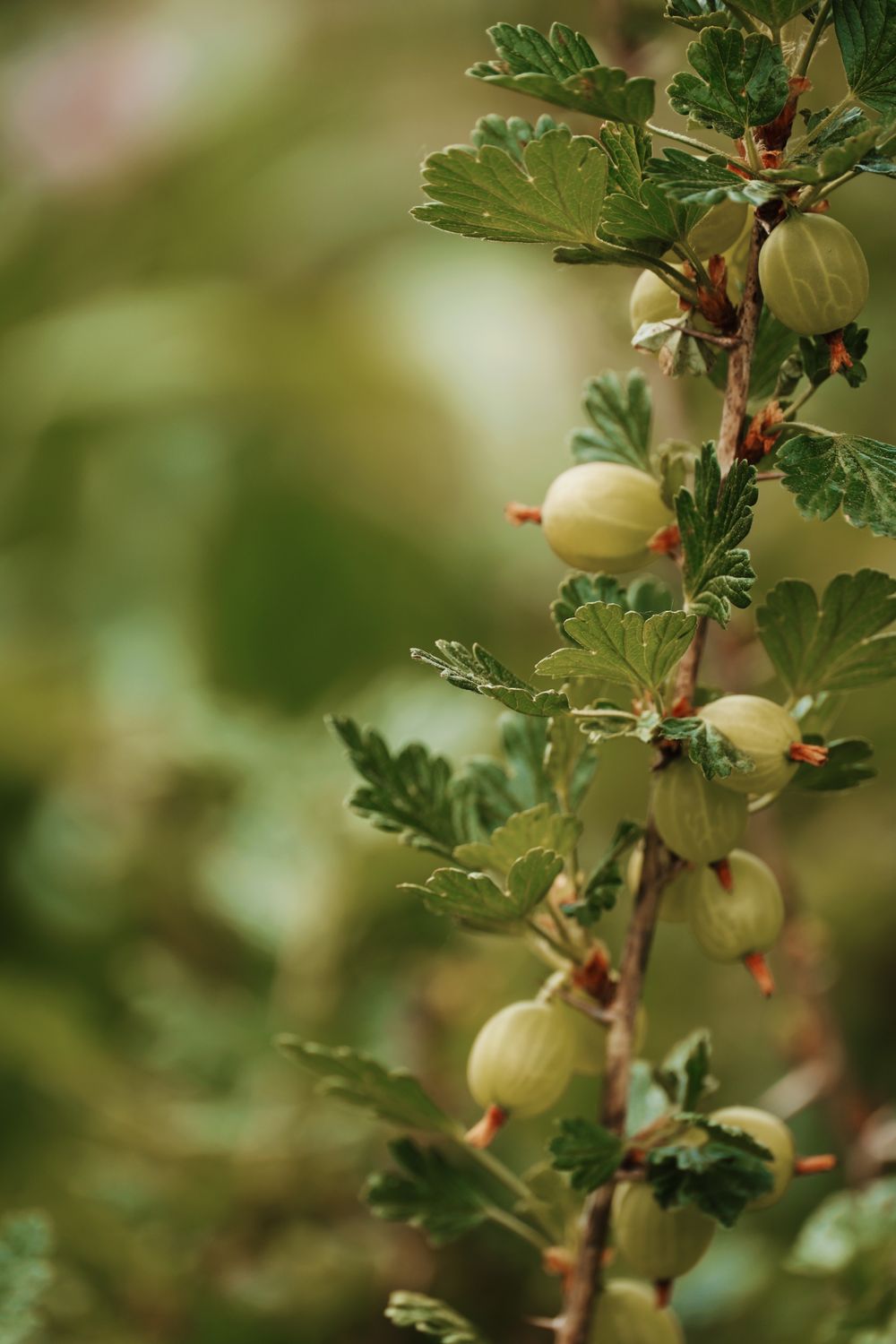
Gooseberry pruning has a reputation for being fiddly, and I think that's mostly because people try to memorise a list of rules instead of picturing the one shape they're actually building towards. Once you can see that shape in your head — a bush built like a wine glass, open in the middle — the whole job gets far simpler, thorns and all.
The Shape You're Building: An Open Goblet
Everything about gooseberry pruning serves one goal: a short clear stem (the "leg") topped with a framework of branches arching outward, with an open, airy centre. That open middle isn't cosmetic — it keeps air moving through the bush, which is the single best defence against American gooseberry mildew, and it gives you somewhere to actually get your hands (and secateurs) in without leaning through a tangle of thorns to reach the fruit.
The Main Winter Prune
Done once a year, while the bush is dormant:
- Cut out anything dead, damaged or crossing first, regardless of where it is on the bush.
- Remove growth crowding the centre, and any low shoots trailing towards the ground — both work against the open goblet shape.
- Shorten the previous season's main branch growth by about half, always cutting to an outward-facing bud, so the framework keeps opening outward rather than folding back into the middle.
- Shorten the sideshoots coming off those main branches to two or three buds — this is where a good share of next year's fruit actually forms, so don't skip it out of caution.
The Optional Summer Prune
There's a lighter, optional pass in midsummer: shorten the new leafy sideshoots back to about five leaves. It's not essential, but it improves airflow further and lets more sun onto the ripening fruit, which helps both flavour and mildew resistance. I do it when I remember and don't lose sleep over it when I don't — the main winter prune does the heavy lifting.
Training a Cordon
If space is tight, a gooseberry cordon — a single upright stem trained against wires or a fence — is a genuinely good option, and the pruning is if anything simpler than a free-standing bush. In winter, shorten the sideshoots back to a few buds along the single stem; in summer, pinch them back again. You get less fruit per plant than a full bush, but the open, single-stem form makes mildew far less likely and lets you fit several varieties into the space one bush would take.
Newly Planted Bushes
A gooseberry planted this winter needs a lighter touch in its first year or two: just remove anything dead, damaged or crossing, and start shaping towards the open goblet as the framework branches establish. Don't chase the full "shorten by half" routine until the bush has a proper set of main branches to work with, usually from year two or three.
Common Mistakes
The biggest one is nervousness — leaving too much growth in place out of reluctance to cut a thorny bush, which just builds a congested, mildew-prone tangle that's miserable to pick from. The second is cutting sideshoots back too hard or not at all instead of the recommended two or three buds, either starving next year's crop or leaving the bush overgrown. And don't forget the outward-facing bud rule when shortening main branches — cut to an inward-facing bud by mistake and you'll spend next winter untangling growth that's headed straight back into the centre you worked to keep open.
Frequently Asked Questions
What shape should a pruned gooseberry bush be?
An open goblet: a short clear stem topped with branches arching outward and an open, airy centre, like a wine glass. This shape maximises airflow (reducing mildew) and makes picking through the thorns far easier than a dense, congested bush.
When should I prune gooseberries?
The main prune happens in winter while the bush is dormant. An optional lighter prune in midsummer, shortening leafy sideshoots to about five leaves, further improves airflow and light onto the ripening fruit but isn't essential.
Can I grow a gooseberry as a cordon?
Yes, and it's an excellent option for a small garden — a single stem trained against wires or a fence, pruned by shortening sideshoots in both winter and summer. You get a smaller harvest per plant but can fit several varieties into limited space.
Why does my gooseberry bush have so few berries despite lots of growth?
Usually too little pruning rather than too much — an unpruned or lightly pruned bush puts its energy into leafy growth and congested wood rather than the short sideshoots where fruit actually forms. A proper winter prune, shortening both main branches and sideshoots as described above, usually brings the crop back within a season or two.
For the rest of the growing calendar — variety choice, planting and dealing with sawfly and mildew — my complete gooseberry growing guide covers it all.