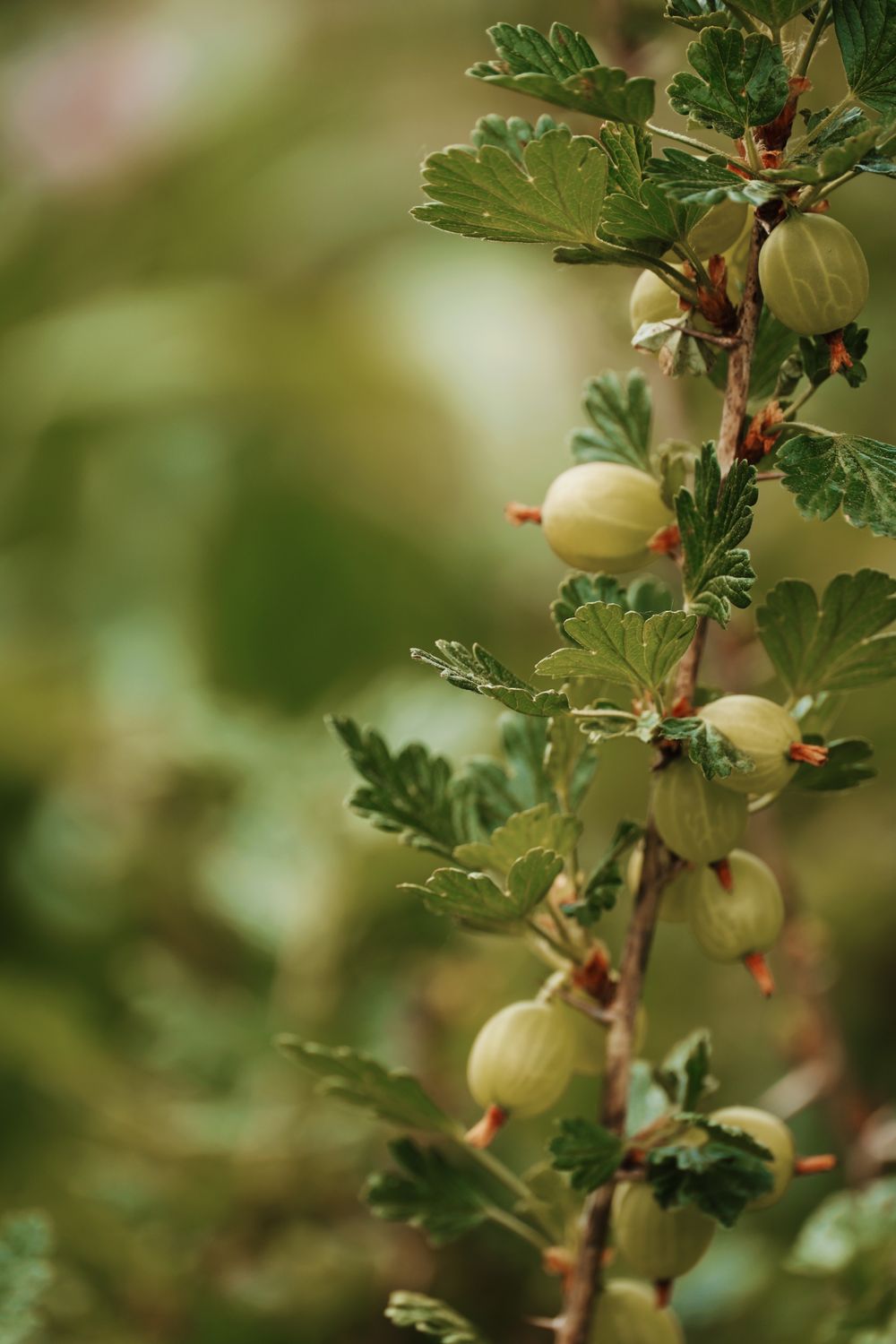
If you've ever grown gooseberries, you'll know the particular frustration. American gooseberry mildew coats the fruit in grey fuzz, sawfly caterpillars strip the leaves overnight — mine have been reduced to bare twigs in a matter of days more than once before I caught them — and somehow the bushes manage to be both productive and thoroughly annoying at once. This is where the worcesterberry comes in: everything a gooseberry does, but tougher, more disease-resistant, and to my mind a good deal easier to live with.
What are worcesterberries?
Worcesterberries come from Ribes divaricatum, a species native to western North America. They're close cousins of the gooseberry (Ribes uva-crispa) and produce similar small, round fruit on thorny bushes. The berries are smaller than gooseberries, about the size of a small grape, and ripen from green through to dark purple-black.
Despite the name, they've no particular connection to Worcestershire at all. As far as anyone can tell, the name was stuck on by a British nurseryman in the early twentieth century, presumably because it sounded a sight more appealing than "North American wild gooseberry." Some botanists reckon worcesterberries are a hybrid between a gooseberry and a blackcurrant, though that's disputed. What nobody disputes is that they're vigorous, productive, and far less trouble than the traditional gooseberry.
How they differ from gooseberries
In the kitchen the two are close enough to swap one for the other, but out in the garden there are some differences worth knowing about. The big one is disease resistance: worcesterberries are highly resistant to American gooseberry mildew, the fungal disease that wrecks gooseberry crops up and down the country. If mildew has been a recurring misery in your garden, switching across may well solve it outright.
They're also more vigorous, growing taller and wider than a gooseberry and reaching up to two metres in height and spread if you let them. That's a bonus if you fancy a productive hedge, and a nuisance if space is tight. Then there are the thorns. Both plants are thorny, but worcesterberries take it to another level entirely: longer, sharper, more densely packed. After years of coming away from my own gooseberries with scratched forearms, I can tell you gloves are not optional here, and I'd genuinely recommend thick leather gauntlets for picking and pruning. On the upside, what you lose in fruit size you gain in quantity. Individual berries run about 1 to 1.5cm across, against 2 to 3cm for gooseberries, but the bushes carry a great many of them. And the flavour has a useful split personality: tart and sharp like a cooking gooseberry when green and unripe, then sweeter and more complex with a hint of blackcurrant once fully ripe and dark purple. That dual character makes them genuinely versatile in the kitchen.
Growing worcesterberries
These are an easygoing crop that copes with conditions fussier fruit would baulk at. They'll take full sun or partial shade, and unlike a lot of fruit bushes they crop reasonably even in partial shade, which makes them handy for a north-facing border or a spot under taller trees. They do crop best in sun, but they don't sulk in shade the way strawberries or raspberries would. Any reasonable garden soil suits them; they prefer moisture-retentive ground but tolerate most things, including the heavy clay so many of us are stuck with, and they're not fussy about pH.
Plant bare-root bushes between November and March, or container-grown plants any time of year, spacing them 1.2 to 1.5 metres apart and digging in plenty of compost as you go. Once they're established they rarely need watering except in a real drought, though new plants do appreciate regular watering through their first summer.
Pruning and training
Left entirely to themselves, worcesterberry bushes turn into dense, impenetrable thickets, so a regular bit of pruning keeps them in hand and improves the fruit. I'd prune in winter while the plants are dormant and, mercifully, the thorns are easier to see without leaves in the way. You're aiming for an open goblet shape with good air circulation, much as you'd prune a gooseberry.
In practice that means three jobs. Remove dead, damaged or crossing branches, and cut out any wood older than three years, since the best fruit comes on younger wood. Shorten the side shoots to two or three buds from the main framework branches. And thin out the centre of the bush to let light and air in, which lowers disease risk and helps the remaining fruit ripen better. Some growers train worcesterberries as fans against walls or fences, which makes picking far easier and keeps that thorny growth under control. It's a good trick for a north or east-facing wall where other fruit wouldn't thrive.
Pests and disease resistance
This is where worcesterberries really earn their keep. Their resistance to American gooseberry mildew is the headline, but they tend to shake off other troubles that plague gooseberries too. Gooseberry sawfly, the caterpillar that can defoliate a gooseberry in days — it's stripped my own bushes to bare stems before I'd realised what was happening — seems to bother them less; it can still turn up, but infestations are usually milder. Leaf spot and other fungal problems are less common as well. Birds, mind you, will still take the ripe fruit, so netting is necessary if you want to beat the blackbirds to it. Squirrels may take an interest too, though those fearsome thorns do offer some deterrent.
Harvesting and uses
Worcesterberries are ready from mid-July to August, depending on where you are and what kind of summer it's been, and you've really got two ways to pick them. For cooking, take the berries while they're green and firm, exactly as you would cooking gooseberries. At that stage they're sharp and sour, perfect for pies, crumbles and fool, and they carry enough pectin to make excellent jam without adding any. For eating fresh, hold off until they turn dark purple-black and soften a little; the flavour mellows considerably, going sweeter with that blackcurrant note. They'll never rival a ripe strawberry for sweetness, but they're perfectly pleasant raw.
In the kitchen they're as obliging as a gooseberry. The jam sets well without added pectin: use equal weight of fruit and sugar, plus a squeeze of lemon juice. For pies and crumbles, use the green berries just as you would gooseberries, though they may want a touch more sugar for their tartness. They freeze beautifully too, so spread them on a tray, freeze until solid, then bag them up and use straight from frozen in cooking. And for a cordial, simmer ripe berries with sugar and water, strain and bottle, and you'll get a gorgeous deep purple.
Worcesterberries vs gooseberries: which should you grow?
If you've the space, there's honestly no reason not to grow both. But if it has to be one, a few things should decide it. I'd choose worcesterberries if you've battled gooseberry mildew, if you want a low-maintenance bush that largely looks after itself, if you've a shady spot crying out for a productive plant, or if you fancy a thorny hedge that doubles as a fruit crop. I'd choose gooseberries if you want larger individual berries, if you have a favourite dessert variety like Leveller or Invicta that you simply can't get as a worcesterberry, or if the thought of picking fruit from a bush armed with inch-long thorns fills you with dread.
For most gardeners who've fought gooseberry mildew year after year, though, switching to worcesterberries is a bit of a revelation. The fruit is similar enough that your recipes don't need touching, and you can finally pack away the fungicide for good.
Worcesterberries and their cane-fruit cousins
If disease resistance and low maintenance are what drew you to worcesterberries, the same instincts point toward a couple of other Ribes crosses worth knowing about. The jostaberry — a gooseberry-blackcurrant cross — shares that same tough, shrug-off-anything constitution and gives you a completely different flavour profile from the same easy-care family. And if you'd still like to grow a traditional gooseberry alongside a worcesterberry for comparison, my complete gooseberry growing guide covers the varieties and the mildew problem worcesterberries were bred to dodge.