What Are Jostaberries?
The jostaberry is one of those plants I find genuinely fascinating — a complex hybrid that takes the best of the blackcurrant and the best of the gooseberry and rolls them into a single thornless, disease-resistant bush. Even the name is a marriage of the two: it's a portmanteau of the German Johannisbeere (blackcurrant) and Stachelbeere (gooseberry).
The story behind it is rather lovely. Ribes × nidigrolaria was developed by German breeders from the 1920s onwards, the aim being a gooseberry-type fruit without the thorns and with resistance to American gooseberry mildew — the devastating disease that was making gooseberries ever harder to grow. After decades of patient work, the jostaberry was finally released to the public in 1977, and it's been quietly winning over gardeners ever since.
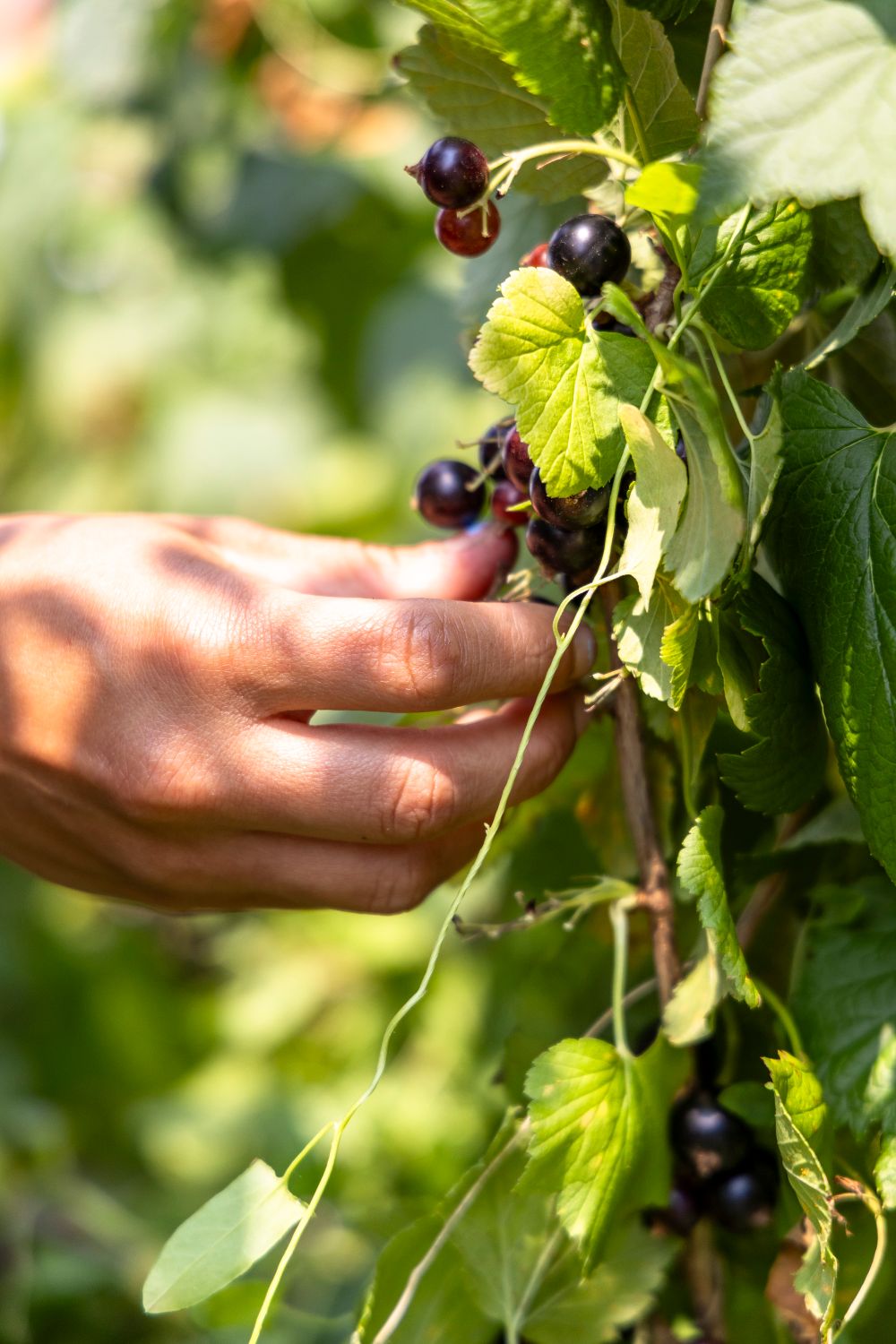
The berries are the size of small gooseberries, about 1cm across, but dark purple-black like blackcurrants. The flavour is the real draw: the earthy, tangy depth of blackcurrant married to the fruity sweetness of gooseberry. Fully ripe, they're sweet enough to eat straight from the bush, though they cook and preserve beautifully too. And the bush itself is vigorous, thornless, and very nearly indestructible. As someone who grows both parents, I can't overstate what a relief that thornlessness is — after years of scratched arms wrestling fruit off my gooseberries, a bush you can reach into bare-handed feels like a small miracle. If you want a productive, low-maintenance fruit bush that laughs off disease and crops generously for almost no effort, the jostaberry is hard to beat — I mean that.
How to Grow Jostaberries in the UK
Site and Soil
Jostaberries are wonderfully easygoing. They'd prefer a sunny position, but they'll crop well in partial shade, which makes them handy for those trickier corners where full sun simply isn't on offer. They'll grow in almost any soil, from heavy clay to light sand, though they do best in fertile, well-drained but moisture-retentive ground with a pH of 6.0 to 6.5. And they're tough as old boots — fully hardy at RHS H6, thriving from the tip of Cornwall to the highlands of Scotland, taking cold, wind, and exposure in their stride.
Planting
Plant bare-root bushes between November and March; container-grown plants can go in any time, though I'd choose autumn if I had the choice. Give them room — space bushes 1.5 to 2 metres apart, because they grow larger than blackcurrants, reaching 1.5 to 2 metres tall and 1.5 metres wide at maturity. Dig a generous hole, work in plenty of well-rotted compost or manure, and plant slightly deeper than the nursery mark to coax new shoots from the base. Water well and mulch thickly.
Then comes the bit that makes most people wince: after planting, prune every stem back to 5cm (2 inches) above the ground. It looks brutal, I know, but it drives the strong basal growth that builds a well-shaped, productive bush. Do it and don't look back.
Container Growing
You can grow them in a large container of at least 40 litres, filled with a mix of loam-based and multipurpose compost. They're vigorous, so go for the biggest pot you can manage — a half-barrel or large planter is ideal — and be ready to water and feed regularly. Yields will be smaller than from an open-ground bush, but the fruit quality will still be excellent.
Best Varieties for UK Gardens
There isn't a great spread of named jostaberry varieties compared with blackcurrants or gooseberries, but the plants you'll find in the UK are excellent:
| Variety | Description | Where to Buy |
|---|---|---|
| Standard Jostaberry | The most widely available form. Vigorous, thornless bush producing abundant dark purple-black berries in July. Disease-resistant and very reliable. This is the one to buy if in doubt. | Thompson & Morgan, Crocus, Pomona Fruits, Chris Bowers |
| Jostaberry (Black-fruited) | Sometimes listed separately by the RHS. Essentially the same plant. Look for well-established specimens from reputable nurseries. | RHS Plants, specialist nurseries |
Care and Maintenance
Pruning
Here's a relief: jostaberries need far less pruning than blackcurrants. With my blackcurrants I'm out there every winter cutting out the oldest third of the stems — a job I've come to do almost on autopilot — but the josta asks for much less. After that hard prune at planting, just let the bush settle in for two or three years with only light shaping. From the fourth year onwards, take out about a quarter of the oldest stems each winter, cutting them right back to ground level — this keeps fresh, productive growth coming from the base and the bush open and airy. While you're at it, remove anything dead, damaged, or crossing. What you're aiming for is an open goblet shape that lets air and light into the middle.
Feeding and Mulching
Give them a general-purpose fertiliser such as Growmore in early spring — jostaberries are greedy and respond well to generous feeding — then follow it with a thick mulch of well-rotted manure or compost, keeping the mulch off the stems themselves. A high-potash feed (tomato fertiliser) when the fruit is swelling can improve both berry size and flavour.
Propagation
They're easily propagated from hardwood cuttings taken in late autumn. Cut 20–25cm lengths of healthy, pencil-thick stems from the current year's growth and push them into a sheltered bed of well-prepared soil with about a third left above ground. By the following autumn they should be well-rooted and ready to move on — free bushes for the price of a little patience.
Pests and Diseases
This is where jostaberries really earn their reputation, having inherited a remarkable toughness from both parents. They're largely immune to American gooseberry mildew, that devastating disease which makes growing gooseberries so frustrating — beating it was one of the original breeding goals. They're also resistant to currant gall mite (big bud mite), which can wreck a blackcurrant crop but rarely troubles a josta. Sawfly, too, is far less of a worry — the caterpillars have stripped my gooseberries to bare twigs more than once, yet they leave the josta largely alone.
The rest is minor. Leaf spot turns up occasionally but is seldom serious; gather fallen leaves in autumn to cut down reinfection. Aphids may colonise young growth now and then, though it's usually self-limiting once the natural predators arrive. Birds, predictably, will help themselves to ripe berries, so net the bush or use a fruit cage if the damage starts to mount. Taken together — thornless stems, vigorous growth, real disease resistance — jostaberries are among the most trouble-free fruit bushes you can grow in a UK garden.
Harvesting, Storage, and Preserving
Jostaberries ripen in July, sitting neatly between gooseberries and blackcurrants in their timing, turning from green to dark purple-black as they go. They don't all ripen at once, so you can pick over several weeks, and ripe berries come away easily with a soft, slightly yielding feel. The yields are generous — an established bush can give 4 to 5 kg of fruit a year. They're a touch fiddlier to pick than blackcurrants, since they won't strip cleanly from the strigs, but those thornless stems make handling the bush a real pleasure.
When it comes to using the crop, they freeze exceptionally well: spread them on a tray, freeze, then bag them up, and they hold their shape and flavour for up to a year. Jostaberry jam has a unique, complex flavour — tangy and fruity with deep blackcurrant notes — and it sets well thanks to the pectin. For something to sip, simmer the berries with water and sugar, strain, and bottle; the resulting cordial, topped up with sparkling water, makes a gorgeous summer drink. And in pies and crumbles, just treat them as you would blackcurrants or gooseberries.
Eating and Recipes
Fully ripe, jostaberries are sweet enough to eat fresh from the bush, though they keep a pleasant tang that not everyone enjoys raw. The flavour really is its own thing — imagine a blackcurrant crossed with a gooseberry and you're close, but there's an extra fruity complexity that's hard to pin down until you've tasted it for yourself.
In the kitchen they're a delight. Toss them with a little sugar and cinnamon under a buttery crumble topping and bake until golden, then serve with custard or cream. Stew them gently with sugar until they burst and the liquid turns a glorious deep purple, and spoon that compote over yoghurt, porridge, or vanilla ice cream. Or pair them with sliced cooking apples in a pie for fabulous colour and a complex, tangy filling. Nutritionally they're little powerhouses, too — packed with vitamin C (more than oranges, weight for weight), along with anthocyanins, potassium, and dietary fibre.
Frequently Asked Questions
What does a jostaberry taste like?
Like a blend of blackcurrant and gooseberry — tangy and aromatic with a fruity sweetness that builds as the berries ripen. Picked fully ripe, when they're dark purple-black, they're pleasant fresh, though most people find them at their very best in jams, pies, and cordials.
Are jostaberries thornless?
Yes, and it's one of their great virtues — the bushes are completely thornless, which makes pruning, maintenance, and picking far more pleasant than wrestling with gooseberries or thorny blackberry hybrids.
How big does a jostaberry bush grow?
A mature bush typically reaches 1.5 to 2 metres tall and 1.5 metres wide. They're vigorous and need more room than blackcurrants, so allow 1.5 to 2 metres between bushes at planting.
Do jostaberries need a pollination partner?
They're partially self-fertile and will set some fruit on their own, but yields improve markedly if a blackcurrant or gooseberry is growing nearby to provide cross-pollination. Planting two jostaberry bushes will also boost cropping.
Are jostaberries disease-resistant?
Very much so — among the most disease-resistant soft fruits you can grow. They're largely immune to American gooseberry mildew and currant gall mite, two of the worst headaches for gooseberry and blackcurrant growers, which makes them ideal for organic gardens.
Can you grow jostaberries in a pot?
You can, in a large container of 40 litres or more, though they're vigorous plants that really prefer open ground. In a pot, expect a smaller but still worthwhile harvest — use loam-based compost, water regularly, and feed throughout the growing season.
Jostaberries are one of the more sensible entries on my full round-up of unusual berries to grow in the UK — a hybrid that behaves itself far better than some of the more exotic superfruits I cover there, while still giving you something genuinely different from a straight gooseberry or blackcurrant.
If it's the currant side of the jostaberry's parentage that appeals most, my guide to growing redcurrants covers its more traditional cousin in full.