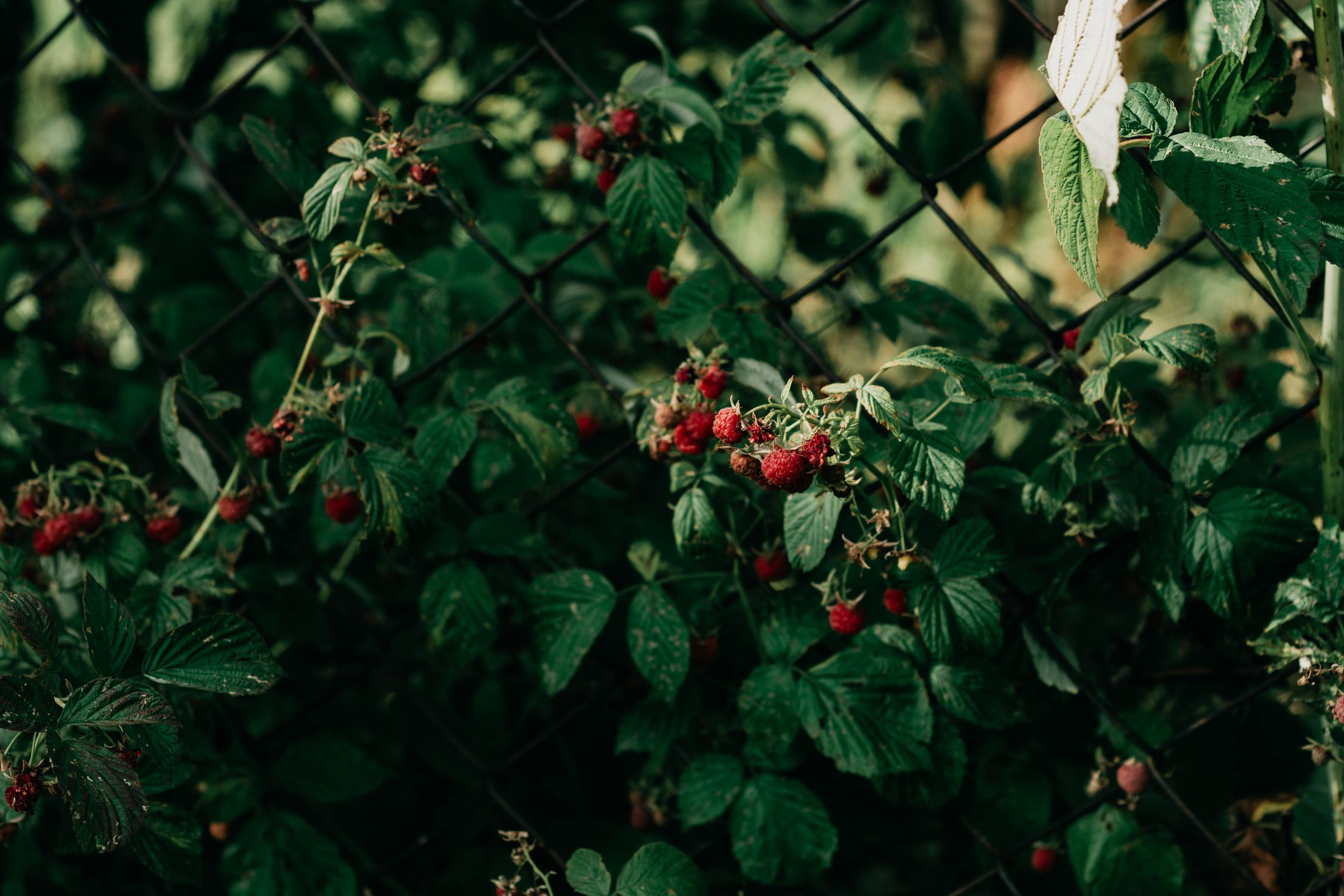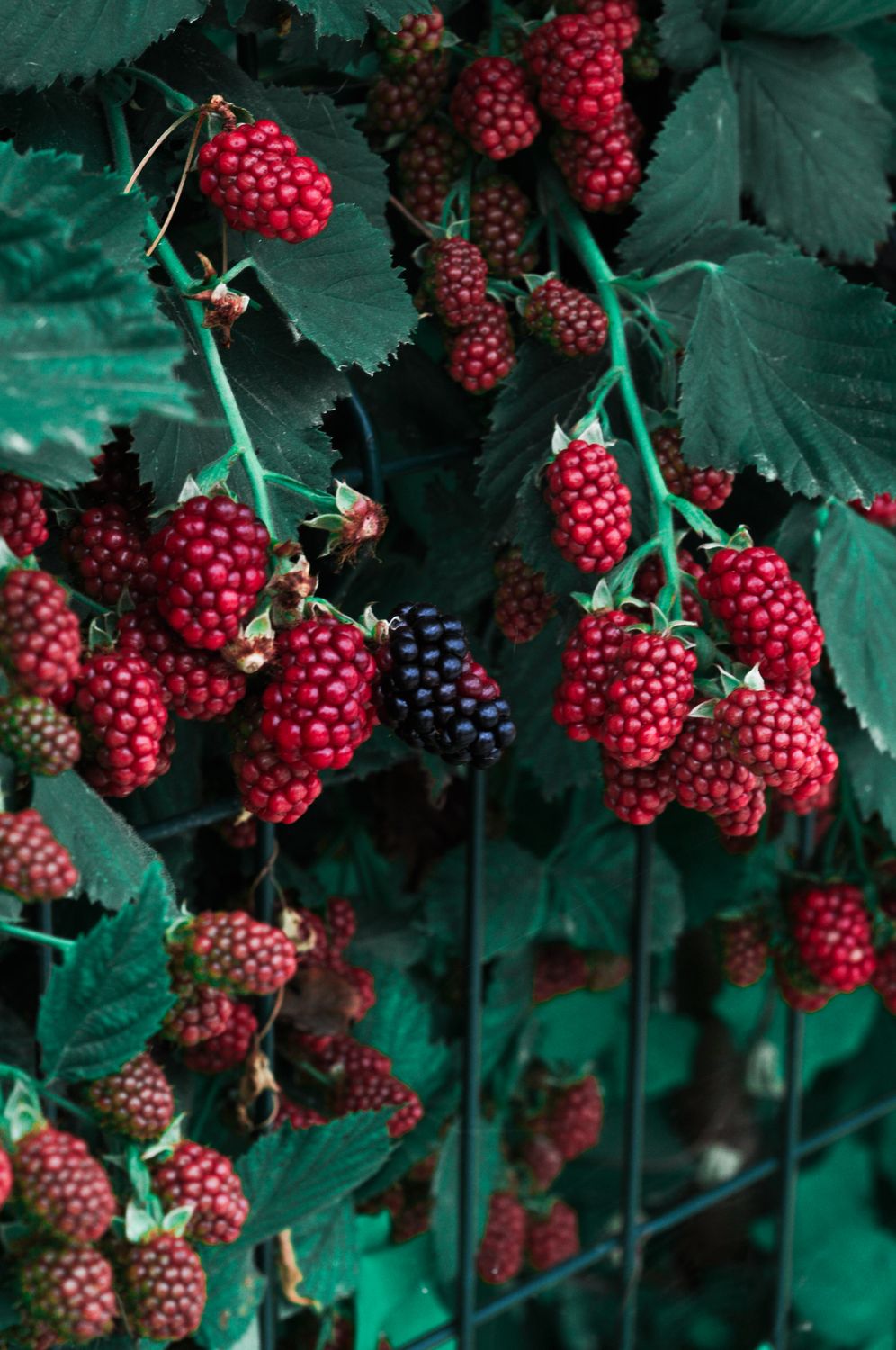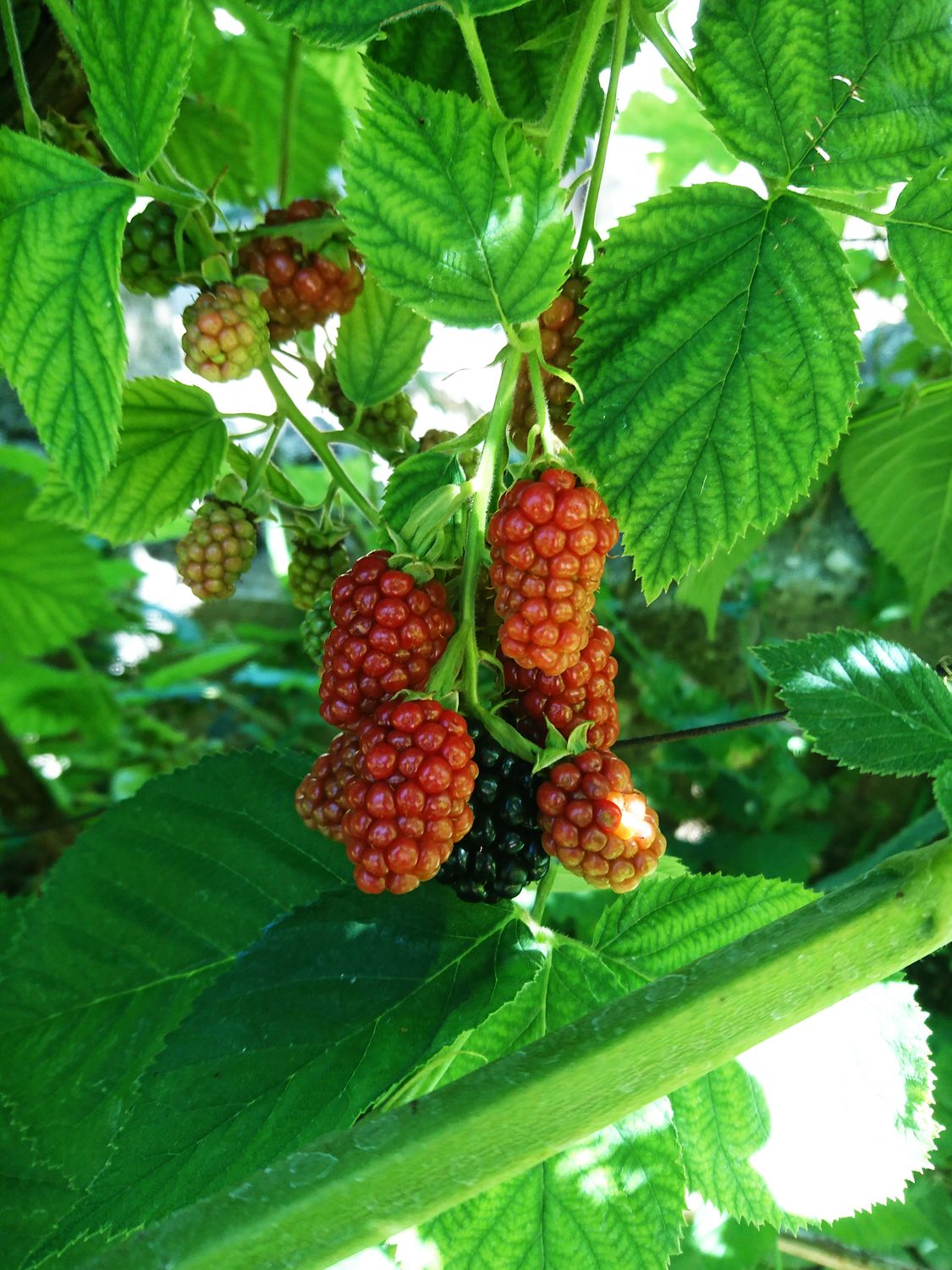
If you only ever grow one hybrid berry, make it the tayberry. I mean that. It is a proudly Scottish creation and, to my mind, one of the finest hybrid berries anyone has ever bred. Let me tell you how to grow it, look after it, and make the most of every last berry.
What Are Tayberries?
The tayberry was developed in 1979 at the Scottish Crop Research Institute in Dundee, now the James Hutton Institute, by crossing a blackberry (Aurora) with a raspberry (SCRI 626/67). The name comes from the River Tay, which flows through Dundee. So it is Scottish through and through, which is part of why it copes so happily with our weather.
The plants produce large, conical berries up to 4cm long that ripen from red through to a deep purple-red. The flavour is the thing, though. It is sweeter and more aromatic than a loganberry, with a perfumed, raspberry-like richness, and just enough tartness underneath to stop it ever becoming dull. I would happily call it one of the most delicious berries you can grow in a British garden, and certainly the best of the hybrids for eating fresh.
Here is the kicker: for all that flavour, you will almost never find a tayberry in the shops. The berries are simply too soft to travel. That is precisely why they belong in the home garden, where you can pick and eat them at the absolute peak of ripeness. It is a small luxury that no amount of money can buy in a supermarket, and it makes the bit of effort thoroughly worthwhile.
How to Grow Tayberries in the UK
Site and Soil
Tayberries do best in full sun in moderately fertile, well-drained soil with a neutral pH. They will put up with light shade, but they crop most heavily where they get plenty of sun. My advice is to find them a sheltered spot against a south or west-facing wall or fence, which gives them both warmth and shelter from cold winds. Steer clear of heavy, waterlogged clay and frost pockets. If your soil is on the heavy side, work in generous amounts of organic matter to improve drainage, and think about planting on a slight ridge.
Planting
Plant bare-root canes between November and March while they are dormant; container-grown plants can go in at any time of year. Space them 2 to 2.5 metres apart along a fence or wall fitted with horizontal support wires at 60cm intervals up to 1.8m high. Dig a hole big enough to spread the roots out comfortably, set the plant at the same depth as the nursery mark, and firm it in well. Water it thoroughly, then lay down a deep mulch of composted bark or well-rotted manure.
Training
These canes are vigorous, reaching 2 to 2.5 metres, and they really do need training on wires to give of their best. The way I do it is to fan the fruiting canes out to one side and train the new season's growth to the other. Keeping the two separate makes pruning and picking so much easier come summer. If space is tight, you can instead weave the new canes up through the horizontal wires in a serpentine pattern, which keeps things more compact.
Container Growing
No open ground? No problem. Tayberries will grow in a large container of at least 50 litres with a sturdy trellis or obelisk for support. Use John Innes No. 3 compost for a bit of stability, water daily through summer, and feed fortnightly with a balanced liquid fertiliser. The yields will be smaller than in open ground, but the fruit quality is every bit as good.
Best Varieties for UK Gardens
| Variety | Description | Where to Buy |
|---|---|---|
| Medana Tayberry | The standard tayberry, with thorny canes and superb flavour. Heavy cropping with large, aromatic berries up to 4cm long. The original and many say still the best for flavour. | Thompson & Morgan, Crocus, Chris Bowers |
| Buckingham Tayberry | A thornless sport of the Medana. Much easier to handle when pruning and picking. Berries up to 4cm long with excellent flavour, though some growers feel the thorny Medana is marginally more productive. | Thompson & Morgan, Crocus, Chris Bowers |
For most gardeners I would point you straight at the Buckingham, the thornless one. The slight drop in yield against Medana is, in my view, more than paid back by how much easier it is to live with when you are pruning and picking. That said, if you are a keen jam maker chasing the biggest possible harvest and you do not mind a few scratches, Medana is the one to go for.
Care and Maintenance
Pruning
Tayberries fruit on the previous year's canes, and that one fact tells you everything you need to know about pruning. Once you have picked the last of the crop in late summer, cut every fruited cane right down to ground level. Then tie in the new season's growth, keeping the 6 to 8 strongest canes and taking out anything weak or crossing.
Feeding
Give them a general-purpose fertiliser in early spring, around March, and mulch generously with well-rotted compost or manure. Once they are fruiting, a fortnightly liquid feed with a high-potash fertiliser, such as tomato feed, will noticeably boost both berry size and flavour.
Watering
Water during dry spells, and pay particular attention when the fruit is swelling and ripening, because consistent moisture at that stage is what gives you the largest, juiciest berries. Keep the water at the base and off the foliage, as overhead watering only invites grey mould.
Propagation
Like loganberries, tayberries propagate beautifully by tip layering, and it is almost too easy. In late summer, bend a healthy new cane tip down to the ground, bury it about 10cm deep, and by the following spring it will have rooted into a brand new plant. It is the simplest and most reliable method I know.
Pests and Diseases
Tayberries are not especially troublesome, but a handful of things are worth keeping an eye on. The most common is the raspberry beetle, whose grubs feed inside the fruit; pheromone traps or a spray at first flower will keep it in check. Aphids may colonise the young shoots, but encouraging ladybirds or reaching for an organic soap spray usually sorts them out. In a wet summer, watch for botrytis (grey mould): good air circulation, prompt picking, and base watering are your best defences. Leafhoppers can mottle the leaves but rarely touch the fruit, so I tend not to worry about them. Gall mites occasionally turn up, leaving buds looking swollen and dry, in which case you should remove and burn the affected canes. And finally, birds, blackbirds especially, find ripe tayberries irresistible, so net the plants or grow them in a fruit cage if you actually want any for yourself.
Harvesting, Storage, and Preserving
Tayberries ripen from mid-July to late August across most of the UK. Pick them once they have turned a deep purple-red and come away easily from the plug. They are soft and delicate things, so handle them gently and use shallow containers, or the bottom layer will be crushed before you reach the kitchen. Fresh, they will keep only a day or two in the fridge, which is yet another reason you never see them in supermarkets and another reason growing your own is so rewarding.
When you have a glut, you have options. To freeze them, spread the berries on a flat tray first and then bag them up once frozen; they hold their flavour beautifully for up to a year. Tayberry jam is exceptional, aromatic and sweet-sharp and deeply fruity, and I would rank it among the finest homemade jams you can make. You can use them in pies and crumbles exactly as you would raspberries or blackberries, their flavour only intensifying with cooking. And stewed with a little sugar, they make a luxurious coulis for cheesecake, ice cream, or meringue.
Eating and Recipes
The flavour of a ripe tayberry is genuinely special, sweeter and more perfumed than a loganberry, with a rich aromatic quality that makes it superb eaten fresh. The berries are juicy and a little soft, with a deep colour that bleeds gorgeously into puddings. A tayberry fool is the simplest place to start: fold lightly stewed, sweetened berries through whipped cream and you have something elegant and utterly delicious. For something showier, top a crisp meringue base with whipped cream and fresh tayberries for a spectacular pavlova. And if you want depth, combine them with sliced cooking apples in a crumble; the two together are extraordinary.
They are good for you, too. Tayberries are rich in vitamin C, fibre, and anthocyanin antioxidants, and that deep colour is a sign of just how many beneficial plant compounds they pack in.
Frequently Asked Questions
What is the difference between a tayberry and a loganberry?
Both are raspberry-blackberry hybrids, but the tayberry is sweeter, larger, and far better for eating fresh. The loganberry is sharper and more acidic, which suits it to cooking and jam. The tayberry was bred nearly a century after the loganberry and represents a real step up in both flavour and berry size.
Can you eat tayberries fresh?
Absolutely, and you should. They are one of the best hybrid berries for eating raw, sweet and aromatic straight from the plant. Where most people prefer loganberries cooked, a tayberry is a genuine treat eaten just as it comes.
How big do tayberry plants grow?
The canes typically reach 2 to 2.5 metres in length and need training on wires or a fence for support. Space your plants 2 to 2.5 metres apart to give those vigorous canes the room they want.
Are tayberries self-fertile?
Yes, they are self-fertile and will crop well from a single plant. Plant more than one, though, and you will get a bigger harvest and stretch the picking season out a little longer.
When do tayberries fruit in the UK?
Typically from mid-July to late August, neatly filling the gap between summer raspberries and blackberries. The exact timing comes down to where you are and what the weather is doing, with southern gardens usually a week or two ahead of northern ones.
Do tayberries need a lot of space?
The canes are vigorous and want 2 to 2.5 metres between plants when grown along a fence or wall. But do not let that put you off if you are short of room: they can be trained vertically on a narrow wall, or grown in a large container with an obelisk, which makes them more adaptable than you might expect.