Every so often a visitor to my garden points at a sprawling cane heavy with dark, jewel-like fruit and asks, "Is that a blackberry or a raspberry?" The honest answer is "both, sort of." Loganberries, tayberries and boysenberries are all hybrids born from crossing raspberries with blackberries, and they sit in that delicious middle ground between the two. But they are far from interchangeable, and choosing the wrong one for your plot can mean the difference between a glut you can barely keep up with and a sulking plant that never quite gets going. Having grown all three here in Britain over the years, I want to walk you through what actually sets them apart and, more importantly, which one belongs in your garden.
What's the difference between a loganberry, a tayberry and a boysenberry?
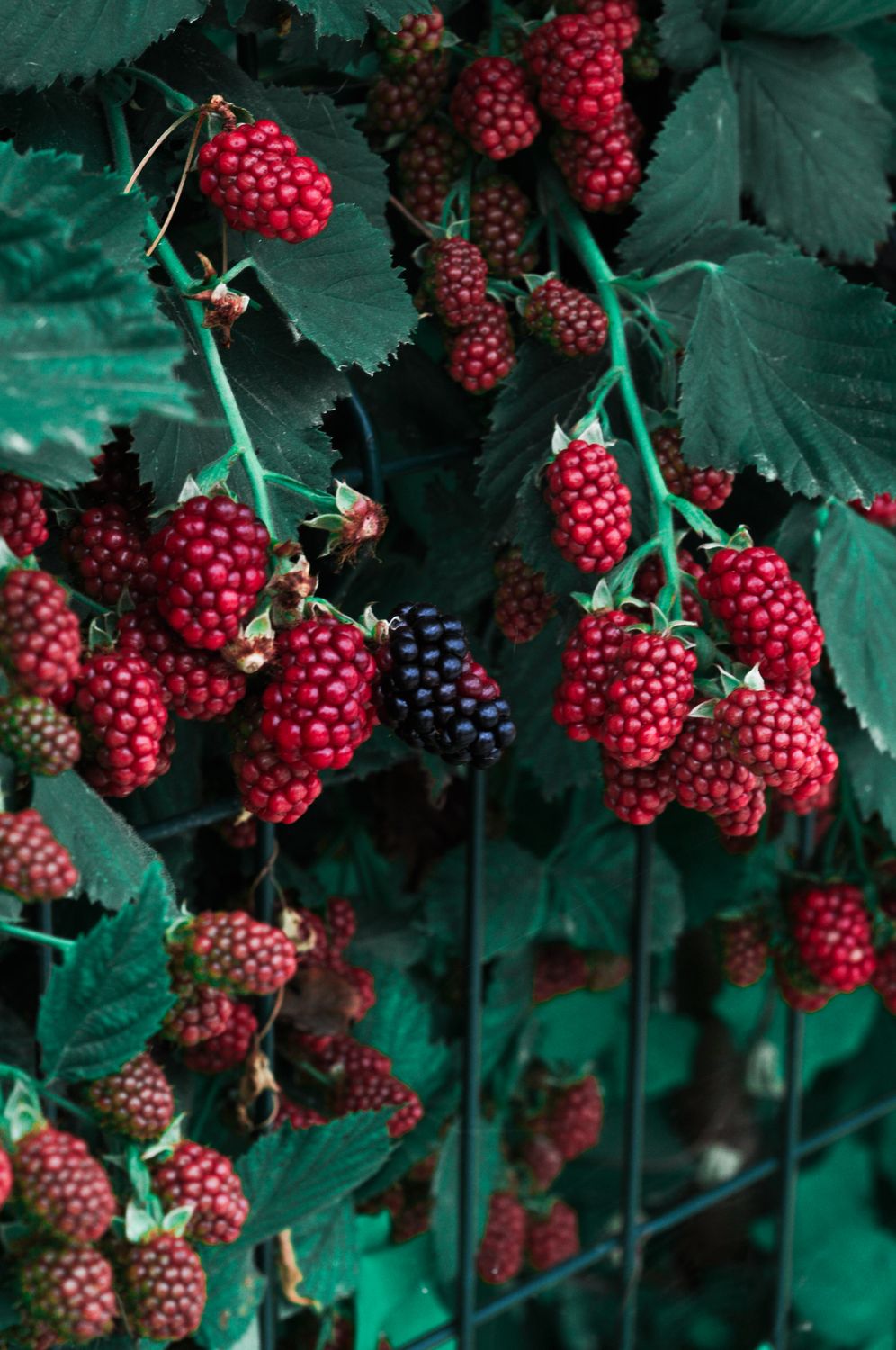
They share a family resemblance, but each has its own story. The loganberry (Rubus x loganobaccus) was a happy accident. In 1881, Judge James Harvey Logan in California was trying to breed a better blackberry, planted some varieties next to a raspberry, and the seedlings that came up turned out to be something entirely new. The result is a long, deep wine-red berry, sharp and tart, brilliant for cooking. It is the old reliable of the group, and if you'd like the full story I've written about growing loganberries in detail elsewhere.
The tayberry is the home-grown one, and I'll admit a soft spot for it. It was bred in 1979 at the Scottish Crop Research Institute and named after the River Tay. Think of it as the loganberry's more refined cousin: larger, sweeter, more aromatic, and far happier to be eaten straight off the cane. If you garden anywhere north of the border it feels almost purpose-built for you, though it thrives across the UK. My full notes on tayberries go further into the cultivation side.
The boysenberry is the exotic of the trio. It's a more tangled hybrid, drawing on loganberry, raspberry and blackberry parentage, and it was popularised in California by Rudolph Boysen and the famous Walter Knott of Knott's Berry Farm. The fruit is large, soft and a deep maroon, with a rich, almost wine-like sweet-tartness that's hard to beat for puddings. The catch, and it's a real one for us, is that it's noticeably more tender than the others. You can read why I think these boysenberries deserve a comeback, but they do come with conditions attached.
How do they compare at a glance?
Sometimes a table says it best. Here's how the three stack up across the things that actually matter when you're deciding what to plant:
| Feature | Loganberry | Tayberry | Boysenberry |
|---|---|---|---|
| Flavour | Sharp, tart, intense | Sweet, aromatic, balanced | Rich, sweet-tart, wine-like |
| Size | Medium-large (~3-4cm), long | Large, often the biggest | Large, soft, plump |
| Colour | Deep wine-red | Red-purple | Dark maroon |
| Hardiness / UK suitability | Very hardy (RHS H6); reliable nationwide | Very hardy; superb, especially in Scotland | More tender; needs shelter and warmth |
| Thorns | Thorny (LY59) or thornless (LY654) | Thorny, or thornless 'Buckingham' | Thorny and thornless forms exist |
| Best use | Jam, pies, cordials, cooking | Eating fresh, all-round use | Desserts, crumbles, fresh at home |
| Eat fresh vs cook | Mostly cook | Excellent fresh | Good fresh, but doesn't travel |
Which hybrid berry is best for UK gardens?
Here's where I have to be honest about our climate, because it does most of the deciding for us. The loganberry and tayberry are tough, dependable plants that shrug off a cold, wet British winter without complaint. The loganberry in particular carries an RHS hardiness rating of H6, which means it'll take hard frosts in its stride, and the tayberry is every bit as resilient. Both crop reliably year after year whether you're in Cornwall or the Cairngorms.
The boysenberry is a different matter. Its soft, tender canes and fruit really do prefer a warm, sheltered, sunny spot, ideally with a south-facing wall or fence to lean against. In a cold or wet garden it can genuinely struggle, and even when it does fruit, the berries are so soft that they bruise if you so much as look at them sternly. That's not a fault you can fix; it's simply the nature of the beast. The flipside is that a happy boysenberry, ripened in the sun, rewards you with a flavour the other two can't quite match.
If thorns matter to you, and on a vigorous hybrid that scrambles to a good size they really do, you have thornless options across the board. The loganberry comes as the prickly LY59 or the kinder thornless LY654; the tayberry has the lovely thornless 'Buckingham'; and boysenberries can be found in both forms too. I'd always steer a new grower towards a thornless variety for their first hybrid, simply because training and harvesting becomes a pleasure rather than a battle.
So which one should you actually grow?
Let me give you the verdict I'd offer a friend over the garden fence, sorted by what you want from your berries.
- Grow a loganberry if you're a jam-maker, a baker, or simply someone who wants a no-fuss plant that crops reliably whatever the weather throws at it. That sharp, tart fruit is born to be cooked, and it sets beautifully into preserves and cordials.
- Grow a tayberry if you want the best all-rounder for a British garden. It's my top pick for most people: sweet enough to graze straight from the cane, big and handsome, hardy as they come, and equally at home in the kitchen. If you only have space for one hybrid, make it this.
- Grow a boysenberry if you have a warm, sheltered, sunny corner and you're after a luxurious dessert berry. Treat it well and it'll give you something special; just don't expect it to thrive in an exposed, soggy plot.
One more name worth knowing before you place your order: the tummelberry, another related hybrid that came out of the same Scottish breeding work as the tayberry and is bred to be even hardier in tricky conditions. If you garden somewhere cold and want the tayberry character with a bit more backbone, it's well worth a look, and I've compared the tummelberry and tayberry side by side to help you choose.
My short version, if you're standing at the garden centre right now: tayberry for eating, loganberry for the jam pan, boysenberry for a sunny spot and a treat. You can't really go wrong with any of them, but you can certainly go more right.
Whichever you settle on, give it a sturdy support to climb, a sunny site, and a decent mulch each spring, and these hybrids will repay you generously. There's nothing quite like a bowl of homegrown berries that nobody at the supermarket has ever heard of, and these three are among the finest you can grow.