If you've been weighing up hybrid berries for the garden, the chances are you've run into both tayberries and tummelberries and found yourself a bit stuck. They look alike, they taste alike, and they grow in much the same way. So what actually separates them, and which one deserves your space? In my experience it comes down to three things: where you live, how much fuss you're willing to put into keeping disease at bay, and whether you're chasing flavour or reliability.
What are tummelberries?
The tummelberry was bred at the Scottish Crop Research Institute, now part of the James Hutton Institute, back in the 1980s. It's a cross between a tayberry and one of its sibling seedlings, essentially a second-generation tayberry created to patch up the original's biggest flaw: its weakness for botrytis, or grey mould.
The name comes from the River Tummel in Perthshire, carrying on the Scottish naming habit that gave us the tayberry in the first place (that one named after the River Tay). Like the tayberry, the tummelberry is a raspberry-blackberry hybrid, but with better disease resistance and slightly different fruiting habits.
How they compare
If I had to call it on flavour alone, the tayberry wins, and it isn't especially close. It gives you berries with a rich, complex taste that pulls together the best of raspberry and blackberry, with a sweetness and aromatic depth that's genuinely outstanding. Plenty of growers reckon it's the finest-flavoured hybrid berry going, and I wouldn't argue. Tummelberries are good, but not quite in that league: similar, a shade less complex, with a touch more tartness. You'd notice the difference in a side-by-side tasting, but it's modest enough that most people would be perfectly content with tummelberries.
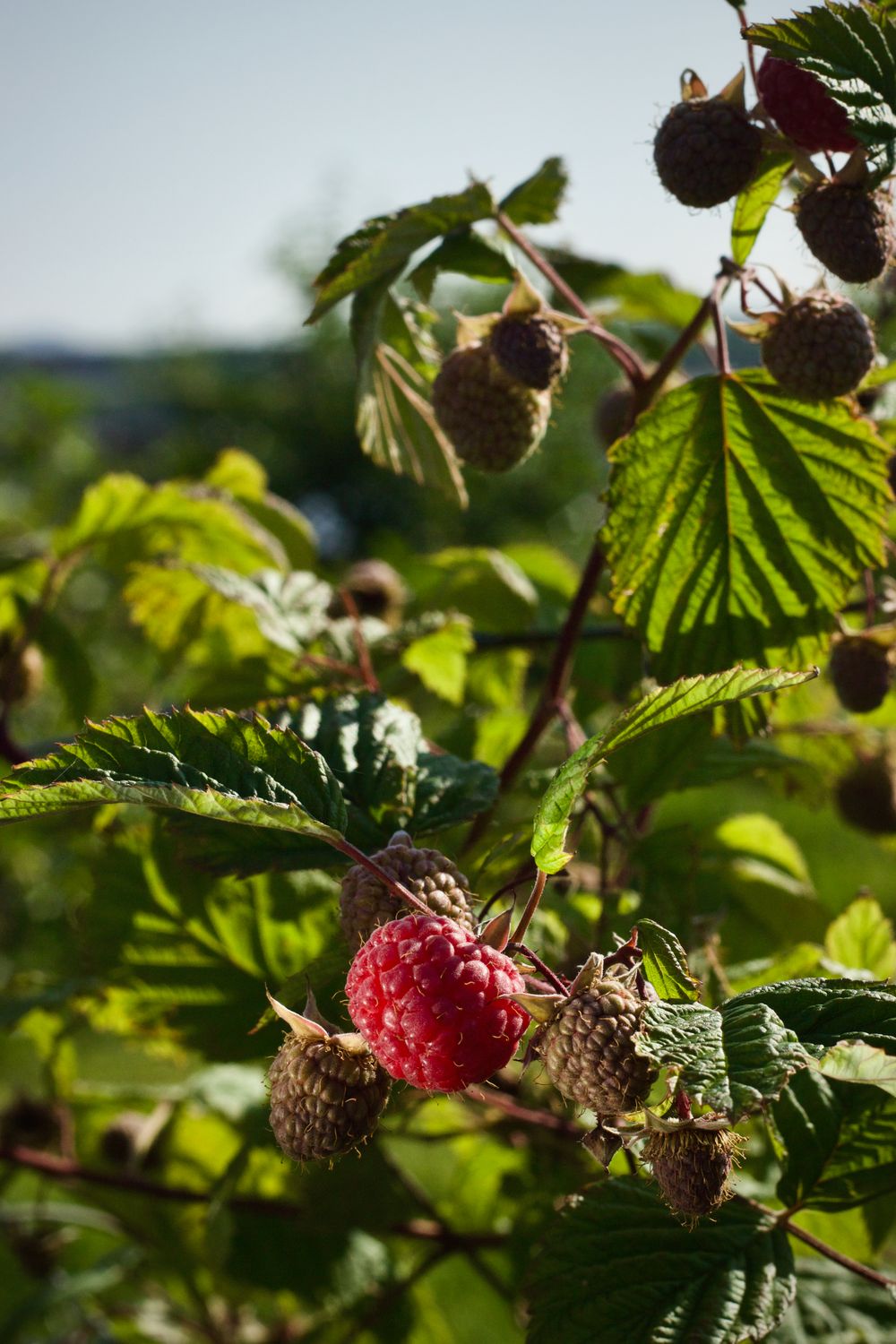
On size and looks, both throw large, elongated berries that ripen from red to deep purple-red. Tayberry fruits run a little longer, reaching 4 to 5 centimetres, while tummelberries are marginally shorter and rounder, though still impressively big for a hybrid. The handy difference is that tummelberry fruit comes away from the plug more cleanly, which makes picking a bit easier and spares you some of those hollow, fragile berries tayberries sometimes give you.
Disease resistance is where the tummelberry really shines, and it's the whole reason it exists. It was bred for improved resistance to botrytis, the tayberry's Achilles heel. In a wet British summer, a tayberry crop can lose a third or more of its fruit to grey mould, where tummelberries shrug off the same conditions with minimal losses. They also stand up better to cane diseases including spur blight and cane spot. If you garden in a wetter part of the country, particularly Scotland, Wales, or the west of England, that resistance alone might be enough to settle the matter.
The two are roughly level on hardiness, both coping down to around minus 15 degrees Celsius, but tummelberries have a slight edge in cold tolerance. They were bred in Scotland for Scottish conditions and it shows, with spring frost damage to the emerging flowers being less of a problem than it is with tayberries. Yields tell a similar story. Tayberries tend to crop a little heavier in a good year, around 3 to 5 kilograms per plant against the tummelberry's 2.5 to 4 kilograms. But the tummelberry's steadier cropping through wet years means that, taken over a five-year average, the total harvest often works out much the same.
Growing requirements
Here the two are identical. Both are vigorous plants that need a support structure to grow against. Give them full sun for the best flavour and yield; they'll tolerate partial shade, but fruit quality drops off. They want fertile, well-drained soil, so dig in plenty of compost before planting, and allow 2 to 2.5 metres between plants. Pruning follows exactly the same system as summer-fruiting raspberries: after harvest, cut the canes that have fruited down to ground level and tie in the new ones.
Which should you grow?
My advice is simple. Go for tayberries if you're in a relatively dry area and want the absolute best flavour. Go for tummelberries if you're somewhere wetter where grey mould is a recurring headache, or if you'd just rather have a more reliable, lower-maintenance plant. And if you've got the room, grow both. They fruit at slightly different times, which neatly stretches out the harvest.
Other hybrid berries to consider
While we're on the subject, these aren't your only options. Loganberries give you tarter fruit that's excellent for cooking. Boysenberries are sweeter and softer with a distinctive aroma. And Japanese wineberries offer small, jewel-like berries with a flavour all of their own and beautiful ornamental canes to boot.
More in this series: Boysenberries: The Forgotten Berry Making a Comeback in British Gardens • Olallieberries: California's Prized Berry You Can Grow in Britain • Japanese Wineberries: The Complete UK Growing Guide • Tayberries: The Complete UK Growing Guide
Feeding and Watering Both Varieties
Neither plant is a heavy feeder, but a spring mulch of well-rotted compost or manure and a balanced general fertiliser as growth starts will noticeably improve cropping on both. Once flowering begins, switching to a high-potash feed (the same tomato fertiliser you'd use on any fruiting plant) for a few weeks boosts berry size and sweetness. Water consistently while the fruit is swelling — both tayberries and tummelberries produce smaller, harder fruit if allowed to dry out at this stage, and tummelberries in particular are prone to disappointing yields if watering is inconsistent through a dry June.
Frequently Asked Questions
Are tummelberries easier to grow than tayberries?
In wetter parts of the UK, yes — the tummelberry's improved resistance to botrytis (grey mould) means it holds onto more of its crop through a damp summer, where a tayberry can lose a third or more of its fruit to rot in the same conditions. In a dry summer, or in the drier east and south of England, the difference in reliability largely disappears and flavour becomes the deciding factor instead.
Do tummelberries taste as good as tayberries?
Close, but most growers rate the tayberry slightly ahead on flavour complexity and aromatic depth. Tummelberries are still very good — sweet with a touch more tartness than a tayberry — and the gap is small enough that most people would be perfectly happy with either if they tasted them separately rather than side by side.
Can I grow tayberries and tummelberries in the same garden?
Yes, and it's a sensible choice if you have room for both. They fruit at slightly different times, which stretches the hybrid-berry harvest over a longer window, and growing both lets you compare the flavour difference for yourself rather than relying on anyone else's opinion — mine included.