Somewhere between the jam pan and the third straight day of picking, most loganberry growers ask the obvious question: is this fruit actually good for me, or just good? The short answer is that a loganberry is nutritionally everything you'd hope from a cross between a raspberry and a blackberry — low in sugar, high in fibre, and unusually rich in the deep-red plant compounds that give it that wine-dark colour. Here's what's actually in them, minus the superfood hype.
What Nutrients Are in Loganberries?
Per 100g (a generous handful), fresh loganberries contain roughly:
| Nutrient | Per 100g | Worth knowing |
|---|---|---|
| Calories | ~55 kcal | Among the lowest of any fruit |
| Fibre | ~5g | A sixth of your daily target from one handful |
| Vitamin C | ~15mg | Roughly a fifth of the daily reference intake |
| Manganese | ~1.2mg | Over half the daily requirement — unusual in fruit |
| Vitamin K, folate, B6 | modest amounts | Useful contributions rather than headline numbers |
| Sugar | ~7g | Half that of grapes, a third less than an apple |
The two standouts are fibre and manganese. Berries carry their fibre in the seeds and skin, and a loganberry — being bigger and seedier than a raspberry — carries more of both. Manganese, which supports bone formation and helps your body process carbohydrates, is scarce in most fruit; cane berries are one of the few genuinely rich sources.
Are Loganberries High in Antioxidants?
Yes — and that dark claret colour is the visible evidence. Loganberries are rich in anthocyanins (the red-purple pigments) and ellagic acid, the polyphenol that berry researchers get most excited about. Inheriting pigment chemistry from both parents, a ripe loganberry sits closer to a blackberry than a raspberry on antioxidant measures — which is to say, near the top of the fruit table.
A sensible note on what that means: laboratory antioxidant scores don't translate neatly into health outcomes, and no single fruit is doing your body's heavy lifting. What the research does consistently support is that people who regularly eat dark berries tend to do well on markers of heart and metabolic health. Loganberries are a dark berry you can grow twenty steps from your kitchen. That's the claim — and it's enough.
Are Loganberries Good for Your Heart and Gut?
The fibre story is the strongest one. At around 5g per 100g, loganberries are genuinely high-fibre — most of it the insoluble kind from seeds and skin that feeds gut bacteria and keeps things moving, plus pectin, the soluble fibre that helps moderate cholesterol (and, conveniently, sets your jam).
For heart health, the combination is low sugar, high fibre, anthocyanins and a decent potassium contribution — the same profile that puts blackberries and raspberries in every cardiologist's sensible-eating list. Nothing magical, everything solid.
Are Loganberries Sweet? What Do They Actually Taste Like?
Honest answer: no, not really — and that's the point of them. Even a perfectly ripe loganberry is sharper than a raspberry, with a winey, complex depth that people either love immediately or learn to love the first time they taste the jam. The flavour is often described as raspberry-meets-blackberry with the volume turned up, and the sharpness is precisely why they cook so well: they hold their character against sugar, cream and pastry where sweeter berries fade to mush.
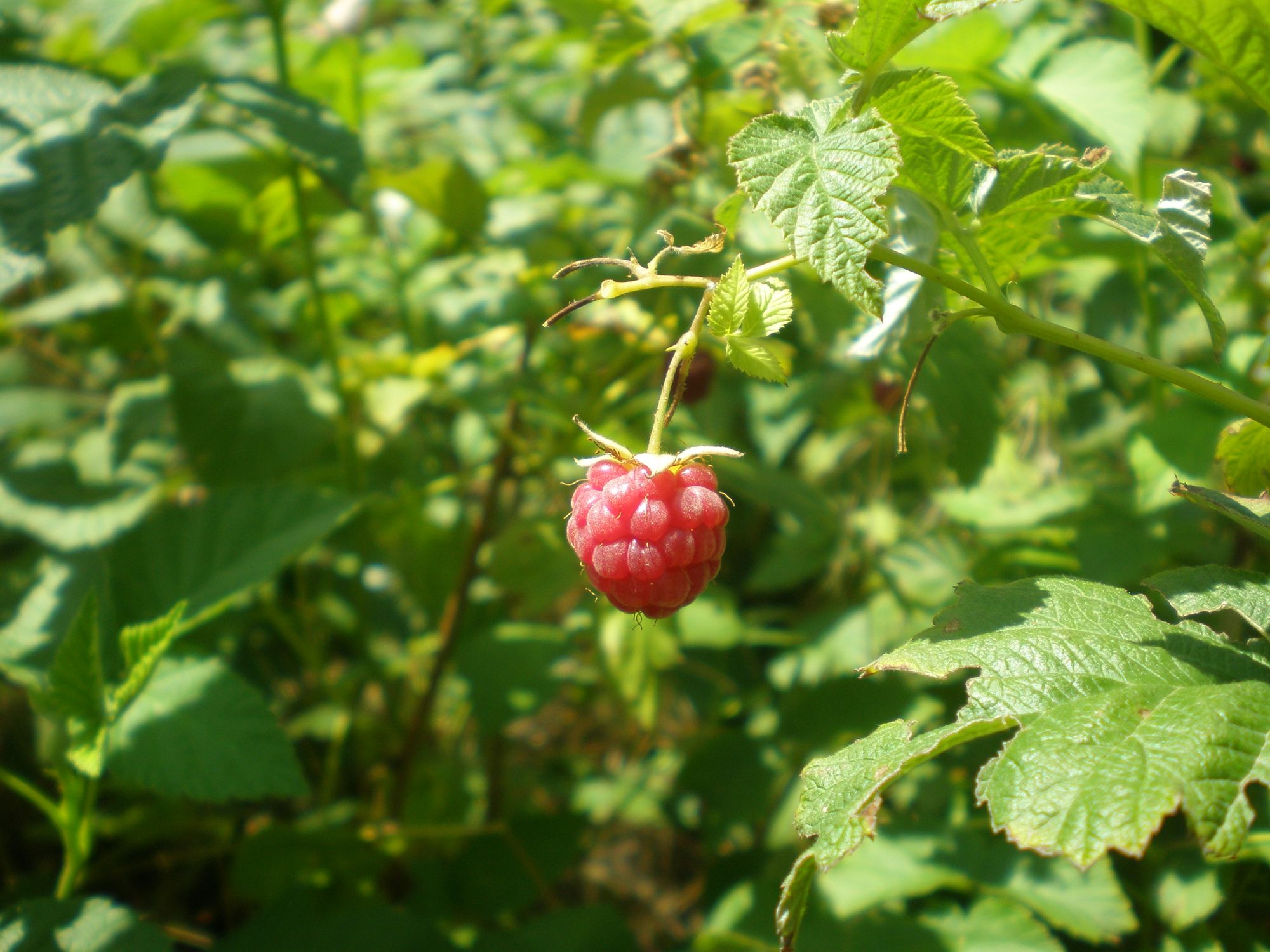
If you've picked one and winced, it probably wasn't ripe — the colour needs to reach deep matte claret, not bright red. My loganberry ripeness guide covers exactly how to tell the difference.
The low sugar has a practical upside: loganberries are one of the more blood-sugar-friendly fruits going, which matters if you're watching that number.
Can You Eat Loganberries Raw?
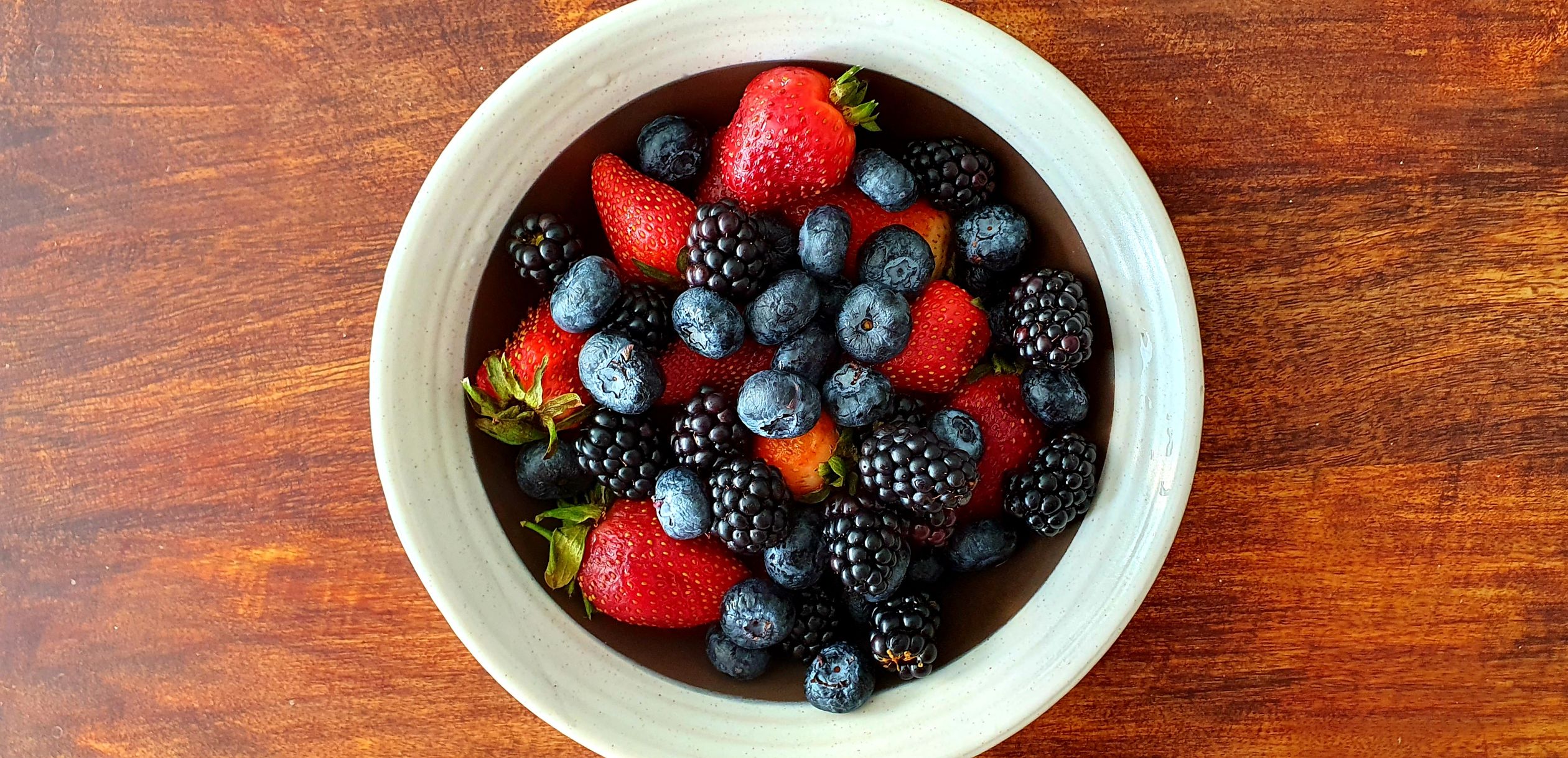
Completely — ripe loganberries are perfectly safe and pleasant raw, ideally with something to soften the edge: cream, yoghurt, a scatter of sugar, or mixed with sweeter berries in a fruit salad where they do the job lemon juice usually does. There's no toxicity concern at any stage of ripeness; an underripe one will simply pucker your face, not poison you.
Two small caveats. The seeds are noticeable — bigger than a raspberry's — which is only an issue if seeds bother you (sieve the cooked fruit for a smooth purée). And like all cane fruit, they're best rinsed just before eating, not before storing, because wet loganberries collapse within hours.
Do Loganberries Keep Their Nutrition When Frozen or Cooked?
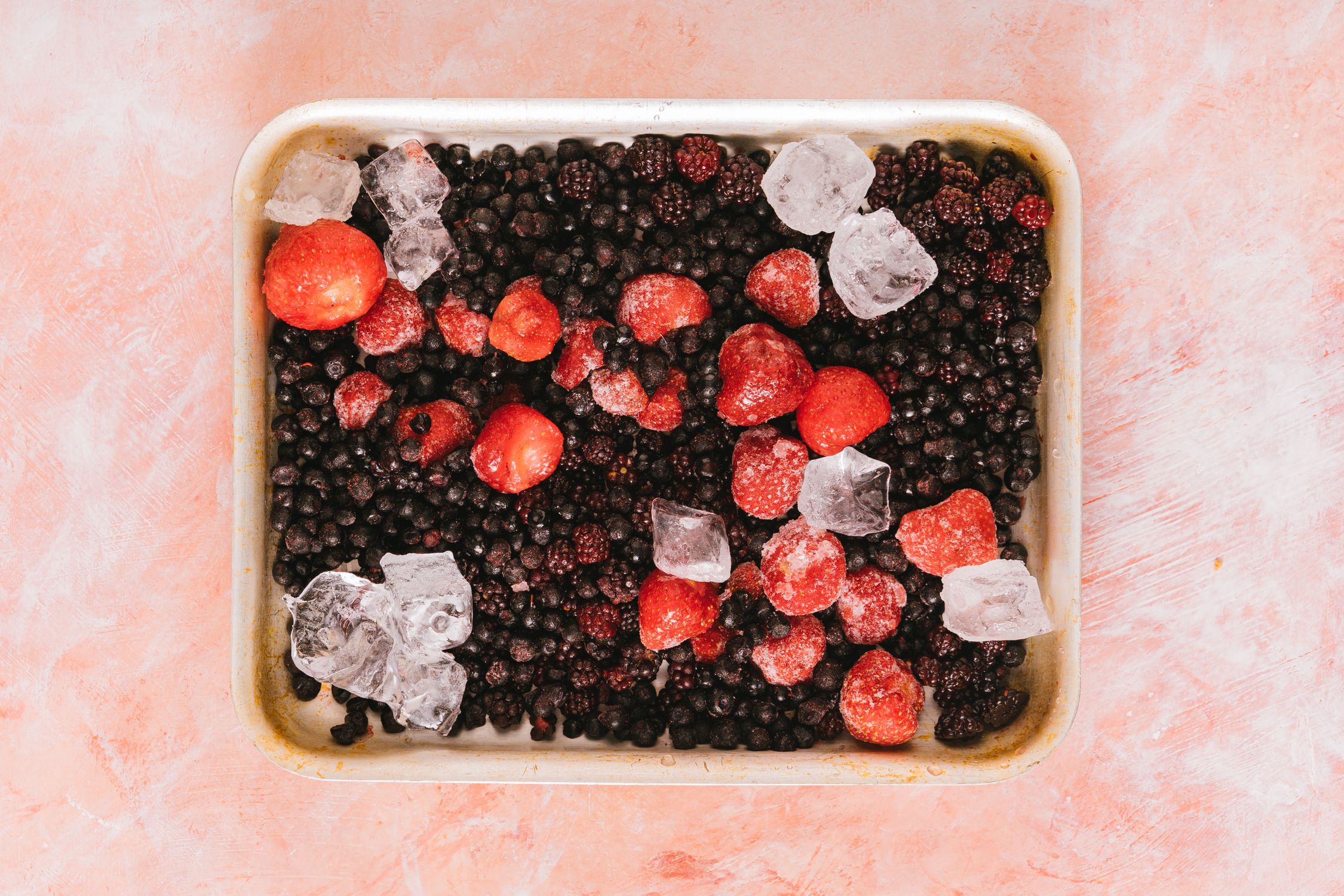
Frozen: almost entirely. Fibre, minerals and anthocyanins survive freezing essentially untouched, and vitamin C loss is minor if you freeze the berries promptly after picking — which, given loganberries barely last a day fresh, you'll be doing anyway. Home-frozen fruit locked down within hours of harvest routinely beats "fresh" shop berries that spent a week travelling.
Cooked: you lose a portion of the vitamin C to heat (it's the fragile one), but the anthocyanins are far tougher, the fibre is untouched, and mineral content doesn't care about temperature. A spoonful of loganberry jam is not a health food — the sugar sees to that — but the fruit inside it is still bringing something to the table.
How Do Loganberries Compare With Raspberries and Blackberries?
Nutritionally, the loganberry does exactly what its parentage suggests: it splits the difference. Slightly more vitamin C than a blackberry, slightly less than a raspberry; anthocyanin levels nearer the blackberry; fibre right at the top of the group. There is no meaningful nutritional argument for choosing between them — eat whichever one you can get ripest, and the ripest berry available to a British household is the one growing in the garden.
Which is the real conclusion here. The healthiest berry isn't a species, it's a supply chain: fruit picked at full ripeness and eaten the same day beats anything refrigerated across a continent. A single loganberry plant hands you six weeks of that every summer. If you don't have one yet, the complete growing guide is where to start.