Every July I get the same question over the garden fence: how do you actually know when a loganberry is ready? It looks ripe for a fortnight before it is ripe, and if you pick by colour alone you'll get a mouthful of sharpness that puts you off the whole crop. After years of growing them (and picking too early, every single June, without fail) here's the honest answer — month by month, colour by colour.
When Do Loganberries Ripen in the UK?
Loganberries ripen from early July to late August in most of the UK, with the peak crop in mid-July. In a warm, sheltered southern garden the first fruits can colour up in the last week of June; in Scotland and the north of England expect to wait until mid-July for the first proper picking.
The season runs long — a mature plant will keep producing for six to eight weeks, which is one of the loganberry's quiet advantages over summer raspberries. You won't get a glut all at once. You'll get a bowlful every couple of days, which suits a household far better than five kilos in one weekend.
If you're still at the planting stage, my complete loganberry growing guide covers everything from soil to training the canes — this article picks up where that one leaves off, at harvest time.
What Colour Are Ripe Loganberries?
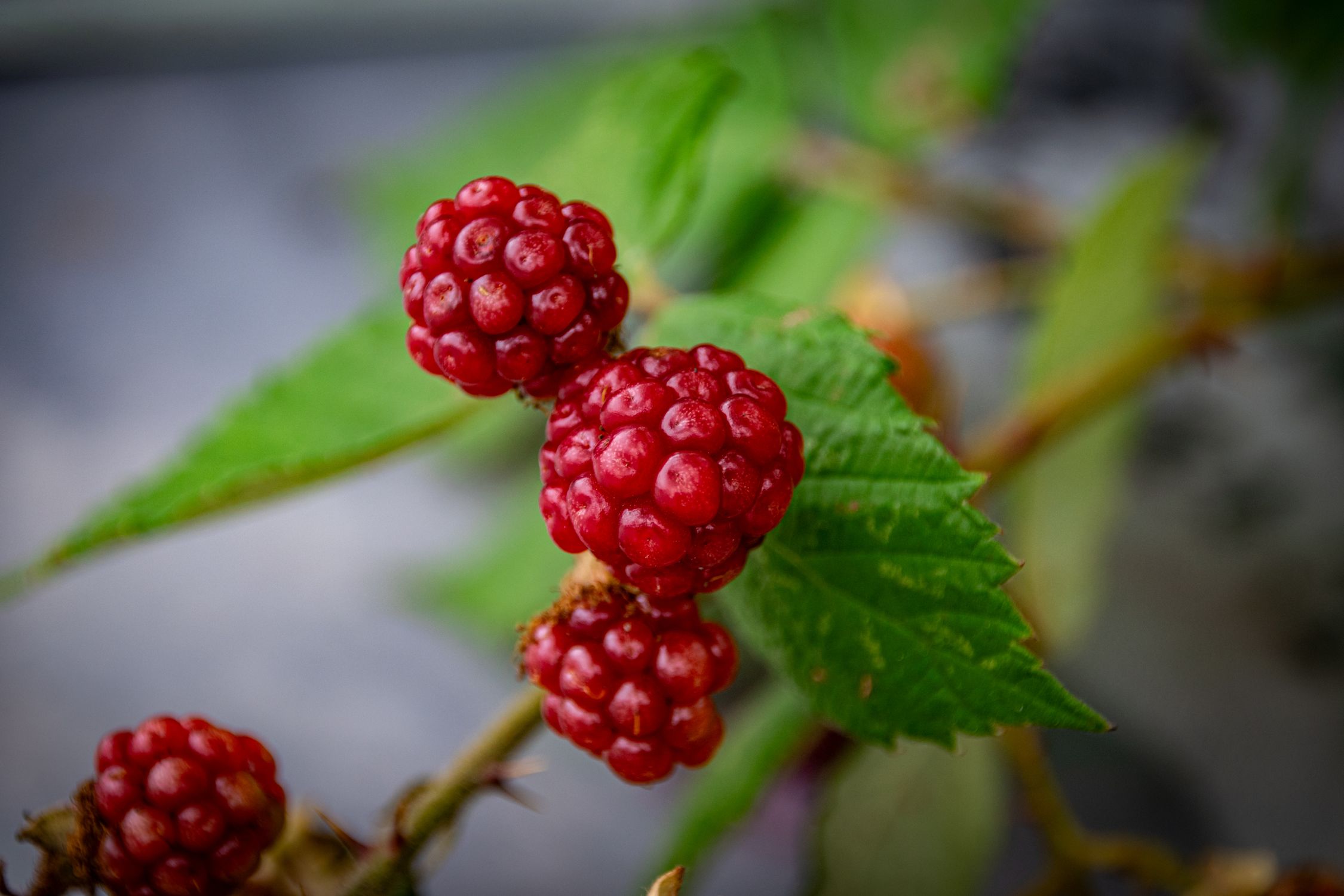
A ripe loganberry is a deep claret red — darker than any raspberry, with a dull, almost matte finish. This is the detail that catches everyone out. A bright, glossy red loganberry is not ripe. It looks magnificent and it will taste of vinegar.
The colour progression goes like this:
- Green — hard, hidden under the leaves, weeks away.
- Pale red to bright scarlet — looks ready, isn't. Still firm and mouth-puckeringly sharp. This stage lasts a deceptively long time.
- Deep claret, wine-dark red — the gloss fades to a soft matte bloom, the berry yields slightly when squeezed. This is it.
Some gardeners describe the ripe colour as "purple-red" — if yours are heading toward burgundy, you've timed it perfectly. Fully ripe loganberries are still noticeably sharper than a raspberry, but with real depth of flavour behind it. That balance of sharp and winey is exactly what makes them the best jam berry there is.
How Do You Know a Loganberry Is Ready to Pick?
Colour gets you close, but the pull test settles it. A properly ripe loganberry comes away from the cane with a gentle tug and keeps its core (the plug stays inside the berry, blackberry-style, rather than staying behind on the plant as it does with a raspberry). If you have to twist or yank, it isn't ready — leave it two more days.
My checklist, in the order I actually use it:
- Colour: deep wine-red, matte rather than glossy
- Feel: slightly soft, gives under gentle pressure
- The pull: releases with a light tug, core intact
- Position: the ripest fruit is usually lowest on the lateral, closest to the main cane
Pick in the morning once the dew has dried, and use a shallow container — ripe loganberries crush under their own weight in anything deeper than a couple of layers.
The UK Loganberry Calendar, Month by Month
| Month | What's happening | What to do |
|---|---|---|
| May | Flowering begins — white blossom along last year's canes | Nothing but watching for late frost; net if birds are scouting |
| June | Green fruit set, first berries blushing red late in the month | Water in dry spells — swelling fruit needs it; get nets on properly |
| July | Peak season. Main crop ripens from early July | Pick every 2–3 days; the season's rhythm is little and often |
| August | Cropping continues, tailing off by month's end | Keep picking; start planning what to do with the freezer stash |
| September | Last stragglers in warm years | Cut fruited canes to ground level once done; tie in the new green canes |
Do Loganberries Ripen After Picking?
No — and this matters more than any other fact on this page. Loganberries are non-climacteric, which is the botanist's way of saying what you pick is what you get. A berry picked bright scarlet will soften in the bowl over a day or two, but it will never sweeten. The sugars only develop on the cane.
This is also why you'll almost never see fresh loganberries in a supermarket: fruit ripe enough to be worth eating is too soft to survive distribution. Growing your own isn't a lifestyle choice with loganberries — it's essentially the only way to eat a proper one.
Why Won't My Loganberries Ripen?
If it's August and your berries are stuck at bright red, one of these is usually the culprit:
- Not enough sun. Loganberries tolerate part shade better than most soft fruit, but ripening — the sugar-building stage — wants those canes in real light. Fruit deep inside a congested plant ripens weeks late or not at all. Thin the laterals next winter.
- Drought stress. A dry June makes the plant pause everything, ripening included. A good soak twice a week while fruit is swelling keeps things moving.
- First-year impatience. Loganberries fruit on the previous season's canes. A plant put in last spring has nothing old enough to fruit properly on — the real crop starts in year two.
- You're comparing them to raspberries. A perfectly ripe loganberry is still sharp. If you're waiting for raspberry sweetness, you'll wait forever and the fruit will rot on the cane. Deep claret and slightly soft means done.
How Long Does the Picking Season Last?
Six to eight weeks from a mature plant — genuinely one of the longest seasons of any UK cane fruit. For comparison, a summer raspberry variety gives you three to four weeks and a tayberry roughly four. If you grow a loganberry alongside an autumn raspberry, you'll be picking cane fruit from July to October off two plants.
Expect 4–5kg from an established plant in a decent summer, spread across the whole season. The berries hold reasonably well on the cane once ripe — you have a two-to-four day window per berry before they go over, which is forgiving compared to a raspberry's forty-eight hours.
What Should You Do With the Harvest?
The first bowl gets eaten with cream and a little sugar — that's non-negotiable in this house. After that, the two best homes for a loganberry glut are loganberry jam (the pectin and acidity levels make it nearly foolproof) and the freezer, where they keep their shape and sharpness better than almost any berry. They're also excellent in a summer pudding, where their sharpness carries the whole thing.
One last tip from hard experience: whatever you plan to do with them, do it within a day of picking. A ripe loganberry waits for no one.