A loganberry is a hybrid fruit created by crossing a raspberry with a blackberry — long, conical, and wine-red when ripe, with a sharp, tart flavour that's closer to a cooking berry than a snacking one. It was first grown in 1881 by an American judge called James Harvey Logan, and it's now a fixture in British allotments and hedgerows, prized as much for jam and crumble as for eating straight off the cane.
If you've stumbled on a loganberry at a farmers' market or spotted one growing over a neighbour's fence and wondered what on earth it is, this page covers what it looks like, what it tastes like, and how to tell it apart from the raspberries and blackberries it sits between.
What Does a Loganberry Look Like?
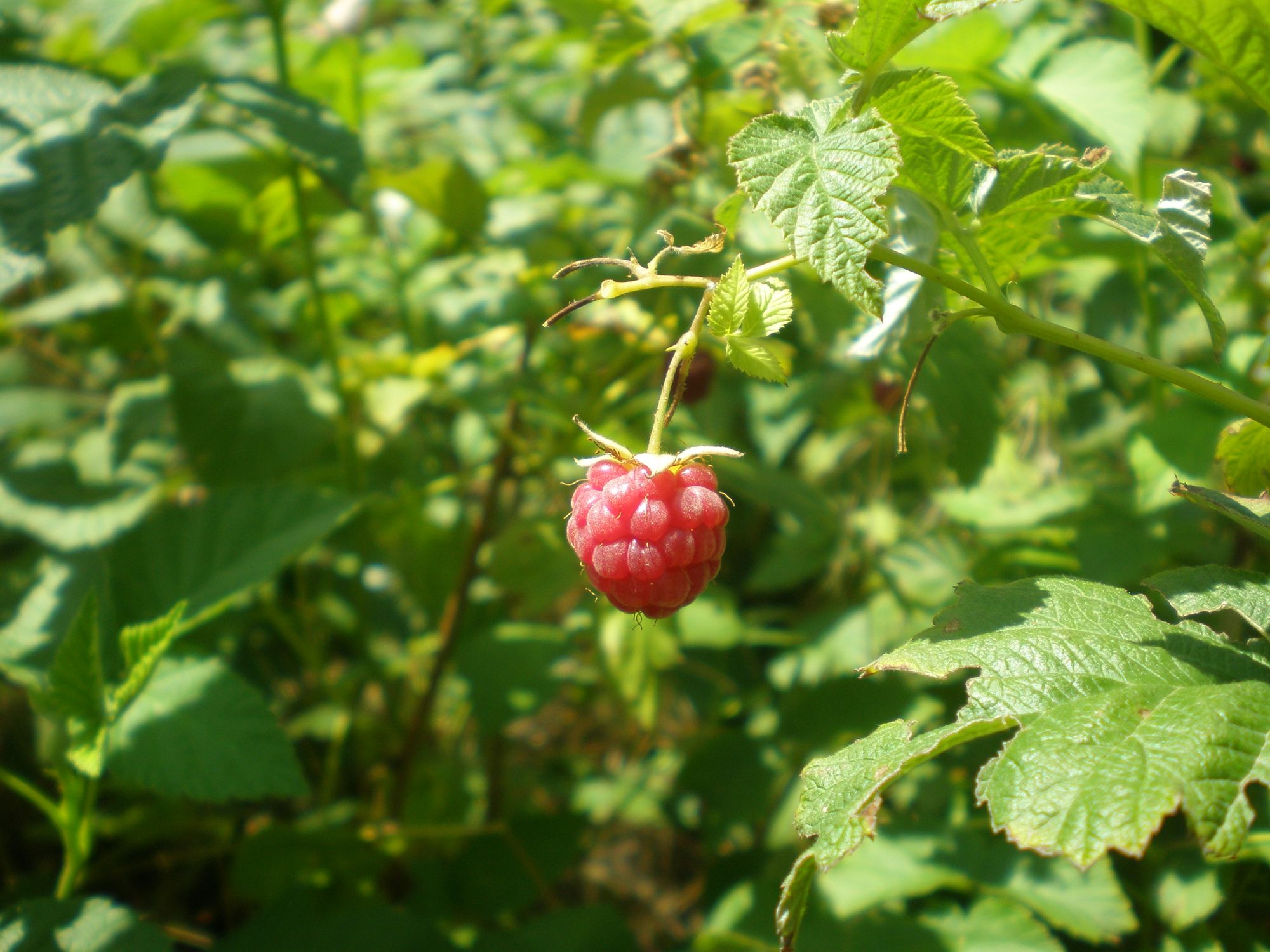
A loganberry looks like a large, elongated raspberry with a deep wine-red to dark maroon colour when fully ripe. It's longer and more conical than a raspberry, and it doesn't separate from its central core the way a raspberry does when you pick it — instead it comes away whole, like a blackberry, with the white core still attached inside.
Unripe loganberries start out pale green, move through a dull pink, then deepen to a dusky red, and finally reach that near-black, wine-red colour when they're ready to pick. A lot of people pick them too early because they're still expecting "raspberry red" — a properly ripe loganberry is noticeably darker and duller than that, closer to the colour of a glass of red wine than a bowl of raspberries.
What Does a Loganberry Taste Like?
A loganberry tastes tart and wine-like, with none of the straightforward sweetness you'd expect from a raspberry. That sharpness is the single biggest surprise for anyone trying one for the first time raw — it's more like a very ripe, slightly sour blackberry crossed with cranberry acidity than a fruit you'd eat by the handful.
That tartness is exactly why loganberries are so good cooked. Heat and sugar round off the sharp edge and bring out a deep, almost winey flavour that plain raspberries or blackberries don't have on their own, which is why loganberries turn up so often in jam, crumble, and sauce rather than fruit bowls. If you want to put that flavour to work, here's how to make loganberry jam.
Loganberry vs Raspberry vs Blackberry: How to Tell Them Apart
The quickest way to tell a loganberry apart from a raspberry or blackberry is colour and shape: it's a longer, darker, dustier red than a raspberry, and less glossy black than a blackberry, sitting somewhere in between the two.
- Shape: loganberries are longer and more conical than raspberries, which are shorter and more rounded. Blackberries are usually a bit shorter and rounder too, though less uniform than raspberries.
- Colour: raspberries stay bright red even when fully ripe. Blackberries go glossy black. Loganberries land in between — a dark, matte wine-red that never goes properly black.
- How it picks: raspberries pull away from the plant hollow, leaving the white core behind on the cane. Loganberries and blackberries both come away with the core still inside, so the fruit stays solid rather than hollow.
- Taste: raspberries are the sweetest of the three. Blackberries are sweeter than loganberries but less complex. Loganberries are the tartest by a clear margin, with a distinctive wine-like note.
For a closer look at how a loganberry stacks up against its closest hybrid relatives, see loganberry vs tayberry vs boysenberry.
Is a Loganberry a Real Species, or Just a Hybrid?
A loganberry is a real, stable hybrid species with its own scientific name, Rubus x loganobaccus — it isn't a one-off cross or a marketing name for a raspberry-blackberry mix. It was bred (most likely accidentally, from raspberry and blackberry plants growing next to each other) by Judge James Harvey Logan in Santa Cruz, California in 1881, and it has bred true and been propagated as its own distinct plant ever since.
That makes it different from something like a tayberry or boysenberry, which were bred deliberately later using loganberries themselves as one of the parent plants. The loganberry sits right at the root of that whole family tree of raspberry-blackberry hybrids.
Can You Eat Loganberries Raw?
Yes, you can eat loganberries raw, but be ready for a sharp, tart hit rather than raspberry-style sweetness — most people find them more enjoyable raw once they're fully ripe and dark, rather than picked early. A loganberry that's still reddish-pink and firm will taste properly sour; wait until it's dusky, dark, and gives slightly when you press it, and the tartness mellows into something much more balanced.
Even at full ripeness, though, loganberries are usually happier with a bit of sugar — stirred through yoghurt, scattered over a pavlova, or blitzed into a coulis. If cooking is more your plan than snacking, the complete loganberry growing guide has a full picking calendar so you know exactly when to expect them ripe in a UK garden.
Frequently Asked Questions
What is a loganberry a cross between?
A loganberry is a cross between a raspberry and a blackberry, first grown in California in 1881. It combines the raspberry's shape and softness with the blackberry's structure and depth of flavour.
Is a loganberry the same as a blackberry?
No, a loganberry is not the same as a blackberry. It's a distinct hybrid species with its own wine-red colour, more elongated shape, and much tarter flavour than a true blackberry.
Why is my loganberry sour?
Your loganberry is sour most likely because it isn't fully ripe yet. Loganberries need to reach a dark, dusky wine-red before the sharpness mellows — if it's still bright pink or reddish, it needs longer on the cane.
Are loganberries good for you?
Yes, loganberries are considered a healthy fruit, being low in calories and a good source of fibre and vitamin C. For the full nutritional picture, see are loganberries good for you.
When are loganberries in season in the UK?
Loganberries are in season in the UK from mid-July through August. For a week-by-week picking calendar, see when are loganberries ripe.