The marionberry and the silvanberry are two of the lesser-known blackberry hybrids that have never quite crossed the Atlantic into British gardens — but they deserve to. The marionberry, developed in Oregon in the 1940s, is so dominant on the US west coast that it accounts for around half of Oregon's entire commercial blackberry harvest. The silvanberry, bred in Australia in the 1970s, offers one of the largest cane fruits you can grow, with a thornless habit that makes it unusually easy to work with. Both grow in the same conditions as a standard blackberry, and both are worth hunting down if you want to extend your hybrid berry collection beyond the more familiar loganberry and tayberry.
What is a marionberry?
The marionberry was bred by George Waldo at Oregon State University from a cross between the Chehalem and Olallie blackberry varieties — making it a close relative of the olallieberry on one side of the family tree. It was released for commercial growing in 1956 and named after Marion County, Oregon, where the original trials were carried out.
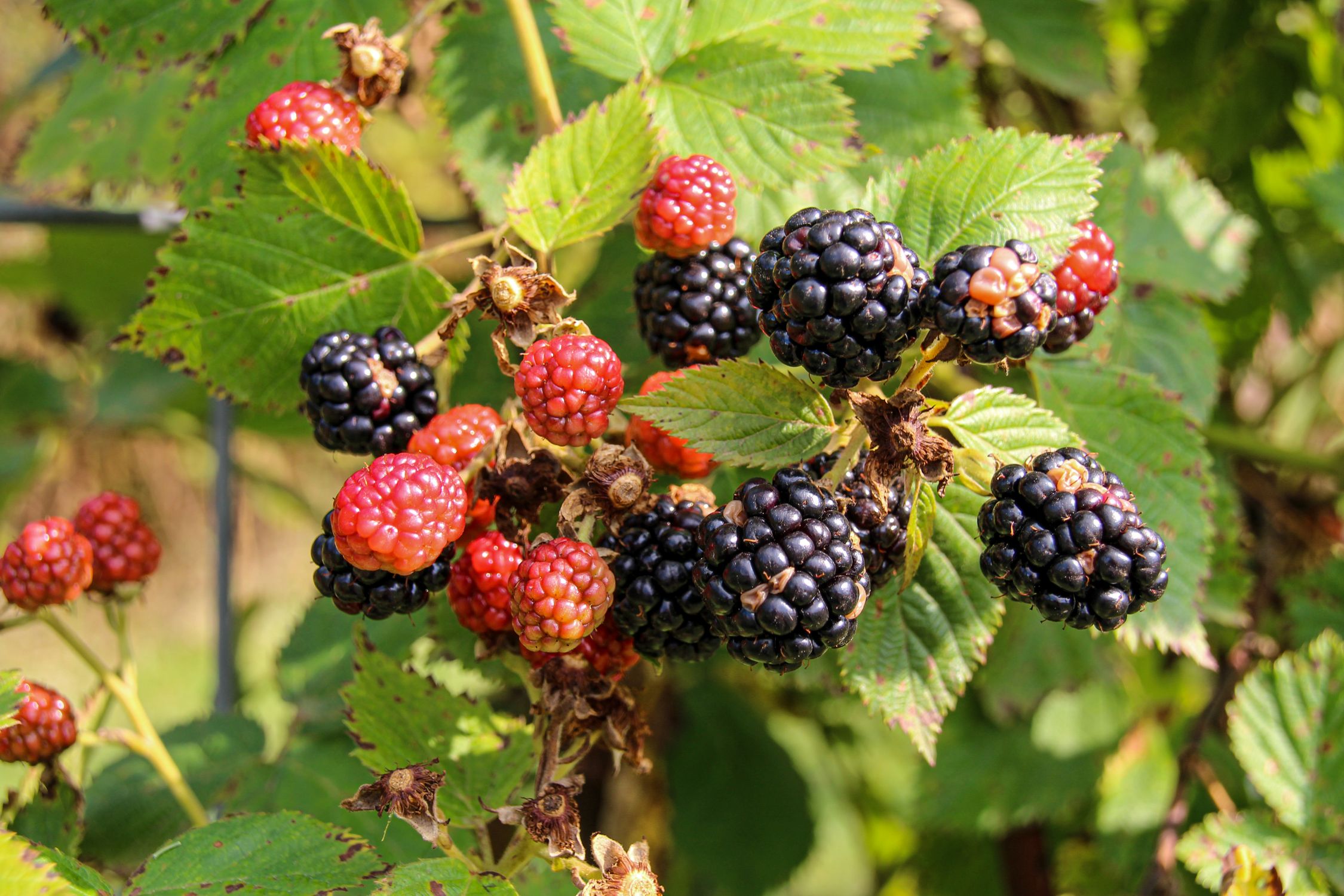
The flavour is what sets it apart: complex, earthy, slightly tart and richly sweet all at once. Producers and chefs on the US west coast often describe it as having something approaching terroir — a sense of place in the flavour that ordinary blackberries lack. The berries are medium to large, elongated, and a deep glossy black when ripe. The plants are thorny and vigorous, needing strong support on a post-and-wire structure.
What is a silvanberry?
The silvanberry was developed by Donald Scott at Australia's CSIRO research organisation in the 1970s, from a complex cross involving a boysenberry, a youngberry and a blackberry. It was released in 1975 and became popular in Australian home gardens partly because of its thornless (or near-thornless) canes and partly because of its extraordinary berry size — individual fruits can reach 4 to 5cm long, making it one of the largest cane fruits available.
The flavour is milder than the marionberry: sweet, soft and straightforwardly pleasant, without the complexity or depth of a boysenberry or tayberry. That is not a criticism — it means the berries eat well fresh, without any sharpness, and are very popular with children. Silvanberries are also highly productive, with yields that compensate for some of what they lack in intensity.
Growing conditions
Both varieties need the same conditions as a blackberry: a sunny or lightly shaded spot with reasonable, well-drained soil and something to train the long canes against. A south or west-facing fence or wall is ideal. Dig in plenty of well-rotted compost before planting and mulch generously each spring to retain moisture and suppress weeds.
Marionberries are fully hardy across most of the UK. The canes are vigorous — capable of reaching 3 to 4 metres — so a solid post-and-wire structure is worth building before you plant. Silvanberries are slightly less cold-tolerant and are best given a sheltered wall in colder parts of Scotland or elevated areas where hard frosts are common. In most of England and Wales they are straightforward. Both fruit on second-year canes (floricanes), so the pruning routine is the same as for a blackberry: cut out canes that have fruited to ground level in autumn and tie in the new canes to take their place next season.
How do they compare to other hybrid berries?
Placed alongside the other American hybrids grown in the UK, the marionberry is the one most similar to a traditional blackberry but with considerably more flavour depth. It is richer and more complex than a standard blackberry, earthier than a boysenberry, and less raspberry-forward than a tayberry. If you want something that functions as a premium blackberry — rather than as something that announces itself as a hybrid — the marionberry is the natural choice.
The silvanberry occupies a different niche: size, yield and ease of picking. It is for growers who want impressive fruit without the thorns and without the complexity that can make more characterful hybrids an acquired taste. Children tend to take to them immediately.
Finding plants in the UK
Neither variety is widely stocked by UK nurseries, and garden centres are unlikely to carry them. Your best chance is a specialist online fruit nursery — search specifically for each name, as they are sometimes grouped under "unusual cane fruits" or listed alongside heritage blackberries. Availability varies from year to year. If you cannot source either, the olallieberry and boysenberry are close in character and occasionally easier to find.
Frequently Asked Questions
Are marionberries the same as blackberries?
They are a blackberry hybrid rather than a true blackberry, but they look and grow very similarly. The flavour is the main difference: richer, more complex and less sharp than a standard blackberry. They are sometimes labelled "Marion blackberries" in the US, where they are sold commercially in jams, juices and frozen fruit — if you have ever tasted US-brand blackberry products, there is a good chance what you were eating was a marionberry.
What do silvanberries taste like?
Sweet, mild and pleasantly blackberry-like, without the sharper edges of a boysenberry or the aromatic intensity of a tayberry. The flavour is approachable and straightforward; where the silvanberry excels is in size and yield. The individual fruits are impressive and the harvest is generous compared with most hybrid cane fruits.
Can I grow marionberries and silvanberries in containers?
Both can be grown in large containers (45 litres minimum) but they are vigorous plants and will produce less in pots than in the ground. Marionberries in particular are large-growing and will be noticeably constrained. If you want a hybrid blackberry for container growing, a boysenberry trained on a single cane is a more manageable choice for a large pot.
Where can I buy marionberry or silvanberry plants in the UK?
Specialist online fruit nurseries are the main source — search by name and check availability before ordering, as stock varies and some nurseries only carry them in certain seasons. Olallieberries and boysenberries are often stocked by the same suppliers and make good alternatives if marionberry or silvanberry are unavailable.