If you want a fruiting shrub that more or less looks after itself, let me put in a word for the chokeberry. I've grown a fair few "difficult" fruits over the years, and this is the one I recommend to anyone who tells me they've got a black thumb. Known botanically as Aronia, these North American natives are quietly tough, gorgeous in autumn, and the berries carry more antioxidants than blueberries could dream of. What's not to like?
What Are Chokeberries?
Chokeberries are deciduous shrubs in the rose family, growing somewhere between 1.5 and 3 metres tall depending on the species and variety. The name puts a lot of people off, but don't let it: they're nothing to do with the toxic chokecherry (Prunus virginiana). The "choke" simply refers to how astringent the raw berries are. Pop one in your mouth and your whole face will pucker. More on that later.
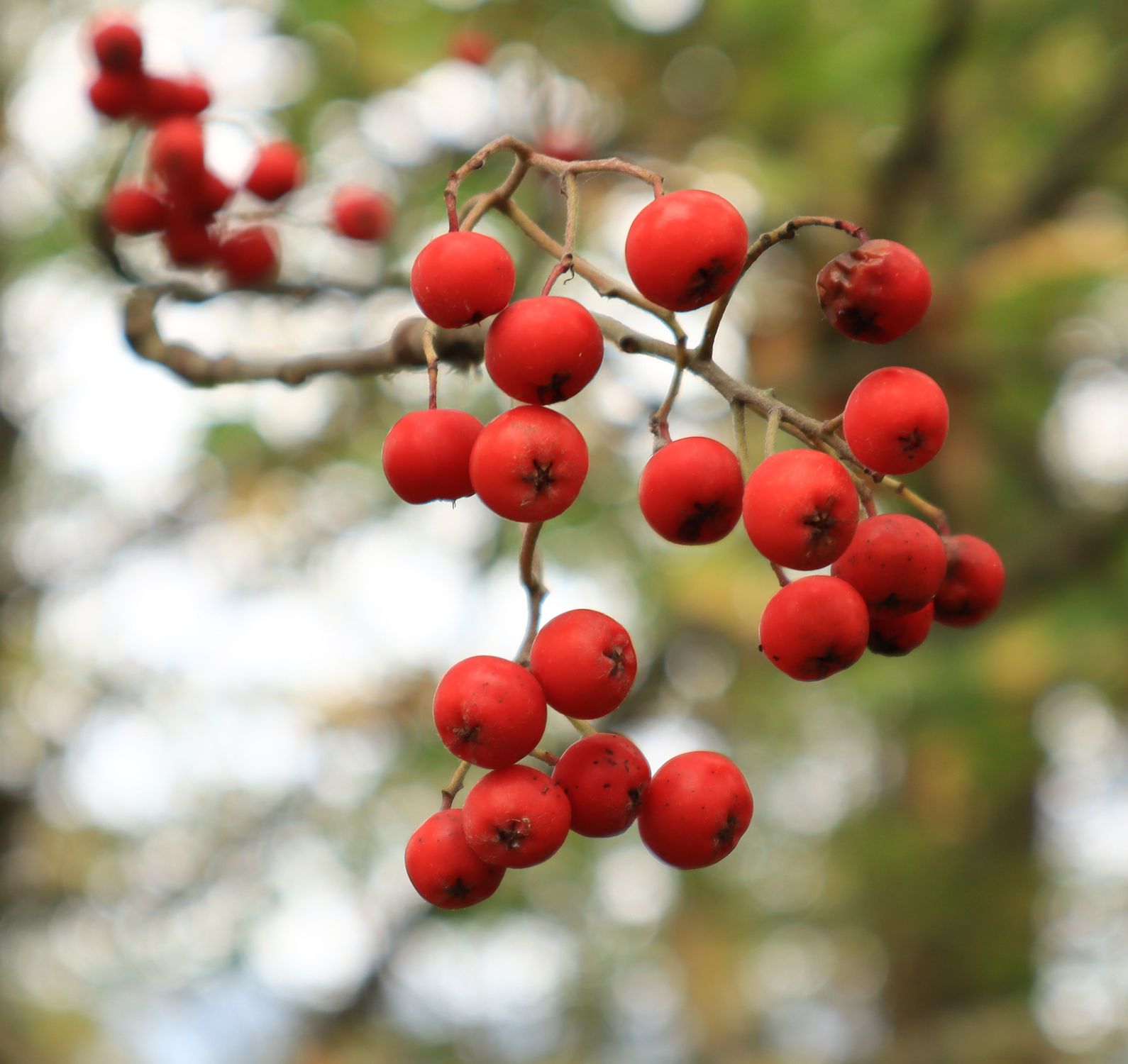
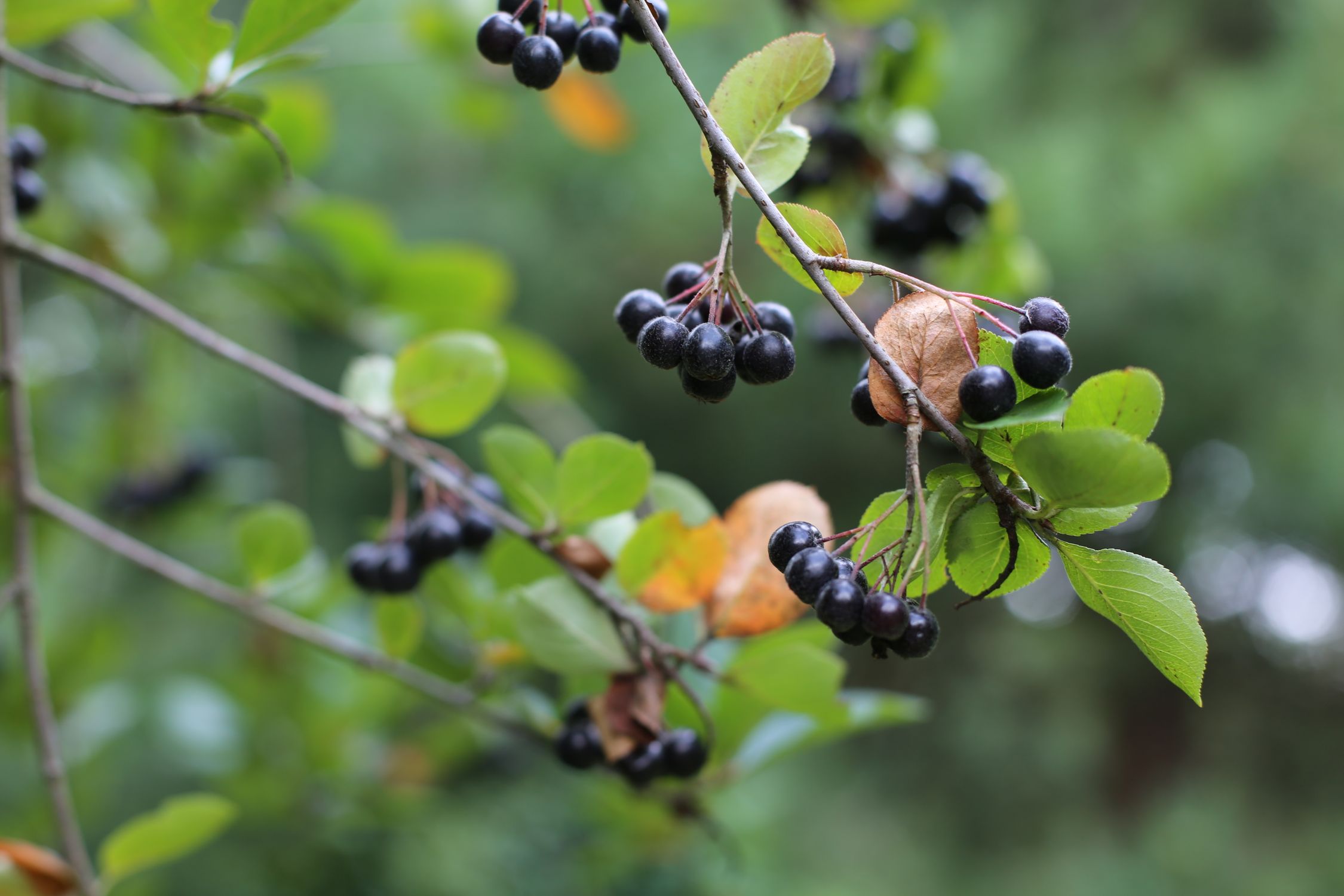
There are three types worth knowing. Black chokeberry (Aronia melanocarpa) is the one most people grow, with clusters of dark purple-black berries from late August. Red chokeberry (Aronia arbutifolia) bears bright red fruit and tends to be grown for looks. And purple chokeberry (Aronia prunifolia) is a natural hybrid of the two, sitting somewhere in between.
Why Grow Them in the UK?
Honestly, they're about the toughest fruiting shrub you can put in a British garden. They shrug off temperatures down to minus 35 degrees Celsius, so late frosts simply don't matter. They'll grow in poor soil, clay, sand or chalk. They cope with waterlogged ground that would drown most fruit bushes, and they'll even give you a reasonable crop in partial shade.
If you've ever wrestled with blueberries and lost, this is your shrub. Blueberries demand acidic conditions with a pH between 4.5 and 5.5, which rules out a lot of gardens. Chokeberries happily tolerate a pH range of 4.0 to 7.5, meaning they'll grow in almost any British soil with no faffing about amending it. That alone wins me over.
And then there's the show they put on. In autumn the foliage turns brilliant red, orange and purple, every bit as good as a Japanese maple, in my view. The white spring blossom brings in the pollinators, and if you leave a few berries on the bush they'll feed the birds through winter.
Choosing Your Variety
For fruit, go with a black chokeberry. Viking is the easiest to find in the UK and gives you large berries on a compact bush around 1.5 metres tall. Nero is another I'd happily recommend, a touch more compact with heavy crops. If you're short on space, Hugin stays very neat at around a metre, which makes it a good one for containers or a small plot.
If you're more interested in the ornamental side but still fancy some fruit, the red cultivar Brilliant earns its name with spectacular autumn colour and attractive red berries, though I'll be honest, the fruit is smaller and more astringent than the black sorts.
Not sure whether to go black or red? My black chokeberries vs red chokeberries comparison weighs up flavour, yield and looks side by side.
Planting
Plant bare-root chokeberries between November and March, or pop in container-grown plants at any time of year. They're not precious about position, but you'll get the heaviest crops and the best autumn colour in full sun, so give them that if you can.
Space the bushes 1.5 to 2 metres apart. Dig a hole twice the width of the rootball, work in some compost or well-rotted organic matter, and set the plant at the same depth as it was growing before. Water it in well and mulch with bark chips or garden compost.
One thing to know: chokeberries spread by suckering, so a single bush will slowly build itself into a thicket. That's brilliant for an informal hedge or a wildlife corner, but if you want a tidy specimen, just pull off the suckers as they pop up.
Ongoing Care
This is where chokeberries really earn their keep, because once they're settled in they ask for next to nothing.
You'll only need to water during the first summer after planting, and then in an extreme drought. Feeding is optional, though a light scattering of general-purpose fertiliser in spring will nudge the crops along. There are no serious pests or diseases to worry about in the UK, and you won't need netting against birds until the berries are nearly ripe, since birds tend to leave the unripe ones well alone.
Pruning is barely worth the name. Take out any dead, damaged or crossing branches in late winter, and every three to four years cut a few of the oldest stems right down to the ground to bring on fresh growth. That genuinely is the lot.
Harvesting and Using Chokeberries
Black chokeberries ripen from late August into September. They're ready when they're uniformly dark and come away from the cluster with an easy tug. I harvest whole clusters rather than fiddling with individual berries; life's too short.
Now, a word of warning: raw chokeberries are not a pleasant snack. The astringency is fierce and mouth-drying. But cooking, freezing or drying transforms them entirely. Freezing is the simplest route, because it breaks down the tannins that cause all that puckering. Once they've been frozen, the berries go beautifully into smoothies, muffins, or a rich purple jam.
Chokeberry juice is a big deal in Eastern Europe, where the berries have been grown for decades. It comes out deep purple and slightly tart, and blends well with apple or grape juice. The berries also make a full-bodied, deeply coloured wine if you fancy a project.
The Superfood Credentials
Chokeberries consistently rank among the highest-antioxidant fruits ever measured. Their ORAC value, which is a measure of antioxidant capacity, is roughly three times higher than blueberries and well above acai, goji, or anything else marketed as a superfood. They're loaded with anthocyanins, vitamin C and polyphenols.
That's why commercial interest is growing here, with several farms in southern England now producing chokeberries for juice and supplements. For the rest of us, it simply means growing your own superfood couldn't be much simpler.
Common Problems
There honestly aren't many. You might spot a bit of leaf spot in a wet summer, but it rarely troubles the plant or the crop. Aphids occasionally have a go at the new spring growth without doing any lasting harm. The one thing most people grumble about is the suckering, and as I said, that's sorted with a quick tug of any shoots you don't want.
If you're after a low-maintenance addition to a mixed fruit garden, chokeberries slot in beautifully alongside other easy-going shrubs. They ask almost nothing of you and give a great deal back. If I had to pick one shrub for a beginner, this might well be it.
Chokeberries are exactly the kind of low-fuss plant I cover in my round-up of unusual berries for UK gardens, sitting alongside other superfood shrubs and hardy oddities that ask very little and give back a great deal.