So you've decided to grow chokeberries. Good choice. The very next question is which one, because black chokeberry and red chokeberry are both fine garden shrubs, but they part ways on size, fruit quality, ornamental punch, and what they're really for. Here's how I'd weigh the two against each other.
The Basics
Black chokeberry (Aronia melanocarpa) and red chokeberry (Aronia arbutifolia) are closely related North American shrubs in the rose family. Both throw clusters of white flowers in spring, follow them with berries in late summer and autumn, and both put on a proper show of autumn leaf colour. There's a third in the family too, the purple chokeberry (Aronia prunifolia), a natural hybrid of the other two that sits more or less midway between them on most counts.
Size and Growth Habit
Black chokeberry is the more compact of the pair, usually reaching 1 to 2 metres with a rounded, bushy shape. It suckers moderately, gradually forming a tidy clump rather than running riot. If you want it smaller still, the cultivar Hugin stays particularly compact at around one metre, while Viking comes in at about 1.5 metres.
Red chokeberry is the bigger beast, climbing to 2 to 3 metres with a more upright, open habit. It suckers far more freely and will form extensive thickets if you let it off the leash, which makes it the better pick for larger gardens, hedgerows, or wildlife plantings where a bit of spreading is welcome rather than a nuisance.
Fruit
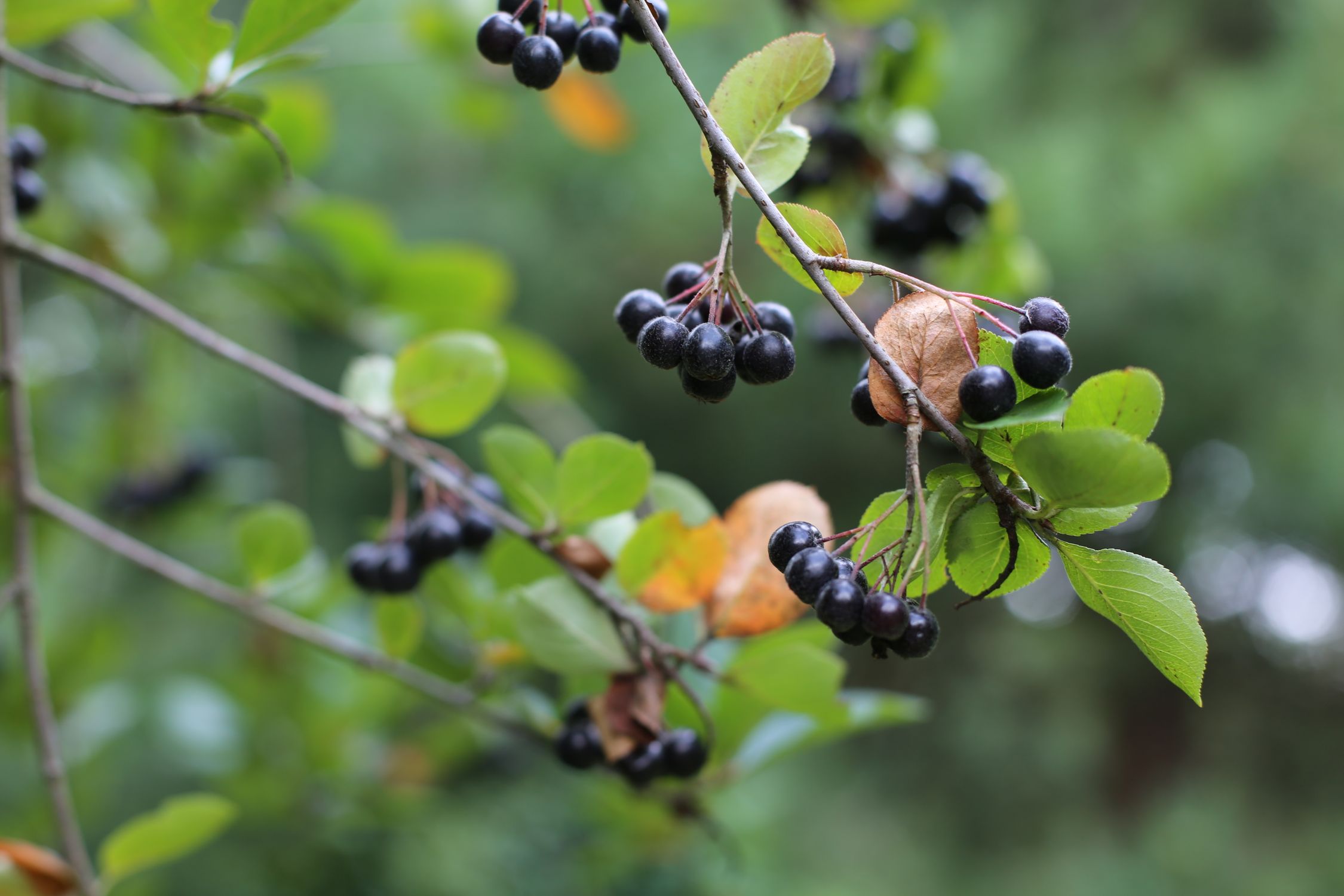
This is where the biggest practical difference lies. Black chokeberry gives you larger berries, typically 8 to 10 millimetres across, in dense hanging clusters that ripen to a deep purple-black in late August into September. Raw, they're fiercely astringent, but they come into their own once cooked, juiced, or turned into jam.
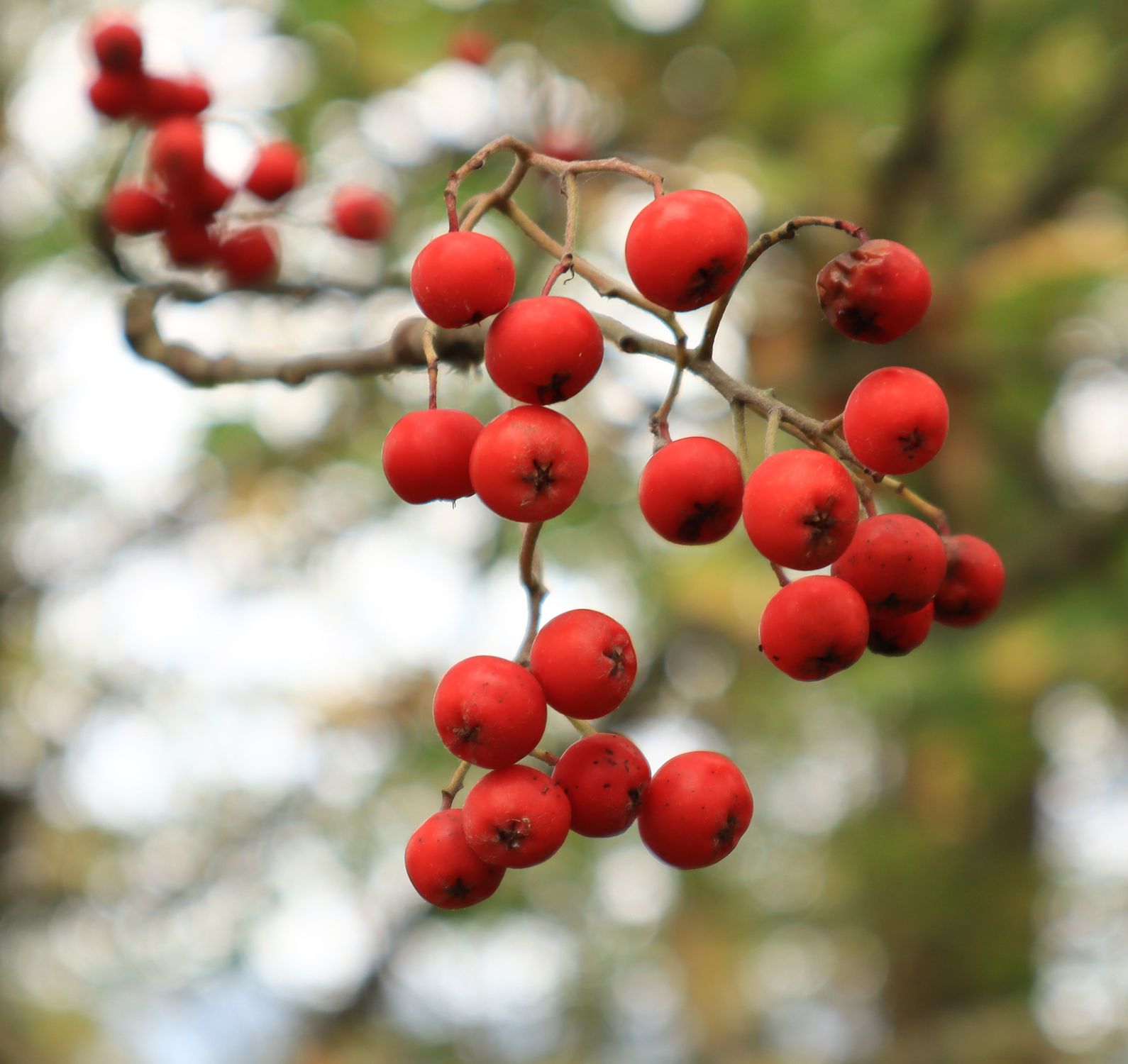
Red chokeberry fruit is smaller, around 5 to 7 millimetres, ripening to bright red a little later in the season. The berries are even more astringent than the black sort and hold less juice. They're edible, but in practice rarely cooked with, since the yield per bush is lower and the flavour stays less appealing even after all your processing.
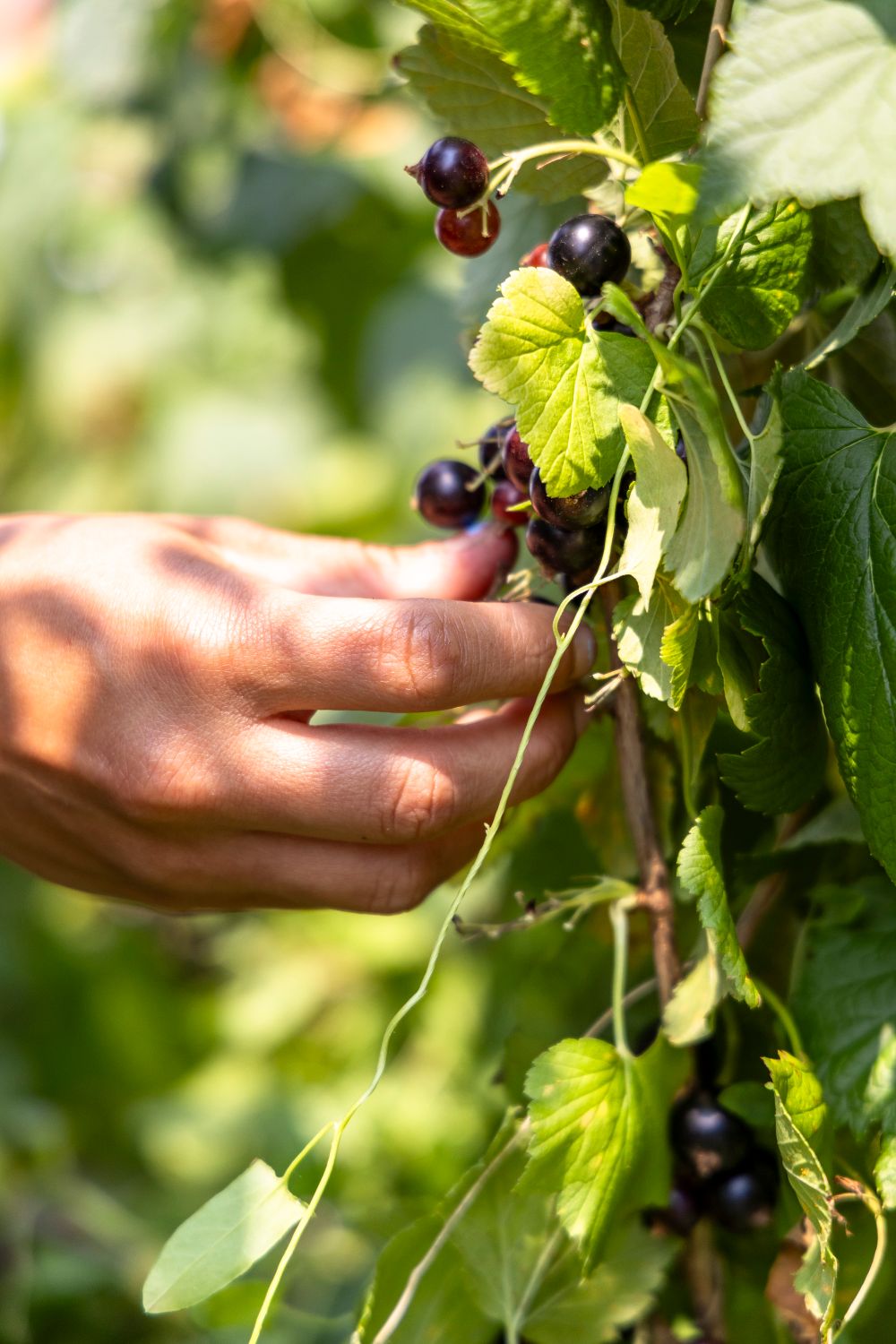
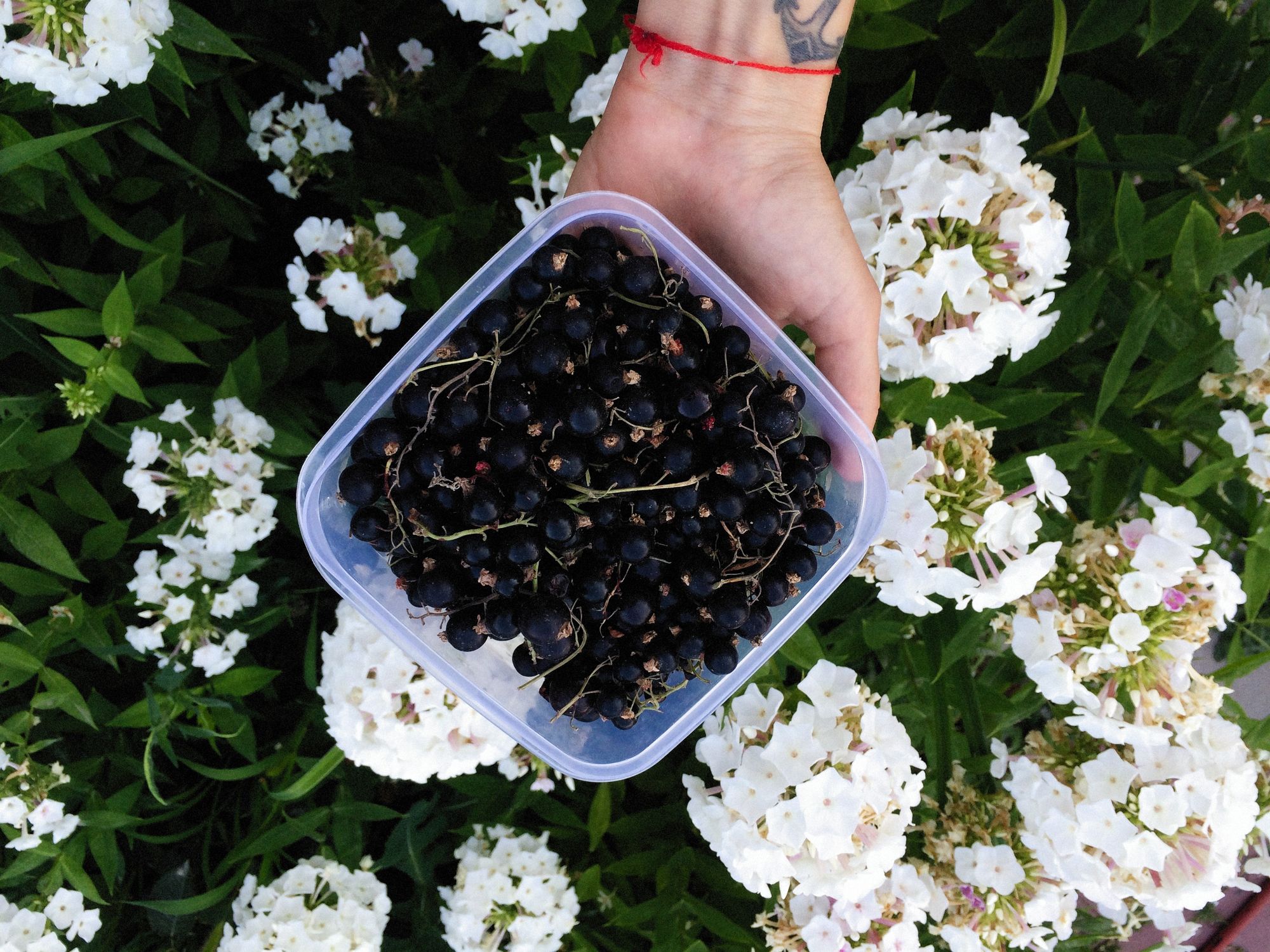
If fruit is your main aim, black chokeberry is the clear winner, no two ways about it. The berries are bigger, juicier, less bitter, and produced in far greater quantity. They freeze well and make excellent jam, juice, and even wine.
Nutritional Value
Both are exceptionally rich in antioxidants, comfortably outperforming blueberries, cranberries, and most other commonly grown fruit. Black chokeberries hold a slight edge in anthocyanin content, the very thing that gives them their dark colour and is tied to those antioxidant benefits, while red chokeberries carry more carotenoids, which is where their red pigment comes from. In practice, it's the black chokeberry that the health food industry leans on almost exclusively, and its juice is widely sold in Eastern European supermarkets and, increasingly, in UK health food shops.
Ornamental Value
Here the tables turn and the red chokeberry takes the lead. Its autumn foliage is among the most spectacular of any shrub hardy in the UK, the leaves turning intense shades of crimson and scarlet that hang on for several weeks. The bright red berries then often cling to the bush well into winter, giving you both visual interest and a useful food supply for the birds.
Black chokeberry isn't without its autumn charms, typically colouring up to red-purple, but it's less vivid and doesn't last as long. The dark berries are handsome enough, yet they don't catch the eye against the autumn leaves the way the red ones do. Worth knowing too: the cultivar Brilliant is a selected form of red chokeberry bred specifically for ornamental impact, with larger flower clusters, more reliable autumn colour, and a neater habit than the wild species. If you want a chokeberry chiefly for looks, Brilliant is the one to reach for.
Growing Conditions
Both species are tremendously tough and adaptable, shrugging off poor soil, clay, wet ground, partial shade, and severe cold alike. Neither needs acidic soil, unlike blueberries, which makes them suitable for very nearly any UK garden.
That said, there are small differences worth playing to. Black chokeberry has the edge in dry conditions and, being more compact, is the better bet for smaller gardens and containers. Red chokeberry copes better with very wet, waterlogged ground and is more shade-tolerant, which makes it the one to choose for those awkward spots at the back of a border or along a damp boundary. Neither type suffers any significant pests or diseases, and both are largely left alone by the common garden pests that torment other fruit bushes, which is no small mercy.
Pollination
Both black and red chokeberries are self-fertile, so a single bush will set fruit with no pollination partner needed. That said, much like blueberries, cross-pollination between different varieties, or even between separate plants of the same variety, tends to improve fruit set and berry size. So if space allows, planting two or three bushes will reward you with heavier crops. The two species can also cross-pollinate each other, and that, incidentally, is exactly how the natural hybrid purple chokeberry came about in the first place.
Which Should You Grow?
It all comes down to what you want from the plant. Choose black chokeberry if you're after the berries to harvest and use; the fruit is larger, juicier, and far better suited to the kitchen, and the bushes are more compact and easier to manage into the bargain. Viking and Nero are the best fruiting varieties you'll find in the UK.
Choose red chokeberry if what you really want is a stunning ornamental shrub that happens to feed the wildlife. The autumn colour is unbeatable, the red berries are beautiful, and Brilliant is the standout cultivar. Here the fruit is a bonus for the birds rather than for your jam pan.
And choose purple chokeberry if you'd like a bit of both. It offers good fruit for processing, decent autumn colour, and a vigorous, easy-going nature. It's less widely available in UK nurseries, but in my view well worth seeking out.
The genuinely good news is that you can't really go wrong here. All three are beautiful, productive, and among the easiest fruiting shrubs you can grow in a British garden. They ask for next to nothing and look stunning in return, whether you plant them as specimens, as hedging, or mixed into a companion-planted fruit garden.