Every now and then I stumble across a fruit that makes me wonder why on earth it isn't growing in every other garden on the street. The cornelian cherry is exactly that sort of plant. It's been quietly feeding people across Eastern Europe, Turkey, Iran and the Balkans for centuries, yet here in Britain it's mostly admired as an ornamental shrub by gardeners who have no idea the glossy red fruits hanging off it in autumn are not only edible but genuinely delicious. I don't grow one myself yet, but the more I read and the more I taste my way through other people's harvests, the more convinced I am that it deserves a place in far more UK gardens. So let me make the case for it.
What exactly is a cornelian cherry?
First, a small confession on the plant's behalf: it isn't a cherry at all. The botanical name is Cornus mas, which tells you it's a dogwood, cousin to the colourful-stemmed shrubs you see brightening up winter borders. The "cherry" bit is pure nickname, earned by the oblong, glossy red fruits it produces. It grows as a hardy small tree or large shrub, and it's fully hardy here in the UK, so there's no fussing over frost protection or wondering whether it'll sulk through a cold snap.
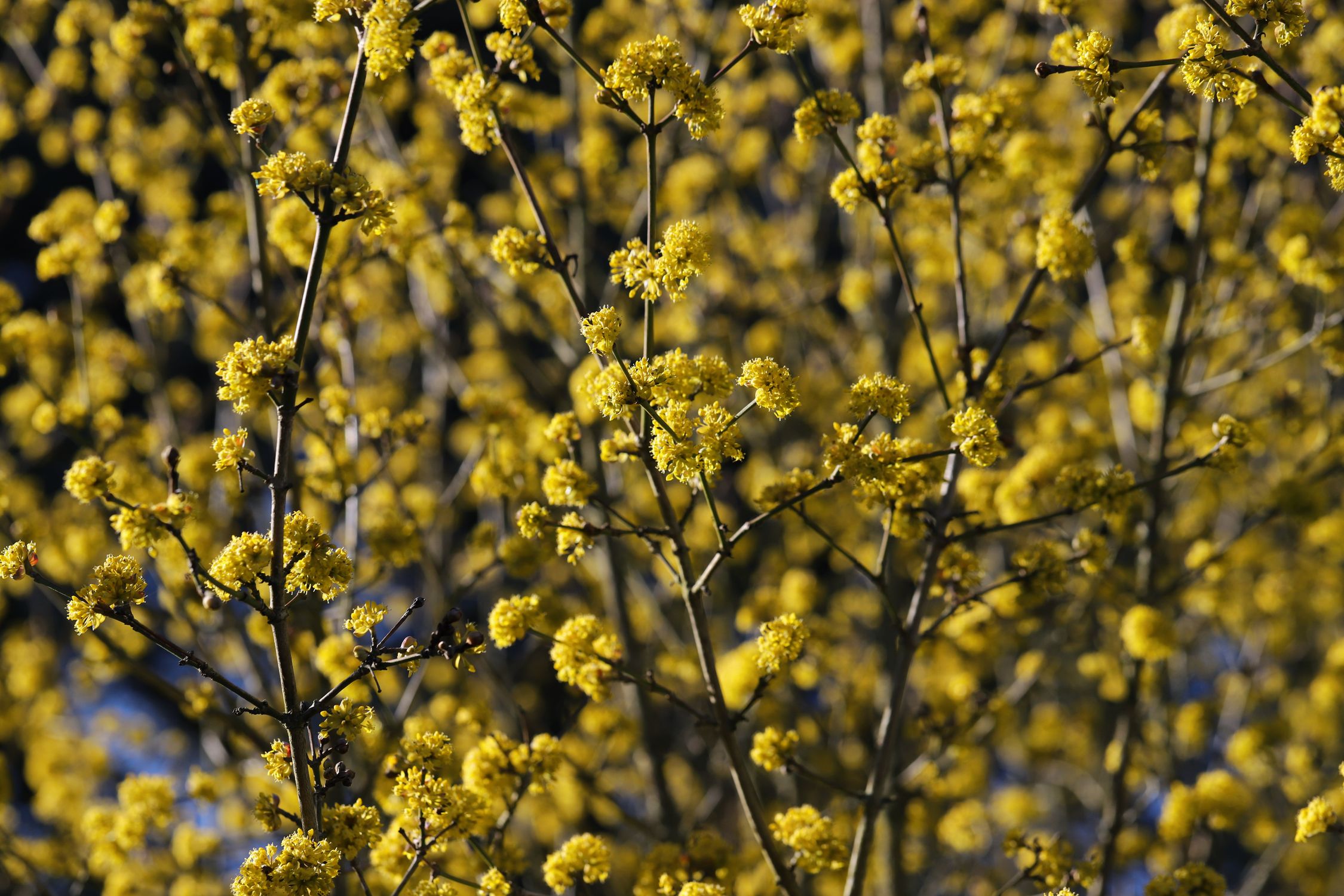
What I love about it is that it earns its keep all year round. In the depths of late winter, when most of the garden is still asleep, Cornus mas erupts into a haze of cheerful bright yellow flowers on completely bare stems. We're talking February into March, often when there's barely anything else going. Those early blooms are a proper lifeline for the first bumblebees and other pollinators braving the cold, which alone is reason enough to plant one. Then the fruits set, the leaves come, and by late summer and early autumn you've got those handsome red cherries ripening up. Even out of fruit it's a good-looking thing with a nice habit and decent autumn colour.
What does cornelian cherry taste like?
Here's where it gets interesting, and where I think a lot of people go wrong with it. Pick the fruit the moment it turns red and you'll get a sharp, mouth-puckering tartness, something like a cross between a sour cherry and a cranberry. Not unpleasant exactly, but bracing. The trick is patience. Leave the fruits on the tree until they're fully ripe and have gone slightly soft, and that sharpness mellows right out into something sweeter and altogether more rounded. The difference between an underripe and a properly ripe cornelian cherry is night and day, so don't judge the plant on a fruit you've pinched too early.
That natural acidity is exactly why it shines in the kitchen rather than the fruit bowl. There's a huge culinary tradition built around it: jams, syrups, fruit sauces, cordials and liqueurs, all making the most of that vibrant colour and zingy flavour. If you've ever cooked with tart fruit before, you'll know how well that acidity behaves once you add a little sugar and heat. It reminds me of the way I treat rosehips in the kitchen, another sharp, characterful fruit that comes alive once it's cooked down into a syrup or jelly. And if you enjoy growing fruit that's more about cooking than snacking, it sits in similar company to cranberries, which trade the same tart-then-transformed magic.
Is cornelian cherry easy to grow in the UK?
This, for me, is the clincher. By every account it's one of the more forgiving fruiting plants you could choose. It's tough, easy and refreshingly low-maintenance. It tolerates most soils without complaint and will even put up with a bit of shade, though you'll get the best flowering and cropping in a sunnier spot. It's not greedy, not prone to dramatic pest problems, and once established it largely gets on with things by itself.
A couple of honest caveats worth knowing before you buy. It is slow-growing, so this is a plant for the patient gardener rather than anyone after a quick crop. The flip side is that it's wonderfully long-lived, so a young tree planted now is genuinely an investment that can outlast you. On pollination, it's largely self-fertile, which means a single specimen will set fruit on its own. That said, planting a second one nearby reliably improves cropping, so if you've got room, two is the sensible move.
If you're weighing it up, here's the short version of why I'd recommend it:
- Year-round interest from those early yellow flowers right through to autumn fruit and foliage.
- Brilliant for early pollinators when little else is in bloom.
- Tough and undemanding, coping with a range of soils and partial shade.
- A productive larder of tart fruit for jams, syrups and cordials.
How should I use the fruit once it ripens?
Because the fruit is at its best cooked, I'd think of it less as something to graze on and more as raw material for the kitchen. The classic approach is to cook the ripe fruits down with sugar into a thick, jewel-bright jam or a deep red syrup that's lovely over yoghurt or stirred into drinks. Cordials and liqueurs are another time-honoured route, and there's a long tradition of cornelian cherry liqueurs across the regions where the plant is best loved. Sauces work beautifully too, the natural sharpness cutting through rich, fatty meats in much the way a redcurrant or cranberry sauce does.
My one piece of advice, drawn from everything I've read rather than from my own tree, is simply to wait for ripeness. Let the fruits hang until they're soft and fully coloured, and you'll be rewarded with far more sweetness and depth to work with. Picked at the right moment, there's very little this fruit can't be turned into.
Should you give it a go?
Honestly, yes, if you've got the space and a bit of patience. I'd love to see the cornelian cherry shrug off its "just an ornamental" reputation and find its way back into British gardens as the dual-purpose plant it really is: gorgeous in late winter, generous to the bees, handsome all summer, and quietly loading itself with fruit for the autumn. It asks for so little and gives so much.
I'll admit I'm writing this as an admirer rather than a grower, but it's firmly on my own list. If you plant one before I do, I'd genuinely love to hear how you get on with it, and what you end up making from that first proper harvest.
Happy growing,
Ash
More Forgotten Fruit
The cornelian cherry belongs to a small club of once-common, now-forgotten British garden fruit: wild damsons tell a similar story from the hedgerow side, chokeberries offer the same plant-and-forget toughness, and the unusual berries roundup collects the whole revival.