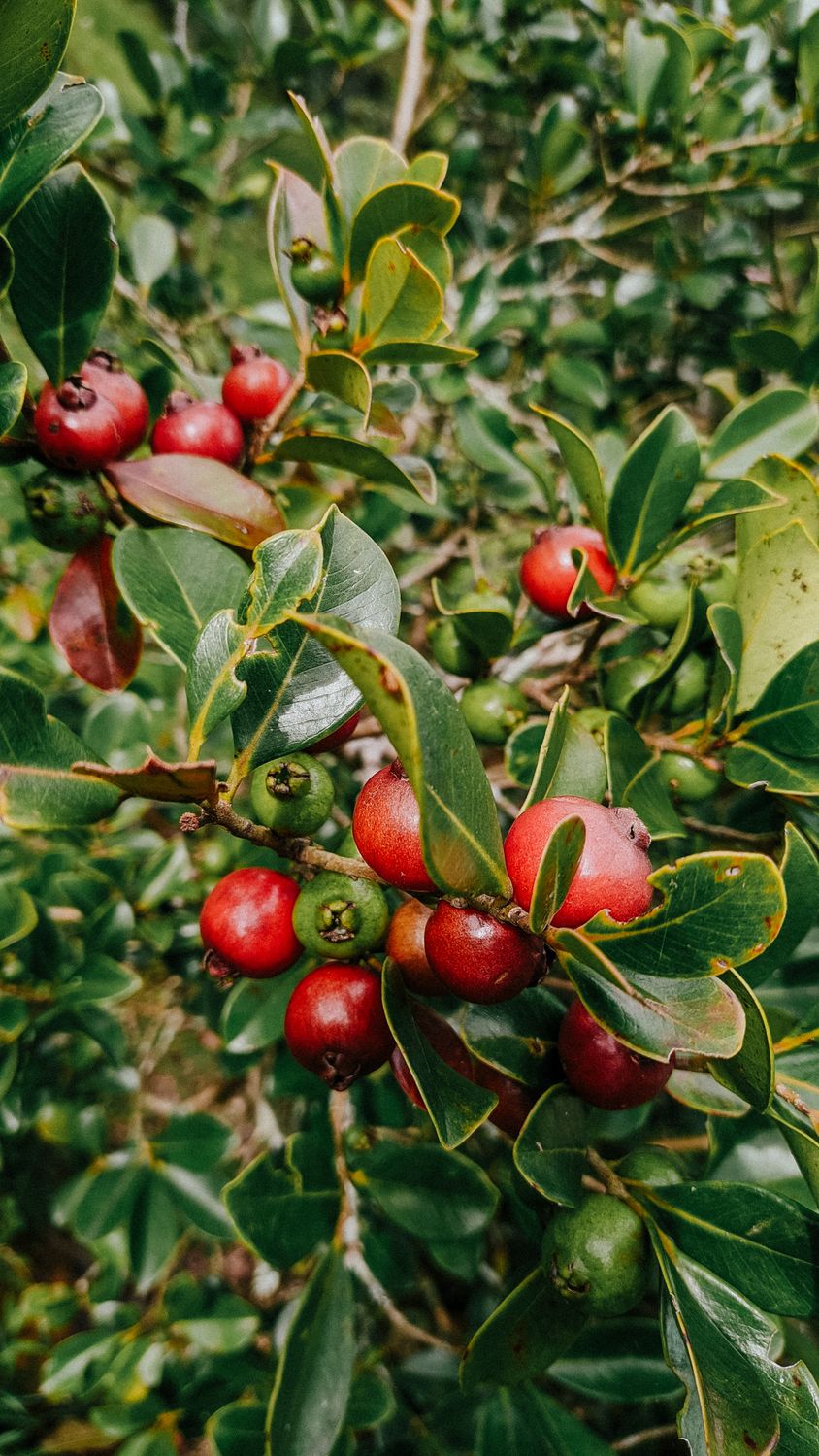
Imagine a small evergreen shrub that produces berries tasting of wild strawberries, was reportedly a favourite of Queen Victoria, and settles happily into a sheltered British garden. Then imagine that almost nobody grows it. That, in a nutshell, is the Chilean guava (Ugni molinae) — one of the best-kept secrets in British gardening, and a plant I think deserves far more company than it currently keeps.
What Is Chilean Guava?
Chilean guava (Ugni molinae, sometimes still listed under its old name Myrtus ugni) is an evergreen shrub in the myrtle family, native to the temperate rainforests of Chile and southern Argentina. Despite the name, there's no relation to the tropical guava. It grows to between 1 and 2 metres tall, with small, glossy, dark-green leaves and a neat, bushy shape that needs very little fussing.
The berries are tiny, roughly blueberry-sized, ripening from green through pink to a deep mahogany-red. The flavour, though, is the whole point: intensely aromatic, with strong notes of wild strawberry, candy floss and a touch of bubblegum. Honestly, the scent of ripe berries can be so powerful that you'll smell them before you spot them on the bush.
The Queen Victoria Connection
The plant arrived in Britain in the 1840s, brought back from Valdivia in southern Chile by the plant collector William Lobb for the Veitch Nurseries in Exeter. As the story goes, Queen Victoria grew so fond of the berries that she had them supplied to the royal kitchens, and Victorian gardeners took to growing the shrubs in sheltered walled gardens and orangeries across the south of England.
It rather fell out of fashion in the twentieth century, but I'm pleased to say it's enjoying a quiet revival now among adventurous gardeners and chefs alike.
Growing Conditions
Chilean guava is hardier than most people give it credit for. It will shrug off temperatures down to around minus 10 degrees Celsius, which puts it within reach of sheltered gardens across much of southern and western England, Wales and Ireland. In colder areas it makes a first-rate container plant that you can simply shift to a frost-free spot for the worst of the winter.
What it really wants is a warm, sheltered position — a south or west-facing wall, a courtyard, a snug patio — and it's happy in full sun or partial shade. Give it moist, well-drained, slightly acidic to neutral soil; it grows perfectly well in ericaceous compost, which makes it a natural neighbour for blueberries and camellias. The one thing it genuinely dislikes is cold, drying wind, so tucking it in against a wall or among other shrubs makes a real difference to how it performs.
Planting
Plant in spring once the last frosts are behind you, so the shrub has a full season to find its feet. Dig a hole twice the width of the root ball, work in some ericaceous compost if your soil leans alkaline, water it in well, and mulch around the base with bark chips to hold moisture and shelter those shallow roots.
If you fancy an informal hedge, space the plants about 1 metre apart. It makes a lovely, unusual evergreen hedge that flowers and fruits away merrily without ever needing the shears.
Growing in Containers
This is a plant that takes to pots beautifully. Use a container at least 40 centimetres across with good drainage, and fill it with a 50-50 mix of ericaceous and multipurpose compost plus a little perlite. Because the habit is so compact and dense, you'll barely need to stake or support it at all.
Stand the pot in a sheltered, sunny corner of the patio or against a south-facing wall. Come winter, move it somewhere protected — a cold greenhouse or unheated conservatory — if temperatures are set to stay below minus 5 degrees Celsius for any length of time.
Care and Maintenance
The watchword here is "moist but not sodden". Keep the soil consistently damp, especially through flowering and fruiting, and never let a container plant dry right out over summer. From April to August, a fortnightly liquid feed keeps it in good heart — a balanced or ericaceous feed both work well.
Pruning is barely a job at all. The shrub holds a naturally tidy, compact shape, so a light trim in spring is all it takes if you want to neaten it up. In borderline-cold gardens, wrap the pot in bubble wrap or hessian during cold snaps, and lay a thick mulch around the base of any plants in the ground to keep the roots safe. As for pests and diseases, I've found Chilean guava to be just about bulletproof in the UK — those aromatic leaves seem to put most insects off entirely.
Flowering and Fruiting
From late spring into summer the bush is dotted with small, waxy, pale-pink bell-shaped flowers, rather like miniature lily-of-the-valley. They're lightly scented and the bees adore them. The plant is self-fertile, so a single specimen will fruit on its own, though I'd plant two if you can, as it improves the yield.
The berries set over summer and ripen late, usually in October and November. That late harvest is one of my favourite things about the plant — fresh fruit to pick when almost everything else in the garden has long since packed up for the year.
Harvesting and Flavour
Pick the berries once they've turned deep mahogany-red and feel slightly soft. Truthfully, your nose is the best guide of all: fully ripe fruit gives off an intoxicating strawberry fragrance that hangs in the air right around the bush.
The flavour really does have to be tasted to be believed. Each little berry delivers an intense hit of wild strawberry and vanilla with a whisper of warm spice. They're at their absolute best eaten there and then, still warm from the autumn sun — one of the small, perfect pleasures of growing your own.
Culinary Uses
For my money, fresh is the finest way to enjoy them, scattered over yoghurt, ice cream or a pavlova. Beyond that, they make a wonderfully perfumed strawberry jam — mix in some apple to add bulk and pectin — and they fold beautifully into tarts, crumbles or whipped cream for a quick, impressive pudding. If you're feeling adventurous, steep the berries in gin or vodka for four to six weeks; you'll end up with an extraordinary, rose-pink spirit carrying that intense strawberry aroma. Dried, they're lovely too, lending a concentrated strawberry note to granola and trail mix.
Nutritional Value
There's substance behind the flavour. The berries are rich in vitamin C, containing up to four times more than blueberries, along with good levels of antioxidants including anthocyanins and flavonoids. In Chilean traditional medicine the leaves are brewed into a tea thought to have anti-inflammatory properties.
Where to Buy
Chilean guava is turning up more and more in specialist fruit nurseries and well-stocked garden centres around the UK. Keep an eye out for named cultivars such as Flambeau, which has striking pink and cream variegated foliage, or Ka-Pow, bred for larger berries and a little more hardiness.
A Garden Treasure Worth Growing
When I tot it all up, the Chilean guava offers an almost improbable list of virtues: a handsome evergreen shrub, charming flowers, late-season fruit with a flavour quite unlike anything else in the garden, and the hardiness to cope in most sheltered British plots. Taste your first ripe berry and I suspect you'll feel exactly as I do — wondering why on earth this plant isn't growing in every garden in the country.
Other unusual fruiting shrubs worth a spot alongside it
Chilean guava tends to appeal to the same gardener who's drawn to other under-grown, high-flavour shrubs. If you like the idea of a fruit almost nobody else on your street is growing, honeyberries offer the same rarity value with a very different, earlier-season flavour, and goji berries share Chilean guava's easy-going, near-bulletproof nature in a British garden. All three make a genuinely unusual fruiting border that flowers, fruits and asks very little in return.
Chilean guava earns a firm spot on my list of unusual berries to grow in the UK, alongside the other exotic superfruits and hardy oddities that quietly outperform their obscurity — well worth exploring if this one has won you over.