Goji berries have been prized in traditional Chinese medicine for thousands of years, and these days you can hardly walk into a health food shop without tripping over a bag of the dried ones. What most British gardeners don't realise is that you can grow them perfectly well right here at home — I've found them far less temperamental than their exotic reputation suggests, and a fresh goji off the bush is a different fruit entirely to the shrivelled dried version. This guide covers everything from planting to harvest. If you're still deciding which type to grow, my guide to red, black and gold goji varieties compares flavour, hardiness and where to buy each.
Why Goji Berries Thrive in Britain
For all their exotic origins, goji plants are remarkably tough. They're hardy to around minus 15 to minus 20 degrees Celsius depending on variety, so they'll come through even a harsh British winter without protection. Once established they shrug off dry spells too, and honestly mine seems to thrive on a degree of neglect — coping with poor, dry ground and wind that would see off fussier plants.
They'll also put up with a wide range of soils, including the alkaline clay so many British gardeners battle with. If anything, I'd say goji is easier to please than half the ordinary shrubs in the average border. The one thing worth knowing early: rich, fertile soil works against you. Too much fertility gives you a thicket of leafy growth at the expense of fruit, which runs against everything else you've been taught about feeding plants.
Planting a Goji Berry Bush
Pick a spot in full sun — partial shade still fruits, but sparingly. Good drainage matters more than soil fertility; if you're on heavy clay, work in some grit before planting rather than compost or manure. Goji takes very happily to a large container (at least 40cm across) on a patio or balcony, which is worth knowing if your ground is limited or you want to keep its spreading roots contained.
Plant in autumn or early spring, whether from a potted plant or bare-root. Space bushes about 1.5 metres apart if growing more than one — they get wide as well as tall. Water in well and keep the root area moist through the first summer; after that, an established plant rarely needs watering except in a pot.
Don't panic in the first year if not much happens above ground. Goji plants can be slow to find their feet while the roots establish, then grow rapidly once they do — reaching 2 to 3 metres if left to their own devices.
Pruning and Training
Left alone, a goji bush turns into a tangled mess of arching, whippy branches that flop across the path and trip you up — mine did exactly that before I started taking the secateurs to it properly. There are three sensible ways to grow it:
- Freestanding bush — the easiest option. Prune hard in late winter, removing dead and weak wood and shortening the long side shoots by half. Repeat every year without fail.
- Trained on wires or a trellis — sensible if space is tight, since it keeps the vigorous growth flat against a support rather than sprawling outward. Tie in the main stems as they grow and prune side shoots back to a couple of buds each winter.
- Trained as a standard (single clear stem with a head of branches at the top) — the tidiest option and the one I'd recommend if you have the patience to establish it. It keeps the suckering growth well clear of the ground and makes picking far easier. Select one strong upright shoot at planting, remove all competing stems, and let it grow to the height you want before pinching out the tip to form a head.
Whichever shape you choose, prune in late winter while the plant is dormant. A general-purpose fertiliser in spring and a mulch around the base is about all the feeding goji asks for — resist the urge to do more.
Propagating Goji Berries
Goji is one of the easier fruiting shrubs to propagate from cuttings, which is handy since named varieties from seed can be unreliable. Take semi-hardwood cuttings in mid-to-late summer, about 10-15cm long, strip the lower leaves, and root them in free-draining compost with a plastic bag over the pot to hold humidity. Roots usually form within four to six weeks. It's a cheap way to fill a hedge or share plants with other growers, and far more reliable than raising named types from seed.
Harvesting Fresh Goji Berries
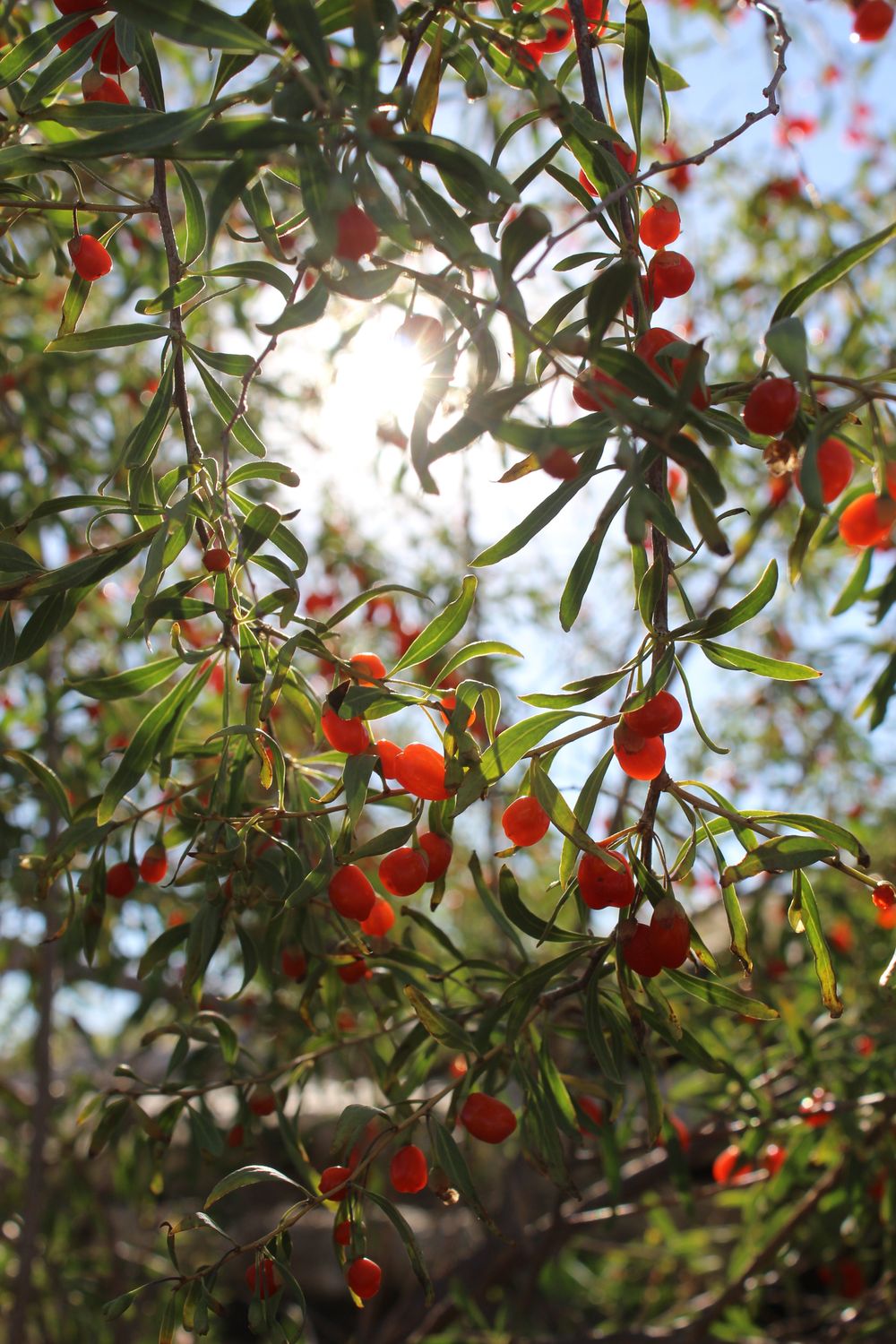
Berries start ripening from late summer, typically August, and carry on into October, ripening gradually over several weeks rather than all at once. They shift from green to their ripe colour — orange-red for the common type — and soften slightly when ready. Handle them gently; they bruise at the slightest provocation, more than almost any other garden berry.
Pick over the plant every few days at the peak of the season rather than waiting for one big harvest. Some growers lay a sheet under the bush and shake the branches, which does work but knocks a few berries about in the process — fine if you're drying the crop, less good if you want whole fruit for eating fresh.
The flavour of a fresh berry catches people out: mildly sweet with a slight herbal, almost tomato-like note, nothing like the concentrated chewy sweetness of the dried ones. Use them within a day or two, as they don't keep well in the fridge — or dry them in a dehydrator or a very low oven if you want to store the crop.
How Long Before a Goji Plant Fruits?
Two to three years from planting before you get a meaningful crop, though you may see a handful of berries in year two. Don't write the plant off if it sits there doing little for the first couple of seasons — it's putting its energy into roots, not fruit. Mine did exactly that, then suddenly took off in year three; patience really is the thing with goji. Once established, a mature bush gives one to two kilograms a year and keeps doing so for decades.
Pests, Diseases and Common Problems
Goji gives remarkably little trouble in Britain. As a member of the nightshade family it carries compounds that put most common garden pests off their dinner, and there are no significant diseases that trouble it here.
| Problem | Likely cause | Fix |
|---|---|---|
| Lots of leaf growth, few berries | Soil too rich or fertile | Stop feeding; goji fruits best on poor, well-drained ground |
| Berries stripped overnight | Birds | Net the plant as fruit starts to colour — the only reliable defence |
| Suckers coming up across the border | Goji spreads by suckering | Pull suckers as they appear, or grow in a large container to contain the roots |
| No fruit after 3+ years | Too much shade, or over-pruned | Move to full sun; prune less aggressively the following winter |
Your real adversary is birds, not insects or disease — they'll strip a ripening bush in a single visit. The other thing to watch is containment, since goji spreads by suckering and can turn invasive if you let it. Mine tries to take over the whole border if I turn my back on it; growing it in a pot keeps it firmly in its place.
Choosing a Variety
Start with a named variety rather than a seed-grown plant — seedlings are a lottery for fruit quality, size and flavour, while named types are propagated from proven stock. Beyond the standard red goji, there are black and gold forms worth seeking out for their different flavour and appearance; I've compared all three properly in my goji variety guide, including where to buy each in the UK.
Frequently Asked Questions
How do you grow goji berries in the UK?
Plant in full sun on well-drained, even poor, soil — goji actually fruits better without rich feeding. Space bushes 1.5 metres apart or grow one in a large container, water well through the first summer, then prune hard every winter to keep the vigorous growth in check. Berries ripen from August, though a meaningful crop takes two to three years to arrive.
Do goji berries need a lot of care?
Very little once established. They tolerate poor soil, drought, wind and hard frost without complaint, and suffer almost no pest or disease problems in the UK. The main task is an annual hard prune in late winter to stop the plant sprawling, plus netting against birds once fruit starts to colour.
Why is my goji berry bush not fruiting?
Most commonly it's still too young — goji typically needs two to three years from planting before cropping properly. After that, too much shade or soil that's too rich (encouraging leaf growth over fruit) are the usual culprits. Move the plant to full sun and stop feeding it if this applies.