Most people know goji berries only as those shrivelled orange things from the health food shop — pricey, chewy, tasting faintly of sweet tomato. The fresh berry off a plant is something else entirely, and the familiar red-orange goji is only one of several kinds you can raise yourself. There's more to this fruit than the packet lets on. For planting, pruning and harvest technique, my how-to-grow guide covers the practical side in full; this one is about choosing which goji is actually worth the space in your garden.
What Are Goji Berries?
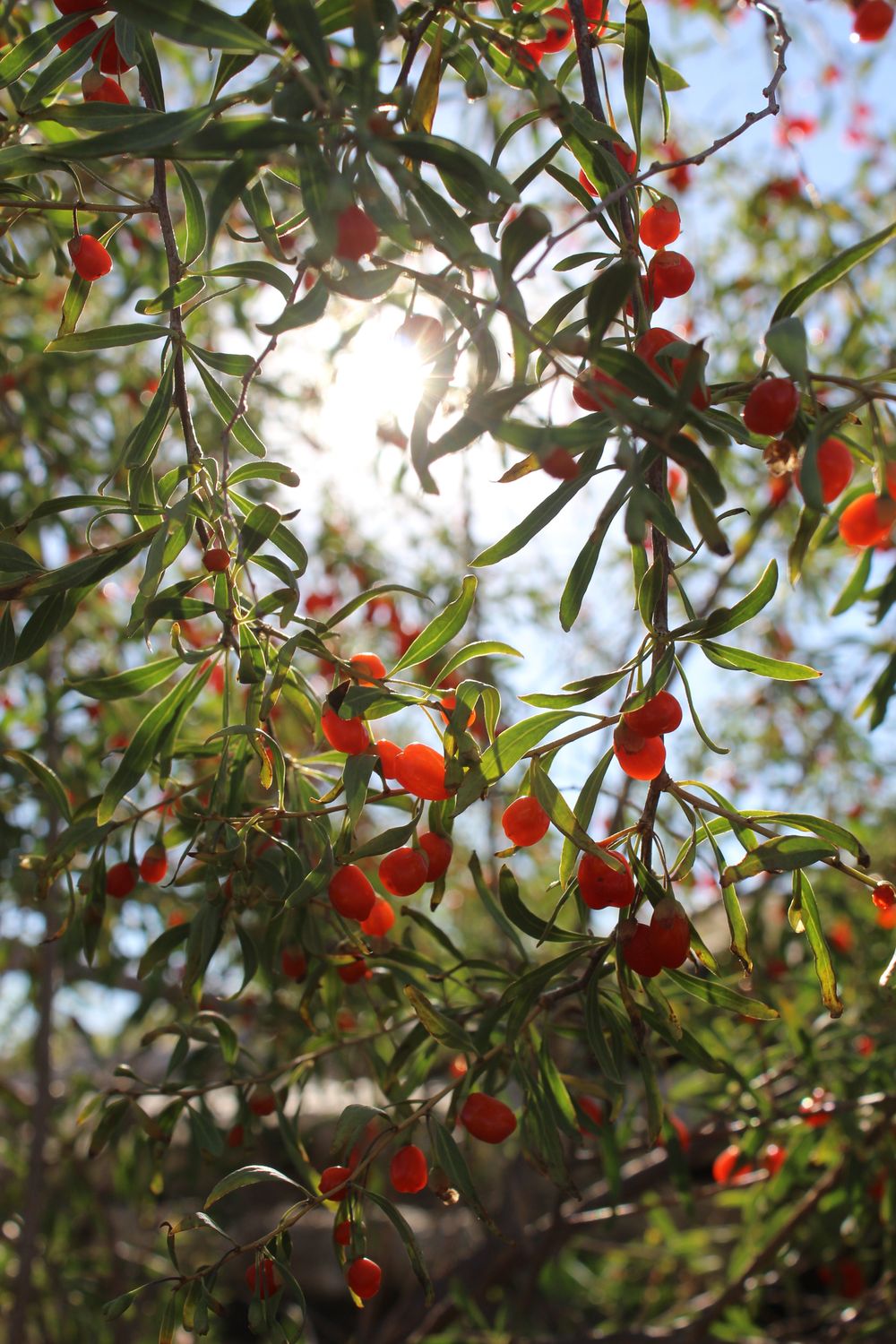
Goji berries come from plants in the genus Lycium, part of the nightshade family. The common red goji is Lycium barbarum, native to China and grown widely across Asia, where it's been used in traditional medicine for centuries before it landed in the West as a health-food craze in the early 2000s. The plant is a deciduous shrub reaching about two metres, with arching branches, small grey-green leaves and delicate purple flowers in summer — a tough old thing that shrugs off poor soil, drought, wind and hard frost.
Red, Black or Gold: How the Three Types Compare
| Red goji | Black goji | Gold / yellow goji | |
|---|---|---|---|
| Species | Lycium barbarum | Lycium ruthenicum | Lycium barbarum (colour variant) |
| Berry colour when ripe | Orange-red | Deep near-black | Golden yellow |
| Flavour | Sweet-tart, tomato-like tang | Milder, gently sweet, little tang | Sweeter and less acidic than red |
| Key compound | Zeaxanthin, carotenoids | Anthocyanins (as in bilberries, blackcurrants) | Carotenoids |
| Plant vigour | Vigorous, most widely grown | More compact | Slightly less vigorous than red |
| UK hardiness | To about -20°C | To about -15°C | To about -15°C to -20°C |
| Availability in UK | Common — most fruit nurseries stock it | Uncommon — specialist suppliers only | Rarest of the three |
| Typical price | £10–£18 per plant | £15–£25 per plant | £15–£25 per plant, when found |
Red Goji: The One Everyone Knows
The standard red goji is what's dried and sold in every health food shop, and it's the variety most UK fruit nurseries stock under names like 'New Big' or 'Sweet Lifeberry'. It's the most vigorous and reliable of the three, tolerant of poorer soil and harder frost than either alternative, and the easiest to buy as a named, true-to-type plant rather than an unpredictable seedling. If you only grow one goji, this is the sensible, low-risk choice — fresh, it tastes like a sweet-tart cross between a cherry tomato and a red pepper, quite unlike the dried version.
Black Goji: Worth Seeking Out
Black goji (Lycium ruthenicum) is a related species from Central Asia, not simply a dark form of the red one. The berries are small, round, and ripen to a deep near-black. They're loaded with anthocyanins — the same pigments that give bilberries and blackcurrants their colour and much of their reputation — and the flavour is noticeably milder than red goji, gently sweet with much less of that tomato tang. The plant tends to be more compact than red goji, which suits a smaller garden or a large pot.
You won't find black goji at general garden centres. Specialist fruit and unusual-plant nurseries occasionally stock it, and seed is more widely available than plants if you're prepared to raise your own (bearing in mind seed-grown plants are a lottery for quality). It's worth the hunt if you want something genuinely different from the shop-bought norm — and its high anthocyanin content puts it in the same conversation as bilberries for gardeners chasing the darkest, most antioxidant-rich fruit they can grow.
Gold Goji: The Rarest Find
Gold, or yellow, goji is a colour variant of the same species as red goji, tasting much like it but sweeter and less acidic, on plants that are a touch less vigorous. It's the rarest of the three to track down for sale in the UK, though it turns up more often as interest in unusual fruit grows. If you spot a named gold goji plant on a specialist nursery list, it's worth snapping up before the short run sells out — stock rarely lasts.
Eating Fresh Goji: How the Varieties Differ
If dried goji is all you've tasted, any of the three fresh varieties is a revelation — juicy and far less concentrated than the shrivelled shop-bought sort. Red goji carries the most of that recognisable sweet-tomato tang; black goji trades tang for a gentler, rounder sweetness that many people find more approachable fresh off the bush; gold goji sits closest to red but with the sharp edges smoothed off. All three are lovely scattered over cereal, blended into smoothies, or eaten straight from the plant, and all three can be dried at home in a dehydrator or a low oven, though home-dried berries never look quite as neat as the shop-bought sort.
Which Goji Berry Should You Grow?
For most UK gardens, start with red goji — it's the hardiest, most widely available as a reliable named variety, and the most forgiving if you're new to growing it. Once that's established and fruiting well (allow two to three years), a black goji is the natural second plant for anyone who wants a genuinely different flavour and the anthocyanin content to go with it. Gold goji is the one to add if you find it, more for novelty and flavour variety than any practical advantage over red.
Whichever you choose, the growing technique is identical across all three — my how-to-grow guide covers planting, pruning, propagation and troubleshooting in full.
Frequently Asked Questions
How many types of goji berry are there?
Three are commonly grown: the red goji (Lycium barbarum), the familiar one from health food shops; the black goji (Lycium ruthenicum), a related species with small, near-black berries high in anthocyanins and a milder flavour; and the gold or yellow goji, a colour variant of Lycium barbarum that tastes sweeter and less acidic than red. All three are fully hardy in the UK.
What is a black goji berry plant?
Lycium ruthenicum — a close relative of the common red goji, native to Central Asia rather than China. The plant is similar to red goji but tends to be more compact, with small round berries that ripen to a deep near-black colour. They're prized for high anthocyanin content, the same pigments found in bilberries and blackcurrants, and the flavour is milder and much less tomato-like than red goji.
Is black goji better than red goji?
Neither is objectively better — they suit different priorities. Red goji is hardier, more widely available as reliable named stock, and easier for a first-time grower. Black goji offers a milder flavour and higher anthocyanin content, but the plants are harder to source and slightly less cold-tolerant. Many growers who want variety end up with both.
Where can I buy black or gold goji plants in the UK?
General garden centres rarely stock either — you'll need a specialist fruit or unusual-plant nursery, and even then black and gold goji are intermittent stock rather than a permanent line. Red goji, by contrast, is widely available as a named variety from most fruit specialists.