Raspberries come in gold, amber, pale yellow, deep purple and true jet black, and each colour brings a noticeably different flavour. Most British gardens only ever grow the standard red, but coloured varieties need no special treatment, grow in the same conditions, and the difference in taste is striking once you try them.
Golden Raspberries
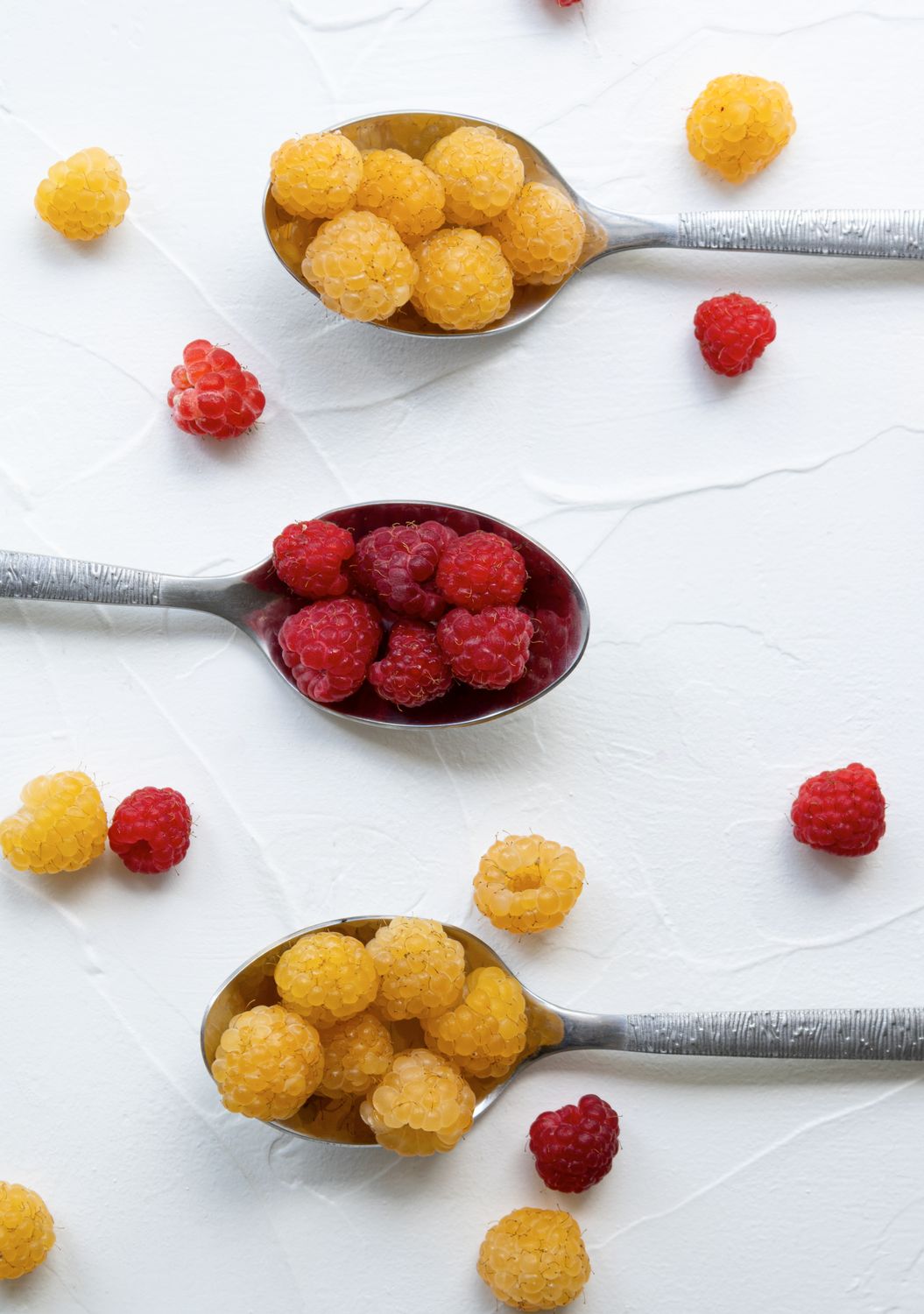
Golden raspberries are the gateway drug, if you like, to the unusual end of the raspberry spectrum. They're simply red cultivars that lack the anthocyanin pigments responsible for the red colour, which lets the yellow-gold tones underneath show through.
The flavour difference is immediate and unmistakable. Golds are sweeter and less acidic than reds, with a honeyed, almost apricot-like quality. The tartness that defines a red raspberry is dialled right down and replaced by a gentle, fragrant sweetness. Some people adore it; others find it lacks the sharp character they love about the fruit. I'm firmly in the camp that finds it a treat.
Three are worth knowing. All Gold is the most widely available golden variety in the UK, an autumn-fruiting type that crops reliably and heavily with large, sweet, golden-yellow berries, and it's easy enough that even the RHS sings its praises. Fallgold is another autumn-fruiter, with slightly smaller but intensely sweet fruit, very productive and properly cold-hardy. And Anne is a North American variety turning up more often over here now, with large berries in a pale, almost cream-gold and an exceptional sweetness. The best part is that golds grow identically to reds: same soil, same support, same pruning — and yes, the same relentless suckering, so expect to be pulling stray gold canes out of the lawn just as you do the reds. If you can grow a red raspberry, you can grow a gold one with zero extra effort.
Black Raspberries
Right, the most important thing first: black raspberries are not blackberries. The confusion is almost universal, so let me be clear. They're a completely separate species, Rubus occidentalis, native to eastern North America, and they taste nothing like either red raspberries or blackberries.
And what a flavour it is. Rich, complex, deeply fruity, with notes of dark chocolate, wine, and something almost smoky. It's more intense and less sweet than a red, with an earthy depth that has made it one of the most prized flavours in American artisan food culture. In the Midwest and the Appalachian regions of the United States, black raspberry ice cream, jam, and pie are something close to a regional obsession.
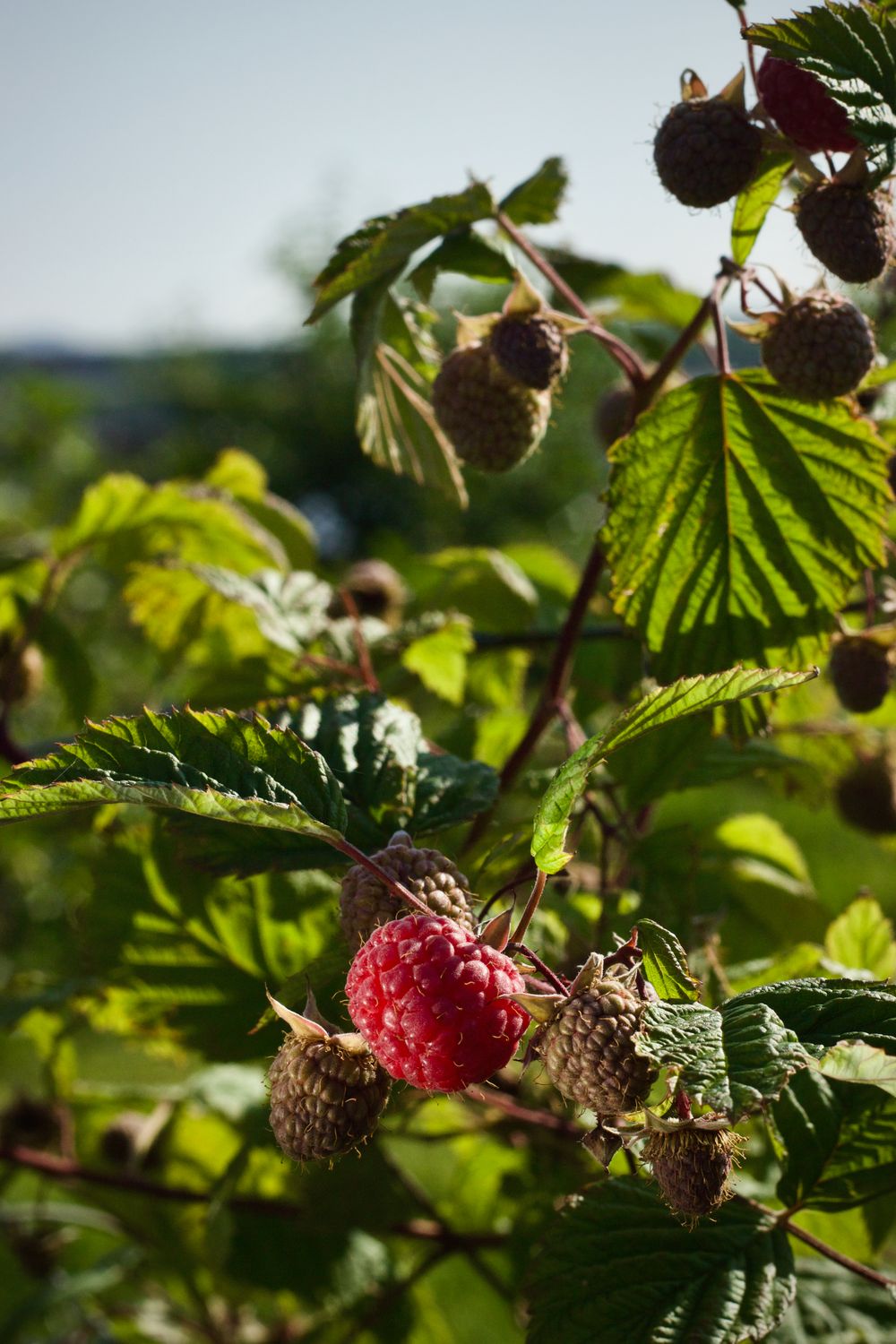
The berries are smaller than red raspberries, with that distinctive hollow centre that all true raspberries share, which is exactly what sets them apart from the solid-cored blackberry. When fully ripe they're a glossy, deep purple-black, darker than any blackberry you'll find.
How to Tell Black Raspberries from Blackberries
The mix-up is understandable enough. Both are dark, both grow on canes, both belong to the genus Rubus. But once you know the tells, you'll never confuse them again. Pull a ripe black raspberry from the plant and it comes away hollow, leaving the white core behind on the bush, just like a red raspberry; a blackberry comes away with its core inside. The canes give it away too, as black raspberry canes carry a distinctive blue-white waxy bloom, especially on new growth, where blackberry canes are plain green or brown. They grow differently as well: black raspberries throw arching canes that tip-root wherever they touch the ground, while blackberries send up straight canes from the root system. And they're early, ripening ahead of most blackberries, typically in late June and July.
Growing Black Raspberries in the UK
Black raspberries are far less common in British gardens than they deserve to be, largely because the plants have historically been hard to get hold of. That's slowly changing as specialist nurseries cotton on to the growing interest.
If you can source them, there are three classics. Bristol is the old American standard, still widely grown, a heavy cropper with excellent flavour. Jewel gives larger berries than Bristol along with better disease resistance, and is generally reckoned the best all-rounder of the lot. Munger is an old variety prized for exceptional flavour, though you'll need to accept moderate yields in exchange.
They want a sunny, well-drained spot and resent waterlogged soil even more than red raspberries do. Space plants about 60 centimetres apart and give them support. Prune the fruited canes out after harvest, exactly as you would a summer-fruiting red. The one real challenge here is sourcing healthy stock, because black raspberries are susceptible to viral diseases, so do buy certified virus-free plants from a reputable nursery. It's worth the care.
White Raspberries
White raspberries are the rarest of the whole spectrum. Think of them as golden raspberries taken to the extreme, with so little pigment that the berries are a pale, translucent ivory or cream. They look almost ghostly hanging on the cane.
The flavour is the mildest and sweetest of any raspberry, almost perfumed, with barely a whisper of acidity. They're divisive: some find them exquisitely delicate, others miss the sharpness that gives the other colours their backbone. They're rare in commerce, turning up mostly through heritage fruit collections and specialist growers, and honestly they're more of a collector's curiosity than a practical garden crop. But if you ever cross paths with one, do try it.
Purple Raspberries
Purple raspberries are hybrids of red and black, and they carry traits from both parents. The colour is a rich wine-purple, darker than red, lighter than black, and the flavour sits between the two as well, marrying the bright fruitiness of a red with the deeper, more complex tones of a black.
Two are worth your attention. Royalty is the best-known purple, with large berries and a rich, complex flavour. It's extremely vigorous, almost aggressively so, throwing up very tall canes that need strong support, so be warned — in my experience the vigorous types will flop and sprawl badly if you don't get sturdy wires in early. Brandywine is smaller and earlier-ripening with good flavour, and a far more manageable grower than Royalty. As a group, purples are vigorous and crop heavily, which makes them rewarding if you've the room, and they tend to be more disease-resistant than the blacks, having inherited some of that toughness from the red side of the family.
A Tasting Comparison
If you lined all five up and tasted them side by side, the progression runs roughly from gentlest to boldest. White is the sweetest and mildest, delicate and floral with almost no acidity, the subtlest of them all. Gold follows, sweet with honey and apricot notes, low in acid and very approachable. Red sits in the middle as the classic balance of sweet and tart, bright and versatile. Then purple, rich and complex, pairing red fruitiness with deeper, wine-like tones. And finally black, the most intense of the lot: dark, complex, smoky-sweet, with real earthy depth. It's the least sweet, yet to my mind the most flavourful of the bunch.
Using Them in the Kitchen
Each colour has its moment in the kitchen. Golds are stunning in tarts and pavlovas where their colour really stands out, they make a beautiful pale-amber jam, and they're excellent with white chocolate. Blacks are superb for ice cream in that great American Midwest tradition, and they go into intense jams and syrups and dark fruit sauces for game and duck, pairing brilliantly with dark chocolate. Purples are the workhorses, slotting into any recipe that calls for red raspberries but with a richer result, and they're particularly good in crumbles and pies.
And don't be afraid to mix them. A raspberry salad of red, gold, and black, or a multi-coloured tart, is visually spectacular and gives you an interplay of flavours that no single variety can manage on its own.
Building a Rainbow Raspberry Patch
There's a real and particular pleasure in growing several raspberry colours together. A patch of red, gold, and black hands you a harvest that spans from late June clean through to October, a range of flavours from sweet and mild to dark and complex, and a display that turns every picking session into something of a treasure hunt. My advice: start with a reliable red, add a gold for contrast, and if you can track one down, a black for that extraordinary depth of flavour that nothing else in the garden can touch. Just be ready to net the lot, because in my garden the birds make no distinction between colours — they'll strip a gold cane as happily as a red. You'll wonder why you ever grew only red.
Frequently Asked Questions
Are coloured raspberries harder to grow than red ones?
No — gold, black, white and purple raspberries grow in exactly the same conditions as standard red varieties. They need the same soil preparation, the same support structure, and the same pruning approach. The main challenge is sourcing plants, as fewer UK nurseries stock them than carry standard red types. My complete raspberry growing guide covers everything from soil to support to harvesting.
Which coloured raspberry tastes best?
Gold varieties are often described as the sweetest, with lower acidity than red types. Black raspberries have a deeper, almost winey flavour that many people find the most distinctive. Taste is genuinely subjective here, and the most satisfying approach is to grow a mix and compare them directly from the same patch.
Do coloured raspberries need different pruning from red ones?
No — the same summer vs autumn-fruiting distinction applies across all colours. Identify whether your variety fruits on old wood or new growth, and prune accordingly. My raspberry pruning guide explains both methods clearly and tells you how to identify which type you have if you are not sure.
Where can I buy unusual raspberry varieties in the UK?
Gold varieties like All Gold are increasingly common in well-stocked garden centres. Black and white varieties are harder to find in person — specialist online fruit nurseries are your best bet. For black raspberries look for Jewel or Bristol; for purple types, Glencoe or Royalty; for white, the suggestively named White Delight or Ivory.