Traditional raspberry canes shoot up to two metres, demand posts and wires to hold them upright, and sucker their way into every corner of the garden they can reach. I love them dearly, but after years of yanking stray canes out of the lawn and the path, and of watching them flop the instant a wire works loose, I'll be the first to admit they need space and a bit of infrastructure that simply isn't there for everyone. Raspberry Shortcake throws nearly all of that out of the window, and for anyone short on room it's well worth knowing about.
What Makes It Different
Raspberry Shortcake is a dwarf, thornless, self-supporting raspberry, developed by Cornell University and released in 2006. It grows to around 60 to 90cm tall in a bushy, rounded shape that wants no staking, no wires and no trellis whatsoever. And the canes are completely thornless, which makes picking and pruning a pleasure in every sense of the word.
It's a primocane-fruiting, or autumn-fruiting, variety, meaning it crops on the current year's growth. That makes the pruning beautifully simple: cut the whole lot to the ground in late winter, and fresh canes grow up and fruit that very same year. That one-chop approach is the great relief of autumn-fruiting raspberries generally — no fretting over which canes fruited and which are next year's, which is exactly the sort of guesswork that trips up beginners with the summer types.
The Fruit
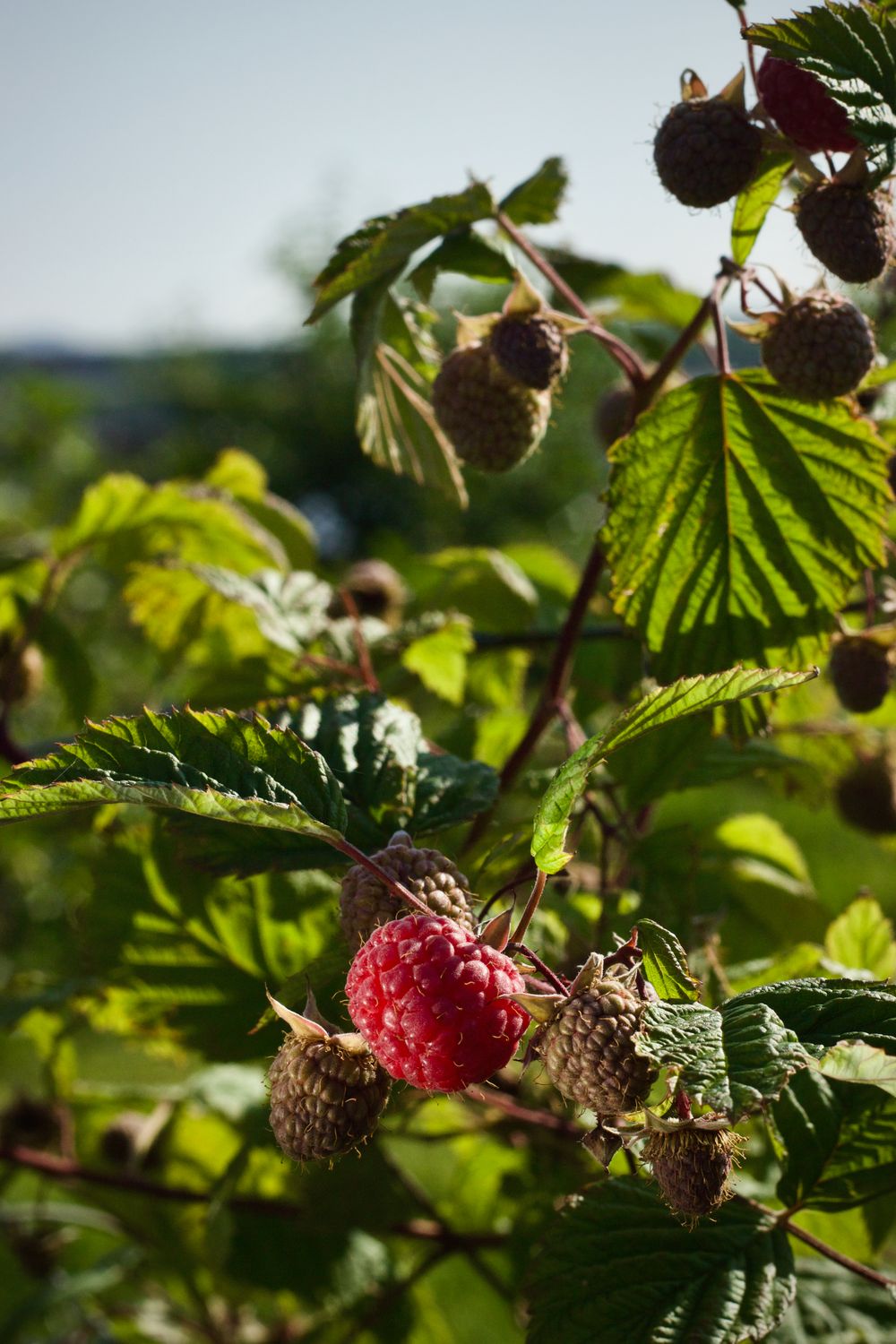
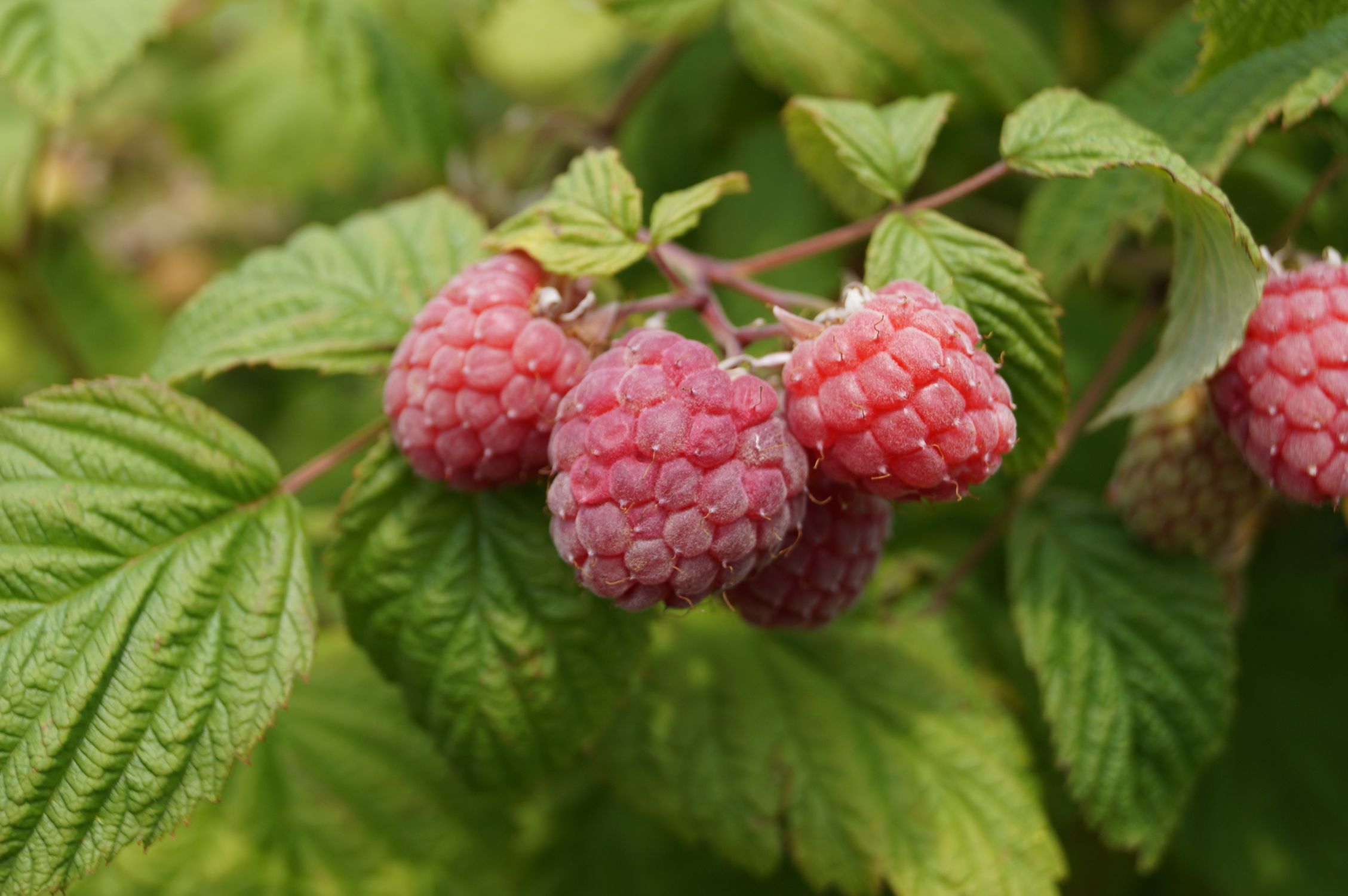
The berries are medium-sized, dark red, with a good sweet raspberry flavour. They aren't as big as the fruit off a full-sized autumn variety like Autumn Bliss or Polka, but they're perfectly respectable and taste every bit as good as any raspberry you'd buy in a punnet.
Cropping runs from late July through September, with the main flush in August. Yields are lower than a full-sized cane for the obvious reason that the plant is smaller, so expect somewhere between 500 grams and one kilogram per plant in a good year, against the two to three kilograms you'd get from a standard autumn-fruiting cane.
Growing Raspberry Shortcake
Give it full sun for the heaviest crop and the sweetest berries. It'll cope with light shade but fruits less for it. Any reasonable garden soil suits, as long as it doesn't waterlog. Raspberries lean towards slightly acidic to neutral ground, a pH of 6.0 to 6.5, though I've found Shortcake really isn't fussy about it. If you're planting a row, space them 60cm apart, but they're just as happy dotted singly into a border or worked into a mixed planting.
Through the fruiting season, regular watering pays off in bigger, better-flavoured berries, so mulch around the base to lock the moisture in. A general-purpose feed in spring plus a mulch of well-rotted compost keeps them content; they're not greedy plants, but they do appreciate decent nutrition. And then there's the pruning, which is the easiest of any raspberry I grow. In February or March, cut every cane down to ground level. New growth comes up in spring and fruits in summer. That genuinely is the whole job.
Container Growing
Raspberry Shortcake is one of the very few raspberries that truly works in a pot. Use one at least 40cm across and deep, filled with good multi-purpose compost. Because it's compact and self-supporting, it won't topple over or sprawl into the untidy mess that full-sized canes always seem to make of a container.
Pots dry out faster than open ground, so plants will need watering more often, especially while they're fruiting. Feed with a high-potassium liquid fertiliser every two weeks from flowering right through to harvest, and refresh the compost every two to three years to keep the soil healthy and well fed.
Suckering
Here's a real practical bonus: Raspberry Shortcake throws up very few suckers compared with ordinary raspberries. Traditional varieties spread with real enthusiasm, sending shoots up metres from the parent, which is a genuine nuisance in a small garden or a tidy border — I'm forever pulling rogue canes out of the lawn and the neighbouring bed on my own plot. A raspberry that stays largely where you put it, as Shortcake does, makes for a far better-behaved plant to live with.
Any suckers that do appear you can dig up and pot on into new plants, or simply pull out if you've no use for them.
Limitations
I won't oversell it. Raspberry Shortcake is no substitute for a proper raspberry bed if you're after big harvests for jam-making and the freezer. The yield is modest and the berries are at their best eaten fresh rather than preserved. If you've the room for a row of full-sized autumn canes like Polka or Autumn Bliss, they'll give you a great deal more fruit.
It's also not widely stocked in British nurseries, so you may have to order from a specialist fruit nursery online. You'll sometimes see it sold as BrazelBerries Raspberry Shortcake, which is just a trademarked marketing brand for the same plant.
Who Should Grow It
This is the raspberry for anyone who wants fresh fruit but hasn't the space or the appetite for a traditional row. Balcony and patio growers, small-garden gardeners, and anyone who simply can't be doing with tall, thorny, suckering canes will get a lot of pleasure from it. It's a lovely one to grow with children too, with no thorns to catch little hands and the berries hanging at exactly the right height for them to pick.