Picture a kiwi fruit shrunk down to the size of a large grape, with smooth skin you can pop straight into your mouth, no peeling, no fuss. That little thing is a kiwiberry, and I'll be honest, the first time someone told me it would grow happily outdoors in a British garden I didn't quite believe them. I was wrong. While the ordinary fuzzy kiwi sulks unless you give it a warm wall and a lot of coddling, the kiwiberry is a tough, vigorous climber that shrugs off our winters and rewards you with clusters of intensely flavoured miniature fruit.
What Are Kiwiberries?
Kiwiberries are the fruit of Actinidia arguta (the hardy kiwi) and its close relative Actinidia kolomikta (the ornamental kiwi). Unlike the brown, fuzzy supermarket kiwi (Actinidia deliciosa), these are small, smooth-skinned, and eaten whole like a grape.
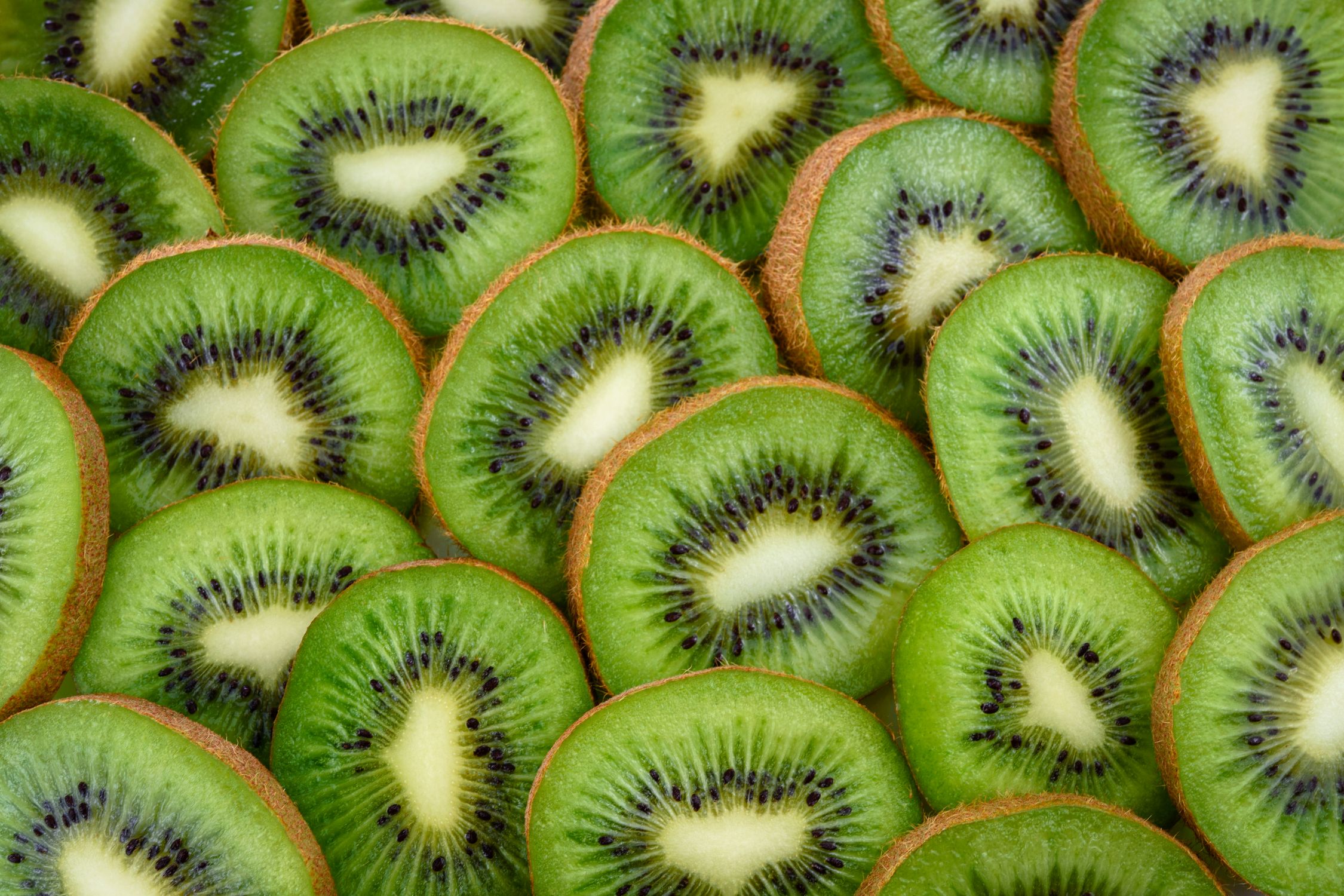
Each berry runs to roughly 2 to 3 centimetres long, with thin green or sometimes reddish skin. Slice one open and you'll see bright emerald flesh ringed with tiny edible seeds, a perfect miniature of a proper kiwi. The flavour, though, is the surprise: sweet and tropical, often more intense than a full-sized kiwi, with hints of pineapple, strawberry and melon all at once.
Hardy Enough for Britain
The whole reason kiwiberries work here comes down to hardiness. Actinidia arguta hails from the forests of Japan, Korea and northern China, where winter temperatures regularly plunge below minus 25 degrees Celsius. It's one of the hardiest fruiting vines in the world, and frankly there isn't a corner of the British Isles it can't cope with.
Actinidia kolomikta is hardier still, surviving minus 40 degrees Celsius in its native Siberia and Manchuria. I'd grow it for the foliage alone, those spectacular pink, white and green variegated leaves, though the berries are a lovely bonus: smaller than arguta, but intensely sweet.
Choosing Varieties
Most kiwiberries need a male pollinator plant somewhere nearby, though a few self-fertile ones will save you the bother. If space is tight, I'd point you straight at Issai, the most popular self-fertile variety. It's compact, good for smaller gardens and containers, fruits younger than most, and although the berries are small they pack a real punch. For something more dramatic there's Ken's Red, with reddish-purple skin, red-tinged flesh and a rich, complex flavour, though it does need a male partner. Ananasnaya (often sold as Anna) is named for its pineapple-like aroma and produces large, excellent berries on a vigorous plant, again needing a male nearby. And Geneva is the early one, honey-sweet and very productive, also needing a pollinator.
If you do go for a non-self-fertile variety, plant one male for every six to eight females. The males are usually sold plainly as Actinidia arguta Male, nothing glamorous, but they earn their keep.
Planting
Plant in autumn or spring in a sunny, sheltered spot. These vines mean business, reaching 6 to 10 metres, so they need proper support. A sturdy pergola, a large arbour, or a heavy-gauge wire system on solid posts all work well. You can also run them along a strong fence or up a large established tree.
They aren't fussy about soil. Any fertile, well-drained ground will do, and while they lean towards slightly acidic to neutral conditions, they won't sulk if it isn't perfect. Full sun gives you the sweetest fruit, but they'll still crop in partial shade. The one thing I'd urge you to avoid is a frost pocket, because the young spring growth is vulnerable to late frosts even though the dormant plant is bulletproof. Allow 3 to 4 metres between plants; they're vigorous and will fill the space given half a chance.
Training and Pruning
Kiwiberries fruit on short lateral shoots growing from the previous year's wood, much like grapes, so it's no surprise the best training systems are borrowed straight from the vineyard. The T-bar system is my preferred approach: fix a horizontal crosspiece to the top of each post, run wires along the arms, train the main stem up the post and the laterals along the wires. It makes a productive canopy and harvesting is a doddle. Alternatively, a pergola lets you run the main stem up a post and spread the laterals over the framework overhead, which is beautiful, productive, and gives you summer shade into the bargain.
Prune in winter when the plant is fully dormant. Shorten the lateral shoots to four or five buds beyond the last fruited section, and take out anything dead, damaged or crossing. Come summer, pinch back any over-enthusiastic shoots to push the plant's energy into fruit rather than rampant growth.
Care Through the Year
In spring, keep one eye on the forecast. Once the new shoots are out, a late frost can catch them, so drape some fleece over the vine if frost threatens after bud break. That's also the time to mulch generously and apply a balanced feed. Through summer, water regularly during dry spells, especially while the fruit is forming, and do that summer pinching to keep vigour in check and air moving through the canopy. Autumn is harvest time, from late September through October, and the berries ripen over several weeks rather than all at once. Winter is the easy season: prune while dormant and otherwise leave well alone, because the bare vines are completely hardy and need no protection whatsoever.
Harvesting
Harvest runs from late September into October. The berries are ready when they give slightly to gentle pressure, much like checking an avocado. The skin may deepen in colour, but I wouldn't rely on that alone as a guide.
You can either pick individual berries as they ripen, or take them slightly firm and let them soften at room temperature for a day or two. Once fully ripe they're fragile, so eat or process them quickly; they'll only keep a few days in the fridge.
One word of patience, though. Young plants can take three to five years before they start fruiting, although self-fertile Issai may give you a small crop in its second or third year. Stick with it, because once a vine is established it can produce a staggering 20 to 30 kilograms of fruit in a season.
Eating and Using Kiwiberries
The real joy of kiwiberries is how little they ask of you in the kitchen: just wash and eat, skin and all. No peeling, no slicing, no mess. They're brilliant eaten like grapes straight from the bowl, and children adore them. Halved, they brighten up a fruit or green salad and always start a conversation. Blended whole into a smoothie they give a vivid green colour and that tropical flavour. They also make a fine jam, chutney or fruit leather, though the pectin content is only moderate, so add apple or lemon juice if you want a good set. Sliced and dehydrated they turn into a chewy, concentrated snack, and they look genuinely stunning scattered over tarts, cakes and pavlovas.
Nutritional Powerhouse
For something so small, kiwiberries punch well above their weight. They contain up to five times more vitamin C per gram than oranges and are rich in vitamin E, potassium and fibre. Because you eat the skin, you also get the high levels of antioxidants that are simply thrown away when you peel a conventional kiwi. They're a natural source of actinidin too, an enzyme that helps with protein digestion.
Common Challenges
Nothing is entirely trouble-free, and there are a few things worth knowing. Late frost is the single biggest risk, so protect those emerging spring shoots with horticultural fleece if frost threatens. Vigour is the next: a healthy vine grows fast, and without regular pruning it'll get away from you, so build your support sturdy enough to handle years of growth from the outset. If you're growing a non-self-fertile variety, remember it needs a male plant within about 15 metres, and crucially the two must flower at the same time. And here's a curious one to watch for: Actinidia species contain compounds similar to those in catnip, so cats may roll on, chew, or dig around young plants. A bit of wire mesh around new plantings until they're established usually settles the matter.
A Garden Climber With Edible Rewards
Kiwiberries offer something genuinely different in a British fruit garden: a spectacular, vigorous climber that hands you bucketloads of exotic, smooth-skinned little fruit without any need for heat, glass, or special treatment. Train one over a pergola for summer shade, run it along a sturdy fence, or use it to hide an ugly outbuilding, and it'll earn its keep twice over, once for the eyes and once for the fruit bowl. If you've got the space and a strong support, I really would give one a go.
Kiwiberries feature high up my round-up of unusual berries for UK gardens, precisely because they hand you something this different for so little extra effort — take a look at that guide for more exotic climbers and superfruits worth the space.