Some plants earn their keep with one good trick, but every now and then you meet one that seems determined to do everything at once. Schisandra is exactly that sort of show-off. It's a graceful twining climber that will clothe a trellis or arch in lush green leaves, dangle clusters of bright red berries in late summer, and then — here's the party piece — give you a berry that's said to carry all five of the classic tastes in a single mouthful: sweet, sour, salty, bitter and pungent, all jostling together. Little wonder the Chinese call it wu wei zi, the five-flavour berry. I don't grow it myself yet, but the more I read about it the more convinced I am that it deserves a far bigger following in British gardens than it has.
What is schisandra, exactly?
Schisandra (Schisandra chinensis) is a deciduous woody climber native to the forests of north-east China, Korea and the Russian Far East. You'll sometimes see it sold as magnolia vine or magnolia berry, a nod to the faintly magnolia-like scent of its small, creamy spring flowers. It climbs by twining rather than clinging, winding its stems around any support you give it, so it makes a proper feature rather than a tucked-away curiosity.
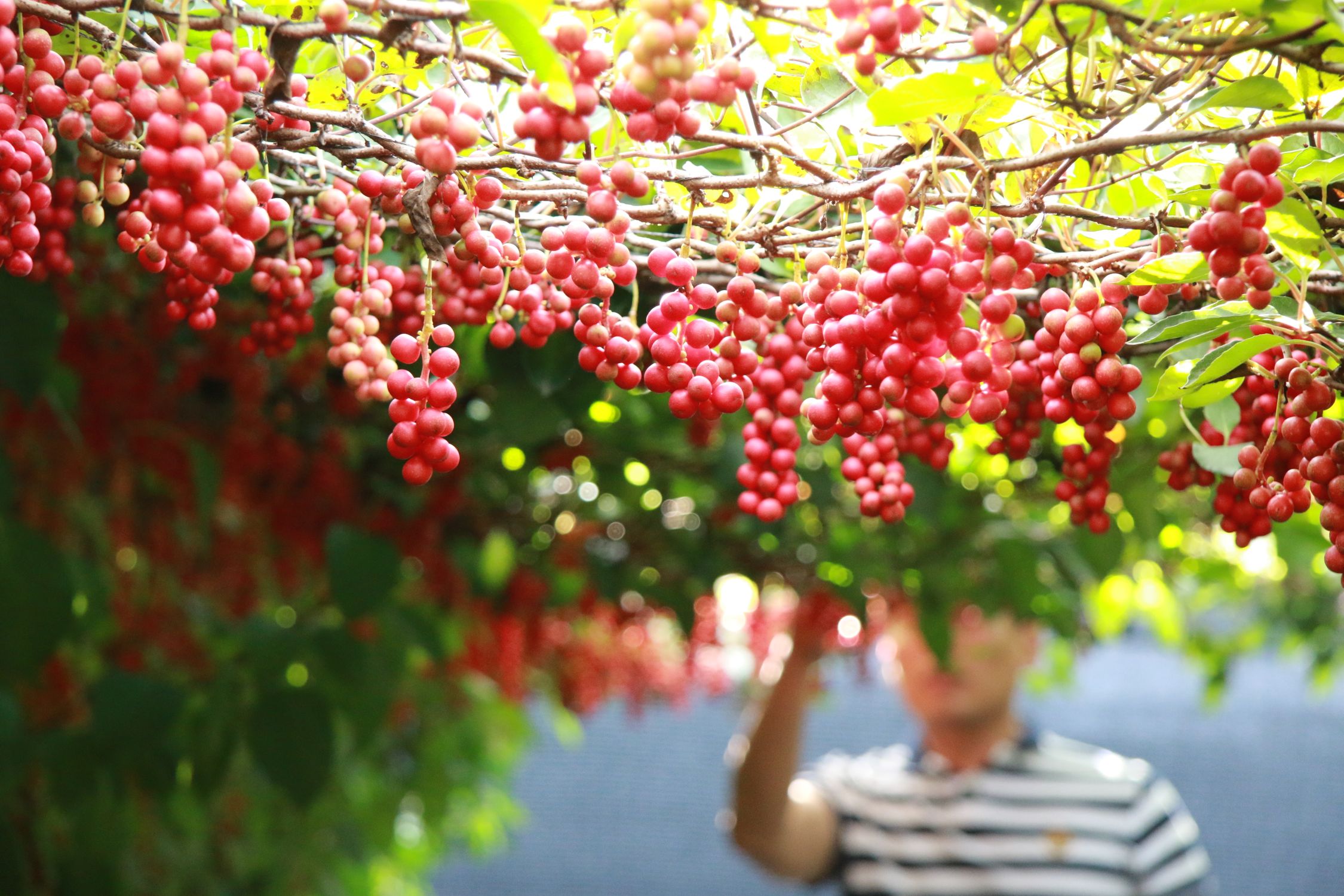
By late summer and into autumn those flowers give way to drooping clusters of glossy, scarlet berries — quite a striking sight against the foliage. The berries are the prize here, used fresh, dried, or steeped into teas, syrups and tinctures. It's a plant that rewards a bit of curiosity in the kitchen as much as in the garden.
What does schisandra taste like?
This is the question everyone asks, and it's the whole reason the plant has such a devoted following. The berry is famous for combining all five traditional flavours at once — sweet, sour, salty, bitter and that hard-to-pin-down pungent or savoury note — which is where the name five-flavour berry comes from. Bite into a fresh one and the first thing that hits is a sharp sourness, but linger and you'll find sweetness and a curious savoury depth underneath, with a faint bitterness in the skin and seed.
It's not a berry you'd graze on by the handful the way you might with strawberries — it's bold and complex, more flavouring than snack. That's exactly why it shines in teas, syrups and cordials, where you can balance those competing notes with a little honey or sugar. Dried, the berries concentrate beautifully and keep well through the colder months.
Is schisandra hardy in the UK?
Here's the good news for British growers: schisandra is seriously cold-hardy. Coming from the harsh winters of north-east Asia, it shrugs off frost without complaint and grows perfectly well right across the UK, from the south coast up to Scotland. You don't need a sheltered microclimate or a greenhouse to keep it happy, which already puts it ahead of many of the more exotic fruits people fuss over.
What it does ask for is the right position. Schisandra is a woodland-edge plant by nature, so it's at its best in what I'd call an "edge" spot — a place that catches some sun but also some shade through the day, rather than baking in full glare or languishing in deep gloom. Think of the dappled conditions at the margin of a wood, where it would naturally scramble up through shrubs, and you've got the idea. A wall, fence or pergola that gets morning sun and afternoon shade (or vice versa) is ideal.
How do you grow schisandra in the UK?
Start with support, because this is a twining climber and it needs something to climb. A trellis, an arch, an arbour or a sturdy wire frame against a wall all work well — anything its stems can wind around. Set it up before or at planting time so you're not wrestling with established growth later.
The soil matters more than the hardiness might suggest. Schisandra likes a rich, moisture-retentive but well-drained soil with plenty of organic matter, much as you'd find on a fertile woodland floor. Dig in a generous helping of garden compost or well-rotted manure when you plant, and then — the part I'd really emphasise — finish with a thick, generous organic mulch. A good mulch of leaf mould, compost or bark keeps the roots cool and damp, which is precisely what this plant craves, and topping it up each year keeps it thriving.
Water well through the first couple of summers while the roots establish, and after that it largely settles into its stride. It mostly just wants that cool, rich, half-shaded root run and something to climb.
Do you need two plants to get berries?
This is the one catch worth understanding before you buy. Most schisandra plants are either male or female, which means that to get fruit you traditionally need both — a male to pollinate and a female to carry the berries. If you've only room for a single plant, an ordinary male-or-female schisandra simply won't crop on its own, which has caught out more than a few hopeful gardeners.
The neat solution, and the one I'd point most people towards, is the cultivar 'Eastern Prince'. It's self-fertile, so a single plant will set fruit all by itself — no need to find space for a pair or worry about getting the sexes right. For the average garden, that makes it far and away the sensible choice. If you've room for a bigger harvest you can always grow more, but one self-fertile plant is a wonderfully low-fuss way in.
Why grow the five-flavour berry?
Beyond the novelty of that five-in-one taste, schisandra carries a long and fascinating heritage. It has been traditionally valued in Chinese herbal medicine for centuries, where it's classed as an adaptogen and has long been used as a tonic. I'll be careful here — I'm a gardener, not a herbalist, and I'd never make claims about what it can or can't do for your health. But that deep traditional and culinary history is a genuine part of the plant's appeal, and it adds something special to growing a berry with so much story behind it.
For me, though, the real draw is simpler. It's a beautiful, hardy, productive climber that does something no other berry can, and it asks for surprisingly little in return. If you already enjoy growing the more unusual fruits, schisandra sits very happily alongside other hardy climbers like kiwiberries, which scramble over a frame in much the same way. And if it's intriguing, off-the-beaten-track "superfruits" that tempt you, it makes good company with goji berries — another plant with a foot in both the kitchen and herbal tradition.
So if you've got an arch or a shady-edged wall crying out for a climber, and you fancy growing something most of your neighbours will never have tasted, I'd say give schisandra a go. Choose 'Eastern Prince' so a single plant will fruit, give it rich soil and a cool, mulched root run, and let it twine away. I can't wait to find a corner for one myself.
— Ash
More Unusual Climbers and Vines
Schisandra is one of very few fruiting climbers for UK gardens — kiwiberries are the other one worth serious consideration, offering grape-sized fruit on an equally vigorous vine. For more fruit with health-food credentials that actually grows here, goji varieties and the unusual berries roundup continue the theme.