Bramble jelly is the classic hedgerow preserve: deep purple, crystal clear, and set firm enough to hold a knife mark. Unlike jam, it has no seeds and no pulp, so it spreads smooth and glossy, and it works as well alongside cheese and cold meats as it does on toast. If you've been out foraging and come home with more blackberries than you know what to do with, this is where they should go.
What You'll Need
Jelly vs Jam: Why Bother Straining?
Jelly is worth the extra step because straining out the seeds and pulp gives you a clear, smooth set that jam can't match. Blackberry seeds are hard and noticeable in a jam, which is fine on toast but wrong if you're serving a preserve alongside cheese or cold meats, where you want something that cuts cleanly and doesn't fight the texture of what's underneath. Jelly also keeps better in a small jar once opened, because there's less pulp to break down. The trade-off is yield: you lose the fruit itself and keep only the juice, so you need more blackberries for the same number of jars than you would for jam. If you've foraged a proper glut, that's rarely a problem — see my complete guide to foraging blackberries for where and when to find them.
Step 1: Cook the Blackberries
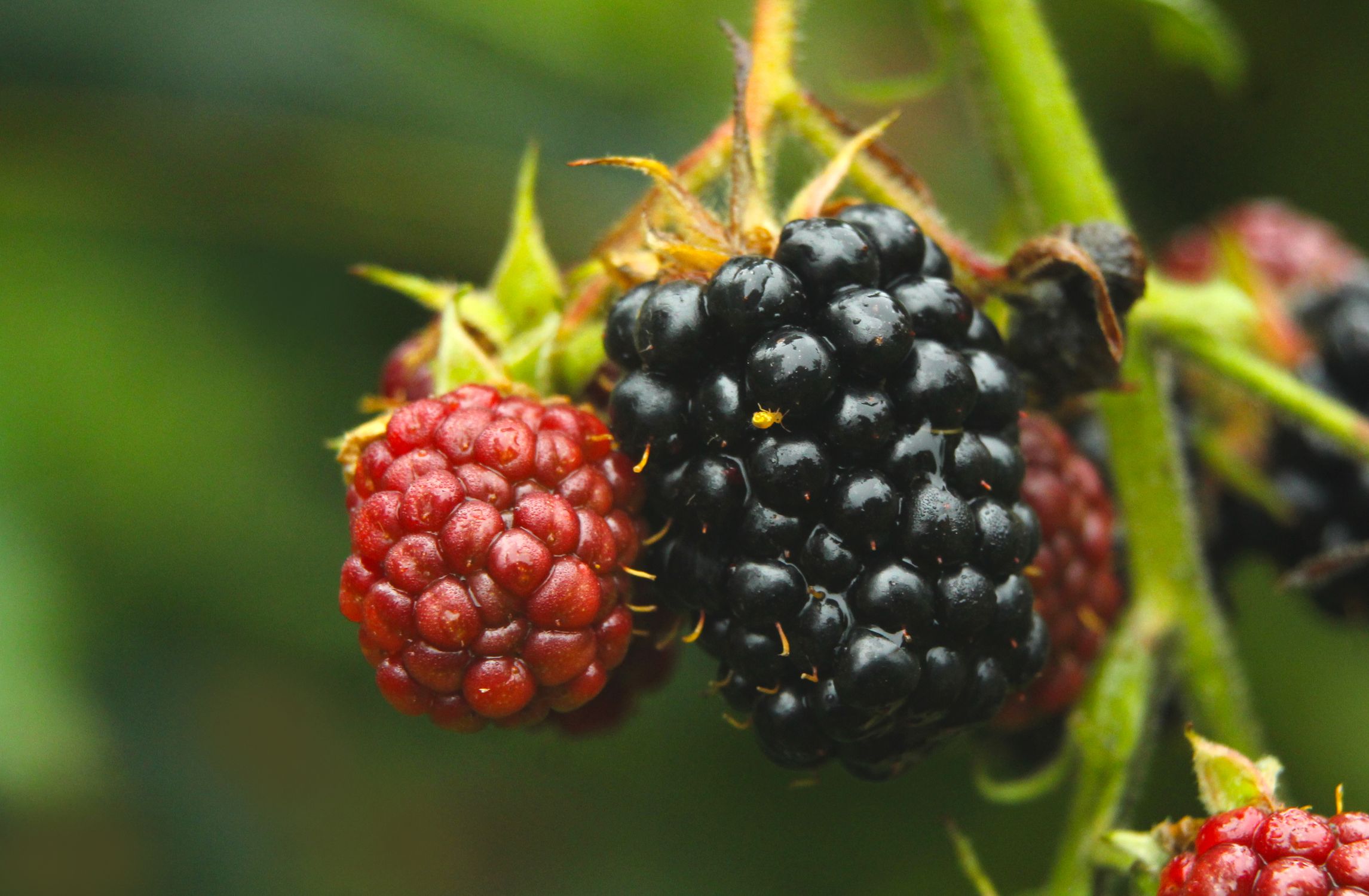
Cook the blackberries gently with water until they collapse into a soft pulp, which takes about 15-20 minutes and needs no more effort than the odd stir. Put the blackberries and water into a large, heavy-bottomed pan. There's no need to hull or top them — the whole berry goes in, stalks picked out but nothing else. Bring to a gentle simmer and cook for 15-20 minutes, mashing lightly with a wooden spoon or potato masher as they soften, until you have a loose, pulpy mixture. You're not trying to make a purée; you just want the fruit fully broken down so it gives up its juice.
Step 2: Strain Overnight (Don't Rush This)
Strain the pulp through a jelly bag or muslin-lined sieve overnight, and resist the temptation to squeeze it. Scald a jelly bag (or a large square of muslin set inside a sieve or colander) with boiling water, then suspend it over a large bowl — I hook mine over an upturned stool leg, but a cupboard door handle works just as well. Pour in the hot pulp and leave it to drip through undisturbed for at least 8 hours, ideally overnight.
Do not squeeze or push the pulp to speed things up. It's tempting when you can see juice sitting right there behind the muslin, but squeezing forces solid particles through the weave and clouds the jelly. A cloudy jelly still tastes fine, but it won't have the clear, jewel-like set that makes bramble jelly worth making in the first place. Patience here is the whole trick.
Step 3: Measure Juice and Sugar
Measure the strained juice and add sugar in a ratio of roughly 450g sugar to every 600ml of juice, which is what gives bramble jelly its firm, reliable set. Pour the strained juice into a jug to measure it, then transfer it to a clean preserving pan. For every 600ml of juice, weigh out 450g of granulated or preserving sugar. Add the lemon juice at this stage too — it boosts the pectin and helps the jelly set properly, since blackberries on their own are only moderately pectin-rich.
Step 4: Boil to Setting Point
Boil the juice and sugar hard until it reaches setting point, usually 104-105°C or a firm wrinkle on a cold plate, which normally takes 10-15 minutes. Warm the sugar gently in the pan with the juice over low heat first, stirring until every crystal has dissolved — check by pressing a spoon against the base; if it's gritty, keep stirring. Once dissolved, turn the heat up and bring to a rolling boil that doesn't stop when you stir it.
Test for setting point after about 10 minutes using a sugar thermometer (104-105°C) or the wrinkle test: spoon a little onto a cold saucer, wait 30 seconds, then push it with your finger. If it wrinkles and holds a line, it's ready. If it just floods back flat, boil for another 2-3 minutes and test again. This is the same method I use for loganberry jam, and it works the same way here — the fruit changes, the physics doesn't.
Step 5: Pot and Seal
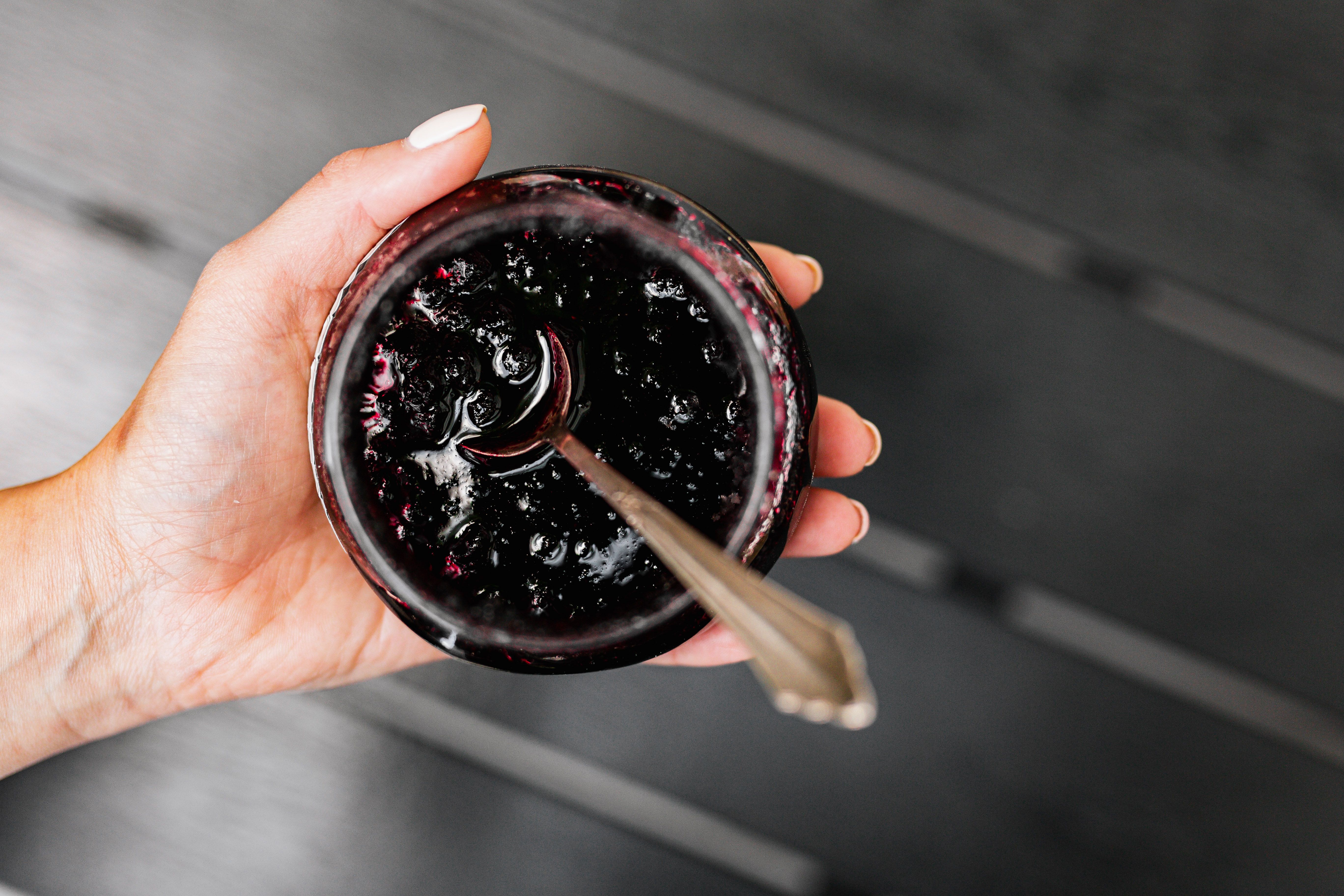
Skim off any scum, pour the jelly into sterilised jars while both are still hot, and seal immediately for a good vacuum seal as it cools. Sterilise your jars beforehand by washing them in hot soapy water and drying them in a low oven (140°C) for 15 minutes, or running them through a hot dishwasher cycle. Ladle the hot jelly into the warm jars right to the top, wipe any drips from the rim, and seal with the lid immediately. You should hear the lids pop or click as they cool and pull down — that's your seal confirming.
Storage and Shelf Life
Properly sealed bramble jelly keeps for up to a year in a cool, dark cupboard, and once opened it should be kept in the fridge and used within a month. Label each jar with the date — a batch of hedgerow jelly always looks the same six months later, and you'll want to know if it's this year's or last year's before you serve it.
Frequently Asked Questions
Why is my bramble jelly not setting?
Bramble jelly usually won't set because it hasn't reached true setting point, or because the fruit-to-sugar ratio was off. Blackberries are only moderately high in pectin, so if you skipped the lemon juice or measured your juice loosely rather than by volume, the set can be soft. If a batch doesn't set after cooling, tip it back into the pan with the juice of another lemon and reboil to setting point — it's easily rescued.
Can I use frozen blackberries for jelly?
Yes, frozen blackberries work well for jelly and can go straight into the pan from frozen, with no need to thaw first. They'll release slightly more water as they cook, so simmer for a few extra minutes to drive off the excess before you start straining.
Do I have to use a jelly bag?
A jelly bag gives the clearest result, but a sieve lined with a double layer of clean muslin or a new J-cloth works just as well if you don't have one. Whatever you use, the rule is the same: let it drip on its own and don't press or squeeze it.
Why does the recipe use only lemon juice and not pectin?
Lemon juice is usually enough because blackberries carry a reasonable amount of natural pectin, especially if some of the fruit is slightly underripe. If you want a firmer set or you're using very ripe, sweet blackberries with low acidity, you can add a small splash of bottled pectin or use jam sugar (which has pectin already mixed in) instead of plain granulated sugar.